ETH Zurich’s Alexander Mathys joins the SFNV Steering Committee
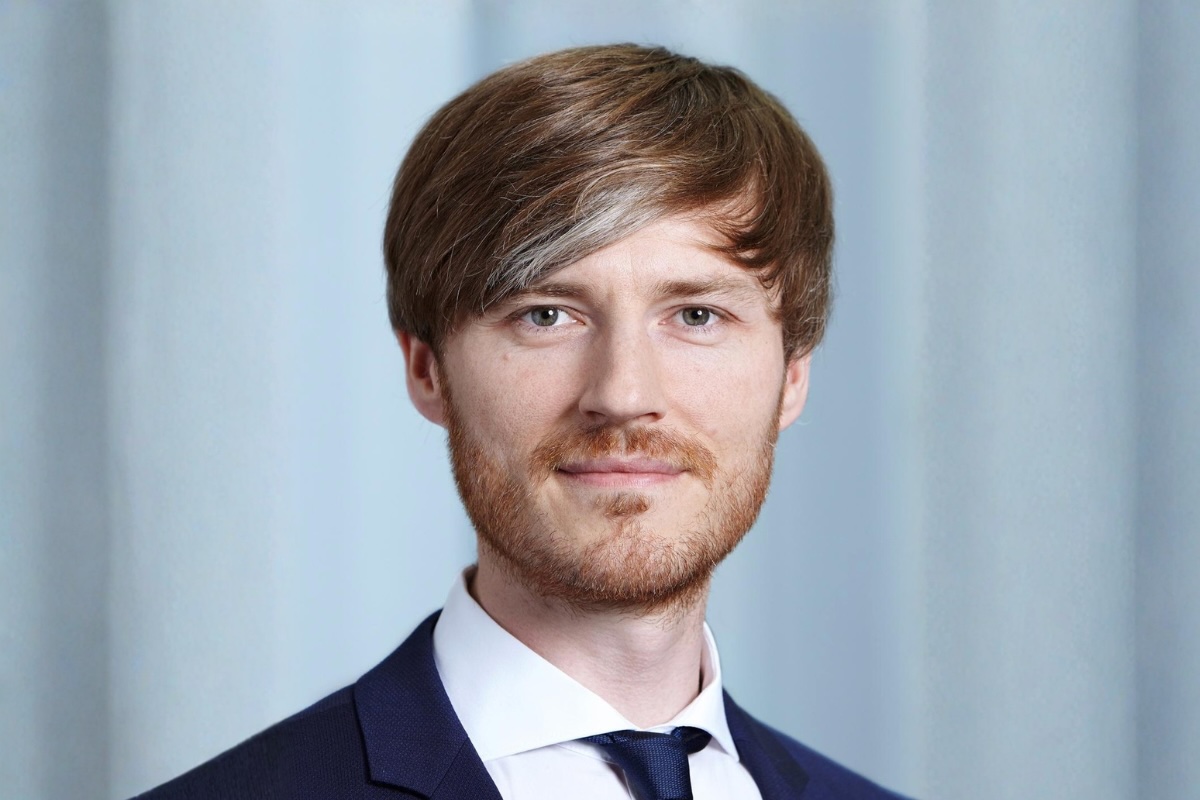
From sustainable processing and circularity to the challenge of turning promising research into solutions that work at scale, Professor Alexander Mathys believes the future of food innovation depends on taking a systems approach. Having recently joined the Swiss Food & Nutrition Valley Steering Committee, Alexander brings extensive experience spanning academia and industry, including ETH Zurich, the German Institute of Food Technologies (DIL), Nestlé and international research initiatives in Singapore.
We caught up with him to explore where he sees the greatest opportunities to build a more sustainable food system, what it takes to move emerging technologies from the lab into real-world applications, and why closer collaboration across Switzerland’s food innovation ecosystem will be key to accelerating impact.
Alexander, welcome to the Valley! What inspired you to join the Swiss Food & Nutrition Valley Steering Committee, and what are you most looking forward to contributing?
Thank you! I’ve had the opportunity to work across academia, applied research and industry, from ETH Zurich and DIL to Nestlé and international research initiatives in Singapore. One thing I’ve learned along the way is that structural food system transformation requires seamless cross-sector integration.
Switzerland has an extraordinary mix of research, food-tech startups and global companies. What excites me about joining the Steering Committee is the opportunity to bring these strengths together. I look forward to bringing a systems-oriented, process-engineering perspective to help convert scientific discoveries into validated, scalable solutions for global food security.
Your work at ETH Zurich takes a systems approach to sustainable food processing, considering the environmental, economic and social dimensions of the entire value chain. Where do you see the greatest opportunities to make our food system more sustainable over the coming decade?
The most impactful shift is moving away from isolated single-indicator metrics, like evaluating carbon footprint alone, and embedding multi-indicator sustainability frameworks directly into early-stage processing design. We must assess environmental boundaries systematically, alongside nutritional quality, energy efficiency, cost, and sensory appeal.
In terms of product design, hybrid food formulations offer immense potential. By strategically combining functional properties from plants, fungi, microalgae, and traditional dairy, we can achieve better nutritional profiles and taste experiences that naturally drive consumer adoption.
I believe we should also focus on optimising production efficiency, exploring resilient raw materials like microalgae, and integrating robust side-stream conversion into value chains.
Much of your research explores how emerging technologies and new raw materials can help us produce healthy, high-quality food more efficiently. Which innovations do you believe have the greatest potential to move from research into real-world impact?
Advanced processing methodologies, like ultra-short thermal treatments, high-pressure processing, pulsed electric fields and specialised extrusion, can help us preserve heat-sensitive nutrients and create the structures we need, while making production more sustainable.
The real challenge is getting these technologies out of the pilot plant and into industry. They need to work continuously, reliably and at a competitive cost. That transition from promising technology to something that can perform at industrial scale is where we now need to focus.
Circularity is another recurring theme in your work, particularly the use of side streams and more efficient use of biomass and energy. Where are we currently missing opportunities to turn food-system waste into value?
We still have many nutrient-rich side streams that end up in relatively low-value applications. There is a real opportunity to make better use of them. For example, liquid side streams can be used to cultivate microalgae for food-grade biomass, while other residues can be used in insect farming to produce more sustainable feed.
To make this work, we need efficient ways to convert, stabilise and extract these resources close to where they are produced. We also need clear safety standards and regulatory pathways. If we can get those pieces right, circular approaches can help us produce more nutritional value from the resources we already have.
When assessing new food technologies, sustainability can’t be reduced to a single metric. How should innovators balance environmental impact with nutrition, affordability, consumer acceptance and commercial viability?
We need to think about these trade-offs from the beginning, rather than waiting until a product is ready to launch. At ETH, for example, we look at environmental impact alongside nutrition, cost and how a technology is likely to develop over time.
A process might perform very well environmentally, but that alone isn’t enough. If it reduces important nutrients, creates taste challenges or makes the final product too expensive, it will struggle to succeed.
That’s why collaboration is so important. Process engineers, food scientists, nutritionists and industry partners need to work together early on. It gives us a much better chance of developing solutions that work technically, commercially and for consumers.
You’ve worked across academia and industry, including at ETH Zurich, the German Institute of Food Technologies (DIL), and the Nestlé Research Centre. What have those different perspectives taught you about what it takes to successfully translate food innovation into practice?
You learn something new in every new role. Universities are very good at exploring fundamental science and longer-term breakthroughs. Applied research institutes such as DIL can test whether those ideas work under food-grade, pilot-scale conditions. Industry brings the experience needed to understand markets, supply chains and scale.
Problems often arise when these groups work sequentially rather than concurrently. Setting up pre-competitive collaborative platforms, joint pilot infrastructures, and shared risk-assessment frameworks allows us to streamline technology transfer and bring scientific concepts to commercial application significantly faster.
Finally, is there a message or invitation you’d like to share with the Swiss Food & Nutrition Valley community?
Switzerland is in a prime position to set a global benchmark for sustainable food processing and nutrition. Through our international activities, including the Singapore-ETH Centre and the Bezos Centre for Sustainable Protein at NUS, we observe how Swiss scientific quality and engineering precision are respected worldwide.
My invitation to the Valley community, across universities, startups, established enterprises, and government, is to leverage our joint capabilities. Let’s focus on de-risking novel processing technologies together, validating circular value chains, and creating science-based solutions that demonstrate real-world impact both regionally and internationally.