
Valley partner Insolight powers Switzerland’s largest agri-PV project
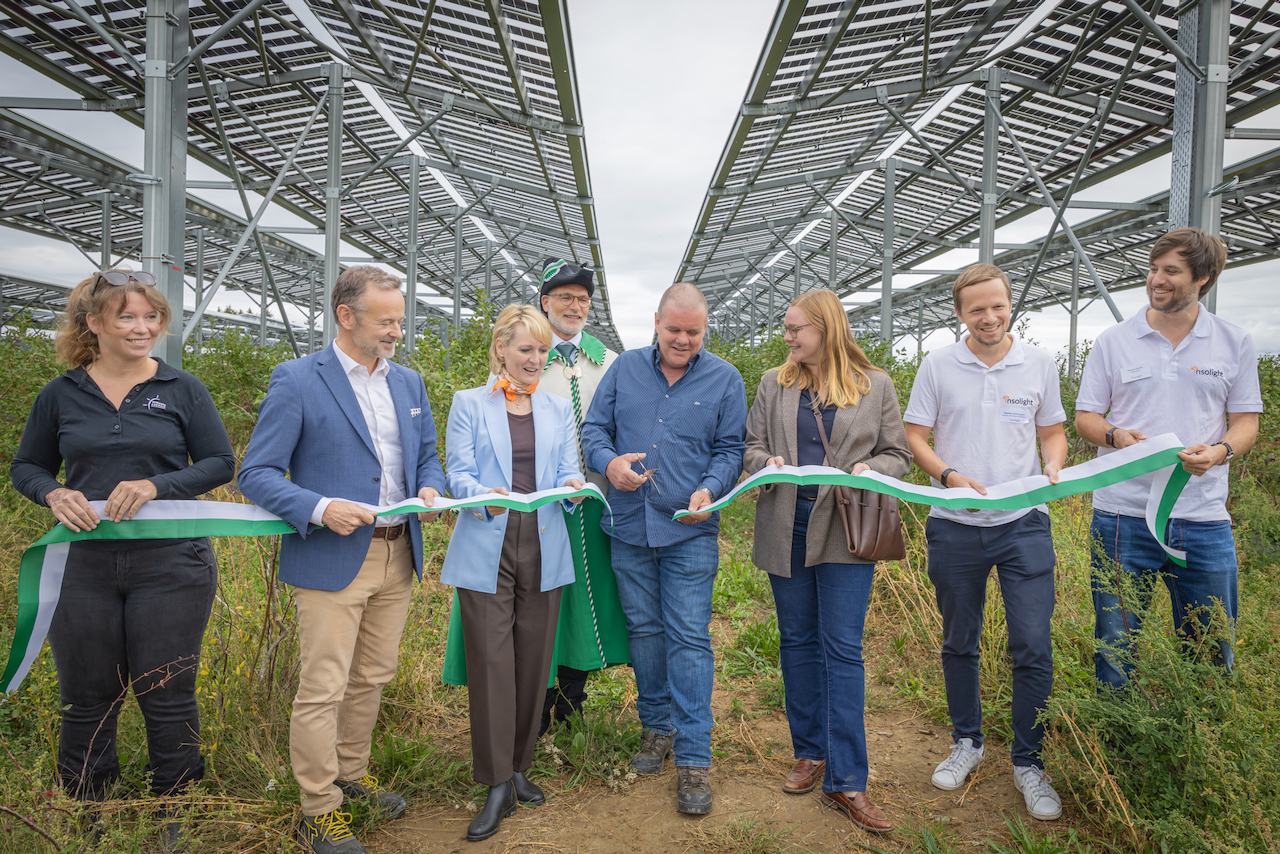
In Lovatens, Romande Energie, Insolight and organic blueberry producer Olivier Pichonnat have inaugurated Switzerland’s largest agri-photovoltaic installation to date, combining crop protection and renewable energy production on the same land. The new installation, officially inaugurated in the presence of Vaud State Councillors Valérie Dittli and Isabelle Moret, is the first of its kind in the canton of Vaud and the largest agri-PV project built in Switzerland so far.
Developed through a collaboration between farmer Olivier Pichonnat, Vaud-based technology company Insolight and Romande Energie, the installation protects 1.8 hectares of organic blueberries while generating around 2,400 MWh of renewable electricity each year – equivalent to the annual consumption of approximately 955 households. The project provides a practical example of how agricultural innovation, climate resilience and the energy transition can work hand in hand.
Helping agriculture adapt to a changing climate
Extreme weather events are becoming an increasing challenge for farmers. Heatwaves, drought, hail, heavy rain and late frosts can all affect crop quality and yields.
The Lovatens installation was designed to help address these challenges. Built on Olivier Pichonnat’s organic farm, its photovoltaic canopy provides greater protection for the blueberry plants while simultaneously producing renewable energy.
The benefits became particularly clear during the hot summer of 2026. While some exposed crops suffered significant damage, the blueberries growing beneath the agri-PV structure benefited from more favourable conditions, helping to limit sun damage, interrupted growth and dehydration.
Vaud State Councillors Valérie Dittli, responsible for agriculture, sustainability and climate, and Isabelle Moret, responsible for economy, innovation, employment and heritage, attended the inauguration. The project reflects the canton’s interest in solutions that can simultaneously support farmers in adapting to climate change, expand renewable energy production and contribute to the regional economy.
A Vaud innovation with broader potential
The system consists of 5,220 photovoltaic modules installed above the blueberry crops on a structure specifically adapted to the needs of the farm.
Positioned 3.2 metres above the ground, the panels allow Olivier Pichonnat to continue working with his existing agricultural machinery and largely maintain his usual farming practices. At the same time, the structure provides protection against hail, frost, heavy rainfall and periods of extreme heat.
“Given the weather extremes we have experienced over the past few years as a result of climate change, it was becoming increasingly difficult for me to imagine a future without better protection for my crops,” explains Olivier Pichonnat. “With Insolight’s Insolagrin agri-PV solution, we were able to take into account both the agricultural challenges and the specific needs of my farm, adapting the installation to blueberry production and the way I work. At the same time, it allows me to play an active role in the energy transition. Combined with Romande Energie’s contracting model, I can look to the future with greater confidence while contributing to the transition towards renewable energy.”
Combining crop protection with food and energy resilience
Designed and built by Valley partner Insolight, the installation demonstrates how agri-photovoltaics can be implemented at scale while meeting the practical requirements of professional agriculture.
Drawing on experience from projects carried out together with leading agronomic research institutes, Insolight combines technical and agricultural expertise to address some of the key barriers to deploying agri-PV systems. The company supports projects from regulatory procedures through to commissioning, with the aim of creating installations that protect both crops and farmers’ long-term livelihoods.
The Lovatens project also highlights the potential synergies between agricultural policy, climate adaptation and renewable energy development.
Making large-scale implementation possible
Romande Energie financed the installation and will operate and maintain it for the next 30 years.
The contracting model enables farmers to benefit from innovative crop protection and new sources of income without having to finance the infrastructure themselves. Romande Energie also manages the sale of the solar electricity produced and its integration into the energy system, taking responsibility for investment, operations and exposure to an increasingly complex electricity market.
By bringing together Insolight’s agronomic innovation, Olivier Pichonnat’s farming expertise and Romande Energie’s energy capabilities, the project offers a promising model for how agriculture and renewable energy production can be developed side by side – creating value for farmers, the energy system and society.