Valley partner CleanGreens Solutions and GreenLife partner on building world’s largest aeroponic greenhouse

Valley partner CleanGreens Solutions and GreenLife partner on building world’s largest aeroponic greenhouse

The Future of Food: Givaudan, Nestlé R+D Accelerator Lausanne and FoodHack launch the 2025 FoodTech World Cup

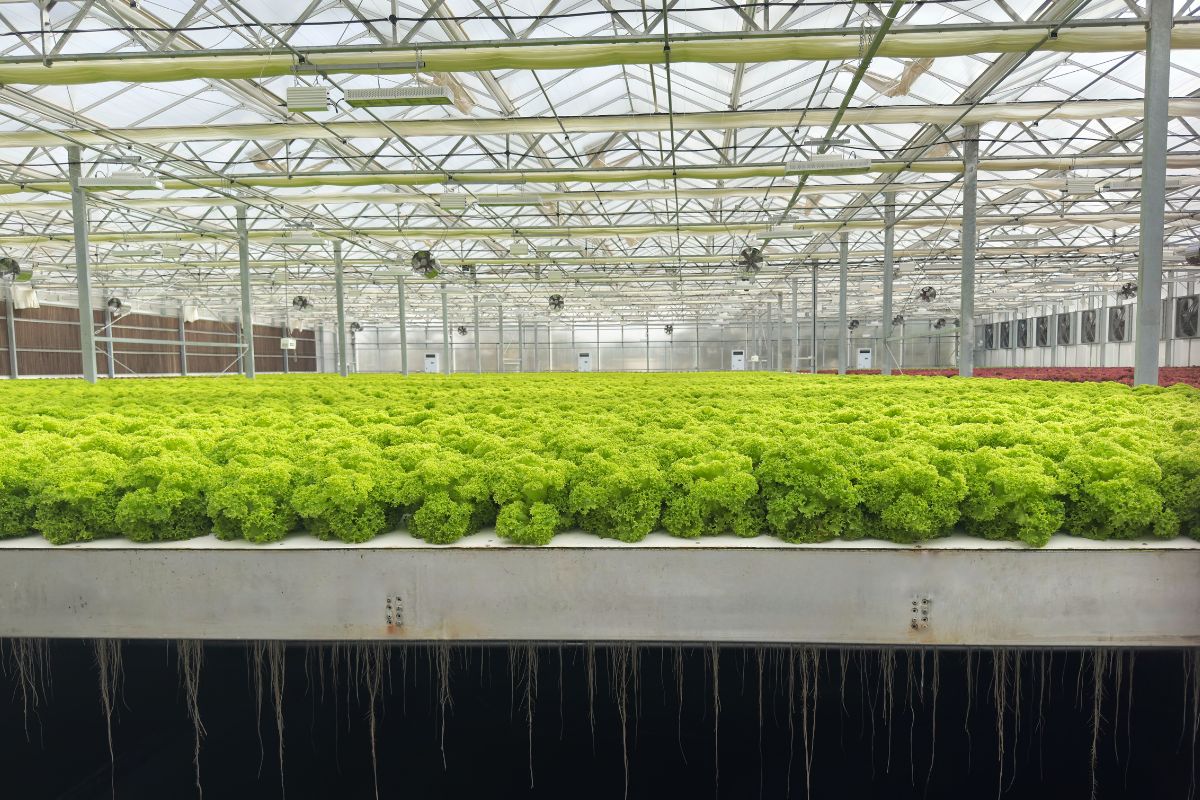
Valley partner CleanGreens Solutions and the GreenLife Company, a leading agricultural innovator in the Middle East, have signed an agreement to expand their collaboration and build the world’s largest Aeroponics Greenhouse farm in Abdali, Kuwait.

Setting a new standard in sustainable farming

Following the success of its 7,500m² Aeroponics facility, GreenLife is scaling up its operations adding 16,500m² more of aeroponics system provider CleanGreens’ technology to reach an unprecedented scale. This project will seek to boost food security in the region and drastically reduce water and land consumption compared to traditional farming. Additionally, this demonstrates the CleanGreens system’s successful adaptation to harsh climates in the Middle East, allowing year-round production without interruption and delivering high-quality greens. 

We’ve been using CleanGreens technology for nearly three years, two years in operations. We have got very positive, even impressive experience. We’ve learned and developed a lot, confirmed the business model and we have decided to expand our project to supply exceptional quality greens to our customers across the region. This technology is the future! I’m looking forward doing more together with CleanGreens,said Adel Al Shamali, Chairman of GreenLife. 

The companies report that the project has validated the potential profitability of Controlled Environment Agriculture (CEA) and related emerging technologies.

Swiss technology for the future of food 

CleanGreens’ patented technology allows for higher efficiency with fewer resources, reducing water use by up to 96% and eliminating pesticides, allowing ideal growing conditions for plants and predictable, high-value local product all year round at competitive price. This expansion further solidifies CleanGreens’ position as a global leader in precision agriculture. 

We are proud to collaborate with GreenLife on this historic expansion. GreenLife is an amazing partner. They have done a tremendous job analyzing the market’s needs, operating the farm, validating the business model in the region. The upcoming 24,000aeroponics greenhouse will be our largest installation globally. It will reaffirm the expertise and commitment of CleanGreens’ team in transforming agriculture on a large scale. We look forward to continuing our collaboration with GreenLife with the goal of addressing the needs of the entire Gulf region,” highlighted Bruno Cheval, CEO of CleanGreens Solutions. 

About CleanGreens

CleanGreens Solutions is a Swiss B Corp, incorporated in 2013. The CleanGreens developed GREENOVA, a unique aeroponics farming system for greenhouses, featuring a patented irrigation method where a rolling robot sprays water and nutrients directly to the roots suspended in air. By reducing phytosanitary risks, increasing oxygenation, using zero pesticides, 96% less water than traditional farming, and notably less than hydroponics, this one-of-a-kind system uses mobile modules that allow for multi-harvesting of herbs, achieving higher yields with fewer resources. 

About GreenLife

GREEN LIFE Company is the first Aeroponic Farming solution in GCC founded by visionary investors in year 2021, to bolster food security by producing healthy, high-quality agricultural products. Green Life Company has achieved global (G.A.P) Fruit & Vegetables certification for Lettuce from SGS. This milestone marks Green Life Company as the first Farm in Kuwait to obtain this prestigious certification, setting a new benchmark for Good Agricultural Practices (GAP) in the region.

Never miss a Swiss food innovation morsel.

Latest News

Igeho Rising Star 2025: Public voting opens 

Igeho Rising Star 2025: Public voting opens 

The Future of Food: Givaudan, Nestlé R+D Accelerator Lausanne and FoodHack launch the 2025 FoodTech World Cup

Fifteen startups have been invited to present their innovations at Igeho 2025 in November in Basel. A public vote will now determine which five advance to the final, where they will face questions from the panel and audience, competing for the 2025 Igeho Rising Star Award.

The application phase for the 2025 Igeho Rising Star Award closed on 31 January, attracting numerous submissions from food tech startups. Each entry was carefully reviewed by the Igeho team based on innovation and use of technology, sustainability and environmental impact, as well as business model and scalability.

Fifteen Swiss startups have been selected to showcase their companies at Igeho 2025, where they will present their innovations to the audience in Basel this November. Benjamin Eulau, Igeho’s Brand Director, shared his excitement: ‘We saw some truly impressive innovations among the applications. Many of these startups have the potential to address long-term challenges in the food service industry.’

Christina Senn-Jakobsen, CEO of Swiss Food & Nutrition Valley, was also impressed by the applications submitted: “We were thrilled to hear that so many start-ups have applied to be part of the Igeho Rising Star Award 2025. From sustainable alternatives that offer consumers more diverse choices to tech-driven solutions that share the impact of what we put on our plates – so many Swiss ecosystem players are working tirelessly to create solutions that will make our food service sector more future-proof. I’m excited to watch them grow and scale through their participation in this competition.”

Public voting now open

The public vote to determine which five startups will compete for the 2025 Igeho Rising Star Award in the grand finale of Igeho 2025 opens today. Until 30 May, professionals from the hotel, restaurant, catering, and care industries can cast their votes for the startups they want to see in the final.

The selected startups are:

Driving innovation through an award

As Switzerland’s leading international hospitality industry platform, Igeho is committed to fostering innovation. With the 2025 Igeho Rising Star Award, it provides emerging companies in the hospitality sector with a valuable opportunity to showcase their businesses, raise awareness of their innovations, and connect with industry professionals.

In collaboration with Swiss Food & Nutrition Valley, Igeho aims to use this award to drive innovation by offering startups a platform and facilitating networking opportunities. ‘We see it as our duty to give startups the chance to present themselves and step into the spotlight,’ says Benjamin Eulau, Igeho’s Brand Director. ‘The hospitality industry and our food system depend on long-term innovation, and we’re proud to support that.’

The grand finale of the 2025 Igeho Rising Star Award will take place at Igeho 2025 in Basel, where the five finalists will compete for the title, along with cash and non-cash prizes. All holders of valid day tickets are welcome to attend and be part of the live audience.

Igeho: International platform for the hotel, catering, take-away and care sectors

Igeho is the most important international industry platform for the hotel, catering, take-away and care sectors in Switzerland. As a live marketing platform it offers the hiospitality branch a comprehensive market overview, interesting networking opportunities and new impulses around the topic of hospitality. The wide range of products and services will be complemented by an exciting supporting programme on current trends and the most important topics in the hospitality industry. The next Igeho will take place at Messe Basel from November 15 to 19, 2025.
www.igeho.ch 

Never miss a Swiss food innovation morsel.

Latest News

Valley partner Cultivated Biosciences rebrands to Cosaic and introduces new ingredient

Valley partner Cultivated Biosciences rebrands to Cosaic and introduces new ingredient

The Future of Food: Givaudan, Nestlé R+D Accelerator Lausanne and FoodHack launch the 2025 FoodTech World Cup

Over the past three years, Valley partner Cultivated Biosciences has worked on using state-of-the-art biotechnology to solve the food industry’s pressing challenges. With recent breakthroughs in product development and industry collaborations, Cultivated Biosciences is rebranding to Cosaic and introducing Cosaic Neo, a unique yeast-derived natural emulsion.

From idea to product

Back in 2021, Tomas Turner, co-founder and CEO, had the idea to grow fats from yeast, to provide texture solutions for vegan cheeses. Appalled by factory farming, he wanted to make an impact by encouraging more people to enjoy creamy animal-free products.

The team he built with his co-founder Dimitri Zogg learnt from the industry about much bigger needs than pure fat alternatives and discovered that their ingredient was much more powerful than fat: a multifunctional natural emulsion from yeast.

This unique ingredient contains fats, but also proteins and fibres. It is the combination of those components that allows the natural combination of 8 key functionalities in 1 animal-free ingredient. It reconciles the needs of the industry for more resilience and performance with the consumer need for better and tastier products. 

Cleaning labels

Cosaic Neo is reported to “clean labels” by replacing unwanted additives, improves the mouthfeel and the taste, improves the physical stability and much more. 

Food product developers can now create both dairy and dairy-free products that meet emerging consumer trends and unlock new business opportunities. This achievement marked a turn in the company’s roadmap and strategy.

Cosaic Neo also delivers functionality and sensory appeal to create products in four key categories: ready-to-drink protein and nutrition shakes, dairy-free milks, barista and coffee creamers, mayo & sauces and creamy liqueurs.

Unlocking opportunity in plant-based protein shakes

Protein Shakes is the fastest growing beverage segment in the US, reflecting the consumers’ interest for on-the-go, healthy proteins. But most commercial plant-based protein shakes contain no more than 8% proteins (around 25g for a 330ml/12 oz bottle) and contain lots of additives. Increasing the protein content further can lead to gelling or strong off-notes.

Cosaic can replace all additives, mask plant-based off-notes and most importantly, improving protein solubilisation to enable loading more proteins – up to 13% or 43g per serving. Cosaic is working closely with industry leaders on trials to bring this concept to market in the US in 2026.

About Cosaic

Cosaic aims for a world in which good food choices benefit everyone: people, businesses, and the planet. They do this with ingredient solutions that offer greater industry resilience and greater consumer satisfaction. Founded in 2021 in Zurich, Switzerland, Cosaic’s 18-member team is transitioning from the research and development stage to the market entry phase. The company plans to introduce its cream to the US market in 2025 and to the European market in 2026, pending regulatory approval for consumption. www.cultivated.bio/


Never miss a Swiss food innovation morsel.

Latest News

Catering to innovation: Key learnings from the first edition of the ZFV Living Lab

Catering to innovation: Key learnings from the first edition of the ZFV Living Lab

 Linda Grieder Kern, CEO of Rethink Resource

Copyright: ZFV-Living Lab © ZFV-Unternehmungen

What happens when you facilitate an open innovation approach to build a more sustainable catering sector? The ZFV Living Lab (ZLL) set out to find out. 

The ZLL gives start-ups, companies and academic institutions access to food service testing environments to help them bring their products to life and trial sustainable ideas in real-life conditions. 

The first edition of the ZLL, supported by SFNV, launched in 2024, aiming to drive forward innovative, sustainable solutions in the food service sector. Now the ZLL is now welcoming applications for a second edition – this time with a focus on innovative solutions to reduce the food service sector’s CO2 emissions. 

We spoke with Christian Gerber, Head of Innovation at ZFV, and Olga Steiger, Head of Sustainability at ZFV, to find out more about what they’ve learnt so far and explore the benefits and challenges of open innovation.

The ZLL is an important part of ZFV’s sustainability strategy. What have you learned so far?

Christian Gerber: Our ambitious sustainability goals require bold, visionary and highly innovative solutions that can only be achieved by pooling our knowledge with other parties. An open innovation approach is fundamental to driving this sustainable transformation forward. Success stories such as FOOD2050 and FARM TO TABLE prove that we’re on the right track. 

Olga Steiger: A clear focus on sustainability challenges is key to finding targeted solutions. That’s why we always focus the Innovation Calls on a specific problem. We kept this more open in the first Innovation Call – one of our most important learnings was that having a common goal facilitates targeted innovation growth.

When the Innovation Call closes, you’ll select up to five ideas to be tested directly on the market. How will you be assessing the applications?

Olga Steiger: Above all, we check that the ideas have realistic potential to have a positive impact on the specified sustainability goals. A solution can be promising – but if it doesn’t have a sufficient impact on reducing greenhouse gas emissions, it won’t reach the testing phase.

Christian Gerber: We realised how challenging it is to objectively categorise and compare solutions. The ideas submitted to us are usually at completely different stages of development – from just an initial idea right up to proof of market potential. The partnership also needs to offer clear added value for both sides. For us, it is particularly important that it is a level playing field and that all participants can contribute their strengths and learn from each other.

Which element of your support offer is particularly valued by ZLL participants?

Olga Steiger: Our very clear focus on sustainability can act as additional motivation for start-ups to review their ideas in relation to the topic. They also receive our expert assessment of the product’s sustainability potential.  

Christian Gerber: During the last Innovation Call, lots of the feedback we received was that start-ups want access to expertise and know-how. The main demand isn’t so much about resources but more about targeted support based on our expertise. This is really the core of the ZLL offer. In addition to access to our 200 venues, participants can benefit from more than 130 years of experience.

The ZLL testing and learning environment changes depending on the idea. How flexible does a platform that relies on open innovation need to be?

Christian Gerber: Incredibly flexible. Our multifaceted operations provide the perfect basis for this, allowing us to create the ideal testing and learning environment for any and every idea. Innovation means learning at every step and adapting to new findings and needs. Open innovation and ecosystem thinking also require courage and practice. At the same time, we do also need to address internal obstacles – we’re constantly putting our own organisation to the test.

What challenges does the consistent focus on sustainability goals pose?

Olga Steiger: One of the biggest challenges is clearly defining what we are looking for and how we assess the sustainability impact of an idea that is at an early stage.

Christian Gerber: Sustainability and economic impact don’t always match up. Combining both of these aspects in a targeted way can be a complex challenge.

How do you move forward testing on the market and what lessons have you learnt from the test phases so far?

Christian Gerber: We’ve learnt a lot from the testing phases so far. Small tests in particular are essential decision-making aids.They provide valuable insights that serve as a basis for possible pilot projects.

What are your hopes for the current Innovation Call?

Olga Steiger: I’m looking forward to closer links to our supply chain as part of this year’s Innovation Call and the potential for innovative solutions developed together with our existing partners as well. After all, we can only transform our food systems in partnership. 

Christian Gerber: I am inspired by the variety of food solutions that already exist today. We are already working with many of them – including Valley partners Luya, Yumame and EggField. However, we would also like to see more innovations that go beyond the plate – especially along the entire value chain – because we recognise that innovation doesn’t happen in isolation. That’s why we are always expanding our innovation ecosystem. Developing and expanding this network is essential for us. This is one of the key things we’re tackling in the ZLL Innovation Call 2025. 

The ZLL Innovation Call 2025 is open for applications until 31 March 2025. Start-ups with innovative ideas can apply here: https://forms.office.com/e/hde3aWc0UF

Never miss a Swiss food innovation morsel

Latest News

Impact Digest | Controlled Environment Agriculture: How is technology shaping the future of farming?

Impact Digest | Controlled Environment Agriculture: How is technology shaping the future of farming?

Impact Digest | Cultured foods: How can we drive impact at scale?

As the global population is predicted to approach 10 billion by 2050, the demand for sustainable, efficient food production systems has become a critical challenge.

Controlled environment agriculture (CEA) – an advanced farming method that optimises plant growth by regulating conditions in enclosed systems – is one way innovators are tackling this issue.

At our Impact Forum: Controlled Environment Agriculture on 11 March 2025, we invited three expert speakers to discuss the current situation in conversation with Valley CEO Christina Senn-Jakobsen. Here’s what we learned…

Key Takeaways 
  • Future food security: Resource-efficient agricultural systems are designed to produce food year-round in controlled conditions and could be a key part of the solution to feeding a world growing faster than the crops needed to sustain it.
  • Environmental benefits: The benefits of CEA systems include reduced water use and nitrogen emissions, higher yields, and limited use of pesticides.
  • Technological innovations: Advances in hydroponics, aeroponics, and vertical farming are accelerating growth in the sector, with AI, the IoT and automation optimising production efficiency.
  • Challenges in scaling and implementation: High initial costs and energy consumption are major barriers to scaling CEA – integrating renewables into tech-enabled farming systems will be crucial.
  • The importance of public perceptions: The future of indoor farming also depends on how well the industry communicates its value to the public and combats any misinformation about the technology and its safety.
  • Industry collaboration: Cross-sector partnerships can drive innovation, but there is a need for greater policy support and funding to achieve this. 
  • Our three expert speakers shared a vision for CEA’s role in global food security and sustainability, and the role of Switzerland in testing out solutions on a smaller scale initially
Switzerland: a living lab for food system innovation
Insights from Dr Fabian Wahl, Executive Board Member at Agroscope 

Fabian from Agroscope explained his research on cultivating single-cell microalgae as an energy-efficient and sustainable protein alternative. He noted that while traditional food systems rely on animal- and plant-based products, microorganisms – specifically bacteria – represent the largest and most diverse biomass on Earth, yet are largely untapped for food production. 

As microalgae can be cultivated with minimal environmental impact, they offer a genuinely superior alternative to conventional agriculture. They can be grown on rooftops or in industrial /agricultural spaces, require no arable land, no synthetic pesticides and significantly less water.

From a regulatory perspective, Fabian noted that only four species of microalgae are currently approved for human consumption, though more species are under review. He also acknowledged the slow approvals process is limiting the industry’s ability to fully exploit the potential of microalgae.

Fabian sees Switzerland as a “living lab” for food system innovation, suggesting that the country could develop and refine CEA technologies before scaling them globally to meet the needs of a growing population.

Indoor farming: A complementary solution for urban food production 
Insights from Bruno Cheval, CEO of CleanGreens Solutions 

Bruno highlighted the challenges faced by traditional agriculture, including unpredictable weather patterns, lack of resources and labour, and disruptions from global events like COVID-19 and war. In light of this, Bruno explained the benefits of indoor farming: less reliance on external climate conditions, optimised resources and automating some of the labour involved. He also touched upon the importance of data-driven farming and how AI and IoT can help optimize lighting, temperature, and resource use.

CleanGreens uses an innovative aeroponics system, where plant roots are suspended in the air and irrigated by a robot, resulting in higher yields compared to traditional farming and other hydroponics. The system has already seen success in France and Kuwait, with plans to expand further into the Middle East, North America and beyond. 

Bruno also acknowledged the high energy consumption and costs associated with CEA. He stressed that scalability will depend on innovations in energy efficiency, such as integrating renewable energy into CEA systems. He emphasised the need for continued investment and collaboration, and argued that CEA should not be seen as a replacement for traditional farming, but rather a complementary solution for urban food production. 

Crafting a new narrative: consumer perceptions of CEA 
Insights from Martino Corti, Head of Innovation at UMAMI

Martino emphasised that while many discussions focus on the technical aspects of CEA, it is also important to understand how customers perceive indoor farming and whether they will accept new methods of food production.

Martino pointed out that public awareness and trust in CEA are still evolving. Many consumers value sustainability and local food production, but may harbour misconceptions about indoor-grown produce or lack knowledge about its safety. He stressed that educating consumers on the benefits of sustainable farming will be essential to drive adoption.

From a technical perspective, he shared how UMAMI’s aquaponics-based indoor farming system integrates fish, shrimp, and other aquatic organisms to create a closed-loop ecosystem. This system naturally fertilizes plants without synthetic fertilizers, significantly reducing waste and water usage.

Martino concluded by reinforcing that while technology is key, market acceptance, storytelling, and branding will play a major role in the success of CEA in the food industry. The future of indoor farming will depend not only on technical improvements but also on how well the industry communicates its value to the public. ​

Hungry for more?

Join us for our next Impact Forum on nutrition and longevity on 15 April

Latest News

Seven things we learnt at our State of Play event on side stream valorisation

Seven things we learnt at our State of Play event on side stream valorisation

Impact Digest | Cultured foods: How can we drive impact at scale?

The Valley’s State of Play event on side stream valorisation brought Swiss industry leaders, innovators, startups and researchers together in Bern to explore how side streams can be upcycled into valuable and nutritious products – for the benefit of both planet and people.

What?

In case you missed it, side stream valorisation is all about finding new ways to transform by-products from food processing waste streams into new, high-value products. 

State of Play attendees were treated to fascinating insights on the topic from our speakers, enjoyed an expert panel discussion and Q&A, and got the chance to explore topics more deeply in smaller discussion groups. There was also plenty of time for networking and sampling some delicious upcycled products in person.

Who?

Linda Grieder-Kern of Rethink Resource, kicked things off with a discussion on the role of side streams in the circular economy – and in Switzerland. Next we heard from Nicolas Dorsaz of Bühler Group about the role of technology and how it is making side stream valorisation appeal to their customers. 

We also took a whirlwind tour of the current market from several innovators in the space – from the applications of spent brewers’ grain with William Beiskjayer from UpGrain and Brauerei Locher’s Aurèle Meyer, to the potential of okara, a byproduct of tofu production, via Flavio Hagenbuch of Luya. Fabian Weinländer from Blattmann Schweiz also delved into the opportunities of potato peel and wastewater. A presentation from Tiffany Abitbol, from EPFL’s Institute of Materials, helped to summarise some of the varied technologies for valorising side streams. 

In panel discussions, a Q&A session and deep dives, we also heard from Clemens Rüttimann from Food Hub Wädenswil, Doris Erne from Wheycation (upcycled whey products) and Karin Friedli from Circunis (an online food platform for surplus waste). 

Thanks to all of the experts and everyone who joined us! 

Our top takeaways

💡 Side streams are an untapped resource 
  • Side streams are the byproducts of food production, distinct from food waste. Upcycling these materials can both reduce emissions and improve food security. 
  • Food waste is a massive contributor to climate change – and side streams offer a way to reduce waste and create value.
  • Spent grains, okara, potato peels and starch slurry are key growth areas and contain nutritional and functional components that can be upcycled into valuable ingredients.
🎤  What the experts said 
  • Nicholas (Bühler): “The food industry generates 2 billion tonnes of side streams annually, yet many are underutilised or simply discarded”.
  • William (UpGrain): “Spent grains alone could provide 24% of the world’s future food needs.”
  • Fabian (Blattman Schweiz): “When potatoes are washed and cut for processing, starch leaks into the water, creating a starch-rich slurry. This is often discarded, but it could be converted into food-grade glucose, reducing food waste and improving circularity.”
💡 Technology is a key enabler
  • Technological innovations are making side streams more functional, safe, and economically viable for food and non-food applications.
  • Fermentation, for example, is unlocking nutritional benefits and improving taste and texture in plant-based proteins and enhancing nutrient bioavailability.
  • However, businesses can be hesitant to adopt new processes due to cost, demand, and regulatory hurdles. 
🎤 What the experts said 
  • Flavio (Luya): “Fermentation technology improves the taste and texture of plant-based proteins, making side stream-based products more appealing.”
  • Tiffany (EPFL): “Mycelium growth on okara, liquid fermentation, and 3D-printed food applications are emerging solutions. However, many side streams spoil quickly due to high moisture content.”
  • Fabian (Blattmann Schweiz): “Existing food infrastructure can process side streams, but we need innovative tech to unlock more value.”
💡Profitability must be built in from the start
  • Side stream valorisation startups need a solid business case from day one. Without financial sustainability, projects simply can’t scale. But many focus on sustainability first, rather than profitability.
  • Upcycled food startups often struggle with high costs and uncertain demand. It can be difficult to reach profitability due to costly R&D and processing, while many impactful ideas never get off the ground due to lack of capital.
  • Partnerships with large food producers can help to reduce costs and improve supply chain integration.
🎤 What the experts said 
  • Clemens (Food Hub Wädenswil): Startups often begin with small-scale production, but scaling requires major investment. Large food companies have efficient processing systems, but are hesitant to invest in new sidestream projects without clear demand.
  • Aurèle (Brauerei Locher): Brauerei Locher’s business model integrates spent grains into commercial food products and partners with other companies and innovators in the industry to keep costs down. 
  • William (UpGrain): UpGrain works directly with bakeries and pasta makers to integrate spent grain flour into their products, ensuring a steady revenue stream.
💡 Health trumps sustainability 
  • While sustainability is rising up the priority list, consumers still prioritise taste, price, and health benefits over environmental claims.
  • Sustainability is more effective in B2B markets where buyers (large food manufacturers, retailers) care about sustainability because they must meet corporate ESG goals. 
  • If an upcycled product doesn’t taste good or isn’t priced competitively, consumers won’t buy it – no matter how sustainable it is.
🎤 What the experts said 
  • Flavio (Luya):This shift is especially evident in plant-based and alternative protein markets, where early sustainability-focused messaging is now being replaced with nutrition- and taste-driven marketing.”
  • Fabian (Blattmann Schweiz): “B2C consumers (everyday shoppers) prioritise taste, price, and convenience over sustainability whereas B2B customers need to meet sustainability reporting requirements.” 
  • Christina (SFNV): “Some major food companies are removing sustainability claims from their marketing due to greenwashing concerns, instead repositioning upcycled ingredients as functional and superior alternatives.”
💡 Fibre could be the next big thing
  • Several food production side streams are naturally rich in fibre: think spent grains left over from brewing beer, the leftovers of tofu production (okara), wheat bran from the milling industry and potato peels. 
  • Nutritionists predict fibre will become a top consumer priority in the next 5-10 years.
  • High-fibre content affects texture, water absorption, and extrusion processes (e.g. making pasta with spent grain). These are key challenges when upcycling side streams into new products. 
🎤 What the experts said 
  • William (UpGrain): “Many European consumers don’t get enough fibre in their diet, creating a market opportunity for fibre-rich upcycled foods.”
  • Linda (Rethink Resource): “Demand for products high in fibre is increasing due to growing awareness of the gut health benefits.”
  • Fabian (Blattmann Schweiz): “Potato peels and starch slurry are high in resistant starch, a fibre that supports gut health and could appeal to health-conscious consumers.” 
💡 It’s not just for food 
  • Side stream valorisation isn’t limited to food applications. 
  • Upcycled ingredients can also be used in other industries like pet food, packaging, cosmetics and bioplastics.
🎤 What the experts said 
  • Tiffany (EPFL): “Okara-based biodegradable films could be a replacement for plastic packaging.”
  • Clemens (Food Hub Wädenswil): “Side streams can be used in animal feed and even construction materials.”
  • Fabian (Blattmann Schweiz): “Potato starch from wastewater can be turned into glucose or bio-based plastics.” 
💡 Greater transparency = new partnerships
  • Many food producers generate large amounts of side streams, but hesitate to disclose side stream availability, making it difficult for startups to source raw materials. 
  • A shared database or industry-wide initiative where companies could confidentially report side stream volumes to match them with upcycling startups could be a potential solution. 
  • Collaboration between Bühler and startups to develop new protein ingredients from side streams is already underway.
🎤 What the experts said 
  • Linda (Rethink Resource): “Data on side stream nutritional composition is available but not widely shared.”
  • Fabian (Blattmann Schweiz): “More transparency in side stream supply chains would help connect producers with upcycling innovators.” 
  • During the panel discussion, our speakers highlighted how companies are often reluctant to disclose how much they waste due to PR concerns.

Switzerland: a side stream leader

The session concluded with a Q&A session which covered consumer perception, technological challenges, funding gaps, and collaboration in sidestream upcycling. And one theme emerged again and again: Switzerland as a side stream leader. 

This was a major theme throughout the event, emphasized by multiple speakers and in the panel discussion. Switzerland already has strong research institutions, food tech startups, and sustainable agriculture. And here at the Valley, we are working on developing a national ecosystem for upcycling. With improved coordination, Switzerland could become a global hub for side stream innovation.

Huge thanks to Bern Economic Development Agency for supporting this event!

Hungry for more?

Our next State of Play event on Regenerative Farming will take place on the 4th June – and remember each Valley partner can benefit from two complimentary tickets.

Latest News