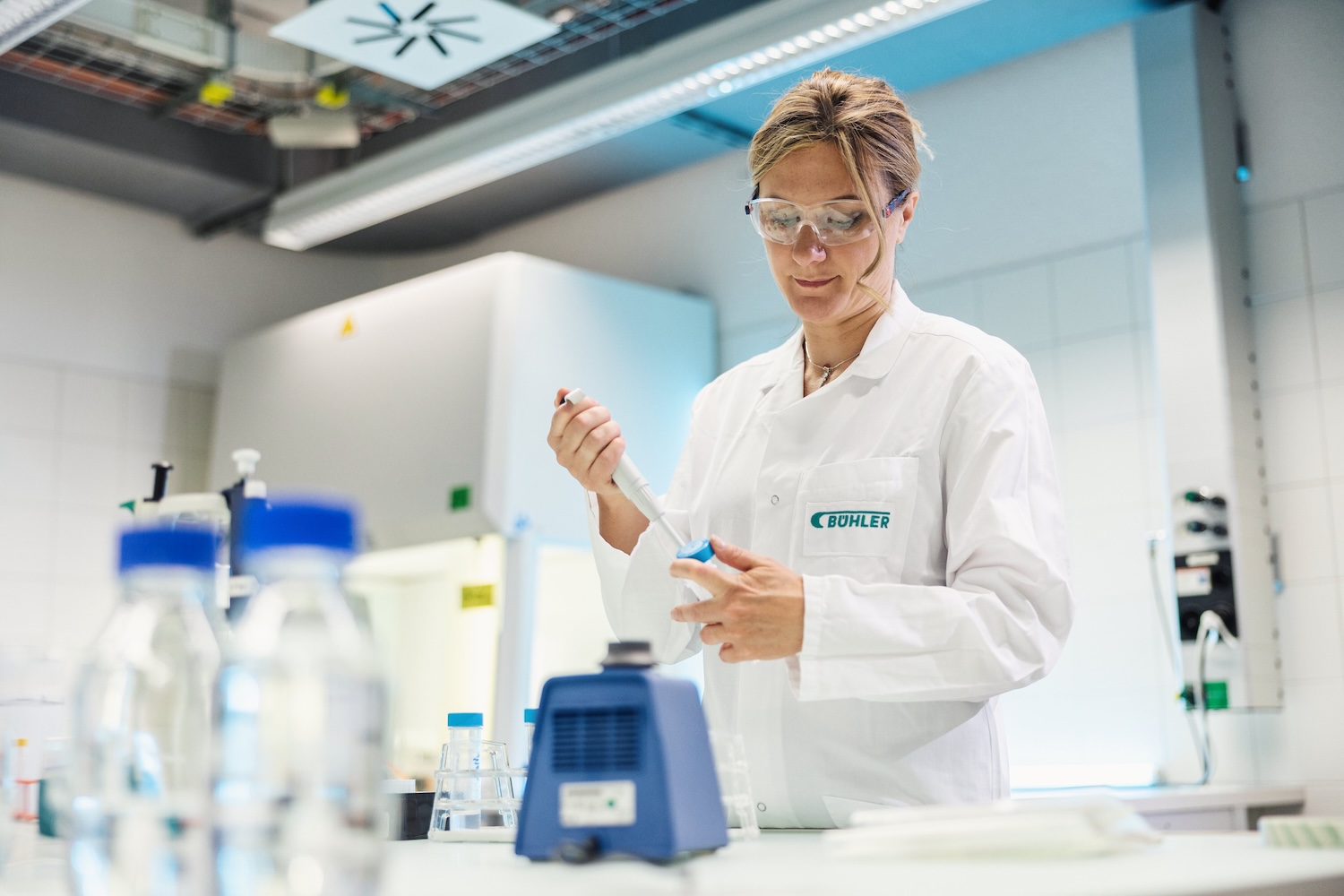
Bühler Networking Days 2025: Scaling sustainable food solutions through collaboration

Bühler Networking Days 2025: Scaling sustainable food solutions through collaboration
The Future of Food: Givaudan, Nestlé R+D Accelerator Lausanne and FoodHack launch the 2025 FoodTech World Cup
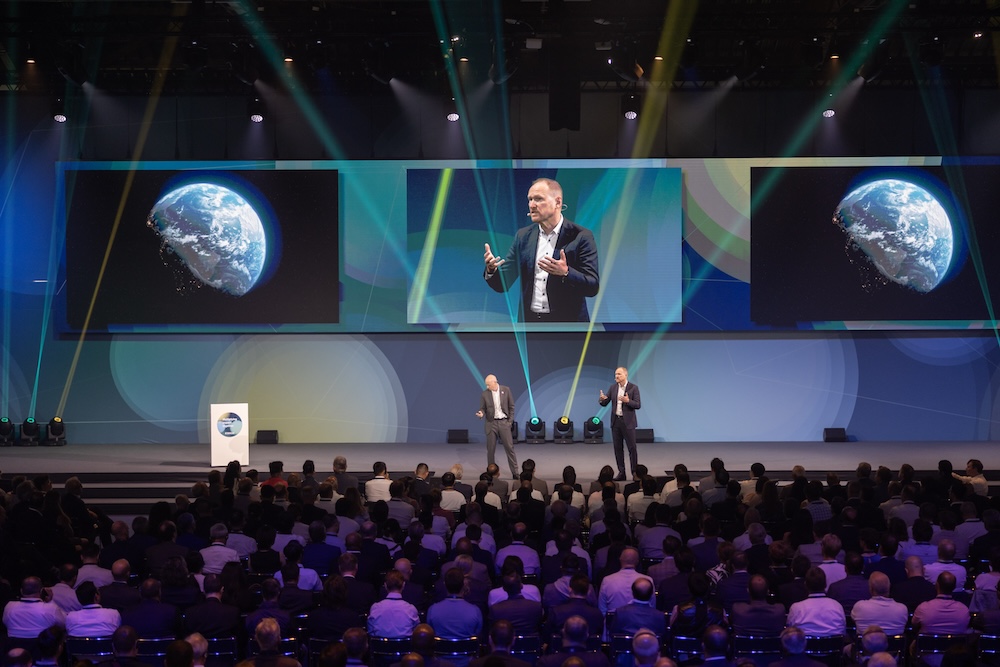
More than 1,200 industry leaders from 90 countries gathered at Bühler Group’s headquarters in Uzwil to explore how to sustainably feed and move 10 billion people by 2050. Under the theme “Multiplying impact together,” the Bühler Networking Days 2025 showcased how innovation, collaboration, and bold leadership can drive the transformation needed across the global food system.

Held every three years, Networking Days has become a flagship event for the food, feed, and mobility sectors – bringing together decision-makers, researchers, and technology providers to exchange solutions and foster collective action. This year’s edition was the largest and most diverse to date, underscoring the event’s growing role as a platform for accelerating progress toward sustainable value chains.

Big change needs bold leadership

Speaking at the event, Bühler Group CEO Stefan Scheiber described the power of collaboration and cooperation to multiply the impact of innovation. “Every breakthrough, partnership, and bold decision has the potential to create ripples – spreading knowledge, inspiring action, and driving progress,” he said. “But their true power lies in the multiplier effect: when these ripples connect, they create waves of change. By working together, businesses and industries don’t just add incrementally to progress – they accelerate it by compounding their influence and scaling solutions far beyond what any single effort could achieve.”

Ian Roberts, Bühler Group CTO said: “It is so clear now that we must act with focus and collaboration to bring the impact necessary to preserve the healthy state of our planet. I am energized by the potential and willingness shown by our 1,200 guests – not to simply talk, but to build concrete actions and to share what they have already achieved to accelerate group learning and impact multiplication.”

The Networking Days 2025 was the fourth Bühler Group Networking Days event. The Swiss-based technology group has convened leaders from the industries it serves once every three years since 2016. Attendees at this year's event traveled from 90 countries and six continents.

Sustainability: a business imperative

Throughout the event, speakers emphasized that sustainability is not just a responsibility – it’s a driver of resilience and competitiveness. Professor Johan Rockström, Director of the Potsdam Institute and architect of the Planetary Boundaries framework, noted: “We must think of sustainability as central to competitiveness, security, stability, and health. When a decision improves your performance, attracts talent, opens new markets, or enhances resilience, communicate that clearly: show that sustainability is not a burden – it’s a competitive advantage.”

Bühler reported significant progress on its 2019 pledge to reduce energy, waste, and water in key value chains by 50% by 2025. Backed by nearly CHF 500 million in R&D investment, the company is delivering solutions that enable customers to reduce environmental footprint while boosting profitability. In some value chains, such as chocolate and aluminum, combined savings potential now exceeds 70%.

From digital process control to machine refurbishment and predictive maintenance, Bühler’s solutions offer practical paths toward more efficient, circular production systems that deliver measurable impact.

Driving transformation through circularity and innovation

Several sessions focused on how rethinking business models can unlock new value. Italian producer Andriani shared how circularity initiatives, supported by Bühler, enabled the company to turn side-streams into new product lines – from pet food to nutritional supplements. Similarly, illycaffè is now repurposing coffee byproducts for use in cosmetics and advancing regenerative practices with its growers.

IMD Professor Julia Binder encouraged businesses to approach circularity as a strategy for growth: “The circular economy is an ecosystem play – it’s very customer-centric, it’s extremely collaborative. The companies that really make money in the future will be those that use the license to innovate. I encourage you to start from the future back: envision one or two transformational innovations that could redefine your business, then define the steps you need to take to get there.”

Safe, healthy, affordable food that tastes good

A key discussion centered on the challenge of delivering nutritious, affordable, and appealing food to a growing global population. Mars Chief Science Officer Abigail Stevenson highlighted the rising importance of nutrient density, with more whole grains, legumes, and nuts appearing in packaged foods. She also emphasized the need for cross-sector collaboration: “Looking beyond our industry is critical for broadening perspectives and for really thinking differently."

Florian Schattenmann, CTO at Cargill, underlined the complexity of balancing priorities: “Products need to offer the right taste, the right nutrition profile, the right sustainability profile, and the right cost – and of those, taste is king.”

The conversation also turned to building food systems in underserved regions. Naval Group CEO Simon Tecleab outlined his company’s journey in expanding food processing infrastructure across East Africa and building a new food park in Angola in partnership with Bühler. Mandla Nkomo, CEO of Partners in Food Solutions, stressed the importance of inclusive innovation: “Talent is evenly distributed, but opportunity isn’t. Let’s build an opportunity superhighway, one factory at a time.”

Education, leadership, and bold decisions

The event concluded with a powerful reminder: technology alone is not enough. As Ranjay Gulati of Harvard Business School put it, “The currency to survive in an era of uncertainty is courage.” Guests were urged to act boldly, invest in leadership, and accelerate implementation of proven solutions.

CEO Stefan Scheiber closed the event by urging attendees to act boldly: “We need the courage to take decisive action – action that accelerates growth and drives the sustainable transformation of businesses, value chains, and entire industries. By doing this, we will shape a better future for our businesses and our societies, and truly multiply impact together.”

Never miss a Swiss food innovation morsel.

Latest News
Valley partner Nestlé’s Nescafé surpasses 2025 regenerative agriculture goal

Valley partner Nestlé’s Nescafé surpasses 2025 regenerative agriculture goal

The Future of Food: Givaudan, Nestlé R+D Accelerator Lausanne and FoodHack launch the 2025 FoodTech World Cup
Nescafé, Valley partner Nestlé's largest coffee brand, sourced 32% of its coffee from farmers implementing regenerative agriculture practices in 2024. This achievement surpasses Nescafé's 2025 goal of 20%, reflecting the strong traction that regenerative agriculture is gaining within coffee farmers, according to the latest Nescafé Plan 2030 Progress Report, released on Wednesday, 11 June.

Nescafé is supporting coffee farmers' transition to practices like optimized fertilization, soil cover, mulching and composting, with the aim of improving productivity and lowering their costs. The adoption of these practices is also helping reduce greenhouse gas emissions (GHG) in coffee. In 2024, participants of the Nescafé Plan achieved a reduction ranging from 20% to 40% of GHG emissions per kilogram of green coffee. 

Need for resilient supply chains

The challenges posed by climate change were acutely felt in the coffee sector this past year, across several coffee-producing countries, where farmers experienced adverse weather conditions. This has resulted in record-high global prices for both arabica and robusta coffee and less coffee available, underscoring the urgent need for more resilient coffee supply chains.

Axel Touzet, Head of Nestlé's Coffee Brands Strategic Business Unit, said: "Regenerative agriculture is at the heart of the Nescafé Plan and our efforts to build resilience in our coffee supply chain. This third Progress Report shows that farmers are becoming increasingly aware of the benefits of these practices, as shown by the increased adoption rates. This encourages us to continue the work we do with our partners, suppliers and farmers in the regions where we source our coffee."

As coffee trees age, they naturally become less productive and more susceptible to the effects of climate change, which can further diminish yields. Renovating and rejuvenating coffee farms is essential to maintain productivity, and in 2024, the Nescafé Plan continued its longstanding coffee plantlet program by distributing 21 million coffee plantlets to support improved yields and climate adaptation.

The Nescafé Plan currently covers more than 400 000 hectares of coffee farmlands. In 2024, over 1 400 of the Plan's field staff and agronomists trained more than 200 000 coffee farmers in 16 countries in regenerative agriculture. These experts are actively assisting farmers with topics, such as soil erosion and runoff, organic matter management and optimized fertilization.

Through the Nescafé Plan, Nestlé and its partners continue to support farmers to help create a strong and resilient coffee supply chain for the future.

Never miss a Swiss food innovation morsel.

Latest News

Swiss startup honored for sustainable innovation in St.Gallen: UpGrain wins Startfeld Diamant 2025

Swiss startup honored for sustainable innovation in St.Gallen: UpGrain wins Startfeld Diamant 2025

The Future of Food: Givaudan, Nestlé R+D Accelerator Lausanne and FoodHack launch the 2025 FoodTech World Cup
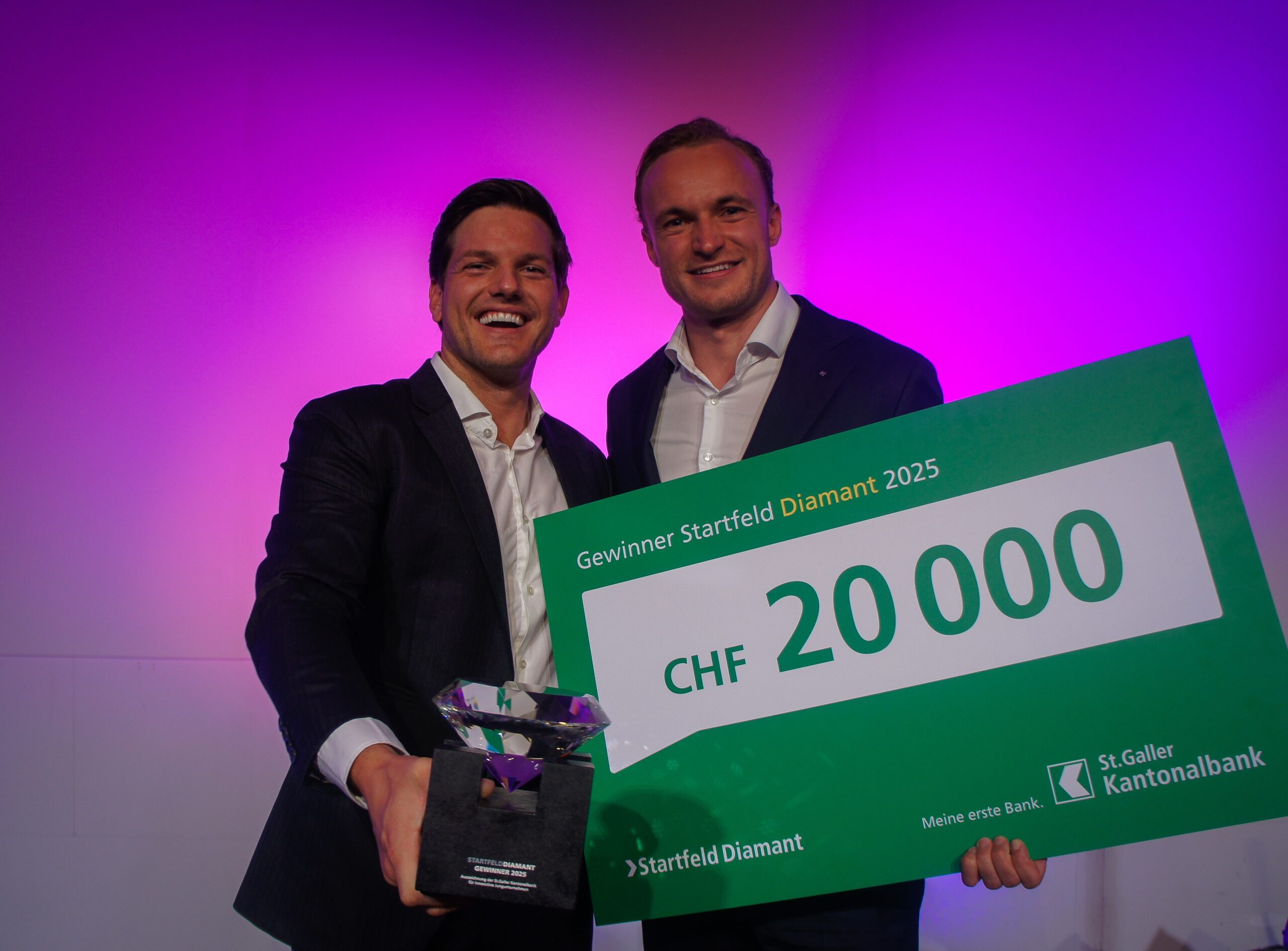
Food made from brewery byproducts: the Swiss startup UpGrain has been awarded the prestigious Startfeld Diamant 2025 in St.Gallen. The prize, presented by the St.Galler Kantonalbank, recognizes outstanding companies from Eastern Switzerland that demonstrate innovation, entrepreneurial spirit, and a strong vision for the future.

“This award is a great honour for our team and proves that our vision for sustainable, circular food systems is setting a new standard,” says Vincent Vida, CEO and co-founder of UpGrain.

UpGrain specialises in the sustainable use of brewer’s spent grain – a previously underutilized byproduct of the beer brewing process. The young company transforms it into nutrient-rich ingredients for the food industry.

Strong partnerships with impact

In collaboration with Brauerei Locher, UpGrain launched Europe’s largest food upcycling facility last year. The plant processes around 25,000 tons of spent grain per year, converting it into proteins, fibers, and other valuable nutrients. These ingredients are used as flour substitutes, texture enhancers in baked goods and meat alternatives, and as the basis for protein-rich snacks and beverages. This process
helps reduce CO₂ emissions, conserves water, and lowers the demand for farmland typically used for conventional protein sources like wheat or soy.

Pioneering Food Innovation from Appenzell.

In March 2025, UpGrain was already honored with the Swiss Sustainability Impact Award. Now, with the Startfeld Diamant, the company has received its second major national award in just a few months – underscoring the relevance and impact of this innovative startup from Appenzell.

„UpGrain impressed us with its sustainable innovation. The startup is not only scalable, but also delivers long-term ecological value", says Bettina Hein Göldi, a member of the jury.

Vincent Vida emphasizes: "With the Startfeld Diamant behind us, we’re more motivated than ever to drive the transformation of the food industry forward."

Sign up for quarterly Swiss food innovation updates.

Latest News

Nestlé to strengthen its capabilities in bio tech and deep tech, enabled by leaner, more agile R&D organization

Nestlé to strengthen its capabilities in bio tech and deep tech, enabled by leaner, more agile R&D organization

The Future of Food: Givaudan, Nestlé R+D Accelerator Lausanne and FoodHack launch the 2025 FoodTech World Cup
Nestlé today announced the strengthening of its R&D expertise in biotechnology and the creation of a new center for deep tech, to boost its innovation pipeline and increase efficiency in research, innovation and operations.

Laurent Freixe, CEO of Nestlé S.A. said: "These new capabilities in bio tech and deep tech will fuel growth by meeting changing consumer needs and accelerating the digital transformation of Nestlé. This is about putting the Nestlé Virtuous Circle in action: unlocking investment through efficiencies to drive more focused and impactful innovation and growth."

Enhanced R&D expertise in cutting-edge biotechnology and clinical research will lead to new nutritional solutions. This will further bolster Nestlé’s consumer-centric innovation pipelines for maternal, early life and medical nutrition, and support new growth platforms such as healthy longevity, women’s health and weight management. Science-based solutions will also be leveraged for Nestlé’s pet care business, including pet therapeutics. New capabilities include the development of the next generation of screening assays, enhanced capabilities in precision fermentation, as well as a re-enforced clinical research program. These competences will drive significant advances in precision nutrition and the development of new generations of highly effective bio-actives and biotics including post- and synbiotics.

The creation of a center for deep tech will be a first-of-its-kind in the food and nutrition industry. Nestlé will build on existing expertise in sensor systems, solutions for product recognition, remote control and display solutions. The new center will screen, test and develop new generations of sensors, robots, coding systems, high-performing AI and virtual/mixed reality solutions to increase efficiency in research, innovation and operations. New technologies will enable the development of smart coffee machines, innovative solutions for precision nutrition, self-controlling equipment and new solutions for dynamic quality assurance. The center will be officially opened in the first half of 2026, at the existing facilities of the Nestlé System Technology Center in Orbe, Switzerland.

Stefan Palzer, CTO of Nestlé S.A. said: "We continue to transform our R&D organization to embrace science and technology trends and to seize current and future growth opportunities. The industry-leading biotechnology capabilities will deliver new ingredients with clinically proven bio-efficacy for precision nutrition for people and pets along their entire lifespan. The upscaling of our unique capabilities in deep tech are key to maximize efficiency in innovation and operations. And all of this is powered by a leaner and more agile R&D organization."

Nestlé’s global R&D organization responds to business and consumer needs, as well as to environmental and technology trends by leveraging its industry-leading science and technology platforms. In close collaboration with the commercial teams and with a clear focus on fewer but impactful projects, R&D develops differentiating product and technology innovation fueling Nestlé’s growth.

Never miss a Swiss food innovation morsel.

Latest News

Bühler integrates NapaRoast technology to add pasteurization for safe food processing

Bühler integrates NapaRoast technology to add pasteurization for safe food processing

The Future of Food: Givaudan, Nestlé R+D Accelerator Lausanne and FoodHack launch the 2025 FoodTech World Cup
Swiss tech leader Bühler Group has integrated NapaRoast’s advanced steam vacuum pasteurization technology into its nut processing portfolio, enhancing food safety, efficiency, and sustainability. This strategic move positions Bühler as a comprehensive solution provider amid growing global demand for healthy, traceable snacks.

Swiss technology company Bühler Group has integrated NapaRoast’s pasteurization and roasting technology. With the addition of the NapaRoast steam vacuum pasteurization technology to its broad portfolio, Bühler strengthens its market position in the nuts processing industry to cater even better to trends such as healthy snacking, regulatory compliance, and sustainable practices. “The integration of NapaRoast puts us in the unique position to be a one-stop shop for our customers. The best-in-class pasteurization process guarantees food safety and traceability, and, in combination with our proven technologies for nuts processing, added efficiency. With the integration of the NapaRoast solution into our portfolio, we look forward to sharing the benefits of this technology and serving the NapaRoast customer base – not just for nuts, but for many of the food processing solutions Bühler offers as well,” says Cathrin Flühler, Head of Market Segment Nuts at Bühler.

The global nut market is growing at an annual rate of up to 7%. The popularity and reputation of tree nuts and ground nuts as healthy snacks due to their high levels of protein, fiber, and antioxidants is growing steadily. With this developing worldwide demand comes an increased focus on food safety. NapaRoast’s steam-vacuum pasteurization process provides the best answer to the stringent microbial contamination requirements that processors are facing today. “Our pasteurization process offers a high pathogen reduction of >5 log in nuts, seeds, and all low moisture foods. During our process steam is used to raise the surface temperature of the product to kill pathogens effectively,” explains Dr. Cameon Ivarsson, Co-Founder of NapaRoast. By pasteurizing with saturated steam, the products can be treated effectively at lower temperatures in a partial vacuum. The high efficiency of saturated steam does not require a drying step thus protecting the quality, texture, color, and flavor of the product.

The missing piece to the puzzle

“We already covered the most important steps such as transport, sorting, storage, roasting, and grinding in our portfolio. When it came to the pasteurization process, however, we had to rely on solutions from suppliers. Now, our customers can get all the important technologies along the value chain from Bühler, which creates valuable synergies for everyone involved. This collaboration is a perfect match between two companies with the same values such as quality, ingenuity, and creating value for customers and consumers,” says Cathrin Flühler.

Cameon Ivarsson adds: “With Bühler, there is a huge opportunity to multiply the impact of our pasteurization technologies across the globe. Their large customer base paired with decades of experience in plant and process engineering will get the most out of the technology. We could not be more excited about the future for nuts processing.”

The NapaRoast pasteurization technology is installed in over 40 processing plants around the world, mainly in the United States, Europe, and Africa. Pasteurization and roasting lines are offered in throughputs ranging from 1 tonne per hour to 6 tonnes per hour. Because of the unique design of the process where the product is treated in bulk bins, there is no breakage, dust, and waste, and down time for product changeover is minimized. Its flexibility allows for the processing of whole pieces, chopped ingredients or powders as well.

A unique playground for nuts processors

To showcase its position in nuts processing and to give customers the unique opportunity to test and train along the value chain, Bühler has upgraded its Flavor Creation Research and Training Center in Uzwil, Switzerland. “Of course, the pasteurization step is integrated into our state-of-the-art facility for our customers to get first-hand experience of the technology. We are excited to open our center in August this year for trials and to invite them to the first exclusive training session on November 4 and 5,” says Cathrin Flühler.

More information about Bühler’s Research and Training Centers can be found here.


Never miss a Swiss food innovation morsel.

Latest News