Bühler launches OptiBake, the world’s first inductively heated wafer oven

Bühler launches OptiBake, the world’s first inductively heated wafer oven
The Future of Food: Givaudan, Nestlé R+D Accelerator Lausanne and FoodHack launch the 2025 FoodTech World Cup
Bühler Group’s new OptiBake oven revolutionizes industrial baking with inductive heating technology that delivers precise temperature control, superior wafer quality, and up to 50% energy savings. As the first of its kind, it sets a new sustainability standard by eliminating direct emissions and reducing operational costs—marking a major leap toward zero-emission wafer production.

“With OptiBake, we set out to deliver more than just a new wafer oven. We challenged ourselves to combine exceptional wafer quality with unprecedented flexibility, while enabling customers to contribute to sustainability,” says Sandra Lutz, Head of Business Unit Wafer at Bühler Group. “Our electric induction heating technology responds to the global demand for higher quality and efficiency, reduced operational costs, and a significantly lower carbon footprint.”

For more than a decade, Bühler’s has focused on developing technologies that support customer growth while reducing the environmental footprint of production. OptiBake offers a range of unique advantages that set it apart from conventional gas-fired or electric wafer ovens. While conventional electric heating has been used for decades, inductive heating offers greater energy efficiency and new possibilities for precise control.

OptiBake’s induction heating system uses electromagnetic fields to generate heat directly within the baking plates, dispensing with open flames and combustion. The result is a process that produces no direct emissions of carbon dioxide (CO2), carbon monoxide (CO), or nitrogen oxides (NOx). Energy consumption can fall to 50%, when compared to gas-fired or electrical wafer ovens, reducing the environmental impact. These emission reductions can also lead to tax and licensing advantages, along with increased subsidy opportunities.

The environmental benefits of the oven are even greater when powered by a low-carbon electricity mix. In such settings, it can significantly reduce CO₂ emissions and support broader sustainability goals. By eliminating reliance on natural gas, the system also contributes to energy security and supply resilience.

Enhanced quality and efficiency

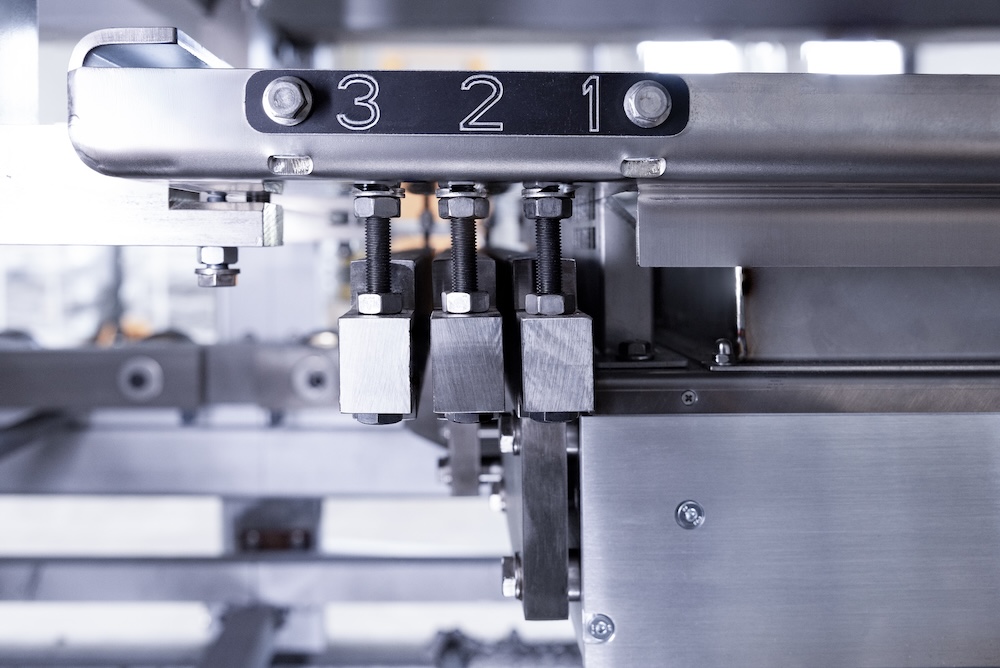
At the heart of the oven’s performance is a newly engineered baking plate design, specifically developed to produce the highest wafer sheet quality in combination with the inductive heating system. Paired with an innovative system for individual plate temperature control, it ensures precise and consistent heat distribution throughout the baking process. The ability to fine-tune temperatures plate by plate not only improves product quality but also allows for exceptional flexibility and responsiveness – key for handling recipe changes or varying production demands. In fact, induction heating provides the ideal foundation for precise process control, enabling the system to respond quickly and efficiently to varying production requirements, ensuring consistent product quality and optimized energy use.

The low baking chamber temperatures reduce life-cycle costs by minimizing thermal stress on components such as cables and bearings. OptiBake also creates a quieter production environment by eliminating burner nozzle flow noise and simplifies heat recuperation due to the absence of combustion products. Furthermore, the new oven allows for 100% raw material utilization, as baking scraps do not burn and can be repurposed. Its operation is safe with no fire hazard as there are no open flames in the baking chamber. The system is also designed to operate without posing any electromagnetic compatibility (EMV) risks, ensuring safe and interference-free integration into industrial environments.

“With rising CO2 taxes, volatile energy prices, and changing consumer demands, companies must act now to stay ahead,” says Johannes Greil, Head of Product Management Wafer at Bühler. “OptiBake represents a milestone in industrial baking technology, delivering increased quality, efficiency, and flexibility. This powerful combination equips customers to thrive today and remain competitive in the years to come.”

Innovation award in hand

OptiBake has also been awarded the Lower Austrian Innovation Award 2025. Out of approximately 80 submissions and nearly 30 projects selected in the final phase, Bühler’s OptiBake stood out and emerged as the overall winner, receiving the Karl Ritter von Ghega Prize. “Earning this award highlights not only our pioneering innovation but also the dedication, passion, and teamwork that drive our work. A sincere thank you to everyone on the team as well as our network of customers, experts, and academic partners, who were fully engaged in the development process,” says Sandra Lutz.

Loacker, the Italian confectionery company from South Tyrol specializing in wafers, chocolate, and related products, began collaborating with Bühler in 2020 to explore zero-emission wafer production. “We are now delighted to be Bühler’s pilot partner, as this project has been on our minds for years and aligns perfectly with our sustainability strategy and our core values, which have been passed down through generations. As a family-owned company, we are committed to creating a positive social and environmental impact throughout the entire lifecycle of our products,” says Andreas Loacker, Vice Chairman of the Board.

“Looking ahead, we expect OptiBake to maintain the high quality of our wafers while significantly improving energy efficiency. Our goal is to take a major step towards zero-emissions production, supporting our decarbonization targets. This transition is essential to reducing our environmental footprint and making our baking process more sustainable," adds Markus Valersi, Project Manager Engineering at Loacker.


Never miss a Swiss food innovation morsel.

Latest News

Impact Digest | Controlled Environment Agriculture: How is technology shaping the future of farming?

Impact Digest | Controlled Environment Agriculture: How is technology shaping the future of farming?

Impact Digest | Cultured foods: How can we drive impact at scale?

As the global population is predicted to approach 10 billion by 2050, the demand for sustainable, efficient food production systems has become a critical challenge.

Controlled environment agriculture (CEA) – an advanced farming method that optimises plant growth by regulating conditions in enclosed systems – is one way innovators are tackling this issue.

At our Impact Forum: Controlled Environment Agriculture on 11 March 2025, we invited three expert speakers to discuss the current situation in conversation with Valley CEO Christina Senn-Jakobsen. Here’s what we learned…

Key Takeaways 
  • Future food security: Resource-efficient agricultural systems are designed to produce food year-round in controlled conditions and could be a key part of the solution to feeding a world growing faster than the crops needed to sustain it.
  • Environmental benefits: The benefits of CEA systems include reduced water use and nitrogen emissions, higher yields, and limited use of pesticides.
  • Technological innovations: Advances in hydroponics, aeroponics, and vertical farming are accelerating growth in the sector, with AI, the IoT and automation optimising production efficiency.
  • Challenges in scaling and implementation: High initial costs and energy consumption are major barriers to scaling CEA – integrating renewables into tech-enabled farming systems will be crucial.
  • The importance of public perceptions: The future of indoor farming also depends on how well the industry communicates its value to the public and combats any misinformation about the technology and its safety.
  • Industry collaboration: Cross-sector partnerships can drive innovation, but there is a need for greater policy support and funding to achieve this. 
  • Our three expert speakers shared a vision for CEA’s role in global food security and sustainability, and the role of Switzerland in testing out solutions on a smaller scale initially
Switzerland: a living lab for food system innovation
Insights from Dr Fabian Wahl, Executive Board Member at Agroscope 

Fabian from Agroscope explained his research on cultivating single-cell microalgae as an energy-efficient and sustainable protein alternative. He noted that while traditional food systems rely on animal- and plant-based products, microorganisms - specifically bacteria - represent the largest and most diverse biomass on Earth, yet are largely untapped for food production. 

As microalgae can be cultivated with minimal environmental impact, they offer a genuinely superior alternative to conventional agriculture. They can be grown on rooftops or in industrial /agricultural spaces, require no arable land, no synthetic pesticides and significantly less water.

From a regulatory perspective, Fabian noted that only four species of microalgae are currently approved for human consumption, though more species are under review. He also acknowledged the slow approvals process is limiting the industry’s ability to fully exploit the potential of microalgae.

Fabian sees Switzerland as a "living lab" for food system innovation, suggesting that the country could develop and refine CEA technologies before scaling them globally to meet the needs of a growing population.

Indoor farming: A complementary solution for urban food production 
Insights from Bruno Cheval, CEO of CleanGreens Solutions 

Bruno highlighted the challenges faced by traditional agriculture, including unpredictable weather patterns, lack of resources and labour, and disruptions from global events like COVID-19 and war. In light of this, Bruno explained the benefits of indoor farming: less reliance on external climate conditions, optimised resources and automating some of the labour involved. He also touched upon the importance of data-driven farming and how AI and IoT can help optimize lighting, temperature, and resource use.

CleanGreens uses an innovative aeroponics system, where plant roots are suspended in the air and irrigated by a robot, resulting in higher yields compared to traditional farming and other hydroponics. The system has already seen success in France and Kuwait, with plans to expand further into the Middle East, North America and beyond. 

Bruno also acknowledged the high energy consumption and costs associated with CEA. He stressed that scalability will depend on innovations in energy efficiency, such as integrating renewable energy into CEA systems. He emphasised the need for continued investment and collaboration, and argued that CEA should not be seen as a replacement for traditional farming, but rather a complementary solution for urban food production. 

Crafting a new narrative: consumer perceptions of CEA 
Insights from Martino Corti, Head of Innovation at UMAMI

Martino emphasised that while many discussions focus on the technical aspects of CEA, it is also important to understand how customers perceive indoor farming and whether they will accept new methods of food production.

Martino pointed out that public awareness and trust in CEA are still evolving. Many consumers value sustainability and local food production, but may harbour misconceptions about indoor-grown produce or lack knowledge about its safety. He stressed that educating consumers on the benefits of sustainable farming will be essential to drive adoption.

From a technical perspective, he shared how UMAMI’s aquaponics-based indoor farming system integrates fish, shrimp, and other aquatic organisms to create a closed-loop ecosystem. This system naturally fertilizes plants without synthetic fertilizers, significantly reducing waste and water usage.

Martino concluded by reinforcing that while technology is key, market acceptance, storytelling, and branding will play a major role in the success of CEA in the food industry. The future of indoor farming will depend not only on technical improvements but also on how well the industry communicates its value to the public. ​

Hungry for more?

Join us for our next Impact Forum on nutrition and longevity on 15 April

Latest News

Seven things we learnt at our State of Play event on side stream valorisation

Seven things we learnt at our State of Play event on side stream valorisation

Impact Digest | Cultured foods: How can we drive impact at scale?

The Valley’s State of Play event on side stream valorisation brought Swiss industry leaders, innovators, startups and researchers together in Bern to explore how side streams can be upcycled into valuable and nutritious products - for the benefit of both planet and people.

What?

In case you missed it, side stream valorisation is all about finding new ways to transform by-products from food processing waste streams into new, high-value products. 

State of Play attendees were treated to fascinating insights on the topic from our speakers, enjoyed an expert panel discussion and Q&A, and got the chance to explore topics more deeply in smaller discussion groups. There was also plenty of time for networking and sampling some delicious upcycled products in person.

Who?

Linda Grieder-Kern of Rethink Resource, kicked things off with a discussion on the role of side streams in the circular economy - and in Switzerland. Next we heard from Nicolas Dorsaz of Bühler Group about the role of technology and how it is making side stream valorisation appeal to their customers. 

We also took a whirlwind tour of the current market from several innovators in the space – from the applications of spent brewers’ grain with William Beiskjayer from UpGrain and Brauerei Locher’s Aurèle Meyer, to the potential of okara, a byproduct of tofu production, via Flavio Hagenbuch of Luya. Fabian Weinländer from Blattmann Schweiz also delved into the opportunities of potato peel and wastewater. A presentation from Tiffany Abitbol, from EPFL’s Institute of Materials, helped to summarise some of the varied technologies for valorising side streams. 

In panel discussions, a Q&A session and deep dives, we also heard from Clemens Rüttimann from Food Hub Wädenswil, Doris Erne from Wheycation (upcycled whey products) and Karin Friedli from Circunis (an online food platform for surplus waste). 

Thanks to all of the experts and everyone who joined us! 

Our top takeaways

💡 Side streams are an untapped resource 
  • Side streams are the byproducts of food production, distinct from food waste. Upcycling these materials can both reduce emissions and improve food security. 
  • Food waste is a massive contributor to climate change - and side streams offer a way to reduce waste and create value.
  • Spent grains, okara, potato peels and starch slurry are key growth areas and contain nutritional and functional components that can be upcycled into valuable ingredients.
🎤  What the experts said 
  • Nicholas (Bühler): “The food industry generates 2 billion tonnes of side streams annually, yet many are underutilised or simply discarded”.
  • William (UpGrain): “Spent grains alone could provide 24% of the world’s future food needs.”
  • Fabian (Blattman Schweiz): “When potatoes are washed and cut for processing, starch leaks into the water, creating a starch-rich slurry. This is often discarded, but it could be converted into food-grade glucose, reducing food waste and improving circularity.”
💡 Technology is a key enabler
  • Technological innovations are making side streams more functional, safe, and economically viable for food and non-food applications.
  • Fermentation, for example, is unlocking nutritional benefits and improving taste and texture in plant-based proteins and enhancing nutrient bioavailability.
  • However, businesses can be hesitant to adopt new processes due to cost, demand, and regulatory hurdles. 
🎤 What the experts said 
  • Flavio (Luya): “Fermentation technology improves the taste and texture of plant-based proteins, making side stream-based products more appealing.”
  • Tiffany (EPFL): “Mycelium growth on okara, liquid fermentation, and 3D-printed food applications are emerging solutions. However, many side streams spoil quickly due to high moisture content.”
  • Fabian (Blattmann Schweiz): “Existing food infrastructure can process side streams, but we need innovative tech to unlock more value.”
💡Profitability must be built in from the start
  • Side stream valorisation startups need a solid business case from day one. Without financial sustainability, projects simply can’t scale. But many focus on sustainability first, rather than profitability.
  • Upcycled food startups often struggle with high costs and uncertain demand. It can be difficult to reach profitability due to costly R&D and processing, while many impactful ideas never get off the ground due to lack of capital.
  • Partnerships with large food producers can help to reduce costs and improve supply chain integration.
🎤 What the experts said 
  • Clemens (Food Hub Wädenswil): Startups often begin with small-scale production, but scaling requires major investment. Large food companies have efficient processing systems, but are hesitant to invest in new sidestream projects without clear demand.
  • Aurèle (Brauerei Locher): Brauerei Locher’s business model integrates spent grains into commercial food products and partners with other companies and innovators in the industry to keep costs down. 
  • William (UpGrain): UpGrain works directly with bakeries and pasta makers to integrate spent grain flour into their products, ensuring a steady revenue stream.
💡 Health trumps sustainability 
  • While sustainability is rising up the priority list, consumers still prioritise taste, price, and health benefits over environmental claims.
  • Sustainability is more effective in B2B markets where buyers (large food manufacturers, retailers) care about sustainability because they must meet corporate ESG goals. 
  • If an upcycled product doesn’t taste good or isn’t priced competitively, consumers won’t buy it - no matter how sustainable it is.
🎤 What the experts said 
  • Flavio (Luya):This shift is especially evident in plant-based and alternative protein markets, where early sustainability-focused messaging is now being replaced with nutrition- and taste-driven marketing.”
  • Fabian (Blattmann Schweiz): “B2C consumers (everyday shoppers) prioritise taste, price, and convenience over sustainability whereas B2B customers need to meet sustainability reporting requirements.” 
  • Christina (SFNV): “Some major food companies are removing sustainability claims from their marketing due to greenwashing concerns, instead repositioning upcycled ingredients as functional and superior alternatives.”
💡 Fibre could be the next big thing
  • Several food production side streams are naturally rich in fibre: think spent grains left over from brewing beer, the leftovers of tofu production (okara), wheat bran from the milling industry and potato peels. 
  • Nutritionists predict fibre will become a top consumer priority in the next 5-10 years.
  • High-fibre content affects texture, water absorption, and extrusion processes (e.g. making pasta with spent grain). These are key challenges when upcycling side streams into new products. 
🎤 What the experts said 
  • William (UpGrain): “Many European consumers don’t get enough fibre in their diet, creating a market opportunity for fibre-rich upcycled foods.”
  • Linda (Rethink Resource): “Demand for products high in fibre is increasing due to growing awareness of the gut health benefits.”
  • Fabian (Blattmann Schweiz): “Potato peels and starch slurry are high in resistant starch, a fibre that supports gut health and could appeal to health-conscious consumers.” 
💡 It’s not just for food 
  • Side stream valorisation isn’t limited to food applications. 
  • Upcycled ingredients can also be used in other industries like pet food, packaging, cosmetics and bioplastics.
🎤 What the experts said 
  • Tiffany (EPFL): “Okara-based biodegradable films could be a replacement for plastic packaging.”
  • Clemens (Food Hub Wädenswil): “Side streams can be used in animal feed and even construction materials.”
  • Fabian (Blattmann Schweiz): “Potato starch from wastewater can be turned into glucose or bio-based plastics.” 
💡 Greater transparency = new partnerships
  • Many food producers generate large amounts of side streams, but hesitate to disclose side stream availability, making it difficult for startups to source raw materials. 
  • A shared database or industry-wide initiative where companies could confidentially report side stream volumes to match them with upcycling startups could be a potential solution. 
  • Collaboration between Bühler and startups to develop new protein ingredients from side streams is already underway.
🎤 What the experts said 
  • Linda (Rethink Resource): “Data on side stream nutritional composition is available but not widely shared.”
  • Fabian (Blattmann Schweiz): “More transparency in side stream supply chains would help connect producers with upcycling innovators.” 
  • During the panel discussion, our speakers highlighted how companies are often reluctant to disclose how much they waste due to PR concerns.

Switzerland: a side stream leader

The session concluded with a Q&A session which covered consumer perception, technological challenges, funding gaps, and collaboration in sidestream upcycling. And one theme emerged again and again: Switzerland as a side stream leader. 

This was a major theme throughout the event, emphasized by multiple speakers and in the panel discussion. Switzerland already has strong research institutions, food tech startups, and sustainable agriculture. And here at the Valley, we are working on developing a national ecosystem for upcycling. With improved coordination, Switzerland could become a global hub for side stream innovation.

Huge thanks to Bern Economic Development Agency for supporting this event!

Hungry for more?

Our next State of Play event on Regenerative Farming will take place on the 4th June - and remember each Valley partner can benefit from two complimentary tickets.

Latest News

Christina Senn-Jakobsen: Taking a bite out of food system myths

Taking a bite out of
food system myths

By Christina Senn-Jakobsen,
CEO, Swiss Food & Nutrition Valley

On April Fools’ Day, we’re prepared for the hoaxes that weave their way into our favourite programmes and news platforms. But what about the myths that persist in our everyday lives - the misconceptions that shape how we, our families and friends think about the food we eat? 

Here at the Valley, we bring together the brightest minds to tackle the world’s most pressing food challenges - and it all starts with working with facts, not fiction. So this quarter, I decided to team up with colleagues from across the Swiss food ecosystem to set the record straight.

1. “There’s not enough food to feed us all”

The world produces more than enough food to nourish all the 8.2 billion people on this planet. Yet hunger and malnutrition persist - not because of scarcity, but due to issues like distribution challenges and food loss and waste.

Experts estimate that a third of all food produced is never eaten. In low-income countries, this food often never reaches consumers due to a lack of secure storage facilities and refrigeration. In high income countries private households are typically responsible for the largest proportion of food waste

The good news is that many innovators are already working on developing solutions in this space. From tackling pre- and post-harvest losses through edible natural coatings to food redistribution and side stream valorisation, actors all along the value chain can contribute to tackling this issue. 

By redistributing surplus food ingredients from the food industry into the hospitality sector and to individual households, we enable cross-fertilization between different ecosystems. This way, the true value of our carefully produced food is better appreciated, and we mutually work towards a more circular food industry, helping reduce losses along the value chain.

Daniel Koch

Managing Director, rohstoffborse.ch by Sanvitafood GmbH

2. “All processed food is unhealthy”

Today, processed food is often seen as a shorthand for junk food - but processing itself isn’t the problem. Processing is a tool that has helped safely and nutritiously feed the world for centuries. From fermentation to fortification, different processing techniques enhance nutrition, improve food safety, and reduce waste. 

In most cases, it’s the formulation of a product, rather than the way it was processed that results in foods that aren’t recommended as part of a healthy diet. While some ultra-processed foods are high in sugar, salt, and unhealthy fats, others - like whole grain breads, fortified cereals, and some plant-based protein products - play a key role in making nutritious diets more accessible and sustainable.

Instead of demonising all processed foods, we should focus on improving their nutritional content and encouraging innovations that make healthy eating easier, more affordable, and more sustainable for everyone.


Not all processed foods are created equal!  Formulation plays a crucial role in determining a product’s nutritional quality. A more balanced perspective, based on facts rather than broad categorizations, is essential to help consumers understand the potential benefits of thoughtfully designed products in fostering both personal and environmental health, rather than grouping all processed foods together as “high in sugar, high in fat, and high in salt.

Sophie Hofer

Product Manager, Planted

3. “Food not grown in soil is less tasty and nutritious”

Many people assume that food must be grown in soil to be nutritious, but this isn’t the case. In fact, controlled environment agriculture solutions, like hydroponics and aeroponics, provide crops with precisely controlled nutrients, water, and oxygen - often leading to more consistent quality. Unlike traditional soil-based farming, these systems reduce the risk of exposure to soil-borne diseases and allow for optimal growing conditions year-round.

Soilless farming methods also make agriculture more efficient and sustainable by reducing water and fertiliser waste. Technologies like closed-loop irrigation systems ensure that plants receive exactly what they need without environmental runoff. While these methods aren’t suitable for all crops, innovations in greenhouse farming are making it possible to grow fresh, high-quality produce in ways that are both resource-efficient and highly nutritious.

Our AEROponics system brings the production area closer to the consumption area, so there is less transport. Therefore, the salads are fresher and crispier than those that take several days by truck or hours by plane. And because the salads are fresh, they taste good. They won't wilt quickly, as evidenced by the various blind tastings we've done and the satisfaction of those who produce with GREENOVA, our agricultural solution.

Estelle Garnier

Agronomy Engineer, CleanGreens Solutions SA

4. “Cultured food is risky.”

Cultured foods might seem futuristic, but they’re based on the same biological principles that have always governed food production. Cultured meat, for example, is made from real animal cells - it just happens to be grown without the need for large-scale livestock farming. 

Companies like Swiss start-up Mirai International are cultivating high-quality meat without the need for animal slaughter, using cell-based technology to create delicious, sustainable alternatives. Meanwhile, Valley partner sallea’s platform technology enables the manufacturing of edible scaffolds, which provide the basis for the cultivation of whole cuts - ensuring that cultivated products are just as safe, rich and satisfying as the real deal. 

These innovations hold the potential to allow us to enjoy the traditional foods we love, while reducing the environmental impact of our food choices. 

At sallea, we develop the technology to cultivate whole-cut meat at an industrial scale. While cultivated meat is sometimes called ‘lab-grown’, leading to scepticism, this overlooks the fact that many everyday foods, like yoghurt, also had their beginning in a controlled environment before being produced at scale.

Simona Fehlmann

CEO and Co-Founder, sallea AG

5. “Individual citizens can’t influence our food system.” 

It’s easy to assume that responsibility for transforming our food system lies with governments, companies, retailers or schools. But in reality, meaningful change requires all of us - including citizens.

While systemic factors shape our choices, individuals collectively hold significant power. The way we shop, eat, and advocate for better food options influences businesses, policy decisions, and innovation. Small, consistent changes at scale - like prioritising sustainable, nutritious options - can drive demand for better products and shift industry norms.

However, expecting people to make perfect choices in an imperfect system isn’t the solution. Instead, we must make sustainable choices convenient, affordable, and appealing and give citizens the information  they need to understand how their lunch has an impact. 

By aligning incentives and improving access to better food, we can ensure that the sustainable choice becomes the default choice - empowering individuals to be part of the food system transformation.

Transforming our food system requires both systemic change and individual action. By giving food service businesses the tools to evaluate, communicate, and monitor their impact, we make it easier for consumers to make informed, sustainable choices—turning everyday decisions into a force for change.

Christian Kramer

CEO & Co-founder , Food2050

6. “All packaging is bad for the environment.” 

While packaging often gets a bad reputation, it plays a critical role in food safety, shelf life, and reducing food waste - which itself is a major contributor to global emissions. The key challenge isn’t eliminating packaging entirely, but rather redesigning it to be more sustainable.

Innovators across Switzerland and beyond are tackling this challenge by developing smarter, more circular solutions. B’ZEOS is creating seaweed-based packaging that’s fully biodegradable, while Agrosustain is working on natural food coatings to reduce the need for excess packaging. Meanwhile, Nestlé and Tetra Pak are pioneering recyclable and bio-based alternatives. 

Rather than focusing solely on eliminating packaging, the future lies in rethinking materials, improving recyclability, and designing smarter systems to keep packaging in the loop - ensuring it protects food while minimising its environmental impact.

Distinguishing fact from fiction 

I believe breaking down myths and distinguishing fact from fiction plays a huge role in ensuring that more people can understand food innovation’s role in supporting local agriculture, improving food security, and promoting access to more nutritious, delicious and affordable choices.

By collaborating with stakeholders across the supply chain, the Valley strives to bridge gaps, foster the connections that drive innovation, and pioneer more future-proof food systems.

Never miss a Swiss food innovation morsel.

Valley partner Upgrain wins the Swiss Sustainability Impact Award

Valley partner Upgrain wins the Swiss Sustainability Impact Award


Forward Fooding unveils 2024 FoodTech 500, celebrating the top AgriFoodTech companies in the world
Valley partner and Appenzell-based startup UpGrain has been honored with the Swiss Sustainability Impact Award at this year’s START Summit in St. Gallen for its achievements in food upcycling.

The award ceremony took place at Olma Messen St. Gallen. As Europe’s largest student-organised startup conference, the event provides a platform for startups to showcase their innovations and connect with potential investors and industry representatives.

"This award is a great honour for our team and a validation of our work in sustainable food production. We are thrilled by this recognition and see it as motivation to further develop our technology and expand internationally," says Vincent Vida, CEO of UpGrain.

Innovative use of brewer’s spent grain

UpGrain has developed a novel process for refining brewer’s spent grain, a by-product of beer production. In collaboration with Brauerei Locher, the company launched Europe’s largest spent grain processing facility last year. The plant processes approximately 25,000 tonnes of spent grain annually into proteins, fiber, and other valuable ingredients for the food industry. These ingredients can be used as flour substitutes, to enhance texture in baked goods and meat alternatives, and as a base for protein-rich snacks and beverages.

This process helps reduce CO₂ emissions, conserves water, and decreases the need for farmland traditionally used for protein sources like wheat or soy. Brauerei Locher alone saves over 5,500 tonnes of CO₂ annually through this method. The technology is internationally scalable and is already proving its value in the food industry with initial production lines in operation.

Integration into Swiss army rations

Recently, the Swiss Army has begun incorporating spent grain-based foods as a sustainable meat alternative in soldiers' rations. Under its brewbee brand, Brauerei Locher produces these foods using its own brewer’s spent grain, processed with UpGrain’s technology. These products meet the military’s high standards for nutritional value and satiety.

Aurèle Meyer, Managing Director of Brauerei Locher, highlights the significance of this development: "UpGrain has created a scalable food upcycling innovation that allows us to repurpose our brewery’s by-products in multiple ways."

UpGrain had already won the START Summit in 2021 - at the time, as a startup idea. With the support and prize money from that recognition, UpGrain was able to secure Brauerei Locher as a partner and build its spent grain processing facility in Appenzell. “Without the START Summit, we wouldn’t be where we are today - at the forefront of the fight against food waste, with Europe’s largest spent grain processing plant in full operation,” says Vincent Vida.

About Upgrain

Founded in 2021 and based in Appenzell, UpGrain AG is an innovative company dedicated to the sustainable utilization of by-products from beer production. Using advanced upcycling technologies, UpGrain transforms brewer’s spent grain into high-quality protein and fiber powders. Its product range—UpGrain Protein, UpGrain Fiber, and UpGrain Classic—can be used in a wide variety of baked goods, pasta, and snack formulations. These ingredients provide an environmentally friendly alternative for the food industry, contributing to a more resource-efficient production system. More information: www.upgrain.ch

Never miss a Swiss food innovation morsel.

Latest News