BIOKET 2026: Fribourg Shines on the International Bioeconomy Stage

BIOKET 2026: Fribourg Shines on the International Bioeconomy Stage
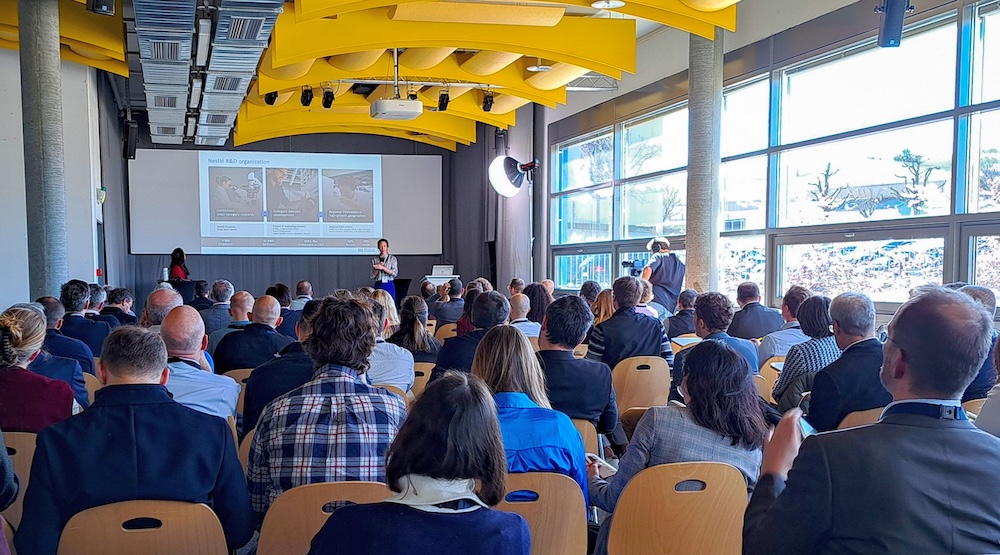
For the first time in Switzerland, Fribourg hosted the international BIOKET congress, dedicated to key enabling technologies in the bioeconomy. Over three days, 485 experts from around 30 countries gathered to explore solutions for more sustainable production models. This edition reinforces the canton’s position as a credible and well-connected player on the global stage.

The seventh edition of BIOKET took place from March 17 to 19, 2026, at Forum Fribourg and closed on a highly positive note. Over three days, 485 participants from around 30 countries turned Fribourg into an international hub for key enabling technologies in the bioeconomy. Organised by the Bioeconomy For Change (B4C) cluster, in partnership with the Fribourg Development Agency (FDA), BIOKET featured a dynamic programme of conferences, technical sessions, B2B meetings, workshops and site visits. Around fifty exhibitors and partners also showcased their solutions, providing hands-on insight into ongoing initiatives.

“This edition in Fribourg truly captures the spirit of BIOKET: building bridges between research, industry and regions. We found here a particularly supportive environment, well suited to accelerating collaborative projects,” said Johan De Coninck, Head of Connexions & International at B4C.

A Key Driver in Transforming Production Models

At the heart of the discussions was the bioeconomy – encompassing all activities that use biological resources to produce food, materials, molecules, biopolymers and energy. Sitting at the intersection of industry, research and innovation, it plays a central role in the transition towards a more circular economy.

Recent developments in the Middle East have once again highlighted how dependent our economies remain on fossil resources. In this context, the bioeconomy offers tangible alternatives to reduce this dependence and strengthen the resilience of value chains.

Showcasing Fribourg’s Ecosystem

Beyond the conference programme, BIOKET 2026 offered participants a first-hand look at Fribourg’s ecosystem through visits to key sites: the Liebherr Group and its technologies, particularly in hydrogen engines; the AgriCo campus, dedicated to agri-food innovation and biomass valorisation; and the innovation ecosystem bringing together bluefactory, the ChemTech institute of the School of Engineering and Architecture of Fribourg, and the Marly Innovation Center. These visits highlighted the canton’s ability to cover the entire value chain, from applied research to industrialisation.

“BIOKET 2026 shows that Fribourg is a place where ideas become concrete solutions. The bioeconomy is no longer just a promise or a potential – it is a fast-growing industrial reality in our canton, as illustrated by start-ups such as Bloom Biorenewables and Seprify. The latter has recently raised more than 12 million Swiss francs,” said Jerry Krattiger, Director of the FDA

A Clear, Long-Term Strategy

Hosting BIOKET 2026 is part of the canton’s enomic development strategy, which identifies the bioeconomy – alongside Industry 4.0 – as a key priority. Following the Bioeconomy Forum in 2024, this international edition marks a new step forward and confirms Fribourg’s strong positioning within European and global bioeconomy networks.

Sign up for quarterly Swiss food innovation updates.

Vivent Biosignals announces Fernando Derossi as CEO and Partner to lead next phase of global growth

Vivent Biosignals announces Fernando Derossi as CEO and Partner to lead next phase of global growth

Vivent Biosignals, a leading provider of real-time plant feedback and AI-driven insights for agriculture, today announced the appointment of Fernando Derossi as Chief Executive Officer and Partner, effective February 1, 2026.

Fernando joins forces with founders Nigel Wallbridge and Carrol Plummer to lead Vivent Biosignals’ next phase of growth. His appointment follows the company’s recent successful funding round, led by Agri Investment Fund with participation from Pymwymic and Horticoop, and marks a new chapter in its evolution as Vivent Biosignals accelerates its mission to become a global leader in agricultural data and AI-powered insights for plant intelligence. With this strengthened leadership team, Vivent Biosignals is ideally positioned to scale its technology worldwide and amplify its impact across the entire agtech ecosystem.

A strengthened leadership team for global scale

Fernando Derossi brings more than 20 years of proven global leadership in scaling AI-powered and science-driven agricultural technologies. With deep expertise in international growth across North America, Latin America, and Europe, he has led global teams in major business units at industry giants Syngenta, BASF, and UPL Corporation, driving innovation to enhance grower profitability while as a seasoned entrepreneur, Fernando has a strong track record of multiple successful scale-ups and exits across agtech and fintech ventures worldwide.

Carrol Plummer, Co-founder & Co-CEO, said: “Fernando is exactly the strategic and operational leader we are seeking. His experience, proven ability to scale innovation globally, and his deep understanding of growers’ needs make him an ideal partner to take Vivent Biosignals into its next phase of rapid growth. We are excited to build this next chapter together.”

Dr. Nigel Wallbridge, Co-founder & Executive Chairman, commented: “We have developed the world’s most advanced plant biosignals platform—technology that gives farmers unprecedented visibility into crop health. Fernando brings the vision, capability, and leadership needed to transform this breakthrough into the global industry standard. We enter this next stage fully aligned and energised.”

Fernando Derossi, CEO & Partner, added: “It is a privilege to join Carrol and Nigel, two pioneers who have created groundbreaking plant-intelligence technology. My mission is clear: scale Vivent Biosignals globally and deliver a trusted AI- and data-driven standard that helps farmers eliminate hidden crop stress, optimise inputs, and achieve the highest possible return on investment. Together, we are bridging the gap between plant biology and AI to ensure that every grower in the planet can have access to this technology.”

Powering the future of plant-driven agriculture

Vivent Biosignals has built a patented platform that captures and decodes plants’ internal signalling system—detecting early signs of stress from pests, disease, water challenges, and nutrient limitations days before visible symptoms appear. When combined with advanced AI models, these biosignals enable growers and agronomists to intervene earlier, optimise inputs, and improve sustainability outcomes. With strong market traction across multiple crops and continents, Vivent is positioned to accelerate global adoption of plant-driven agriculture, empowering farmers to produce more, while optimising inputs and protecting their crops against an increasingly volatile climate.

Sign up for quarterly Swiss food innovation updates.

OneAgrix appoints Philippe Chatelain to Board of Advisors

OneAgrix appoints Philippe Chatelain to Board of Advisors

OneAgrix, a Swiss–Singapore headquartered trusted trade infrastructure company, has appointed Philippe Chatelain to its Board of Advisors as it advances its platform for regulated global trade.

Operating across regulated supply chains requires infrastructure capable of delivering end-to-end traceability, verification, and regulatory readiness across the full lifecycle of a product. OneAgrix is building systems designed to embed these capabilities directly into how trade operates, supporting auditability, cross-border execution, and long-term operational resilience.

Philippe Chatelain brings decades of hands-on experience designing and deploying traceability, serialization, authentication, and digital product passport systems across FMCG and industrial supply chains. His work spans full lifecycle monitoring, from production and marking through distribution, consumer verification, and regulatory oversight.

His appointment strengthens OneAgrix’s in-house capability to operate and govern traceability and verification systems at scale, supporting regulated trade across jurisdictions and compliance-intensive industries including food and FMCG.

“Trusted trade depends on infrastructure that works across the entire lifecycle of a product, not fragmented tools,” said Diana Sabrain, Founder and CEO of OneAgrix. “Philippe’s experience reinforces our focus on building systems that support regulatory integrity and execution discipline.”

In his advisory role, Chatelain will work closely with the OneAgrix leadership team on infrastructure strategy, governance priorities, and the scaling of trusted systems across global markets.

About OneAgrix

OneAgrix is a Swiss–Singapore headquartered company building compliance-first infrastructure for regulated food, FMCG, and adjacent industries. The platform enables lifecycle traceability, verification, and cross-border trade readiness across complex regulatory environments.

Find out more: https://www.oneagrix.com/

Sign up for quarterly Swiss food innovation updates.

The Cultured Hub unveils plant cell culturing for cocoa, coffee, and other ingredients

The Cultured Hub unveils plant cell culturing for cocoa, coffee, and other ingredients

The Future of Food: Givaudan, Nestlé R+D Accelerator Lausanne and FoodHack launch the 2025 FoodTech World Cup
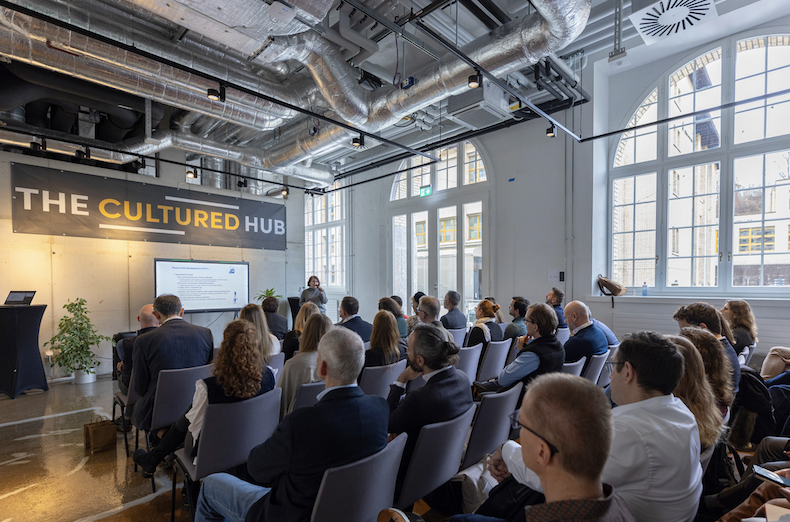
Valley partner, The Cultured Hub, has announced an expansion of its service offering with the addition of plant cell culturing capabilities, broadening its activities beyond cultured meat and leveraging this technology platform to support the growing field of alternative ingredient production. To mark this milestone, the Hub hosted the first Cultured Plant Cell Event 2025, bringing together start-ups, corporate leaders, and researchers to explore how plant cell culture can complement traditional agriculture and strengthen global supply chains for high-value ingredients such as cocoa, coffee, and citrus.

Originally created to accelerate cultivated meat and cellular agriculture technologies, The Cultured Hub now extends its infrastructure and expertise to plant cell-based processes. This expansion comes at a time when rising commodity prices, climate volatility, and increasing pressure on agricultural systems are driving demand for resilient, sustainable sourcing pathways. Plant cell culture offers a promising approach to enabling controlled, year-round production of key plant compounds independent of farmland, weather, pests, or disease.

“Plant cell cultivation represents an important new frontier in sustainable food and ingredient production,” said Ian Roberts, Chief Technology Officer at Bühler Group. “Many of the same challenges we see in cultivated meat – the need to scale, reduce cost, and ensure quality at industrial levels – also apply here. By expanding The Cultured Hub’s offering into plant cell culture, we are supporting innovators in this transition and giving the food industry a unique platform to explore new, climate resilient ingredient pipelines.”

A dynamic ecosystem of innovators

Throughout the event, participants discussed the pressures facing cocoa, coffee, and citrus supply chains, and how plant cell culturing can serve as a complementary production method for stabilizing ingredient availability. Scientific and technical sessions covered the state of the technology, recent breakthroughs, scale-up challenges, and the path from lab to market.

Start-ups actively pitched their technologies and solutions directly to industry leaders specializing in cocoa, chocolate, and coffee processing, fostering collaboration and potential partnerships. Multiple innovators in plant cell culture also presented their work across coffee, cocoa, and next-generation ingredients, including companies such as Ergo Bioscience, Coffeesai, Phyton Biotech, Spicy Cells, Kokomodo, Food Brewer, Celleste Bio, and GALY. Their contributions illustrated the diversity of approaches underway globally – from cocoa biomass grown in bioreactors to stabilized coffee cell lines and high-value plant compounds produced using controlled fermentation.

“Demand for alternative, climate-resilient ingredients is growing rapidly, and plant cell culture is emerging as a credible sourcing platform,” said Yannick Jones, CEO of The Cultured Hub. “Yet the field still faces high costs and complex technical challenges. By providing shared bioprocess infrastructure and a collaborative environment, The Cultured Hub enables both start-ups and corporates to scale more efficiently, shorten development timelines, and explore where strategic partnerships and investments can unlock the next wave of innovation.”

A scientific frontier with commercial momentum

The event also featured a keynote from Prof. Dr. Ing. Regine Eibl-Schindler, ZHAW School of Life Sciences and Facility Management, who introduced the emerging discipline of microbotanics – the cultivation of plant cells to produce targeted metabolites, flavors, and functional compounds with precision and consistency. This global network advancing plant cell research and its applications, connects researchers, start-ups, and industry to accelerate innovation in sustainable plant biotechnology.

“Plant cell factories allow us to produce molecules or biomass that are difficult, slow, or expensive to obtain from fields, while reducing exposure to climate and disease risks,” said Philippe Jutras, Founder of the Plant Cell Institute. “But as with any new technology, scaling is the bottleneck. Events like this create essential alignment between researchers, start-ups, and industry so we can move from promising lab results to meaningful commercial impact.”

A new offering to accelerate the future of ingredients

Plant cell culturing remains an emerging field, with costs driven by sterile bioreactors, energy-intensive controlled environments, and the complexity of plant cell biology. Scaling from flasks to pilot systems is technically demanding and often beyond the reach of early-stage companies. The Cultured Hub’s expansion directly addresses these challenges by providing access to advanced bioprocess equipment, expert process development support, and a neutral platform for collaboration.

Sign up for quarterly Swiss food innovation updates.

Bühler names two Fellows for advancing sustainability and technological innovation

Bühler names two Fellows for advancing sustainability and technological innovation

The Future of Food: Givaudan, Nestlé R+D Accelerator Lausanne and FoodHack launch the 2025 FoodTech World Cup
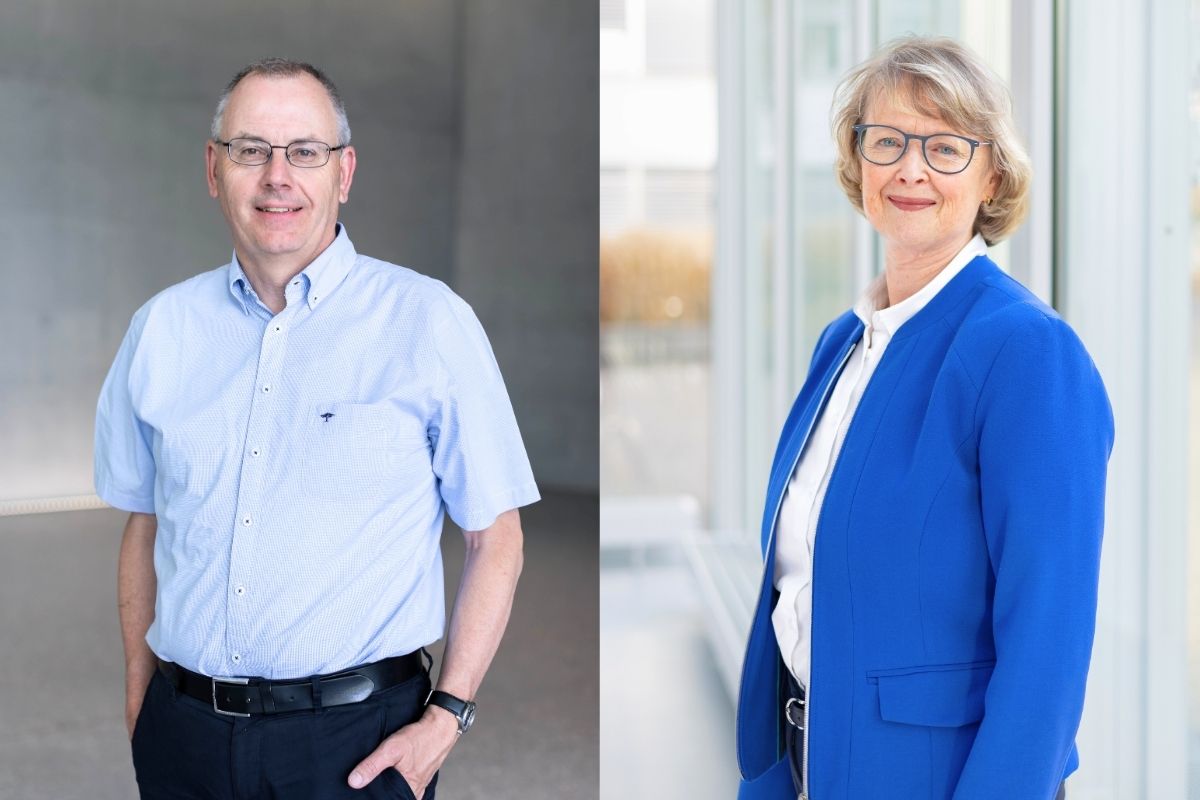
Bühler has named Béatrice Conde-Petit, food scientist and engineer, and Markus Hofer, process engineer, as Bühler Fellows. The distinguished leaders are the first recipients of the company’s new Fellowship program, which recognizes individuals whose expertise, influence, and outstanding contributions have extended beyond their corporate roles and influenced the industries Bühler serves. 

“Béatrice Conde-Petit and Markus Hofer have each made extraordinary contributions to Bühler,” said Stefan Scheiber, CEO, Bühler Group. “Their work has driven technological advancements, shaped strategies for our key businesses, and advanced our sustainability goals. As Bühler Fellows, they will continue to provide the thought leadership, talent mentoring, and guidance that have distinguished their careers.”

Together, the two Fellows will serve as mentors, advisors, and ambassadors of technical excellence across the organization, continuing to advance Bühler’s innovation agenda. Their work also strengthens Bühler’s broader ecosystem of collaboration, linking industry partners, academia, start-ups, NGOs, and customers with Bühler’s process and technology expertise to develop sustainable solutions for a growing global population.

“The Bühler Fellowship recognizes individuals who embody technical excellence and the collaborative spirit that drives Bühler forward,” said Ian Roberts, CTO, Bühler Group. “Our Fellows exemplify the dedication and mentorship that define our culture of innovation. Through their continued guidance, we will accelerate progress toward a more sustainable future, helping our customers grow their businesses while lowering their environmental footprint.”

Béatrice Conde-Petit, food scientist, engineer, and sustainability specialist, has worked at Bühler for more than 15 years. She has led initiatives that have advanced food and feed processing, and improved machinery efficiency and food safety. Having developed and driven food safety programs, Conde-Petit helped shape the company’s sustainability strategy, building a framework that connects innovation with measurable customer impact. She led the integration of sustainability across Bühler, guiding strategic projects that combine science, technology, and business to deliver value to customers and partners. Committed to developing talent, she mentors emerging scientists and engineers, supports women in STEM, and collaborates with academic and start-up partners to foster innovation and ethical leadership across the value chain. Conde-Petit received the World Business Council for Sustainable Development Leading Women Award in 2025 for her contributions to advancing corporate sustainability and driving transformation.

“It is an honor to be named Bühler Fellow. I am grateful for this recognition and excited to bring my experience to drive innovation. I want to help build a future proof food system that makes a positive difference for society and our industry. I am passionate about working closely with customers and partners, and about building and guiding talents to make it happen,” said Béatrice Conde-Petit.

Markus Hofer, process engineer, has been with Bühler for more than 30 years and is recognized for his technical depth and strategic leadership across multiple business areas. His experience spans R&D, product and general management both on the food and advanced materials side, where he has contributed to key technology and business developments that strengthened Bühler’s position in food processing, coating, and materials solutions. Hofer has helped shape technology roadmaps, business portfolios, and strategic projects that deliver long-term value to Bühler and its customers. For example, he was instrumental in the acquisition, integration, and development of Leybold Optics to become a pillar of Bühler’s business. He is equally known for developing young talent, mentoring engineers and innovation teams, and inspiring Bühler’s next generation of innovators through initiatives such as the Solar Energy Racers, an after-hours program for apprentices and young engineers designing and building solar-powered cars for international competitions. Hofer serves on the advisory board of Empa, the Swiss Federal Laboratories for Materials Science and Technology, and on the board of RhySearch, contributing expertise in optics, precision manufacturing, and digital technologies. He is also a long-standing juror and mentor in the ETH Zurich-McKinsey “venture” start-up competition.

“I appreciate this recognition. Throughout my career at Bühler, I have been fortunate to work with talented teams and leading customers that continually push the boundaries of technology. As a Bühler Fellow, I hope to keep contributing by sharing knowledge, encouraging curiosity, and helping our people and partners succeed,” said Markus Hofer.

The Bühler Fellowship program is the pinnacle of the Bühler expert pathway established to recognize individuals who make exceptional contributions to technical and strategic leadership, strengthening Bühler’s innovation capabilities, and advance collaboration across the company and its global network. Fellows are nominated through an internal process and selected by the Executive Board for their proven expertise, business impact, and commitment to developing future talent.

Sign up for quarterly Swiss food innovation updates.

Vivent biosignals raises €7.5M including investments from agri investment fund, horticoop and Pymwymic.

Vivent biosignals raises €7.5M including investments from agri investment fund, horticoop and Pymwymic.

Vivent Biosignals, the Swiss-based pioneer of “wearables for plants”, has announced new investment from Agri Investment Fund (AIF), Horticoop, Pymwymic and Swiss private investors. The funding will accelerate Vivent’s commercial scaling of its breakthrough plant biosignal monitoring technology, which is transforming crop management and sustainable food production.

“We are thrilled to welcome Agri Investment Fund as a new investor, joining Pymwymic and Horticoop,” said Carrol Plummer, Co-founder of Vivent Biosignals. “ This investment comes at a pivotal moment. In 2025, we successfully launched our live outdoor crop health platform, now monitoring more than 1,000 hectares across Europe. With Agri Investment Fund, we gain a partner deeply embedded in European agriculture and food value chains—exactly the kind of strategic alignment we need to accelerate our growth and deliver value at scale.”

Vivent ’s technology uses AI to interpret plants’ own biosignals, enabling growers to detect stress from pests, disease, drought and nutrient imbalances days, weeks or even months before visual symptoms appear. These “plant-first ” insights give farmers the ability to act early, improve yield stability, and use inputs more precisely. Vivent is the first company to commercialize real-time plant electrophysiology as a crop health diagnostic and prediction system—transforming the way growers understand and respond to what their plants need.

One of Vivent ’s satisfied clients, Tom Vlaemynck, Managing Director and CEO of TomatoMasters, comments “Vivent helps us improve fruit quality and reduce our waste percentage. From the first look at their model results we could already see that we needed to focus on changing different parameters than we expected.”

“Recent advances in AI allow us to interpret plants’ internal signal networks with a level of precision that was previously impossible,” said Dr. Nigel Wallbridge, Co-founder and Executive Chairman of Vivent Biosignals. “By scaling in outdoor agriculture, we’ve built the world’s largest dataset of crop biosignals—unlocking insights that benefit individual growers, research partners, and policymakers. With our new investors, we are accelerating the global shift toward plant-driven, resource-efficient agriculture as well as tackling some of the critical blights that threaten global food production.”

Vivent’s platform helps growers improve yields, optimize input use, and enable more sustainable crop protection strategies. Already proven in greenhouses and indoor farms, the technology is increasingly deployed across field crops such as berries, potatoes, apples, and grapes—providing continuous, real-time plant health insights across a wide range of production environments in Europe and North America. In addition to supporting growers directly, Vivent partners with leading suppliers in crop protection, fertilization, irrigation, and horticultural lighting to evaluate how plants respond to interventions—live, in situ, and in real time. Plant breeders also rely on
Vivent signals to assess the resilience of new varieties, accelerating the development of hardier crops.

“We see enormous potential for Vivent ’s technology to improve both farmer profitability and environmental sustainability,” said Patrik Haesen, CEO of Agri Investment Fund. “By giving crops a voice, Vivent is enabling a new era of precise, plant-led decision-making in agriculture—and we are excited to support the company’s growth.”

About Vivent Biosignals

Vivent Biosignals, founded by serial entrepreneurs Carrol Plummer and Dr. Nigel Wallbridge, provides real-time crop health monitoring and actionable agronomic insights by decoding plants’ own electrical signals with advanced AI. Our team of plant scientists, data scientists, and commercial specialists works with controlled-environment growers, agricultural distributors, food processors, and crop protection companies across Europe to help farmers improve productivity sustainably.

For more information, visit https://vivent-biosignals.com/ 

About Agri Investment Fund

Agri Investment Fund (AIF) is an agri-food focused investor supporting companies that deliver high-impact innovation across the agricultural value chain, from farm productivity to sustainablefood systems. AIF backs technologies that help future-proof European agriculture and increase resilience for growers, processors and consumers.

For more information, visit https://aifund.be/en/

About Horticoop

Horticoop is a cooperative with an active membership base of professional growers in the horticultural sector. Horticoop actively invests in businesses that contribute to the horticultural industry. In doing so, the cooperative supports a sector that meets the needs of a growing population while at the same time minimizing its environmental impact. For comments please contact Hend van Ravestein at H.vanRavestein@Hortic

For more information, visit www.horticoop.com

Sign up to receive the Valley’s quarterly newsletter