Impact Digest | Cultured foods: How can we drive impact at scale?

Impact Digest | Cultured foods: How can we drive impact at scale?

Impact Digest | Cultured foods: How can we drive impact at scale?

With the global population projected to reach 10 billion by 2050, scaling innovative protein solutions is essential to meeting both demand and climate targets.

Cultured food could provide protein products that taste and feel like the animal-based original, but with a reduced environmental and animal welfare impact and improved food security. However, barriers to scaling cultured foods remain, showing space for ongoing ecosystem collaboration and discussion.

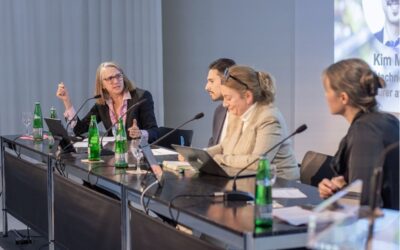
Following our State of Play: Cultured Foods 2.0 event on 4 December 2024, we invited three expert speakers to discuss the current legislative situation surrounding cultured foods and discover how companies can help accelerate progress. Read on to discover what we learnt. 

Key Takeaways

  • Cultured foods for a future-proof food system: Through efficient food production, cultured foods can help tackle global sustainability and food system challenges.
  • Regulatory landscape: Currently, three applications for approval of cultured foods are under review in Switzerland. Switzerland's regulatory framework is closely aligned with that of the EU, but since Switzerland is not an EU member, it maintains its own separate approval process. Therefore, approvals granted in Switzerland do not automatically apply to the EU market.
  • Consumer acceptance and market readiness: Consumer attitudes toward meat alternatives are becoming more favourable due to concerns over health and environmental impacts. Cultured meat products are available in markets like Israel, Hong Kong, and Singapore.
  • Collaboration and advocacy are key: Successful scaling and innovation in cultured foods will rely on continued stakeholder collaboration. Organizations like The Cultured Hub, the Swiss Protein Association and the Good Food Institute are working to address these hurdles by fostering ecosystem collaboration and dialogue.
  • Switzerland’s innovation credentials: Thanks to its strong research institutions, government support, and innovative capabilities, Switzerland is well-positioned to lead in scaling cultured foods.

Switzerland: Leading the way in cultured food innovation

Presented by Yannick Gaechter, CEO of The Cultured Hub

Yannick discussed cultured foods as a promising solution to address pressing global sustainability and food system challenges by enabling sustainable and efficient food production while preserving cultural and community values. 

He also noted that Switzerland offers robust research institutions, government support, and expertise in innovation. This makes it uniquely positioned to lead in the cultured foods space. Continued advancements in cultured food technologies could further cement Switzerland's role as an "innovation nation". 

Collaboration between industries, academia, and governments is key to addressing sustainability and scaling challenges in cultured foods. The Cultured Hub, a joint initiative by Migros, Givaudan, and Bühler Group, provides startups and corporations with resources, facilities, and services to scale up cultured food production efficiently while retaining intellectual property and equity. 

Yannick concluded by inviting stakeholders to work together to position Switzerland as a global leader in sustainable and innovative food systems.

Navigating innovation and regulation: novel foods in Switzerland

Presented by Ralph Langholz, Vice President of the Swiss Protein Association

Ralph discussed the Swiss Protein Association's role in fostering a favourable political and regulatory environment for emerging innovative food categories such as cultivated meat and plant-based products. Switzerland shows strong potential as a hub for innovation in these areas based on its strong ecosystem and established distribution channels. 

Regarding the regulatory landscape, Ralph provided an overview of the global progress in authorizing novel and cell-based foods. He highlighted that while countries like Israel, the US, and Singapore have authorized such products, Switzerland and several others are still processing applications. 

Switzerland's regulatory approach, closely modelled after the European Union's, presents advantages such as direct interaction with local authorities. Still, approvals granted in Switzerland do not automatically extend to the EU market, unlike the reverse.

Ralph further explained the constraints on industry tastings in Switzerland. While commercial tastings remain prohibited without formal authorization, private tastings are allowed in non-commercial settings. 

He emphasized the importance of submitting well-structured applications aligned with EU guidelines. Ralph noted that products involving GMOs might face additional hurdles, requiring separate authorization if the GMO components are not already listed on the EU's approved list. 

Ralph also addressed the potential implications of ongoing talks between Switzerland and the EU, suggesting that future agreements could unify the novel food authorization process under EU jurisdiction. For now, Switzerland remains a viable potential initial market for novel foods due to its manageable size and diverse linguistic regions.

A global perspective on the cultivated foods and meat industry 

Slides provided by Carlotte Lucas, Head of Industry at the Good Food Institute Europe
Presented by Christina Senn-Jakobsen, CEO at SFNV due to illness.

The cultured foods sector continues to expand, marked by increasing numbers of companies, innovations, and public funding. Collaboration among stakeholders, including trade associations and ecosystem builders like the Swiss Cultured Hub, continues to be crucial for progress.

Governments worldwide are showing mixed reactions to cultured foods. While some governments (for example, the UK, Israel, Singapore) more actively support the industry due to its potential for food security and innovation, some others (e.g., Italy and specific US states) have moved to ban or at least heavily regulate cultured foods. In Switzerland, authorities have emphasized a rigorous novel food approval process.

Market readiness is advancing, with the first products approved for sale in markets like Israel, US, Hong Kong, and Singapore. Consumer attitudes show growing concerns over excessive meat consumption and its impact on health and the environment, and openness to trying cultured meat. Meanwhile, technological advancements and infrastructure development are key to helping scale production from lab to commercial levels. 

The Swiss Cultured Hub and organizations like the Good Food Institute Europe (GFI) are working to address these hurdles. Advocacy, dialogue, and regulatory clarity remain vital to overcoming resistance and ensuring safe, sustainable innovation. Ultimately, a unified focus and collaboration are essential for the industry's success.

Hungry for more?

Dive into the full report from our State of Play: Cultured Foods event here. 

Or join us for our next Impact Forums on Urban Farming on 11 February or Valorisation of sidestreams on 7 April.

Impact Digest | Ultra-processed foods: myths, facts and future role

Impact Digest | Ultra-processed foods: myths, facts and future role

Impact Digests | Can we scale up regenerative farming for a sustainable future?

Nearly 29% of the global population experienced moderate or severe food insecurity in 2023. As the world population grows, we don’t only need to consider food availability - we need to find new solutions to ensure that  everyone has access to a nutritionally complete diet too.

Building on a fascinating discussion as part of Food Day @ETH, on the 11th of November, we brought together four expert speakers to discuss the complexities of food processing and its impacts on health and the environment. Read on to discover what we learnt.

Key Takeaways

We need more clarity: There is no clear legal definition of UPFs and the NOVA classification system has significant limitations. The definition and wording should also reflect the focus of the discussion. If we're talking about health, we should speak about "unhealthy processed foods". If we're talking about the amount of energy required to create a product, we should talk about “energy intensive processed foods”.

We must view a product’s impact holistically: To drive better social, environmental, and economic outcomes, we need to balance multiple goals along the value chain, including access to safe and nutritious food, efficiency in resource management, and equitable livelihoods.

We need innovation to drive healthier formulation: Reformulating processed food can be a powerful lever for creating healthier food options - and industry can be a key part of the solution through responsible product development.

Dr. Martin Michel, Expert & former Nestlé

Martin discussed food processing in the context of food systems, emphasising its role in value chains. He highlighted the primary goals of food processing: food safety, preservation, sensory aspects, nutrition and health, sustainability, and food diversity.

He also briefly discussed the NOVA classification system and its limitations, pointing out that  ‘ultra-processed food’ is ill-defined, and the classification conflates composition, number of ingredients, and processing techniques. Many foods classified as “ultra-processed” are also characterized by high energy density, elevated levels of saturated fats, sodium, and/or sugars, while being low in dietary fiber, all of which are independently linked to negative health outcomes.

Martin also highlighted that collaboration between stakeholders is vital to address potential trade-offs based on systems perspectives, scientific data, and risk-benefit analysis.

Niels Jungbluth, Manager & Owner, ESU-services GmbH

Niels introduced the life cycle assessment (LCA) methodology, which considers the environmental  impact of a product from ‘cradle to grave.’ All inputs and outputs are balanced according to the defined system boundaries and functional units. LCA is not an absolute measurement; it compares different situations and products.

When analysing food consumption, the level of food processing (e.g. for UPFs) is not a major factor when assessing its environmental impact. The most significant factor in an LCA is usually if the product is of animal origin, due to the environmental impact of agricultural production. Transport, packaging, food waste, processing, cooling, and preparation play a minor role. 

Niels highlighted the importance of new policy measures to allow a broader acceptance of plant-based products. 

Sophie Hofer, Product Manager, Planted 

Sophie discussed Planted’s approach to product development, highlighting their commitment to creating clean-label plant-based meats that are packed with protein, fiber and essential micronutrients such as Vitamin B12. She emphasised that Planted meats seamlessly fit into a healthy, balanced diet, challenging the negative reputation often associated with processed foods. 

Sophie stressed that not all processed foods are created equal and that the formulation plays a crucial role in determining a product's nutritional quality. She called for a differentiated approach from media and other opinion leaders when discussing highly processed foods. The current generalized perception often overlooks the nuances between products and their formulations. A more balanced perspective, based on facts rather than broad categorizations, is essential to help consumers understand the potential benefits of thoughtfully designed products in fostering both personal and environmental health, rather than grouping all processed foods together as "high in sugar, high in fat, and high in salt."

She further highlighted the significant environmental benefits of Planted’s offerings compared to traditional animal meat with up to 97% Co2 emission savings and addressed the challenges of accurately classifying plant-based alternatives within the NOVA system.

Mélanie Douziech, Scientific Collaborator, Agroscope 

Mélanie presented research results on meat and dairy alternatives' nutritional and environmental impacts. She pointed out that while meat alternatives generally have lower environmental impacts, dairy alternatives may potentially have some negative impacts on both the environment (due to possible increase in water scarcity and freshwater eutrophication) and health (due to possible insufficient levels of calcium and iodine if the product isn’t fortified).

She highlighted that processing can improve the protein quality and bioavailability in soy-based meat alternatives and that there is no clear trend between processing and environmental impacts.

Moving closer to a future-proof food system

The event highlighted the complexity of defining and regulating UPFs and the need for consumer clarity when it comes to innovative products that do not fit neatly into the existing categories of the NOVA classification. By taking a more holistic view of the impacts of their products, food producers can optimise their formulations and offer consumers choices that make healthier and sustainable diets more accessible. Thanks to everyone who joined us!

Hungry for more?

SFNV’s new Steering Committee Chair Marie-France Tschudin on encouraging collaboration for a better food system

SFNV’s new Steering Committee Chair Marie-France Tschudin on encouraging collaboration for a better food system

Givaudan TW Startup Challenge
Collaboration is crucial to allow food system innovation to flourish in Switzerland and beyond, according to Marie-France Tschudin, who was elected as Swiss Food & Nutrition Valley’s new Steering Committee Chair in May this year. Marie-France, former President of Innovative Medicines International and Chief Commercial Officer of Novartis, has 30 years of multinational experience in the pharmaceutical and biotechnology industries and is passionate about shaping a more sustainable future through food. We recently caught up with her to discuss her vision for the Valley and her views on Switzerland’s role in shaping a future-proof food system.
Marie-France, once again: welcome to the Valley! Could you tell us a bit about what motivated you to join us on our journey? 

Having spent 30 years in healthcare, I firmly believe that food and good nutrition can help us prevent the onset of chronic diseases. But our food system is in constant flux. Despite growing innovation and knowledge about what we can do to keep ourselves and the planet healthy, our food system ecosystem is fragmented which can make achieving meaningful change more complex. 

I’m impressed by how Swiss Food & Nutrition Valley unites stakeholders from across the food ecosystem to work together. Thanks to its dedicated team and network of partners, the Valley encourages and nurtures change and innovation in Switzerland. Through collaborative action, we accelerate our progress towards a more sustainable food system — and then support others in doing the same.

What is your vision for the future of Swiss Food & Nutrition Valley?

The complex challenges related to our current food system include malnutrition, food waste, threats to farmers' livelihoods, and environmental concerns such as soil degradation, to name just a few.  And we will likely face additional challenges in the future. 

I believe that we already have the technology, the knowledge and solutions to address many of these issues. Our biggest challenge is making sure we can implement them at scale. To do this, we need to take a systems approach, whereby all parties in the food system have a role to play to serve a collective, greater common purpose or objective.

By fostering a network where innovation is supported and concrete solutions can become scalable, Swiss Food & Nutrition Valley can help strengthen Switzerland's position as a food innovation nation. 

What do you mean by “food innovation nation”?

As one of the most competitive countries in the world, Switzerland offers the right conditions and environment for innovation, including in the food industry. We need to continue to nurture that environment so that “Made in Switzerland” science, technology and state-of-the-art innovation targeting a better food system can flourish and be leveraged across the globe. 

How do you plan to strengthen the Valley’s impact?

I believe that effective collaboration within the ecosystem is vital to driving change and achieving measurable results. I'll be actively engaging with our partners to learn and understand their most pressing issues and to create and support opportunities for collaboration. I'll also be supporting the Valley’s team to create the right forums to showcase our partners' impact and innovations. 

What does sustainable food mean to you personally?

Food is always at the heart of our lives. It influences how we feel, who we interact with and how we interact with them. Through food, we can share our diversity, create memories, and celebrate and care for each other and our world.

To me, sustainable food is nutritious and supports local economies as well as the wellbeing of the planet. Sustainable food will look different depending on where you are in the world, but essentially, it is about fostering a healthy, varied diet while minimising waste. 

Is there a message you’d like to share with the Valley community?  

Change is always challenging but necessary if we want a more robust, future-proof food system. Of course, change isn’t going to happen overnight. But our long term commitments to creating this future are something we can feel proud of every day, with every step we take.

Never miss a Swiss food innovation morsel.

Esau & Hueber joins Bühler: complementing forces for innovation excellence

Esau & Hueber joins Bühler: complementing forces for innovation excellence

Givaudan TW Startup Challenge
Swiss technology group Bühler is pleased to announce the acquisition of Esau & Hueber, a German company specializing in individual solutions in hygienic process and fermentation technology in the beverage, food, pharmaceutical, and biotechnology sectors. The acquisition enhances Bühler’s malting, brewery, and sustainable protein businesses, expanding the company’s expertise and capacity in these areas while multiplying the reach of Esau & Hueber’s technology across Bühler’s global network.

“This acquisition aligns perfectly with our long-term strategic objectives,” said Johannes Wick, CEO of Grains & Food business at Bühler. “By leveraging Esau & Hueber's strengths in brewery and sustainable protein areas, we can provide superior solutions to our customers in these sectors.” This strategic acquisition is set to fill technological gaps and strengthen Bühler's position as an industry innovator.

Esau & Hueber is an independently managed manufacturer with 42 employees and supports its clients in all project phases. It designs and builds high-tech facilities and develops advanced processing technology. Esau & Hueber holds strong expertise in yeast and fermentation management, as well as automation. Esau & Hueber will continue to operate from its home in Schrobenhausen.

Bühler Group is a global leading technology company in the fields of food, feed, and mobility. Among its areas of expertise, it provides customers worldwide with cutting-edge solutions in malting and brewing. Its technology covers the entire process, from raw material processing to producing the finest malt and beer. Additionally, Bühler’s technology can monitor product quality with advanced sensors and automate the production process with digital services.

“We are delighted to welcome Esau & Hueber to Bühler. The acquisition presents a unique opportunity to integrate Esau & Hueber capabilities and better meet the evolving needs of our global customers,” said Ian Roberts, CTO at Bühler. “We see many opportunities to multiply their technology with the global reach of our business.”

Johannes Schulz-Hess, shareholder of Esau & Hueber, stated: “I am thrilled for the Esau & Hueber team. The recent successful developments within the company and its capabilities are now opening up entirely new dimensions and opportunities through the association with Bühler. This step will also greatly benefit our customers and create new market potential.”

The integration of Esau & Hueber will commence immediately, with specialized teams from both companies working closely to ensure a seamless integration process.

About Bühler

Bühler is driven by its purpose of creating innovations for a better world, balancing the needs of economy, humanity, and nature in all its decision-making processes. Billions of people come into contact with Bühler technologies as they cover their basic needs for food and mobility every day. Two billion people each day enjoy foods produced on Bühler equipment; and one billion people travel in vehicles manufactured using parts produced with Bühler solutions. Countless people wear eyeglasses, use smart phones, and read newspapers and magazines – all of which depend on Bühler process technologies and solutions. Having this global relevance, Bühler is in a unique position to turn today’s global challenges into sustainable business.

As a technology partner for the food, feed, and mobility industries, Bühler has committed to having solutions ready to multiply by 2025 that reduce energy, waste, and water by 50% in the value chains of its customers. It also proactively collaborates with suppliers to reduce climate impacts throughout the value chain. In its own operations, Bühler has developed a pathway to achieve a 60% reduction of greenhouse gas emissions by 2030 (Greenhouse Gas Protocol Scopes 1 & 2, against a 2019 baseline).

Bühler spends up to 5% of turnover on research and development annually to improve both the commercial and sustainability performance of its solutions, products, and services. In 2023, some 12,500 employees generated a turnover of CHF 3.0 billion. As a Swiss family-owned company with a history spanning 164 years, Bühler is active in 140 countries around the world and operates a global network of 105 service stations, 30 manufacturing sites, and Application & Training Centers in 25 locations. To find out more visit their website.

Never miss a Swiss food innovation morsel.

Impact Digests | Can we scale up regenerative farming for a sustainable future?

Impact Digests | Can we scale up regenerative farming for a sustainable future?

Impact Digests | Can we scale up regenerative farming for a sustainable future?

We recently held our third Impact Forum event, featuring four distinguished speakers who shared their insights on accelerating regenerative farming practices to restore harmony with nature. The event highlighted the urgent need to adopt regenerative agriculture as a solution to live within planetary boundaries. Read on to explore some of the key insights from the event.

Key Takeaways

  • Farmer-centric approaches: Success in regenerative agriculture starts with educating and supporting farmers through training, community building, and funding mechanisms.
  • Collaboration is key: Effective partnerships among farmers, researchers, companies, and other relevant organizations and associations are vital for accelerating the adoption of regenerative practices.
  • Outcome-based measures: Regenerative farming prioritises implementing approaches that improve soil health and biodiversity. While this may lead to a temporary reduction in quantity during the transition phase, over time the system usually becomes even more productive.

Alex von Hettlingen, Regenerative Schweiz 

  • Alex von Hetlingen spoke about the importance of farmer education and community support in regenerative agriculture. He spoke about Regenerative Schweiz’s specialised courses for different types of farmers, including arable, vegetable, and forage production.
  • He also discussed the key principles of regenerative agriculture: soil biome restoration, plant and animal health, and local nutrient and water cycles.
  • Alex emphasised that there is no quick fix, there is a need for soil research, and that there is no regenerative economy without restored soils.

Anita Frehner, FiBL

  • Anita Frehner expanded the perspective from production to the entire food system, stressing the importance of policy interventions to support sustainable farming practices through subsidies and legal requirements.
  • She spoke about the need for holistic solutions, with the need for reduced food waste and dietary changes alongside changes in farming practices.
  • Anita also emphasised the need for collaboration among different sustainable farming practices to achieve broader sustainability goals.

Piera Waibel, Earthworm Foundation

  • Piera gave us an introduction to Earthworm Foundation and its regenerative agriculture transition projects. The foundation collaborates with companies to improve their supply chains, focusing on holistic and collaborative methods.
  • She spoke about success factors for scaling these kinds of projects, including collaboration across value chains, baseline assessments to determine context specific improvement potential, and funding mechanisms to support farmers during the transition.
  • Piera stressed the importance of collective commitment and engagement across the entire value chain. She also shared that transitions should focus not only on environmental outcomes but also consider social aspects like farmer autonomy and resilience.

Philippe Birker, Climate Farmers 

  • Philippe Birker highlighted the failures of the current agricultural system, including ecological degradation, economic inefficiencies, and social challenges faced by farmers.
  • He discussed Climate Farmers’ key initiatives, including connecting farmers with events and training, policy engagement, and providing practical tools like holistic context assessments, carbon credit schemes, and regenerative agriculture verification to support farmers practically.
  • Phillippe highlighted the importance of making farming appealing again through regenerative practices and community support. He called for increased collaboration across the sector, and stressed the importance of data and verification to ensure practices are genuinely regenerative to avoid greenwashing.

Regenerative farming for a healthier future

The event concluded with a Q&A session, where we cleared up a few critical points concerning regenerative vs. organic farming. Regenerative agriculture is outcome-based and focuses on soil health and biodiversity, while organic farming is practice-based with strict input restrictions.

The integration of regenerative farming holds great promise for improving environmental sustainability, food security, and resilience. Collaboration, education, and innovation are key to realising its full potential.

Thanks to everyone who joined us! 

Hungry for more? We’ll be hosting three more Impact Forums on the topics of precision nutrition, sustainable packaging, and sustainable protein in Q3 and Q4. Click on the links to save your space for free.  

Never miss a Swiss food innovation morsel.