The role of Innovation, Impact and Frontline Agricultural Nations in driving global food system transformation

The role of Innovation, Impact and Frontline Agricultural Nations in driving global food system transformation

By Christina Senn-Jakobsen,
CEO, Swiss Food & Nutrition Valley

“I believe it’s time for us to shift our mindset and recognise how each nation can play to its unique strengths to scale innovations and boost our joint impact."

In April 2024 I took part in the Swissnex in Brazil Future of Food Bootcamp. We spent one week each in Sao Paulo and Rio visiting universities, innovation hubs, startups and large companies to meet and learn about the Brazilian food ecosystem.

The experience blew open my food transformation world.

Exploring a food system that is so starkly different from Switzerland and the other countries we typically work with got me thinking about how we’re always talking about the same players: the food agritech innovation nations.

I couldn’t be prouder of what we’ve accomplished so far in the Valley ecosystem. But I also believe it’s time for us to shift our mindset and recognise how each nation can play to its unique strengths to scale innovations and boost our joint impact.

Innovation Nations, Impact Nations, and Frontline Agricultural Nations

Achieving the necessary food system transformation is a three step process:

  1. Identify and understand the problems
  2. Build the solutions
  3. Implement at scale

I believe that we often get stuck in step two. We know what the problems are, and in many cases, we already have the solutions. But we now need to figure out how to move onto step three and begin to drive scaling and impact in a meaningful way.

My trip to Brazil made me realise that there are three types of nations involved in the global food system transformation: Innovation Nations, Impact Nations, and Frontline Agricultural nations. Each has distinct needs and unique contributions.

Hover over the images below to find out more about each category.

Of course, some nations may fit into more than one of these categories. The United States, for example, could be seen as both an Impact Nation and an Innovation Nation. But they help us to consider the various roles that different nations can play - and most importantly - how these nations interact. 

So why does this matter? Today, 80% of global emissions come from the G20 countries, which account for only 10% of the world’s countries. That’s not even to mention the devastation associated with the other food system challenges, such as hunger and nutrition balance, depleted soils and biodiversity loss. 71% of farmers say climate change is already having a big impact on their farm, and one in six farmers have identified income losses greater than 25%. In 2023, there was over $21 billion in crop losses due to severe weather in the US alone.

When it comes to the impact of climate change, Frontline Agricultural Nations are disproportionately affected. Geopolitical conflict makes trading next to impossible, extreme weather is destroying crop yields, and farmers are struggling to produce. This means that smallholder farmers are often paying the price for challenges caused by actions beyond their control.

Different starting points, complementary strengths

To tackle these global issues, we need to work collaboratively. And to collaborate effectively, we need to better understand each nation’s goals and meet them where they are.

I think we can frame it in a similar way to Maslow’s hierarchy of needs. Frontline Agricultural Nations are often rightly focused on ensuring that their population’s fundamental needs are met: enabling access to safe and nutritious food. Impact nations tend to focus on strengthening their economies, while many innovation nations are shifting their focus to purpose-driven action to drive better human and planetary health.

So how does this help us? Take Switzerland. We're a small nation, but a big food innovation nation. Even if we transformed our food systems completely, our efforts alone wouldn’t be enough to move the needle on the Sustainable Development Goals (SDGs) on a global scale. But if an Impact Nation like Brazil or China were to transform its food systems to become more sustainable – there is huge potential for impact.

Impact Nations are looking for solutions that can both strengthen their economies and ensure that everyone continues to have access to safe and nutritious food. To make this happen, impact nations need to have access to the latest innovations and find ways to scale them in an affordable way. Frontline Agricultural Nations, who are the most impacted by climate change, would ultimately benefit from this. They can draw on these scaled innovations and adapt them to reflect their local contexts – strengthening their economies, building climate change resilience, and contributing to global food security, too. Nigeria, Ghana, and Ivory Coast together, for example, produce about 86% of the world’s yam supply and the region also provides more than half of the world’s cocoa, often produced by smallholder farmers.

Zooming in

Let’s take a closer look at what this looks like in practice at country level.  

Innovation Nations

To boost their impact, Innovation Nations need to break out of their bubbles and actively look for ways to collaborate more closely with Impact Nations and Frontline Agricultural Nations. 

A great example here is technology to increase crop yields that both reduces harmful pesticides and greenhouse gas emissions, while increasing a farm’s profitability. When a technology is scaled in an Impact Nation, the return on investment becomes more affordable, ultimately increasing the accessibility of the solution in Frontline Agricultural Nations – and its global impact.

Switzerland

Its strength
Switzerland works with the Food and Agriculture Organization (FAO) to advance sustainable agriculture and food innovation, both domestically and internationally. Swiss universities and institutions like EPFL in Lausanne and ETH in Zurich collaborate closely with the private sector to pioneer breakthroughs in ingredients innovation, digitalisation of food chains, water technology, new farming systems – all of which have profound implications for the global agrifood landscape.

The opportunity
Switzerland already ranks highly as an Innovation Nation. We’ve seen great success in helping small startups to scale up through collaboration with large retailers like ALDI SUISSE. Now it’s time to think bigger. There is a huge opportunity to work with impact nations to drive change at scale.

Singapore

Its strength
Often touted as “the best place in the world for food innovation,” Singapore has cemented itself as an alt protein hub. The city-state has high engagement from its government in the form of funding and legislation, which has enabled the region to pioneer advancements with cultivated proteins, precision fermentation and more.

The opportunity
Misinformation around the future of sustainable protein abounds, but players like The Good Food Institute are working to address this with clear, understandable messaging strategies. Valley partner ADM has a plant-based innovation lab and research hub in Singapore designed to ramp up alternative protein development and production across the Asian region. Bühler, Givaudan, ETH and many other Swiss actors are also present.

Impact Nations 

Impact Nations are big producers and exporters. With their main focus placed on strengthening their economies, they need innovation to help them continue to generate revenue from their high-value commodities, but in a way that also reduces their climate impact. 

Impact Nations like Brazil and the US could, for example, potentially reduce cattle methane emissions through feed additives and supplements, like those developed by Valley partner dsm-firmenich or ADM. Brazil and China also produce 20 million tonnes and 35 million pounds of food waste respectively. Drawing on innovations like Valley partner AgroSustain’s pre- and post-harvest solutions could help Impact Nations direct these lost resource costs back into their economies.

Brazil

Its strength
Brazil is a large country and an even larger impact country — it’s a top-5 producer of 34 commodities and is the largest net exporter in the world. The country is a big producer of beef and other high-value foods like orange juice. Brazil is responsible for nearly 80% of orange juice marketed globally.

Its opportunity 
Brazil has a decarbonisation strategy in place, but it doesn’t include agrifood in its plan. This is surprising when you consider that its food sector accounts for 74% of the country’s total emissions. Adapting this strategy could bring us a huge step closer to achieving the SDGs.

China

Its strength
China is the world’s largest producer (and consumer) of food. Recently, the country issued various agricultural policies and strategies to promote rural vitalisation and low-carbon development of the agricultural sector.

Its opportunity
China’s growing middle class has led to increased food consumption, particularly of meat. The country has had significant improvements in agricultural productivity over recent decades, but maintaining this productivity will be difficult due to climate change and decades of unsustainable farm management practices. Improving soils, minimising food waste, and addressing an agricultural labor shortage will be essential.

Frontline Agricultural Nations 

Frontline Agricultural Nations need access to adaptive strategies to manage and mitigate the effects of climate change, and knowledge and innovation to manage agrifood systems in a more sustainable way to ensure global food security.

Self-sufficient systems such as those developed by Valley partner Mabewo produce electricity and water themselves, protecting natural resources. These types of innovations alongside the implementation of drought-resistant crops could help Frontline Agricultural Nations protect their productive capacities and ensure food security.

Afghanistan

Its strength
Agriculture is the main source of rural livelihoods in Afghanistan. Livestock (mainly cattle, sheep, and chicken) make up the largest part of its economy. Wheat and rice are its main agricultural crops.

The opportunity
Agriculture makes up about ¼ of its GDP, but according to the UN, 9 out of 10 people in Afghanistan do not have enough to eat. Rising temperatures, extreme weather, and diminished water supply are impacting the country’s productive capacity. There is an urgent need for effective watershed management mechanisms, drought resistant crops, and resources for its livestock and dairy sectors.

Ghana

Its strength 
Ghana is rich in natural resources, known particularly for its commercially grown cacao. The plant is grown on more than half of the country’s arable lands and is a significant source of revenue. The soil and climate also favour a wide range of crops, such as yams, rice, millet, and shea nuts. 

The opportunity
Agriculture is responsible for almost ⅕ of its GDP, which adds to Ghana’s climate change vulnerability. By implementing solutions to build climate resilience, the impact of extreme weather events and localised disasters on Ghana’s inhabitants could be reduced.

It’s time for a mindset shift

The Swiss love innovation. But we need a mindset shift. We have the solutions we need. It’s now time to explore what drives each country to take action to allow us to drive food system transformation and impact at scale.

It is not our job to ‘convert’ people. We know that current global agrifood systems are a major driver of climate change and ecological devastation. We must learn to meet each other on shared ground, understand the different contexts we’re working in, and unite in our shared objective of securing a livable future on this Earth. 

The Valley is speaking with colleagues at the FAO to determine how best to make Swiss innovation available at scale, but we need each country to play its part.

There is an interdependency among us all. We’re ultimately all part of the same food system. We must work together across borders to drive forward the change we want to see and make sure we leave no one behind.

Never miss a Swiss food innovation morsel.

Vege’tables teams up with Planted and New Roots to drive healthier and more sustainable diets.

Vege’tables teams up with Planted and New Roots to drive healthier and more sustainable diets.

Vege’tables teams up with Planted and New Roots to drive healthier and more sustainable diets.

Smart Food consultants, Vege’tables have teamed up with leading Swiss plant-based pioneers Planted and New Roots to drive the adoption of more sustainable diets. We sat down with Vege’tables Co-Founder and CEO, Sophie Hanessian to find out more.

Tell us about the key issues you address and how you tackle them.

We all know that we need to change the way we eat to improve our health and reduce the impact of our food systems on the environment. But in reality, changing food habits is really hard! You need to find time to rethink the products you buy and the recipes you cook. Today many of us are so busy, we just don’t have the time or energy to figure out where to begin.

Vege’tables exists to make Smart Food - food that is healthy, ethical and sustainable, 100% plant-based and mostly whole food - accessible to everyone. We do this by guiding companies and public organisations to develop and implement health and sustainability strategies and by helping catering professionals to develop their Smart Food skills and increase their customer base.

Food service colleagues play a key role in food system transformation. Many providers want to adapt their choices but meat is still often the default for many consumers. To change this, we need to tackle three issues in parallel.

Firstly, we need to educate and raise awareness among consumers, but also among chefs, about the impact of our food choices on our health and the environment. We need to ensure that they understand why some choices will have an immediate positive impact. Then we must ensure that there are more healthy and planet-friendly choices available in out-of-home settings.

Finally, we need to introduce consumers to some of the products on the market to encourage them to adapt their own purchasing decisions and cooking choices. We find that as soon as people cook the products themselves and realise that it’s actually very easy to make the switch, they’re much more motivated to cook them again. Practical training is so important.

How are you collaborating with other Valley partners to boost your impact?

When planning 3 workshops for employees at La Ville de Neuchâtel in 2022, we reached out to fellow Valley partner Planted to see if they would be interested in showcasing their clean label plant-based meats at the event - and we were thrilled to receive a very positive response! After some discussion about how best to collaborate, we cooked a planted.chicken-based dish alongside participants and also shared out some packs for them to take away with them.

Building on this successful collaboration, we reached out to fellow Valley partner New Roots, a Swiss producer of 100% plant-based cheese, and other dairy alternatives. We recently featured their products in a workshop for students at the prestigious Les Roches global hospitality school in Crans-Montana.

At a recent two-day training event for chefs at a creche in Jura, we cooked nearly 140 meals based around Planted products with a New Roots-based cream. Many of the chefs said that cooking with new ingredients and products really helped them to think more creatively about how they could develop their dishes and menus.

For me, these are real win-win collaborations. Chefs leave our workshops inspired and aware of all the great plant-based brands they can use in their recipes and consumers and the next generation get access to healthier, delicious and more planet-friendly choices.

So what’s next?

Demand for Vege’tables’ services is growing and I’m currently looking for funding to scale up and grow my team to enable us to work with a larger range of clients.

This autumn, we’ll be working with GastroFribourg and GastroVaud to provide more training on “The new Smart Food trend”. This will be a great opportunity for our partners to come and present their products directly to catering professionals.

I’m really eager to explore new partnerships with other Swiss plant-based alternative pioneers and consider what more we can do to showcase new brands and connect consumers with innovative products. If you’d like to collaborate, I’d love to connect.

Find out more about Vege’tables or connect with Sophie on Linkedin.

Find out more about Planted and New Roots.  

Never miss a Swiss food innovation morsel.

Latest News

Teaming up for impact: ZFV Group on their partnerships with Yumame, Steasy and Food2050

Teaming up for impact: ZFV Group on their partnerships with Yumame, Steasy and Food2050

Image of the Yumane team
Powering 200+ meeting places across Switzerland, Valley partner ZFV Group (ZFV) has more than 125 years of expertise in the fields of hospitality and catering. Fortunately for our ecosystem, they don't keep this knowledge under lock and key. They're eager to partner with food sector startups to help bring fresh innovations to market.

The ZFV team believes that we can only achieve true change through collaboration. This is why the company is constantly on the lookout for new partnerships with future-focused startups. Read on to find out how Valley partners Steasy, FOOD2050, and Yumame have already benefited from their advice and support. 

Yumame: Partnering with innovative producers

In its own restaurants, as well as in cafeterias and staff restaurants, ZFV's focus is on balanced and climate-friendly food. Whether it's through innovative recipes from ZFV's own climate-friendly kitchen, totally new concepts like Flavour Kitchen or Green Kitchen Lab, or menus that feature more than 50% vegan and vegetarian offerings, ZFV relies first and foremost on diverse partnerships with innovative producers - like Valley partner Yumame Foods AG.

The startup produces delicious and sustainable food based on fungi and fermentation, with a strong focus on local and environmentally-friendly practices. These newcomers attracted the attention of ZFV's F&B team, who were immediately enthused and impressed by its products. ZFV has now become Yumame’s first catering partner — and they’ve already dished up their first recipes in the Green Kitchen Lab at the University of Zurich. This includes the innovative "Farm to Table" research project, which ZFV developed together with the Zurich University School of Management and Law and Zurich University of the Arts, where Yumame was featured as an important part of the culinary offer.

FOOD2050: Enabling more climate-friendly choices

ZFV values transparency about the effects of its food highly, and aims to inspire its guests with enthusiasm for an environmentally-friendly and balanced diet. Startup and Valley partner FOOD2050, founded in 2021, pursues the same aim. The company was in the process of developing a meal plan system and was looking for a partner that shared its values.

Won over by FOOD2050's vision, ZFV became its strategic partner in 2021, and they jointly implemented the meal plan system for the first time at the University of Zurich in 2022. They continued to develop the concept together, creating a digital menu and meal plan that helps guests understand the the climate impact of their menus and food profiles that offer detailed information about individual dishes - right down to portraits of the producers who grew the ingredients. The solution was rolled out across 80 ZFV companies in 2023.

"Innovation means keeping one's eyes open, constant scrutiny, actively engaging with one's environment, personal development and also taking a chance now and then!" - Dario Notaro, CBDO ZFV

Steasy: Investing in the future of catering

By investing in Steasy, a start-up that developed the first-ever mobile mini steamer, ZFV found a way to delight and serve those who don't eat their lunch in cafeterias and staff restaurants. Thanks to an integrated battery, a pre-prepared menu can be quickly and gently heated — a total innovation with potential that was immediately obvious to the ZFV team. Today, they’re busy implementing a proof of concept for possible business cases that can leverage this exciting technology.

"High-quality, healthy and sustainable food should also be possible on the move, or in locations where it is not possible to eat in a restaurant," - Dario Notaro, CBDO ZFV

Open to innovation and new partners

ZFV's partnerships help the company move closer to its vision of comprehensive meeting places that encompass six key dimensions – menu, people, physical space, virtual space, sustainability — and most importantly, the ZFV ecosystem, including partners like Steasy, FOOD2050 and Yumame.

Through its partnership with Valley, ZFV is eager to connect with even more Swiss food innovators. The team is currently developing a unique innovation infrastructure to further accelerate rapid market testing within the broader ZFV ecosystem.

Read the article in German

Never miss a Swiss food innovation morsel.

Latest News

Givaudan teams up with 5 global startups to transform actionable insights into efficient and delicious alt-protein choices.

Givaudan teams up with 5 global startups to transform actionable insights into efficient and delicious alt-protein choices.

Givaudan TW Startup Challenge

Valley partner, Givaudan has launched a Plant Attitude Challenge, inviting start-ups to show how to decrease costs of one of their alt-protein recipes, while ensuring a delicious consumer experience. The contest brings to life 10 pathways to more affordable, sustainable alt-protein products from recent white paper developed together with UC Berkeley.

Five alternative protein start-ups from around the world will join Givaudan’s ‘Plant Attitude Challenge’ on April 17th and pitch how their solutions can decrease costs on one of their standard recipes by up to 20% while still ensuring a delicious and nutritious consumer experience.

Start-ups taking part in the Challenge will also articulate how they address the insights from Givaudan’s recent white paper with UC Berkeley: ‘10 Alternative Protein Pathways: Opportunities for Greater Efficiency.’

Challenge finalists include Eat Typcal (Brazil), Meatless Kingdom (Indonesia), Eternal (U.S.), Juicy Marbles (Slovenia), and BVeg Foods (India). These five companies will present their pitches at a live virtual event on April 17th, with both public and jury voting, and the winner will go on to collaborate with Givaudan on their innovation idea.

Flavio Garofalo, Global Director, Culinary & Plant Attitude, Givaudan, said: “We created the Plant Attitude Challenge to inspire companies to translate the 10 pathways from our recent white paper into cost effective alt-protein innovations that don’t compromise on all the things that delight consumers—including taste, mouthfeel, visual appeal and nutrition. We strongly believe that collaboration and strategic partnerships are key to success in alt-protein, and by teaming up to share knowledge, expertise and resources, we can innovate and get products to market more quickly.”

The winning start-up will collaborate with Givaudan, which offers a global ecosystem of protein hubs and alt-protein experts, as well as state-of-the art digital technologies and an integrated portfolio of solutions.

Expert jury members will include:

  • Flavio Garofalo, Global Director Culinary & Plant Attitude, Givaudan
  • Sudhir Joshi, Professor, University of California Berkeley
  • Beatriz Jacoste Lozano, Director KM ZERO Food Innovation Hub
  • Jolene Lum, Head Business Development, Nurasa

The live Plant Attitude Challenge event on April 17th is open to the public, and every participant will have an opportunity to vote for their favourite start-up innovation. Registerhere and download the white paper, ‘10 Alternative Protein Pathways: Opportunities for Greater Efficiency’ here. 

About Givaudan

Givaudan is a global leader in Fragrance & Beauty and Taste & Wellbeing. We celebrate the beauty of human experience by creating for happier, healthier lives with love for nature. Together with our customers we deliver food experiences, craft inspired fragrances and develop beauty and wellbeing solutions that make people look and feel good. In 2023, Givaudan employed 16,260 people worldwide and achieved CHF 6.9 billion in sales with a free cash flow of 13.3%. With a heritage that stretches back over 250 years, we are committed to driving long-term, purpose-led growth by improving people’s health and happiness and increasing our positive impact on nature. This is Givaudan. Human by nature. Discover more at www.givaudan.com

About Givaudan Taste & Wellbeing

Powered by innovation and creativity, Givaudan Taste & Wellbeing aims to shape the future of food by becoming the co-creation partner of choice to its customers. Built on its global leadership position in flavours and taste, the Company goes beyond to create food experiences that do good and feel good, for body, mind and planet. With an expanded portfolio of products across flavours, taste, functional and nutritional solutions and a deep knowledge of the food ecosystem, Givaudan’s passion is to collaborate with customers and partners to develop game changing innovations in food and beverage. This is Givaudan. Human by nature. Learn more about how we are shaping the future of food at www.givaudan.com/taste-wellbeing

Never miss a Swiss food innovation morsel.

Latest News

Swiss innovators Givaudan and Bühler join forces with MISTA to open a new extrusion hub

Swiss innovators Givaudan and Bühler join forces with MISTA to open a new extrusion hub

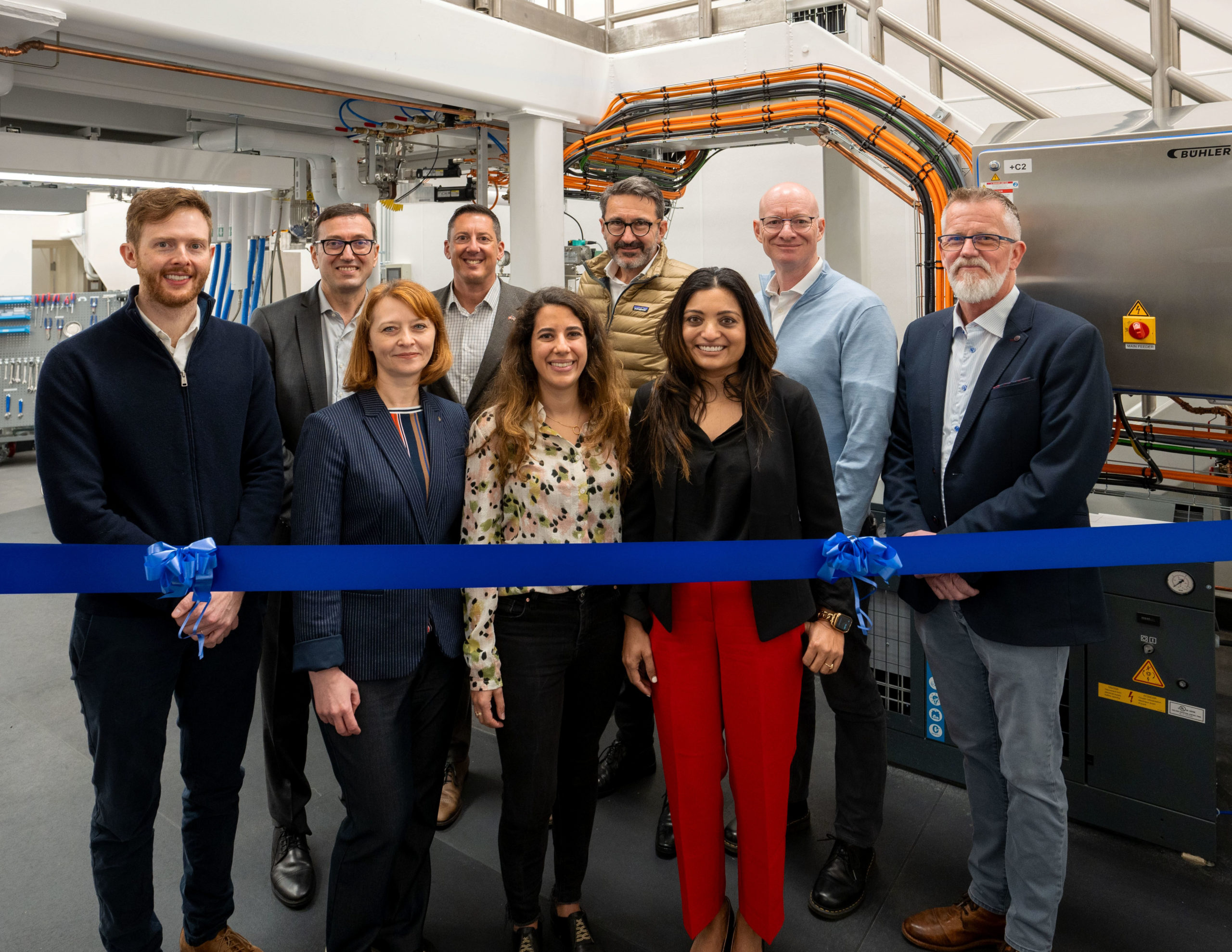
Inauguration of new extrusion hub at MISTA Innovation Center in San Francisco.
Valley partners Givaudan and Bühler have teamed up with MISTA to open a state-of-the-art extrusion hub at the MISTA Innovation Center in San Francisco. The opening of this new facility advances MISTA’s capabilities in driving food innovation and highlights Givaudan's and Bühler’s commitment to supporting food system transformation.

This collaborative effort between Givaudan and Bühler offers companies the opportunity to conduct innovative and effective product development trials for their extruded products. Equipped with a 30mm twin-screw Bühler extruder, the hub enables both high moisture extrusion, such as plant-based meat production, and low moisture extrusion, including snacks and cereals. Unlike smaller benchtop extruders, the results obtained at the facility can be translated to full-scale production equipment. With an output of up to 50 kilograms per hour, companies can now explore new possibilities in product development with ease.

Fabio Campanile, Global Head of Science and Technology, Givaudan Taste & Wellbeing, highlighted the company's commitment to plant-based alternatives, innovation, and the importance of partnerships. "Adding extrusion capabilities at MISTA expands our vast innovation network and further demonstrates our commitment to the alternative protein space. We believe that by working together and leveraging our collective expertise, we can continue driving the development of the food industry to deliver sustainable and delicious food experiences for consumers around the world."

The hub at MISTA is the latest addition to the Global Innovation Network being built by Givaudan, Bühler, and others, further solidifying the collective dedication to driving innovation and supporting its customers worldwide. Other innovation facilities include Givaudan’s Zurich Innovation Centre, the Protein Innovation Centre in Singapore, and the Tropical Food Innovation Lab in Brazil.

The hub launch coincided with the bi-annual MISTA in Action programme, held at the end of March. This event brought together industry executives, leaders, and start-up companies from around the world to network and explore the latest collaborative advances in the food industry. Attendees included representatives from consumer-packaged goods companies, ingredient players, equipment manufacturers, service providers, and premier funding companies in food tech.

During the event, Ian Roberts, CTO at Bühler, delivered an inspiring keynote speech, emphasizing the importance of collaboration and technological advancements in shaping the future of the food industry. “Collaboration is key to building a sustainable future for food with the goal of feeding the expected 10 billion world inhabitants by the year 2050. The MISTA facility demonstrates that these collaborations provide real results. The partnership with MISTA, Givaudan, and Bühler is providing a world-class technology platform for food innovators to develop and scale the protein sources that will sustainably nourish the world’s growing population,” said Ian Roberts.

"MISTA acts as a catalyst for companies to discover, integrate, and evolve new ways of working that will help power their innovation engine and accelerate the transformation of the food system," said Scott May, founder and Head of MISTA. "Through the nodal network, unique collaborations, access to new technologies and domain expertise, MISTA empowers companies to re-imagine innovation and drive positive change for companies and the industry. We are confident the addition of extrusion capabilities will help generate and accelerate many of the great-tasting food solutions needed to ensure a sustainable food future."


About Givaudan

Givaudan is a global leader in Fragrance & Beauty and Taste & Wellbeing. We celebrate the beauty of human experience by creating for happier, healthier lives with love for nature. Together with our customers we deliver food experiences, craft inspired fragrances and develop beauty and wellbeing solutions that make people look and feel good. In 2023, Givaudan employed 16,260 people worldwide and achieved CHF 6.9 billion in sales with a free cash flow of 13.3%. With a heritage that stretches back over 250 years, we are committed to driving long-term, purpose-led growth by improving people’s health and happiness and increasing our positive impact on nature. This is Givaudan. Human by nature.Discover more at www.givaudan.com

About Givaudan Taste & Wellbeing

Powered by innovation and creativity, Givaudan Taste & Wellbeing aims to shape the future of food by becoming the co-creation partner of choice to its customers. Built on its global leadership position in flavours and taste, the Company goes beyond to create food experiences that do good and feel good, for body, mind and planet. With an expanded portfolio of products across flavours, taste, functional and nutritional solutions and a deep knowledge of the food ecosystem, Givaudan’s passion is to collaborate with customers and partners to develop game changing innovations in food and beverage. This is Givaudan. Human by nature. Learn more about how we are shaping the future of food at www.givaudan.com/taste-wellbeing

About Bühler

Bühler is driven by its purpose of creating innovations for a better world, balancing the needs of economy, humanity, and nature in all its decision-making processes. Billions of people come into contact with Bühler technologies as they cover their basic needs for food and mobility every day. Two billion people each day enjoy foods produced on Bühler equipment; and one billion people travel in vehicles manufactured using parts produced with Bühler solutions. Countless people wear eyeglasses, use smart phones, and read newspapers and magazines – all of which depend on Bühler process technologies and solutions. Having this global relevance, Bühler is in a unique position to turn today’s global challenges into sustainable business.

As a technology partner for the food, feed, and mobility industries, Bühler has committed to having solutions ready to multiply by 2025 that reduce energy, waste, and water by 50% in the value chains of its customers. It also proactively collaborates with suppliers to reduce climate impacts throughout the value chain. In its own operations, Bühler has developed a pathway to achieve a 60% reduction of greenhouse gas emissions by 2030 (Greenhouse Gas Protocol Scopes 1 & 2, against a 2019 baseline).

Bühler spends up to 5% of turnover on research and development annually to improve both the commercial and sustainability performance of its solutions, products, and services. In 2023, some 12,500 employees generated a turnover of CHF 3.0 billion. As a Swiss family-owned company with a history spanning 164 years, Bühler is active in 140 countries around the world and operates a global network of 105 service stations, 30 manufacturing sites, and Application & Training Centers in 25 locations. For more information go to www.buhlergroup.com

About MISTA

MISTA’s mission is to transform the global food system to meet the needs of the future...an abundant future that nourishes and delights people and planet. We are a global nodal network and innovation platform consisting of members ranging from large, established companies to new food technology start-ups. We practice curated collaboration by bringing companies together in a trust-based ecosystem to work in new ways, inspiring innovative, regenerative solutions that accelerate the changes required to solve challenges facing our global food system.
For more information go to www.mistafood.com

Never miss a Swiss food innovation morsel.

Latest News