
The Cultured Hub unveils plant cell culturing for cocoa, coffee, and other ingredients
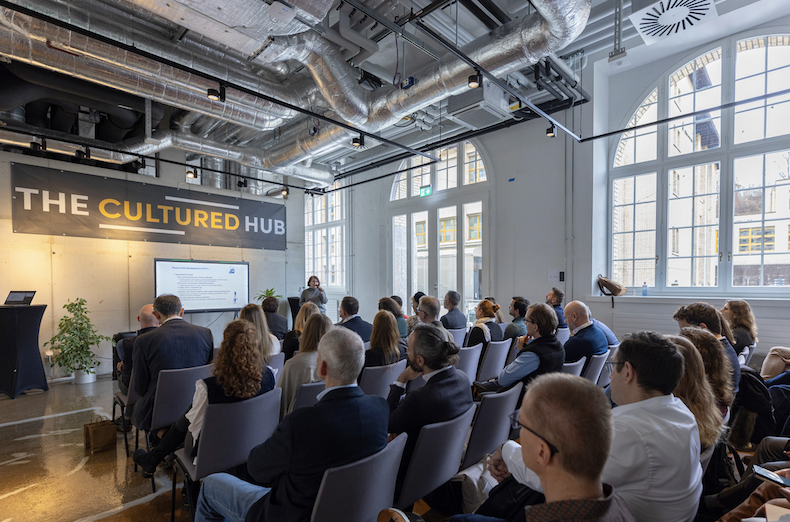
Valley partner, The Cultured Hub, has announced an expansion of its service offering with the addition of plant cell culturing capabilities, broadening its activities beyond cultured meat and leveraging this technology platform to support the growing field of alternative ingredient production. To mark this milestone, the Hub hosted the first Cultured Plant Cell Event 2025, bringing together start-ups, corporate leaders, and researchers to explore how plant cell culture can complement traditional agriculture and strengthen global supply chains for high-value ingredients such as cocoa, coffee, and citrus.
Originally created to accelerate cultivated meat and cellular agriculture technologies, The Cultured Hub now extends its infrastructure and expertise to plant cell-based processes. This expansion comes at a time when rising commodity prices, climate volatility, and increasing pressure on agricultural systems are driving demand for resilient, sustainable sourcing pathways. Plant cell culture offers a promising approach to enabling controlled, year-round production of key plant compounds independent of farmland, weather, pests, or disease.
“Plant cell cultivation represents an important new frontier in sustainable food and ingredient production,” said Ian Roberts, Chief Technology Officer at Bühler Group. “Many of the same challenges we see in cultivated meat – the need to scale, reduce cost, and ensure quality at industrial levels – also apply here. By expanding The Cultured Hub’s offering into plant cell culture, we are supporting innovators in this transition and giving the food industry a unique platform to explore new, climate resilient ingredient pipelines.”
A dynamic ecosystem of innovators
Throughout the event, participants discussed the pressures facing cocoa, coffee, and citrus supply chains, and how plant cell culturing can serve as a complementary production method for stabilizing ingredient availability. Scientific and technical sessions covered the state of the technology, recent breakthroughs, scale-up challenges, and the path from lab to market.
Start-ups actively pitched their technologies and solutions directly to industry leaders specializing in cocoa, chocolate, and coffee processing, fostering collaboration and potential partnerships. Multiple innovators in plant cell culture also presented their work across coffee, cocoa, and next-generation ingredients, including companies such as Ergo Bioscience, Coffeesai, Phyton Biotech, Spicy Cells, Kokomodo, Food Brewer, Celleste Bio, and GALY. Their contributions illustrated the diversity of approaches underway globally – from cocoa biomass grown in bioreactors to stabilized coffee cell lines and high-value plant compounds produced using controlled fermentation.
“Demand for alternative, climate-resilient ingredients is growing rapidly, and plant cell culture is emerging as a credible sourcing platform,” said Yannick Jones, CEO of The Cultured Hub. “Yet the field still faces high costs and complex technical challenges. By providing shared bioprocess infrastructure and a collaborative environment, The Cultured Hub enables both start-ups and corporates to scale more efficiently, shorten development timelines, and explore where strategic partnerships and investments can unlock the next wave of innovation.”
A scientific frontier with commercial momentum
The event also featured a keynote from Prof. Dr. Ing. Regine Eibl-Schindler, ZHAW School of Life Sciences and Facility Management, who introduced the emerging discipline of microbotanics – the cultivation of plant cells to produce targeted metabolites, flavors, and functional compounds with precision and consistency. This global network advancing plant cell research and its applications, connects researchers, start-ups, and industry to accelerate innovation in sustainable plant biotechnology.
“Plant cell factories allow us to produce molecules or biomass that are difficult, slow, or expensive to obtain from fields, while reducing exposure to climate and disease risks,” said Philippe Jutras, Founder of the Plant Cell Institute. “But as with any new technology, scaling is the bottleneck. Events like this create essential alignment between researchers, start-ups, and industry so we can move from promising lab results to meaningful commercial impact.”
A new offering to accelerate the future of ingredients
Plant cell culturing remains an emerging field, with costs driven by sterile bioreactors, energy-intensive controlled environments, and the complexity of plant cell biology. Scaling from flasks to pilot systems is technically demanding and often beyond the reach of early-stage companies. The Cultured Hub’s expansion directly addresses these challenges by providing access to advanced bioprocess equipment, expert process development support, and a neutral platform for collaboration.
Sign up for quarterly Swiss food innovation updates.
Latest News
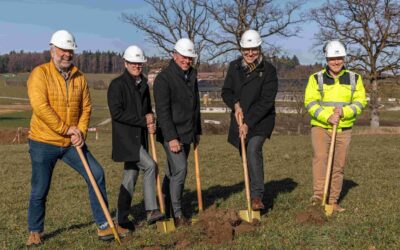
New production facility will support the evolution of fermentation-based food systems in Switzerland
The construction of the new building...
OneAgrix appoints Philippe Chatelain to Board of Advisors
OneAgrix, a Swiss–Singapore...

Pow.Bio and Bühler join forces to advance next-generation precision fermentation
Pow.Bio, the pioneer in AI-enabled...

The perfect mix of talent and tech: empowering startups in the Swiss food ecosystem
Innovation succeeds when the right...