Startupticker.ch’s Stefan Kyora: Raising visibility in a competitive market

Startupticker.ch’s Stefan Kyora: Raising visibility in a competitive market

Givaudan TW Startup Challenge

From talent and testing to features and facilities – how the Swiss ecosystem helps startups grow

Building a successful startup takes more than a great idea. SFNV’s recent dialogue series invited Valley partner featured in the SFNV Navigator to explore three challenges that can make or break an innovation journey. Click on the links below to find out what they’ve learnt while working with food innovators, the trends shaping their fields, and how startups can access support through the Valley ecosystem. 

Developing products
that consumers want

- with Inès Blal from EHL
Institute of Nutrition R&D

Attracting the
right talent

- with Manuel Lanz from FoodTechScout

Raising visibility
in a competitive market

- with Stefan Kyora from startupticker.ch

Making innovation visible

Stefan Kyora, Editor-in-Chief, Startupticker.ch

Many startups underestimate the role of communications in their growth journey. Why does visibility matter, particularly for early-stage innovators?

Stefan Kyora: Customers, business partners, investors and even potential employees want to know the background and history of a start-up so that they can assess its credibility and potential. By being featured in reputable media, start-ups make it easier for themselves to build relationships with these stakeholders. The risk of being copied as a result of such coverage, on the other hand, is significantly overestimated.

Having worked with countless Swiss startups, what distinguishes the companies that successfully capture attention from those that struggle to be heard?

Stefan Kyora: The startups that communicate most effectively are usually very clear about the problem they are solving and why it matters. They avoid jargon and make it easy for people outside their immediate field to understand the relevance of their work.

Furthermore, communication is only successful if it is targeted.  This means successful start-ups know when to report what to whom. Traditional business journalists are interested in investments or sales successes. Local newspapers always need a local angle. And platforms such as 20 Minuten or Watson can be enticed with celebrity endorsements or high-profile clients.

How can Valley partners benefit from startupticker.ch’s media partnership with SFNV?

Stefan Kyora: Through our collaboration with Swiss Food & Nutrition Valley, Valley partners are able to share relevant stories and milestones with the editorial team. This could be news, but also events, calls to action or information for our Ecosystem Directory.

We consider ourselves part of the Swiss start-up support scene. This means we support start-ups with our communications expertise as much as we can. In particular, you don’t need to come to us with a perfect story if you want Startupticker to cover it. We’re happy to help work out the angle that’s interesting for both us and our readers.

What would you like to see more startups doing to strengthen the visibility of Swiss food innovation, both nationally and internationally?

Stefan Kyora: It is precisely when you are successful, everything is going well and the company is growing that you might not think to share your continued success. Yet this would not only help the start-up itself, but also the ecosystem as a whole. Greater visibility for rapidly growing companies would make it clear that Swiss start-ups have an impact on the wider economy that should not be underestimated.

Ready to share your story?

Valley partners can access communications support, content guidance and benefit from our media partnerships through the SFNV Communications Hub.

Latest News

FoodTechScout’s Manuel Lanz: Attracting the right talent

FoodTechScout’s Manuel Lanz: Attracting the right talent

Givaudan TW Startup Challenge

From talent and testing to features and facilities – how the Swiss ecosystem helps startups grow

Building a successful startup takes more than a great idea. SFNV’s recent dialogue series invited Valley partner featured in the SFNV Navigator to explore three challenges that can make or break an innovation journey. Click on the links below to find out what they’ve learnt while working with food innovators, the trends shaping their fields, and how startups can access support through the Valley ecosystem. 

Developing products
that consumers want

- with Inès Blal from EHL
Institute of Nutrition R&D

Attracting the
right talent

- with Manuel Lanz from FoodTechScout

Raising visibility
in a competitive market

- with Stefan Kyora from startupticker.ch

Talent as a growth strategy

Manuel Lanz, Managing Director, FoodTechScout

When people talk about startup success, they often focus on funding or technology. Why do you believe talent deserves a place in that conversation?

Manuel Lanz: Funding and technology are important, but ultimately it is people who bring ideas to life. Talent plays a decisive role in how quickly a company can grow and whether products can be brought to market successfully. Especially in the food and nutrition sector, companies need teams that combine technical expertise, market understanding and execution strength. That is why forward-looking recruitment planning, a strong understanding of the talent market and access to the right profiles at the right time are essential. 

How are hiring needs evolving across the food and nutrition sector, and what skills or profiles are becoming increasingly important?

Manuel Lanz: Hiring needs in the food and nutrition sector are becoming increasingly interdisciplinary. Companies are looking for people who can connect science, technology, sustainability and business. At the same time, flexibility is becoming more important: talent is increasingly brought in on a project basis or for specific growth and innovation phases.

Beyond technical expertise, soft skills are now central. Companies need people who take ownership, communicate clearly, learn quickly and can work effectively in dynamic, cross-functional teams. What matters most is the fit between skills, personality, company culture and the current growth stage.

What support does FoodTechScout offer innovators, and how can startups ensure they attract the right people at the right stage of growth?

Manuel Lanz: FoodTechScout supports food companies in finding the talent they need to grow. With our market knowledge in the food and nutrition sector, we help companies identify the right profiles, better understand the talent market and plan recruitment more strategically. Depending on their needs, we can also take over parts of the recruitment process and provide operational support.

Through our collaboration with Swiss Food & Nutrition Valley, partners also benefit from complimentary 30-minute recruitment consultations, free events on building high-performing teams and the opportunity to post roles free of charge on the FoodTechScout job board.

If you could change one thing about how the food industry approaches talent development and recruitment, what would it be?

Manuel Lanz: I would like to see the diversity and attractiveness of the food industry become visible to talent much earlier. Many exciting companies, roles and career paths are still not well known today. Yet the food industry is a particularly attractive sector — especially in view of the transformation of the food system and its interfaces with health and longevity.

This is exactly why we developed the FoodTech Map: it makes visible which companies are active in the sector and how diverse the ecosystem is.

Building your team?

FoodTechScout’s recruitment resources and hiring support is available to Valley partners through the SFNV Navigator

Latest News

EHL’s Inès Blal: Developing products that consumers want

EHL’s Inès Blal: Developing products that consumers want

Givaudan TW Startup Challenge

From talent and testing to features and facilities – how the Swiss ecosystem helps startups grow

Building a successful startup takes more than a great idea. SFNV’s recent dialogue series invited Valley partner featured in the SFNV Navigator to explore three challenges that can make or break an innovation journey. Click on the links below to find out what they’ve learnt while working with food innovators, the trends shaping their fields, and how startups can access support through the Valley ecosystem. 

Developing products
that consumers want

- with Inès Blal from EHL
Institute of Nutrition R&D

Attracting the
right talent

- with Manuel Lanz from FoodTechScout

Raising visibility
in a competitive market

- with Stefan Kyora from startupticker.ch

From prototype to product

Inès Blal, Associate Professor and Co-Director of the EHL Institute of Nutrition R&D

Many food startups begin with a promising concept. From your experience, what separates the products that successfully reach the market from those that don’t?

Inès Blal: The companies that make the most progress tend to challenge their assumptions early and often. In food innovation, this means exploring whether the concept can be developed and whether consumers enjoy it, trust it, and are willing to make it part of their daily lives.

We’ve seen many technically impressive products struggle because consumers' and users' expectations weren't considered early enough in the development process. Food innovation is unique. Food is personal: taste, habits, culture, and emotions all shape adoption. Successful companies are those that engage with consumers and users throughout the development process and continuously test, learn, and adapt along the way.

Where do innovators most commonly struggle during the product development journey, and why are these challenges often underestimated?

Inès Blal: Many innovators focus on the novelty of the product or the technology and underestimate the challenge of translating a promising concept into a product that consumers will adopt. In food innovation, culinary expertise combined with hospitality management knowledge is essential for bridging ingredients, technologies, and consumer expectations to transform an idea into a product people genuinely enjoy and can be produced consistently at scale.  

These challenges are often underestimated because innovators tend to overlook the fact that success depends on delivering sensory appeal, quality, nutritional value, economic viability, scalability, and consistency simultaneously. This is why experimentation and early market validation are so critical throughout the development process.  

How can startups benefit from EHL’s prototyping, consumer testing, and market validation capabilities, and what types of innovators are best placed to take advantage of these services?

Inès Blal: At the EHL Institute of Nutrition R&D, we help innovators bridge the gap between technical feasibility and market success. We combine culinary expertise, hospitality management knowledge, consumer testing, and market validation. Our aim is to enable entrepreneurs and companies to refine their products and test key assumptions before committing significant resources to scaling. 

Our services are particularly valuable for innovators who have moved beyond the idea stage and need assessment and evidence that their product can deliver sensory quality, nutritional value, consumer appeal, and commercial viability simultaneously. We work with startups, established food companies, technology developers, and research institutions, helping bridge innovation to market while advancing knowledge on how food innovations are successfully developed, adopted, and scaled. 

Looking ahead, what would you like to see more of within Switzerland’s food innovation ecosystem to help promising ideas become successful products?

Inès Blal: Switzerland already has many of the ingredients needed for success: strong research institutions, innovative companies, entrepreneurial talent, and a solid food ecosystem. The opportunity now is to strengthen the connection between these actors and create more opportunities for experimentation, validation, and learning.  

I would also like to see greater use of restaurants, hotels, canteens, and other foodservice settings as spaces for innovation. These real-world environments generate valuable insights into consumer behavior and can help accelerate the journey from promising ideas to successful products.

Looking to validate your next food innovation?

EHL’s prototyping, consumer testing and market validation services are available to Valley partners through the SFNV Navigator

Latest News

Giulio Busoni: Why the food industry can’t afford to wait on AI

Giulio Busoni: Why the food industry can’t afford to wait on AI

Givaudan TW Startup Challenge

Artificial intelligence is rapidly reshaping industries around the world, from healthcare and manufacturing to finance and retail. But what does it mean for food?

To help answer that question, we partnered with Porsche Consulting to launch AI in Food, a new initiative exploring how AI can help create a more resilient, efficient and sustainable food system. Through events, expert insights, webinars and a flagship report, the initiative will bring together leaders from food, technology, research and innovation to explore both the opportunities and challenges ahead.

To kick off the conversation, we spoke with Giulio Busoni, Partner at Porsche Consulting, who works with leading consumer goods organisations on growth, operations and transformation. Drawing on experience from both within and beyond the food sector, Giulio shares his perspective on why AI matters now, what food can learn from other industries, and why the biggest challenge may not be the technology itself.

Artificial intelligence is rapidly transforming industries worldwide, from healthcare and manufacturing to finance and retail. But what does this mean for the food sector?

Giulio Busoni: A first key perspective is that the food industry no longer evolves in isolation, but within an increasing convergence across industries, most notably with life sciences and sport, centred around the theme of wellbeing and longevity. This dynamic is progressively blurring the boundaries of the consumer experience and is significantly reshaping the competitive landscape of the sector.

At the same time, the European Food & Beverage industry remains in a mature and highly significant economic sector, making a substantial contribution to GDP, employing millions of people, and built on a broad yet highly fragmented production base. It is characterized by a predominance of SMEs and a limited number of large players. The sector is also heavily exposed to international markets, with a
significant share of exports destined for non-European countries, making the ability to innovate in response to global demand increasingly critical.

A distinctive feature of the sector lies in its historical heritage and protected designations of origin, which have traditionally underpinned the competitiveness of “Made in Europe”. However, this protection is gradually weakening, making it increasingly important to adopt tools capable of ensuring traceability of origin, quality, and authenticity.

In this context, artificial intelligence is primarily emerging as an incremental enabler rather than a disruptor of business models. On the one hand, it enables improvements in supply chain efficiency, helping to alleviate pressure on margins; on the other, it enhances responsiveness and operational flexibility in the face of increasingly volatile demand, strengthening forecasting and planning capabilities.

Finally, AI also acts as an accelerator on the demand side: it allows companies to better understand consumer needs at greater speed and to reduce innovation time-to-market, making the sector more agile in an increasingly fast-changing competitive environment.

The food industry is under increasing pressure to improve sustainability, resilience, efficiency, innovation speed, and health outcomes. Why do you believe AI has become such a critical topic for the sector now?

Giulio Busoni: Artificial intelligence is not a new topic for the food industry: companies have been running experiments and pilot projects for several years, often in isolation and without large-scale integration. Today, however, a clear step change is underway, driven by a greater maturity and understanding of AI technologies, as well as by the emergence of early adopters who, having anticipated the shift, are already capturing tangible competitive advantages.

This acceleration is primarily the result of growing structural pressure on the sector. On the one hand, rising costs, across raw materials, energy, labour and logistics, are compressing margins. On the other, there is an increasing need to accelerate innovation and to respond more effectively to demand that is becoming ever more volatile and personalised. These dynamics are compounded by rising operational complexity, increasingly stringent European regulatory requirements, particularly around traceability and sustainability and persistent inefficiencies such as food waste, which continue to generate significant economic losses.

In this context, AI is emerging as a tool capable of addressing multiple challenges simultaneously across the entire value chain. The transition from pilot initiatives to scaled programmes is already visible among leading players, with applications delivering concrete and measurable impact across innovation, planning and operations.

For this reason, artificial intelligence can no longer be viewed as an experimental domain, but rather as a strategic lever essential to sustaining competitiveness in the short to medium term.

You have worked with organisations across multiple industries. What can the food industry learn from more advanced sectors in their AI adoption journey?

Giulio Busoni: A recurring pattern observed across industries is the tendency to launch pilot initiatives with strong initial momentum, which, however, remain isolated and are not designed from the outset with scalability in mind. This represents one of the most significant limitations in AI adoption journeys.

The most critical lesson is that data strategy and technology infrastructure cannot be treated as downstream considerations, addressed only after initial use cases are developed. Instead, they must be planned ex ante. It is essential to establish, from the outset, a structured collaboration between IT and business functions, capable of defining an integrated roadmap that encompasses data preparation, data quality, and the organisation’s ability to leverage data consistently and at scale.

In parallel, it is necessary to develop a use case implementation roadmap aligned with both business priorities and the maturity of the underlying data. This helps avoid a misalignment between strategic ambition and actual execution capabilities.

In the absence of these enabling conditions, pilot projects are likely to remain siloed and difficult to replicate, primarily due to limitations in data maturity or infrastructure. This typically results in marginal impact, extended development timelines, and frequent interruptions in the adoption journey, often leading to the need for programme reassessment or even a full restart.

In essence, more advanced sectors demonstrate that the critical success factor is not the initiation of pilot projects, but rather the ability to create the conditions required to scale them in a systematic and sustainable way across the organisation.

In your view, what does the food industry risk losing if it adopts AI too slowly?

Giulio Busoni: Today, the real distinction is no longer between those who adopt artificial intelligence and those who do not, but rather between organisations that use it in a limited way through isolated pilots and those that integrate it in a scaled and strategic manner across the organisation. In this respect, slow adoption exposes the sector to two primary risks.

The first relates to overall enterprise value and medium-term competitiveness. Within the European agri-food ecosystem, it is evident that companies and start-ups that have embraced AI have experienced significant value creation, demonstrating that this technology enables higher valuation multiples compared to the market average. Remaining outside this trajectory, or outside the ecosystems developing new solutions and synergies, means risking a loss of competitive positioning.

The second risk is operational and affects the entire value chain. Failure to adopt AI translates into persistent cost inefficiencies, from supply chain and manufacturing through to support function, precisely in those areas where processes are most amenable to automation. This is compounded by a decline in attractiveness to talent, who increasingly gravitate towards organisations with more advanced capabilities and forward-looking strategies.

Finally, there are direct implications for top-line performance. Consumers are demanding greater transparency and traceability, elements that are rapidly becoming prerequisites for market access. At the same time, product portfolios are ageing more quickly, requiring continuous innovation that is closely aligned with customer needs and capable of being translated rapidly into go-to-market.

In summary, delayed adoption risks simultaneously undermining enterprise value, operational efficiency, and growth potential.

When organisations begin adopting AI, what is typically the greatest challenge: the technology itself, or the people and processes surrounding it?

Giulio Busoni: The technological dimension does not represent the primary barrier; it is often the most accessible component. The more significant challenge lies in building the necessary capabilities and redefining the role of digital strategy within the organisation.

First and foremost, adopting artificial intelligence requires investment in culture and people. Organisations must develop new skill sets and integrate AI into their business strategy in a structured manner, moving beyond purely internal applications to understand how these capabilities can also create market impact.

From a technological standpoint, models, algorithms and tools are becoming increasingly accessible. The critical issue is how these tools are integrated into business processes and adapted to the specific needs of the organisation. In this context, the make-or-buy decision becomes particularly relevant, that is, whether to develop capabilities internally or acquire them externally a choice with long-term
strategic implications.

Data represents a fundamental asset. The information base that companies have built over time constitutes a genuine competitive advantage, one that can be exponentially enhanced through AI. For this reason, it is essential both to preserve this asset and to develop the internal capabilities required to manage it effectively.

In summary, technology acts as an enabler, but the success of AI adoption ultimately depends on people, capabilities, and the organisation’s ability to embed AI within its processes and overall business strategy.

Switzerland combines excellence in food science, innovation and manufacturing. What opportunity does this create in the context of the AI era?

Giulio Busoni: Switzerland represents a highly favourable environment for innovation, underpinned by a deeply integrated ecosystem that brings together universities, capital, institutions and industry within a shared medium- to long-term vision. This model translates into a high density of talent, with one of the highest concentrations of AI expertise globally.

A distinguishing feature is the role of leading universities, recognised as international benchmarks, which operate in close collaboration with industry. Food science and AI-driven innovation are not developed in isolation within academia, but emerge from joint efforts between universities and corporates, creating a virtuous cycle between research and industrial application.

This is further reinforced by the presence of advanced technology centres established by large companies. These facilities are not exclusively used for internal purposes but are, to some extent, opened up to other players within the ecosystem. This helps lower barriers to entry, particularly for smaller organisations—facilitating access to advanced capabilities and infrastructure.

Overall, Switzerland provides a structurally strong foundation that is already highly enabling for the development of AI in the food sector. At the same time, this potential could be further accelerated through a stronger focus on capital availability and start-up integration, thereby enhancing the system’s ability to generate innovation at scale.

When launching the “AI in Food” initiative, what is one question you believe every leader in the food sector should be asking themselves today regarding AI?

Giulio Busoni: The fundamental question every leader should be asking today is whether artificial intelligence is merely an operational tool or a central pillar of the company’s overall strategy. All subsequent decisions stem from this choice.

Once the strategic positioning of AI has been clarified, a second question becomes critical: whether to build capabilities internally or continue relying on AI as an external service. This decision has direct implications for long-term value creation.

If AI is treated as a peripheral element—confined, for example, to the IT function without meaningful integration with the business—the risk is the proliferation of fragmented initiatives: multiple pilots, separately purchased tools, and uncoordinated applications. In such a scenario, benefits remain incremental and isolated, failing to translate into a strategic impact on the organisation. Moreover, relying predominantly on external solutions raises the risk that both data and the associated competitive value are effectively controlled by third-party providers, limiting the company’s ability to differentiate.

Conversely, positioning AI as a strategic pillar implies investing in proprietary data infrastructure, developing internal capabilities, and enabling the widespread application of AI technologies across all business processes. This approach allows organisations to fully leverage the information assets they have built over time and to unlock a step change in performance and growth.

In essence, the real choice is whether to use AI tactically or to transform it into a structural and sustainable competitive advantage.


Join the AI in Food community

Latest News

How Voltiris is building on its Helbling Venture Challenge success

How Voltiris is building on its Helbling Venture Challenge success

Givaudan TW Startup Challenge

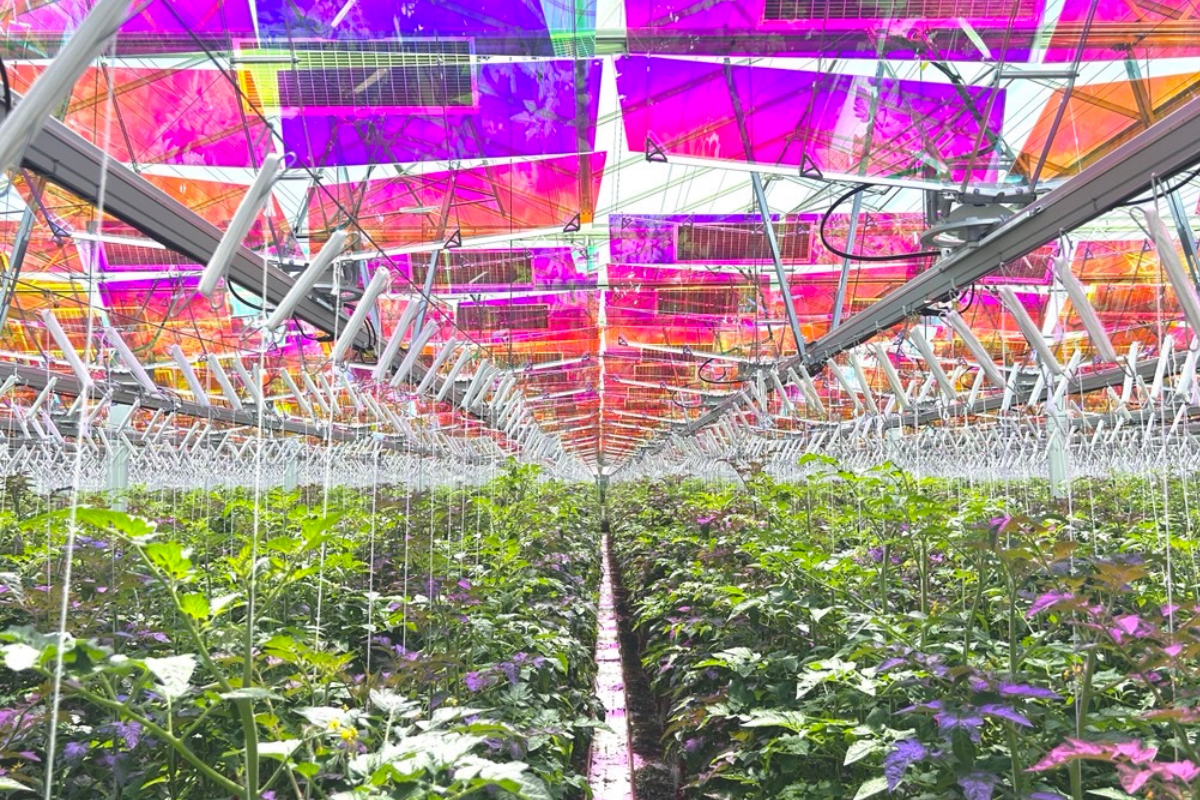
When Voltiris won the Helbling Venture Challenge 2025, the Swiss climate-tech startup impressed the jury with its innovative approach to greenhouse agriculture. By intelligently harnessing different parts of the light spectrum, Voltiris enables greenhouses to produce both food and solar energy simultaneously, helping growers improve sustainability, resilience and resource efficiency.

Seven months later, the company continues to build momentum, demonstrating how the right combination of innovation, expertise and collaboration can help promising technologies scale their impact.

Winning the Helbling Venture Challenge

The Helbling Venture Challenge supports ambitious startups tackling major technological challenges. Beyond recognition, the winning company receives hands-on product development support from Helbling Technik's multidisciplinary team of engineers, designers and innovation experts.
For Voltiris, the challenge came at an important stage of growth. While the company already had a strong technological foundation, the collaboration created an opportunity to step back from day-to-day operations and focus on key strategic and development priorities.

Commenting on the value of the challenge, Nicolas Weber, CEO & Co-Founder of Voltiris said, "Helbling Technik's engineering expertise came at a pivotal moment, as we move from a proven technology toward industrial-scale deployment. Working alongside their multidisciplinary team gave us access to real product development and industrialisation know-how. This helped us pressure-test our design choices, sharpen our development roadmap, and build confidence in how we scale our technology toward production. It's exactly the kind of hands-on technical partnership that helps a hardware startup turn a promising innovation into a robust, scalable product."

Creating strategic clarity for growth

Through workshops, ideation sessions and ongoing exchanges, Voltiris worked closely with Helbling's team to explore new concepts, validate opportunities and further refine its roadmap. The structured approach helped align technology development even more closely with evolving market needs, while also creating space to reflect on topics such as scalability, market positioning and long-term product evolution.

The collaboration highlights how partnerships between startups and experienced innovation teams can go beyond accelerating technology development. They can also provide strategic clarity, strengthen resilience and help companies navigate the challenges that come with growth.

Reflecting on the collaboration, Nicolas Schärer, Managing Director and Partner at Helbling Technik highlighted the qualities that made Voltiris stand out: "Voltiris has both a compelling vision and a team with the determination to turn that vision into reality. Throughout the collaboration, we were impressed by their openness to challenge assumptions, explore new perspectives and continuously refine their approach. That's exactly the kind of mindset that helps innovation move from promising technology to real-world impact."

Looking ahead to the 2026 challenge

While Voltiris is building on the momentum created by its 2025 win, the next generation of Helbling Venture Challenge participants is already underway.

This year's edition focuses on Physical AI – intelligent systems that can perceive, understand and act in the physical world. From robotics and autonomous systems to smart industrial technologies, the challenge highlights startups working at the intersection of AI, engineering and real-world impact.

The Top 10 startups for the Helbling Venture Challenge 2026 have now been selected. Over the coming months, the teams will work closely with Helbling experts as they refine their technologies and prepare for the final pitch event in September.

Find out which startups made the list here

Get the latest Swiss food innovation news, events and jobs in your inbox.

Latest News