Bühler opens puffing technology center to bolster product development capabilities

Bühler opens puffing technology center to bolster product development capabilities
The Future of Food: Givaudan, Nestlé R+D Accelerator Lausanne and FoodHack launch the 2025 FoodTech World Cup

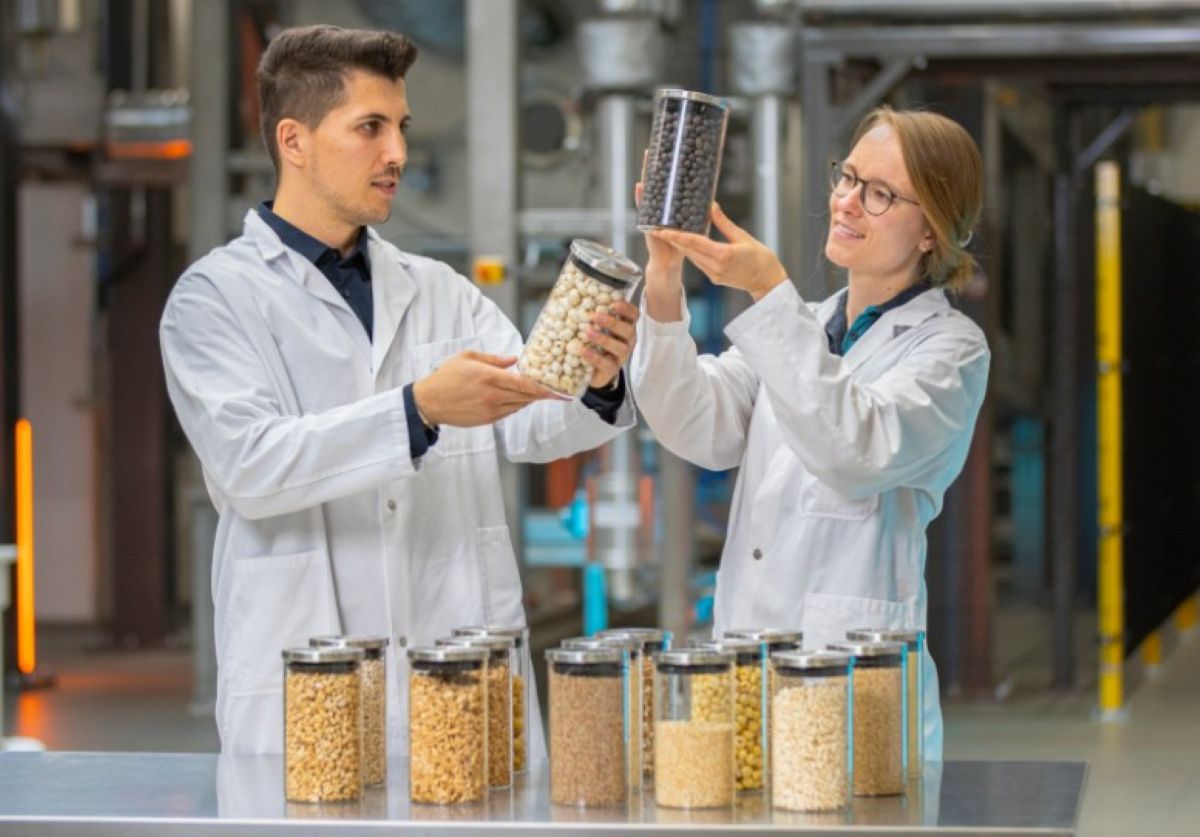
Swiss tech leader Bühler has opened its new Puffing Application Center in Uzwil, Switzerland, providing food and feed producers industrial-scale capabilities to develop innovative, plant-based, and affordable products. The center strengthens Bühler’s network of research and training centers, equipping customers with the tools and expertise to test, optimize, and scale up puffed grain and pulse products rapidly and efficiently – all under one roof. 

Puffing is a hydrothermal process that uses heat and pressure to significantly expand the volume of raw materials. The technology is versatile and applicable to a broad range of products – snacks, ready-to-eat breakfast cereals, confectionery, bakery items, and dairy applications. Their increased volume and porosity make them lighter and crispier. Puffing enhances digestibility by breaking down starches, extends shelf life by reducing moisture, and boosts nutritional value through preserving and easy enrichment with vitamins, minerals, or proteins.

To support customers in leveraging the full potential of this technology, Bühler has launched its new Puffing Application Center, a platform for innovation, testing, and product development. 

“With this center, we are ready to support customers worldwide – not only in food, but also in pet food and feed, where demand for crispy, nutritious products is on the rise,” says Christoph Vogel, Head of Business Unit Human Nutrition at Bühler. “It is an invitation to the industry to innovate sustainably and cost-effectively, amid growing pressure on margins and supply chains.”

Capacity to match every process

Bühler Cerex puffing technology for food and feed is available in three configuration sizes to meet different production needs. The Single system supports throughputs of 350 to 500 kilograms per hour (kg/h), making it ideal for early-stage product development and small-scale production. The Double system offers capacities ranging from 700 to 1,000 kg/h, enabling mid-scale operations. For high-capacity requirements, the Quattro system delivers between 1,400 and 2,000 kg/h. At the Puffing Application Center, the Single system is available for trials and demonstrations. 

Thanks to the new research and training center, customers can rapidly test and optimize puffed products made from a wide variety of grains and pulses, such as quinoa, chickpeas, and ancient grains. The ability to experiment with diverse raw materials helps create products that meet consumer demand for healthier, clean-label options, with lower fat, sugar, and salt, and higher protein and fiber content. “With Bühler’s technical expertise and advanced equipment, customers can fine-tune recipes and validate product performance at scale, all without the need to invest in their own R&D infrastructure,” says Carol Krech, Head of Market Segment Cereals & Snacks at Bühler.

The focus of the new production facility in Memmingen will be on scaling and further developing the group of products that relies on Planted’s proprietary complete meat muscle. The muscle grows through proprietary fermentation processes and can be further processed into a variety of meat cuts. The planted.steak based on this advanced technology was launched in 2024 and has triggered strong demand from consumers and restaurants - demonstrating the potential of alternative proteins in terms of flavour, health benefits and sustainability. The opening in Memmingen was announced in late 2024 as an answer to this increased demand. 

All under one roof 

The Puffing Application Center is fully integrated into Bühler’s network of research and training centers in Uzwil, which includes facilities such as the Grain Innovation Center, Flavor Creation Center, Food Creation Center, and Protein Application Center. This unique configuration enables customers to develop complete product concepts – from puffed snack pellets to cereal bars and chocolate applications – all within a unified innovation process. Customers can bring pulses to Bühler’s Grain Innovation Center for cleaning and sorting, puff them at the new facility, and finalize products at adjacent centers, streamlining the entire development process. 

For more information, visit the Puffing Application Center website.

Never miss a Swiss food innovation morsel.

Latest News

Igeho Rising Star 2025: five finalists announced

Igeho Rising Star 2025: five finalists announced

The Future of Food: Givaudan, Nestlé R+D Accelerator Lausanne and FoodHack launch the 2025 FoodTech World Cup

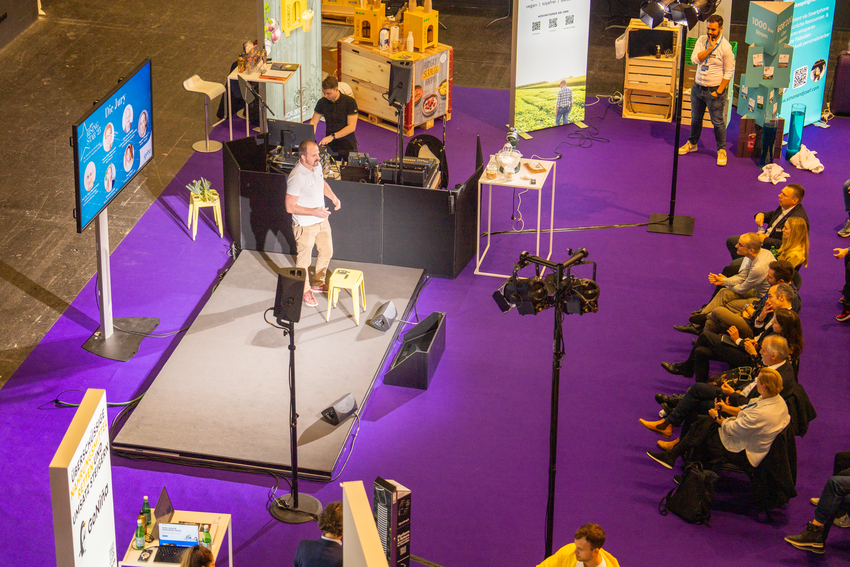
The results are in: The Swiss food and hospitality ecosystem has made its selection of the five start-ups for the final of the Igeho Rising Star Award 2025. Catchfree, Circunis, Foodflows, GoNina, and Yumame Foods are the five innovators selected to showcase their innovations in the final on 18 November in Basel.

The Igeho Rising Star Award 2025 final will take place on 18 November at 4.15 pm on the Igeho 2025 stage. The five finalists will be able to present their innovations to the audience and then answer questions from the jury. Catering and food expert Andrin Willi will host the final.

From 7 April to 30 May, the Swiss hospitality ecosystem could select their favourite innovative solutions and products as part of the public voting process. The five finalists showcase a diverse array of sustainable food innovations: 

  • Catchfree develops plant-based seafood alternatives
  • Circunis has launched a digital marketplace for surplus food
  • Foodflows streamlines farm-to-table purchasing
  • GoNina uses AI-driven forecasting for catering businesses
  • Yumame Foods creates fungi-based food products.

As Switzerland’s leading international hospitality industry platform, Igeho is committed to fostering innovation. With the 2025 Igeho Rising Star Award, it provides emerging companies in the hospitality sector with a valuable opportunity to showcase their businesses, raise awareness of their innovations, and connect with industry professionals.

In collaboration with Swiss Food & Nutrition Valley, Igeho aims to use this award to drive innovation by offering startups a platform and facilitating networking opportunities.

The jury

This year, the jury for the award will once again consist of experts from the Swiss food industry:

  • Pascal Bieri, Co-Founder at Planted
  • Dr Claus-Heinrich Daub, Professor of Sustainable Business Management at FHNW
  • Marina Helm Romaneschi, Marketing & Innovation Strategy at Swiss Food Research
  • Christine Schäfer, Senior Researcher at the Gottlieb Duttweiler Institute
  • Rebecca Clopath, an Alpine natural chef
  • Christian Gerber, Head of Innovation Management at ZFV.

All 15 start-ups that participated in the public voting for the Rising Star Award will have the opportunity to showcase their innovations to the Swiss hospitality audience over two days at Igeho 2025 in Basel. In addition to the five finalists, the following start-ups will also be exhibiting at the trade fair: Actidot, FoodFor, Hexafed, LOVYÜ, Niatsu, Sanvitafood, Saya Suka, SwissMiso, and TrueFoods.

Igeho: International platform for the hotel, catering, take-away and care sectors

Igeho is the most important international industry platform for the hotel, catering, take-away and care sectors in Switzerland. As a live marketing platform it offers the hospitality branch a comprehensive market overview, interesting networking opportunities and new impulses around the topic of hospitality. The wide range of products and services will be complemented by an exciting supporting programme on current trends and the most important topics in the hospitality industry. The next Igeho will take place at Messe Basel from November 15 to 19, 2025.

www.igeho.ch

Sign up for quarterly Swiss food innovation updates.

Latest News

New Roots founders launch a new plant-based protein, Yellow Sunshine 

New Roots founders launch a new plant-based protein, Yellow Sunshine 

The Future of Food: Givaudan, Nestlé R+D Accelerator Lausanne and FoodHack launch the 2025 FoodTech World Cup

The cofounders of Valley partner New Roots, Alice Fauconnet and Freddy Hunziker, have developed a new plant-based brand integrating fermented functional proteins based on the versatile lupin legume.

Leading with lupin

Announcing the launch of Yellow Sunshine - named for the bright colour of the legume that forms its key ingredient, Alice and Freddy’s focus is on delivering products that support both personal and planetary health. Building on their years of experience in plant-based food innovation with vegan creamery New Roots, Yellow Sunshine is aimed at blending functionality, taste and sustainability in a single package. 

Lupin was carefully selected for its versatility, sustainable credentials and nutrition benefits. It is a legume rich in protein and fibre, composed of 40% protein, and free from cholesterol and saturated fats. Containing all of the nine essential amino acids, Yellow Sunshine is also rich in magnesium, potassium, iron, zinc, and B vitamins. 

A scalable sustainable solution 

But Yellow Sunshine does not just represent a nutritional innovation: it’s a scalable sustainable solution to the environmental challenges posed by traditional animal farming. The key ingredient naturally restores nitrogen to the soil, thereby reducing the need for chemical fertilisers. The bean’s roots also enrich the soil in which they grow, and the founders are passionate about sourcing the crop solely from regenerative farms in Switzerland and Germany, in areas known for sustainable farming practice and fertile soil. This equates to a short, transparent value chain with minimal processing that preserves maximum nutritional integrity.

Co-founder Freddy Hunziker explained how the pair wanted to create a product that is not just an alternative to animal protein, but a truly forward-looking protein: ‘We’re pioneering a new protein source while working directly with Swiss and German farmers to build an ingredient supply chain from the ground up. This is about making food that’s better - for people, for farmers, and for the soil.’

Unlocking flavour with fermentation

The founders chose fermentation for its ability to enhance the digestibility, flavor, and nutritional value of foods. As well as this, the process also naturally extends shelf life and enriches the products with beneficial probiotics, bringing gut health benefits to consumers. By combining fermentation with sustainable farming practices rooted in local partnerships, the aim is for a new generation of deeply functional and fairly farmed plant-based foods.

For more information visit Yellow Sunshine


Never miss a Swiss food innovation morsel.

Latest News

5 questions for Anna – the Valley’s new COO

5 questions for Anna – the Valley’s new COO

 Linda Grieder Kern, CEO of Rethink Resource
We’re thrilled to welcome Anna Mucha to the Swiss Food & Nutrition Valley team as our new Chief Operating Officer. With deep roots in both corporate supply chains and agile entrepreneurship, Anna brings a rare blend of operational depth, systems thinking and innovation mindset to the Valley. We caught up with her to talk about circularity, bold collaboration, and what’s next for SFNV.

What motivated you to join Swiss Food & Nutrition Valley as COO?

Looking back, I started my career by building reliable and sustainable supply chains within food. I then moved on to build a company and a family. Now I’m asking myself: what does it take to build a thriving ecosystem? I've experienced firsthand how powerful systemic collaboration can be when tackling complex problems – much like in nature, everything is interconnected. The Valley's mission to pioneer future-proof food systems aligns perfectly with my values. What excites me most is applying my operational expertise to transform bold visions into tangible results.

How has your experience as a founder shaped your approach to this new role?

Founding a company was like getting an intensive MBA in everything – product development, marketing, finance, and HR – all compressed into real-world experience you can't get anywhere else. But the two most crucial skills I developed were focusing relentlessly on what you do best and making the impossible possible with limited resources.

As a founder, I also learned the importance of building your own ecosystem. Now I'm excited to apply these same principles at the Valley: that laser focus on core strengths and resourceful execution will be essential for scaling collaborations effectively across our network.

How can SFNV help scale circular models within Switzerland’s food system?

The Ellen MacArthur Foundation's "Big Food Redesign" highlights four critical concepts – regenerative practices, low-impact, diversity, and upcycling – that must be designed into our food systems rather than retrofitted afterwards. The Valley is well positioned to weave these principles directly into our ecosystem and support partners to strengthen their work in these areas going forward.

What’s one thing people might be surprised to learn about your journey?

A lot of things in my life happened through serendipity – by being at the right time in the right place. There is a lot of power in knowing what you want in your career and actively communicating it to everyone, but the rest is walking through doors when they open. I have two personal mantras: “no hay camino, se hace camino al andar”, which basically means every way is unique and the path you took might only make sense in hindsight. The second one is: “emotion creates motion”. So I go where the energy flows, where my passion lies and I try to play to my strengths.

What does a future-ready food system look like to you?

It’s one where sustainability, health and profitability aren’t trade-offs, but mutually reinforcing. It’s local and global, tech-enabled and people-powered. And, most importantly, it’s built on a foundation of collaboration. I think Switzerland is uniquely positioned to lead by example – combining scientific excellence, entrepreneurial drive and a collaborative mindset. I’m excited to help the Valley make that vision a reality.

Latest News

Impact Digest | Sustainable Packaging 

Impact Digest | Sustainable Packaging 

Impact Digest | Cultured foods: How can we drive impact at scale?

Well designed and well implemented packaging solutions have a crucial role to play in shaping more sustainable food systems. From reducing food loss and waste to ensuring that 10 billion people have access to safe and nutritious food, how we transport and store our food and drinks is more important than ever.

Accordingly, innovators across Switzerland, and Europe more broadly, are busy scaling up sustainable packaging alternatives and rethinking reuse and recycling to make our food last longer. At our Impact Forum: Sustainable Packaging on 08 May 2025, we invited three expert speakers to discuss the field as it stands with Valley CEO Christina Senn-Jakobsen. Here’s what we learned…

Key Takeaways

  • Legislation is changing: New European packaging legislation (PPWR) came into force earlier this year, but the panel agreed it appears to be creating more confusion than clarity in many areas. 
  • There is room for improvement: The panel agreed on the need for better consumer education and effective recycling systems. Packaging regulations are complex and there is a need for clear, factual communication to consumers.
  • Paperisation continues to be a big trend: Paperization is a growing trend in the packaging industry, with manufacturers seeking to improve recyclability by introducing components made of renewable, fibre-based materials. However, our speakers also addressed the challenges of this and how reducing fossil-based plastic can be equally important. 
  • Cooperation across the value chain is needed to achieve circularity: The value of partnerships with local communities, governments, and competitors to grow the reusable packaging market cannot be underestimated. Extended producer responsibility schemes to drive circular economy improvements are also important.
  • Greater investment is required to meet the needs of a growing population: We need more investment related to sustainable packaging, and this is requested by our customers, the food and beverage brands, but also by consumers and the society.
  • Growing awareness on multiple fronts: Understanding of sustainability and regulatory changes are driving shifts in consumer demand and behaviour.Consumer awareness is becoming more sophisticated, too, with the public more engaged with the benefits of reuse vs recycling and the carbon footprint of different packaging. 

Packaging as a holistic system
Insights from Ann Lorentzon, Project Leader, RISE Research Institutes of Sweden

Ann highlighted the complexities of sustainable packaging, noting the mismatch between environmental and recycling concerns. When companies approach RISE asking what constitutes a sustainable packaging, Ann shared that even after all the classic sustainable markers have been met, there are still issues that can arise. For example, replacing plastic with paper to create climate-smart packaging can create recycling issues, while removing laminates to simplify the recycling process can lead to increased food waste. Ann emphasised how crucial it is to be aware of this dilemma when trying to make a sustainment packaging. 

With this in mind, Ann explained that there was hope that the new European packaging legislation (PPWR) would provide more clear direction. Unfortunately, in Ann’s view, it has increased confusion due to the 10 different requirement areas, which all come into effect at different times.   

Ann also stressed that in all this discussion about what constitutes sustainable packaging, it’s vital to remember why we use the packaging. Packaging needs to meet various functions in the process from production to consumption, and in this, product protection is the most critical function to reduce environmental footprint. Both under packing and over packing lead to increased environmental consequences. Over packing can use too many resources, adds unnecessary weight and volumes and can lead to secondary problems such as higher transport emissions. But under packing can equally lead to much faster negative environmental impact because it results in product damage and waste of both product and the packaging. The goal, Ann explained, is to achieve an optimum packaging design which minimizes resource use and environmental impact for the entire system. She summarised that, in her view, sustainable packaging with a minimised environmental footprint must consider the whole system holistically: the product, the distribution and the packaging.

New developments in design and materials
Insights from Davide Braghiroli, Director of Sustainability & Packaging Regulation, Tetra Pak

Companies like Tetra Pak are always evolving, Davide explained, and now is no different –  the beverage industry is transforming. More and more products are needed to meet the demands of the 8 billion people on Earth. In conjunction with this, consumers are becoming more sophisticated in their understanding of sustainable packaging and demanding better alternatives. 

Davide outlined Tetra Pak's efforts to reduce climate change, introduce circularity, and develop new materials. He pointed to the trend of paperisation - whereby manufacturers look to improve recyclability by introducing components made of renewable, fibre-based materials. Tetra Pak is currently trialling a paper-based cap for carton packaging, for example.  

Tetra Pak is also working to support ambient distribution, so distribution without refrigeration, to really reach every corner of the planet, and prolong the shelf life of products in all climates. Davide gave the example of paper packaging that consists of 70% cardboard,  25% polymer and a small 5% of aluminum. The main development in design for recycling is the replacement of the aluminum barrier layer, which is extremely important, and Tetra Pak has seen great success so far with a paper-based barrier layer.  

He also reminded the audience of the importance of having alternatives to fossil-based materials. Renewable materials are important, hence increasing the amount of paper packaging, but even in the plastics segment, TetraPak are committed to reducing the amount of plastic produced with fossil fuels.

Packaging as a service
Insights from Frank Plessers, Founder & CEO, futuREproof

Frank began by explaining how many single-use packaging collection systems are still insufficient, resulting not only in waste (undermining efforts towards a circular system) but also in resource depletion. Unfortunately, bad waste management results in microplastics, which end up in our bodies, again, contributing to various health and environmental issues. Even paper packaging is unfortunately sometimes combined with forever chemicals, which again needs to be disposed of thoughtfully, and results in damage to biodiversity. So reuse, as opposed to recycling, is basically a whole different approach towards packaging.  

Frank explained futuREproof’s mission: introducing reusable packaging solutions that are premium quality and technologically integrated. To achieve this – and make reusable packaging ‘the new normal’ – their model involves leasing reusable packaging and coordinating collection and cleaning through a mobile application. The basic idea is that cheap and sustainable packaging does not exist. Instead, futuREproof take on the high upfront costs – banking on the premium materials being used again and again, up to 400 times or more – and then maximise its value and minimise its impact. Nonetheless, the financial impact of collection and cleaning remains challenging.  

One of the biggest issues is that many elements related to convenience and cost are defined by how often something is used and what the economies of scale are. Frank explained this creates something of a ‘chicken and egg’ situation, where you need to have the collection infrastructure to make it easy for the consumer, but you typically can only get there if you grow accordingly. While obviously extended producer responsibility can help in this aspect, Frank explained that this is typically not covered directly by the producers and manufacturers. 

Hungry for more?
Join us for our next Impact Forum on Nutrition & Mental Health on 10 June.

Latest News