
Alessandre Keller joins the SFNV Steering Committee to drive innovation across health, nutrition and food
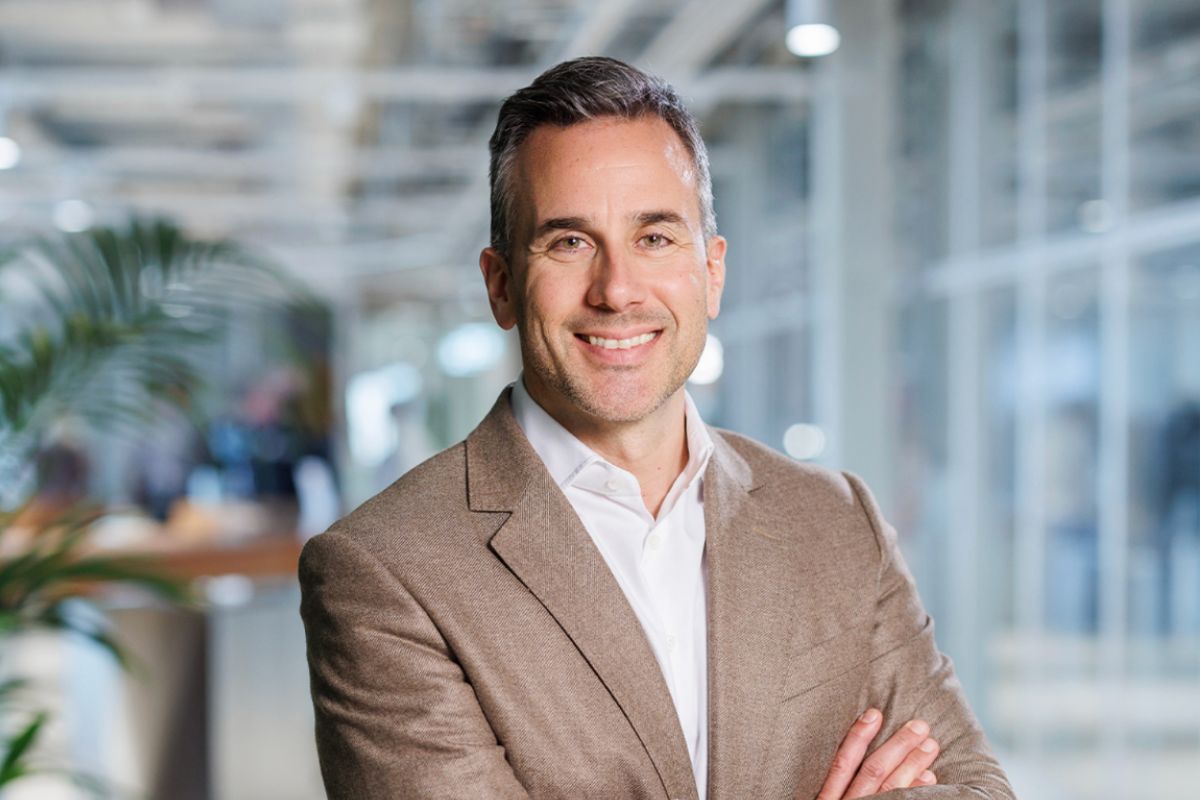
The future of health will increasingly be shaped through nutrition, prevention, and everyday choices, according to Alessandre Keller, who has joined the Swiss Food & Nutrition Valley Steering Committee. Alessandre brings extensive international leadership experience spanning food, healthcare, diagnostics, and nutrition, with senior roles at Nestlé, Unilabs, and dsm-firmenich. Passionate about bridging science, business, and real-world impact, he believes Switzerland is uniquely positioned to accelerate innovation at the intersection of food, health, and technology. We recently caught up with him to discuss the convergence of nutrition and healthcare, the importance of ecosystem collaboration, and how Switzerland can strengthen its role as a global hub for food and health innovation
Alessandre, welcome to the Valley! What motivated you to join the Swiss Food & Nutrition Valley Steering Committee at this point in your career?
Thank you. I’m very pleased to join the Valley. What motivated me is the belief that the future of health will not only happen in hospitals, diagnostics, or pharma. It will increasingly happen earlier, through nutrition, prevention, science, and everyday choices.
Throughout my career, across Nestlé in food and beverage, Unilabs in medical diagnostics, and now dsm-firmenich in health, nutrition, and care, I have seen how powerful innovation can be when different worlds connect. That is what I find exciting about Swiss Food & Nutrition Valley. It brings together the right ecosystem to accelerate meaningful change.
You’ve led transformations across healthcare, diagnostics, and nutrition globally. How do you see these sectors converging in shaping the future of food and health?
I see a strong convergence between food, nutrition, diagnostics, and health. We are moving from a very reactive healthcare model to one that must become much more preventive and personalised. Nutrition has a major role to play in that shift. Diagnostics, biomarkers, data, and AI can help us better understand individual needs. Food and nutrition companies can then translate this science into solutions people can use in their daily lives.
For me, this is exactly where Swiss Food & Nutrition Valley can play an important role: connecting science, industry, startups, and public stakeholders so that innovation becomes more practical, scalable, and impactful.
From your experience across regions like China, Latin America, and Europe, what global insights can Switzerland leverage to strengthen its position as a food innovation nation?
What I have learned across regions is that innovation is not only about science. It is also about speed, partnerships, consumer relevance, and execution.
Switzerland has a very strong foundation: world-class science, strong companies, credibility, quality, and an entrepreneurial ecosystem. The opportunity is to connect these strengths even more and to make Switzerland not only a place where innovation is created, but also a place where innovation is scaled and shared globally. Swiss Food & Nutrition Valley can help make that bridge stronger.
Having driven large-scale transformations, what do you see as the biggest barriers to implementing nutrition and health innovations at scale today?
One of the biggest barriers is fragmentation. There are many great ideas, technologies, ingredients, and scientific insights. But they often remain in separate worlds: academia, startups, corporates, healthcare, regulation, consumers. The challenge is to bring these worlds together around clear priorities and real use cases.
Another barrier is scale. It is one thing to create an exciting innovation. It is another to make it accessible, affordable, trusted, and relevant in people’s everyday lives. That is why I believe the Valley’s mission is so important. It can help move the ecosystem from good ideas to concrete impact.
You’ve worked extensively on early-life and healthy-aging nutrition. How can the food system better support people across all life stages moving forward?
I believe nutrition needs to become much more life-stage specific. The needs of an infant, a child, an active adult, someone managing metabolic health, or an aging person are very different. Science is helping us better understand these needs, from early-life nutrition to healthy aging, gut health, immunity, and personalized nutrition.
The food system can support people better by moving from generic nutrition to more targeted, science-backed solutions that are still simple and relevant for everyday life. This is also where Switzerland has a real opportunity: strong science, strong trust, and a strong innovation ecosystem.
What role do large multinational companies play in accelerating more sustainable and health-focused food systems?
Large companies have a responsibility because they bring scale, capabilities, investment, and global reach. But they cannot do it alone. The future will come from more open models, where large companies collaborate with startups, universities, suppliers, customers, and public stakeholders.
In my current role at dsm-firmenich, I see every day how important it is to connect B2B science and innovation with real consumer and health needs. That bridge between science, business, and people is essential if we want to create more sustainable and health-focused food systems.
Collaboration is at the heart of Swiss Food & Nutrition Valley. What does effective collaboration look like to you, and where do you see the biggest opportunities for partnerships?
For me, effective collaboration starts with a shared purpose and a very practical mindset. It is not collaboration for the sake of networking. It is about bringing the right people together to solve concrete challenges faster than any one organisation could do alone.
The biggest opportunities are at the intersection of nutrition, health, biotechnology, sustainability, and digital. This is where we can create solutions that are science-based, scalable, and relevant for people. SFNV is well positioned because it can act as a connector and accelerator across the ecosystem.
What are your priorities as a Steering Committee member? Where would you like to see the Valley make the greatest impact?
My first priority will be to listen and learn from the ecosystem. Then I would like to contribute in areas where I have experience: connecting health and nutrition, scaling innovation globally, building bridges between B2B and B2C, and helping translate science into business and societal impact.
I would like to see the Valley make the greatest impact in strengthening Switzerland’s position as a global hub for food, nutrition, and health innovation, with a very clear focus on real outcomes for people and the planet.
Is there a message you’d like to share with the Swiss Food & Nutrition Valley community?
I’m genuinely excited to join the Swiss Food & Nutrition Valley community. I believe Switzerland has a unique combination of science, talent, entrepreneurship, quality, and global influence.
The opportunity now is to connect these strengths even more and accelerate innovation with real impact. I look forward to learning from the community, contributing my international experience, and helping build collaborations that can improve health and nutrition outcomes far beyond Switzerland.
Never miss a Swiss food innovation morsel.
Latest News
The Canton of Fribourg hands over the keys to Agroscope’s new laboratory in Posieux
The Canton of Fribourg officially...

Consumer understanding takes centre stage at Bridge2Food Europe 2026
How do we develop foods that are...
Nutrition4MetabolicHealth: Why a leading reinsurer is prioritising prevention
Non-communicable diseases such as...
Startupticker.ch’s Stefan Kyora: Raising visibility in a competitive market
From talent and testing to features...