From GLP-1 to gut health: the future of food as preventive health

Adopting healthier, nutrient dense and balanced dietary patterns can improve life expectancy and reduce the risk of age-related diseases.
Today, advances in metabolic medicine, microbiome science and personalised nutrition are reshaping how we think about the role of food in health. Many of these breakthroughs begin with scientific discovery — from understanding how our cells produce energy, to how gut microbes interact with nutrients, or how individuals respond differently to diet. Yet the real challenge lies in translating these insights into breakthrough solutions that fit seamlessly into everyday life.
Across Switzerland’s food innovation ecosystem, companies are tackling this challenge from multiple angles. Ingredient specialists are improving the nutritional profile of everyday foods, large companies are investing in targeted nutrition platforms, and emerging brands are developing functional products designed around gut health and energy. At the same time, digital health tools are helping individuals turn complex biological insights into practical daily habits.
In this article, six Valley partners share their take on how emerging science is shaping the future of preventive nutrition. Interested in a specific area? Click on the links below to jump to the most relevant content:
The biology behind preventive health
- Cellular health is emerging as a new frontier in nutrition science: In our research, we are increasingly exploring how nutrition can support cellular processes that are essential for healthy ageing. Recent clinical findings show that the nicotinamide, a form of vitamin B3 (niacin) and pyridoxine, a form of vitamin B6, can significantly boost muscle stem cell activity and aid in the muscle repair process after intense exercise or injury. The understanding of how such bioactives enhance muscle recovery opens the door for new opportunities to support strength, resilience, and long‑term functional health across the lifespan.
- The gut microbiome is becoming a key pathway linking diet and longevity: Molecules such as NAD⁺, a co enzyme found in all living cells play a key role in energy production and cell function, yet their levels naturally decline over time. Our recent work highlights how certain NAD⁺ precursors interact directly with gut microbes, enhancing their activity and driving the production of beneficial metabolites that support healthy aging. This reinforces the idea that nutritional solutions containing NAD+ precursors could influences health not only directly, but also through interactions with our microbial ecosystem.
- Nutrition science is opening new opportunities for targeted preventative health solutions: As our understanding of the links between dietary quality metrics, cellular metabolism and the microbiome deepens, it is becoming possible to design more targeted nutrition solutions to support healthy ageing. In addition, as people reach midlife and beyond, their nutritional needs change and they may face challenges linked to metabolic health, mobility, cognition, digestion and sleep. These insights are opening new avenues for nutritional solutions that help individuals proactively support their health as they age. We recently launched Nestlé Vital to complement these shifting needs with science‑backed nutritional drinks. Additionally, emerging research also shows that nutrition may influence the pace of ageing, an area we continue to explore.
- Precision nutrition starts with understanding our genes and how they respond to our environment: Not everyone responds to food in the same way. Advances in nutrigenomics are revealing how genetic differences influence how individuals metabolise nutrients and respond to different dietary patterns. Epigenetics, the science of how genes are used, also allows us to estimate how our diet will impact our future health. These insights are helping researchers and health professionals better understand why some people are more vulnerable to certain health risks than others.
- Epigenetic insights can help identify risks before symptoms appear: By analysing how genes interact with diet and lifestyle, it is possible to identify early signals linked to metabolism, nutrient utilisation and long-term wellbeing. This creates new opportunities to take a more preventive approach to health by adapting nutrition strategies earlier in life.
- Genomics and Epigenomics are laying the foundation for precision nutrition: As epigenetic research continues to advance, nutrition recommendations are likely to become more tailored to individual biology. Integrating genomic and epigenomic insights with nutrition science could help create more targeted strategies that support long-term health and disease prevention.
Rethinking how food is designed
- GLP-1 therapies are changing how people eat: The rapid adoption of GLP-1 medications is beginning to change eating behaviours. Early data shows that more than half of users report eating smaller portions, highlighting how appetite regulation is shifting consumption patterns.
- When people eat less, every bite matters more: As portion sizes decrease, the role of food experience becomes even more important. Consumers still expect foods to deliver enjoyment and satisfaction, even in smaller quantities. This creates new opportunities to design foods that deliver flavour, satiety and appropriate nutrient density in smaller portions while supporting balanced nutrition.
- A new opportunity to rethink how food supports wellbeing: GLP-1 therapies are part of a broader shift toward metabolic health and preventative care. For the food industry, this opens the door to rethinking product design — from taste and texture to nutrient composition — so that food continues to play a positive role in people’s health journeys.
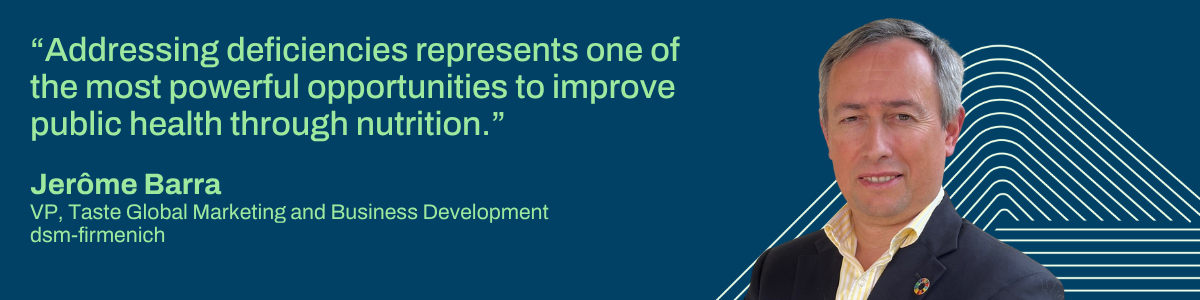
- Closing nutrient gaps is essential for preventive health: Many people worldwide still fall short of essential nutrients such as vitamins, minerals and omega-3 fatty acids. These nutrient gaps can have long-term consequences for metabolic health, immunity and overall wellbeing across all life stages. Addressing these deficiencies therefore represents one of the most powerful opportunities to improve public health through nutrition.
- Improving everyday foods can have a major health impact: While breakthrough innovations attract attention, improving the nutritional quality of foods people already eat may be one of the fastest ways to support healthier diets. Reformulating products to reduce sugar, salt and saturated fat, while enriching them with fibre and essential micronutrients, can help improve nutrition at scale.
- Personalised nutrition will help deliver the right nutrients to the right people: As nutrition science and digital health tools advance, it is becoming possible to better understand individual needs and dietary patterns. This opens the door to more personalised approaches that help ensure people get the nutrients they need to support long-term health.
- Taste plays a critical role across all the above. In the world of medical nutrition and OTC (over-the-counter) products, it impacts adherence: Poor flavour, aroma or ‘flavour fatigue’ can significantly reduce intake, especially among populations such as elderly or oncology patients, who commonly experience taste alterations. Ensuring products deliver both optimal nutrition and an enjoyable sensory experience is therefore essential to support compliance and improve health outcomes
Turning nutrition science into new daily choices
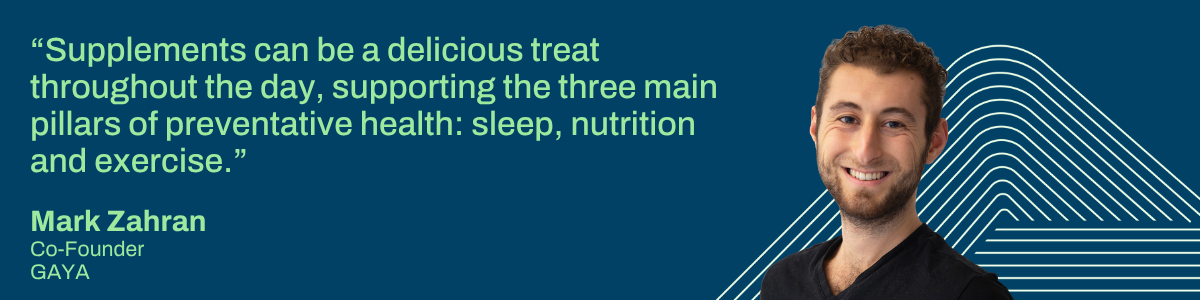
- Functional drinks are becoming part of everyday health rituals: As consumers become more proactive about their wellbeing, beverages are evolving beyond simple hydration or refreshment. Functional drinks are increasingly designed to support areas such as energy, focus, gut health and stress resilience. Because beverages are already part of daily routines, they can offer a simple way for people to integrate health-supporting ingredients into their lifestyles while maintaining convenience.
- Ancient ingredients are meeting modern nutritional science: Many functional beverages draw inspiration from traditional botanical ingredients that have been used for centuries. Today, advancements in formulation and nutritional science bring these long-used ingredients forward into modern formats, creating new opportunities to combine ancient wisdom with contemporary approaches to wellbeing.
- Convenient formats help translate nutrition science into daily habits: For long-term preventive health to succeed, solutions must be easy to adopt and enjoyable to consume. Convenience is what turns complex nutrition science into sustainable habits. Functional foods and drinks play a crucial role in this shift, acting as a delivery system for emerging health insights in formats that are accessible, delicious, and easy to maintain.

- Healthy diet, healthy metabolome: Healthier dietary patterns look different for everyone. What we eat, when we eat, and how we live all shape our internal metabolic environment. Metabolomics is the science of assessing this metabolic environment by measuring small molecules in the body that reflect our internal processes, offering a clearer picture of how diet and lifestyle influence metabolism in real time.
- Metabolism can be measured directly: We can now track metabolic changes through metabolomics and advanced algorithms, offering a direct view of how the body processes food, produces energy and responds to daily influences. Meals, movement, stress and sleep can all shape our metabolic state across the day and this influences how people feel in everyday life, including their energy, focus and mood.
- Turning metabolic insights into actionable recommendations: This new frontier in metabolic testing creates new opportunities to translate metabolic data into clearer and more personalised guidance. Understanding how individuals respond differently to food, activity or recovery can help shape more tailored approaches to nutrition and prevention. For the food and health system, this opens the door to solutions that are better aligned with individual needs and can support long-term health.
From nutrition science to everyday health
Taken together, these perspectives point to a profound shift in how we think about food and health. Advances in biology are revealing new pathways through which nutrition influences metabolism, resilience and long-term wellbeing. At the same time, food innovation is making these insights more accessible through better products, improved formulations and new digital tools.
The challenge now is not only to deepen scientific understanding, but to translate it into solutions that people can adopt and sustain in their daily lives. This means designing foods that are not only nutritious, but desirable, convenient and tailored to individual needs.
For food businesses, the opportunity lies in bridging this gap — connecting cutting-edge science with real-world behaviour. Those that succeed will help shape a future where preventive health is not an aspiration, but an everyday reality.