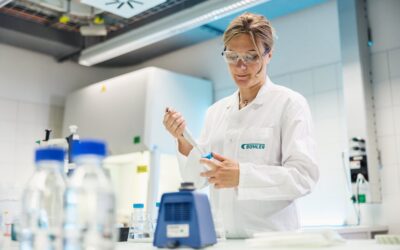
Vege’tables teams up with Planted and New Roots to drive healthier and more sustainable diets.

Vege’tables teams up with Planted and New Roots to drive healthier and more sustainable diets.

Vege’tables teams up with Planted and New Roots to drive healthier and more sustainable diets.

Smart Food consultants, Vege’tables have teamed up with leading Swiss plant-based pioneers Planted and New Roots to drive the adoption of more sustainable diets. We sat down with Vege’tables Co-Founder and CEO, Sophie Hanessian to find out more.

Tell us about the key issues you address and how you tackle them.

We all know that we need to change the way we eat to improve our health and reduce the impact of our food systems on the environment. But in reality, changing food habits is really hard! You need to find time to rethink the products you buy and the recipes you cook. Today many of us are so busy, we just don’t have the time or energy to figure out where to begin.

Vege’tables exists to make Smart Food – food that is healthy, ethical and sustainable, 100% plant-based and mostly whole food – accessible to everyone. We do this by guiding companies and public organisations to develop and implement health and sustainability strategies and by helping catering professionals to develop their Smart Food skills and increase their customer base.

Food service colleagues play a key role in food system transformation. Many providers want to adapt their choices but meat is still often the default for many consumers. To change this, we need to tackle three issues in parallel.

Firstly, we need to educate and raise awareness among consumers, but also among chefs, about the impact of our food choices on our health and the environment. We need to ensure that they understand why some choices will have an immediate positive impact. Then we must ensure that there are more healthy and planet-friendly choices available in out-of-home settings.

Finally, we need to introduce consumers to some of the products on the market to encourage them to adapt their own purchasing decisions and cooking choices. We find that as soon as people cook the products themselves and realise that it’s actually very easy to make the switch, they’re much more motivated to cook them again. Practical training is so important.

How are you collaborating with other Valley partners to boost your impact?

When planning 3 workshops for employees at La Ville de Neuchâtel in 2022, we reached out to fellow Valley partner Planted to see if they would be interested in showcasing their clean label plant-based meats at the event – and we were thrilled to receive a very positive response! After some discussion about how best to collaborate, we cooked a planted.chicken-based dish alongside participants and also shared out some packs for them to take away with them.

Building on this successful collaboration, we reached out to fellow Valley partner New Roots, a Swiss producer of 100% plant-based cheese, and other dairy alternatives. We recently featured their products in a workshop for students at the prestigious Les Roches global hospitality school in Crans-Montana.

At a recent two-day training event for chefs at a creche in Jura, we cooked nearly 140 meals based around Planted products with a New Roots-based cream. Many of the chefs said that cooking with new ingredients and products really helped them to think more creatively about how they could develop their dishes and menus.

For me, these are real win-win collaborations. Chefs leave our workshops inspired and aware of all the great plant-based brands they can use in their recipes and consumers and the next generation get access to healthier, delicious and more planet-friendly choices.

So what’s next?

Demand for Vege’tables’ services is growing and I’m currently looking for funding to scale up and grow my team to enable us to work with a larger range of clients.

This autumn, we’ll be working with GastroFribourg and GastroVaud to provide more training on “The new Smart Food trend”. This will be a great opportunity for our partners to come and present their products directly to catering professionals.

I’m really eager to explore new partnerships with other Swiss plant-based alternative pioneers and consider what more we can do to showcase new brands and connect consumers with innovative products. If you’d like to collaborate, I’d love to connect.

Find out more about Vege’tables or connect with Sophie on Linkedin.

Find out more about Planted and New Roots.  

Never miss a Swiss food innovation morsel.

SFNV welcomes 23 international startups at its annual Walking the Valley event

SFNV welcomes 23 international startups at its annual Walking the Valley event

Vege’tables teams up with Planted and New Roots to drive healthier and more sustainable diets.

Every year before the Hack Summit, the Valley team invites global startups to meet Swiss food ecosystem actors at our annual Walking the Valley event. This year we were thrilled to introduce 23 startups to 11 Valley partners. 

Watch the event recap video to find out more about what the Swiss food innovation ecosystem has to offer.

Never miss a Swiss food innovation morsel.

Swiss Food & Nutrition Valley teams up with Nestlé and Tetra Pak to inspire collaborative innovation in sustainable packaging

Swiss Food & Nutrition Valley teams up with Nestlé and Tetra Pak to inspire collaborative innovation in sustainable packaging

Givaudan TW Startup Challenge
On 11th June 2024, Swiss Food & Nutrition Valley, together with Valley partners Nestlé and Tetra Pak, brought together 60 Swiss and European at a nationwide event in Bern. The joint project was designed to shine a light on some of the most promising approaches in sustainable packaging materials and drive further innovation through new collaborations. A post-event report summarising the key insights and learnings is now available for download.

Driving circularity

Today, the global economy consumes 70% more materials than the planet can replenish – and as little as 8.6% of materials used are repurposed. Although packaging is essential to keep food safe, extend shelf-life and facilitate storage and distribution, solutions also need to be implemented in a way that minimises their climate impact and drives circularity.

Swiss Food & Nutrition Valley has identified sustainable packaging as one of their five Impact Platform topics – areas where Switzerland has the expertise and technology to develop scalable solutions. Earlier this year, Valley partners Nestlé and Tetra Pak, agreed to co-host an event that would bring together experts and innovators across the Swiss ecosystem to explore the most promising approaches and identify possible collaborations to accelerate progress in this space.

Exploring the most promising innovations

The resulting event, “Imagining the Packaging of the Future: Sustainable Solutions Unwrapped 1.0”, was held at BernExpo on the 11th June. 60 Swiss and European colleagues from multinational companies, SMEs, academia and Switzerland’s thriving startup scene, took part in the full-day programme.

Participants heard insights from leading experts in the field, including ETH Zurich, EPFL and Zurich University of Applied Sciences, and contributions took a closer look at alternatives to wood fibres and high-performing bio-based polymers as particularly promising solutions. Six Swiss and European startups also pitched their innovations, including Valley partners B’ZEOS and Agrosustain.

Commenting on the event, Christina Senn-Jakobsen, CEO of Swiss Food & Nutrition Valley, said, “When we talk about packaging, we often focus on what’s not working. But well designed and well implemented packaging solutions have a crucial role to play in shaping more sustainable food systems – from reducing food loss and waste to ensuring that 10 billion people have access to safe and nutritious food. I left today’s event feeling energised and confident that our ecosystem is ready to team up to drive forward the most promising approaches.”

Gustavo Barros, Director of R&D Partnerships at Tetra Pak, added, “Collaboration with our customers, suppliers and industry stakeholders has been central to our sustainability journey. Our dedication to sustainability constantly drives us to explore new materials and technologies. Today, we’ve connected with several colleagues whose research and innovations can help us take another step forward. We look forward to continuing these conversations.”

Rob Hoitink, who is leading Nestlé’s development of paper-based packaging at a global level, added, “Innovation is key to delivering our ambition of getting to 100% recyclable or reusable packaging. Today’s event highlights the vital importance of R&D collaboration across the ecosystem to accelerate the development and implementation of new solutions.”

Sharing the learnings

The Swiss Food & Nutrition Valley team has compiled a report summarising the key insights and learnings from the event.

About Swiss Food & Nutrition Valley

Swiss Food & Nutrition Valley (SFNV) is a not-for-profit association founded in 2020 that strengthens and promotes food system innovation, both within Switzerland and across the globe. Our diverse network of Valley partners – from global companies, universities, innovation accelerators to government bodies, SMEs and startups – collaborate to address the most pressing challenges in food, agriculture and nutrition, and co-create innovative solutions that drive better planetary and human health.

Follow the Valley on Linkedin

About Nestlé

At Nestlé, we believe in the power of food to enhance the quality of life for everyone, today and for generations to come. Our company, headquartered in Vevey (VD), has around 270,000 employees, more than 2,000 brands, and a presence in 188 countries, investing CHF 1.7 billion every year in R&D as an engine for growth

As a founding partner of the Swiss Food and Nutrition Valley, Nestlé’s Research & Development organisation is the largest in the food and beverage industry, with 4,100 employees working at 23 locations worldwide, including 3 R&D campuses in Switzerland: Lausanne, Orbe, and Konolfingen.

Find more at: www.nestle.com

About Tetra Pak

Tetra Pak is a world leading food processing and packaging solutions company. Working with our customers and suppliers, we provide access to safe, nutritious food for hundreds of millions of people in more than 160 countries every day.

With over 24,000 employees worldwide, we commit to making food safe and available, everywhere, and we promise to protect what’s good: food, people and the planet.

Find out more at: www.tetrapak.com.

Join our online Impact Forum on Sustainable Packaging on 21 October

Teaming up for impact: ZFV Group on their partnerships with Yumame, Steasy and Food2050

Teaming up for impact: ZFV Group on their partnerships with Yumame, Steasy and Food2050

Image of the Yumane team
Powering 200+ meeting places across Switzerland, Valley partner ZFV Group (ZFV) has more than 125 years of expertise in the fields of hospitality and catering. Fortunately for our ecosystem, they don’t keep this knowledge under lock and key. They’re eager to partner with food sector startups to help bring fresh innovations to market.

The ZFV team believes that we can only achieve true change through collaboration. This is why the company is constantly on the lookout for new partnerships with future-focused startups. Read on to find out how Valley partners Steasy, FOOD2050, and Yumame have already benefited from their advice and support. 

Yumame: Partnering with innovative producers

In its own restaurants, as well as in cafeterias and staff restaurants, ZFV’s focus is on balanced and climate-friendly food. Whether it’s through innovative recipes from ZFV’s own climate-friendly kitchen, totally new concepts like Flavour Kitchen or Green Kitchen Lab, or menus that feature more than 50% vegan and vegetarian offerings, ZFV relies first and foremost on diverse partnerships with innovative producers – like Valley partner Yumame Foods AG.

The startup produces delicious and sustainable food based on fungi and fermentation, with a strong focus on local and environmentally-friendly practices. These newcomers attracted the attention of ZFV’s F&B team, who were immediately enthused and impressed by its products. ZFV has now become Yumame’s first catering partner — and they’ve already dished up their first recipes in the Green Kitchen Lab at the University of Zurich. This includes the innovative “Farm to Table” research project, which ZFV developed together with the Zurich University School of Management and Law and Zurich University of the Arts, where Yumame was featured as an important part of the culinary offer.

FOOD2050: Enabling more climate-friendly choices

ZFV values transparency about the effects of its food highly, and aims to inspire its guests with enthusiasm for an environmentally-friendly and balanced diet. Startup and Valley partner FOOD2050, founded in 2021, pursues the same aim. The company was in the process of developing a meal plan system and was looking for a partner that shared its values.

Won over by FOOD2050’s vision, ZFV became its strategic partner in 2021, and they jointly implemented the meal plan system for the first time at the University of Zurich in 2022. They continued to develop the concept together, creating a digital menu and meal plan that helps guests understand the the climate impact of their menus and food profiles that offer detailed information about individual dishes – right down to portraits of the producers who grew the ingredients. The solution was rolled out across 80 ZFV companies in 2023.

“Innovation means keeping one’s eyes open, constant scrutiny, actively engaging with one’s environment, personal development and also taking a chance now and then!” – Dario Notaro, CBDO ZFV

Steasy: Investing in the future of catering

By investing in Steasy, a start-up that developed the first-ever mobile mini steamer, ZFV found a way to delight and serve those who don’t eat their lunch in cafeterias and staff restaurants. Thanks to an integrated battery, a pre-prepared menu can be quickly and gently heated — a total innovation with potential that was immediately obvious to the ZFV team. Today, they’re busy implementing a proof of concept for possible business cases that can leverage this exciting technology.

“High-quality, healthy and sustainable food should also be possible on the move, or in locations where it is not possible to eat in a restaurant,” – Dario Notaro, CBDO ZFV

Open to innovation and new partners

ZFV’s partnerships help the company move closer to its vision of comprehensive meeting places that encompass six key dimensions – menu, people, physical space, virtual space, sustainability — and most importantly, the ZFV ecosystem, including partners like Steasy, FOOD2050 and Yumame.

Through its partnership with Valley, ZFV is eager to connect with even more Swiss food innovators. The team is currently developing a unique innovation infrastructure to further accelerate rapid market testing within the broader ZFV ecosystem.

Read the article in German

Never miss a Swiss food innovation morsel.

SFNV welcomes a new Steering Committee President at its 4th General Assembly

SFNV welcomes a new Steering Committee President at its 4th General Assembly

Vege’tables teams up with Planted and New Roots to drive healthier and more sustainable diets.

On 17th May, Swiss Food & Nutrition Valley held its 4th General Assembly in Bern. The team were thrilled to welcome Marie-France Tschudin as the new president of the SFNV Steering Committee. Watch the recap video below to get a sense of the day.

Find out more about Swiss Food & Nutrition Valley’s work in our Joint Impact Report 2023.  

Never miss a Swiss food innovation morsel.

Impact Digests | How can AI ensure food security for 10 billion people?

Impact Digests | How can AI ensure food security for 10 billion people?

Image of the Yumane team

Last month, we held our second Impact Forum event, bringing together 5 experts to explore how we can use AI to ensure food security for 10 billion people – in just 60 minutes. Topics spanned from leveraging satellite imagery to cellular analysis to data-driven decision-making. Read on to explore some of the event’s key insights.

Key Takeaways

  • Collaboration counts: Success in agricultural technology relies on collaboration between tech providers, researchers, and farmers.
  • Empowering farmers: Educating and empowering farmers to use AI tools effectively is crucial for adoption.
  • Innovation is essential: Continuous innovation in AI and tech is vital for addressing agricultural challenges and improving productivity.

Matthias Zwingli, Connect AI

Matthias Zwingli outlined key insights into the current landscape of AI and its impact on various industries, emphasising that AI doesn’t replace companies, but enhances the efficiency of those that use it.

He outlined the three use cases that he believes have the greatest potential to enhance food security through AI: 

  • improving crop yield and resistance by understanding and enhancing crop output
  • precision farming to boost food production and conserve resources and
  • industry-agnostic productivity improvements to improve efficiency and reduce time and resources needed.

Mateja Kramar, ETH AI Center

Mateja discussed the role of AI in securing food production from field to fork. She emphasised the importance of focusing on soil health and small-scale farmers, as they contribute significantly to global food production — 80% of the food we eat comes from small-scale farmers.

Mateja stressed the need to bring soil back to life through regenerative agriculture practices with the help of AI. She highlighted how AI can optimise farming practices, improve sustainability, and reduce food waste throughout the supply chain. 

She outlined various AI applications, such as satellite imagery for monitoring farms and predicting harvests, and tracking food delivery to retailers to minimise waste. Mateja also stressed the need for consumer education and awareness to encourage healthier and more sustainable food choices. 

Matthias Graeber, Bühler Group

Matthias discussed how AI can enhance sustainable food value chains by addressing various global crises, including climate change, mounting inequalities, and extreme biodiversity loss. 

He highlighted Bühler’s role in providing machinery for food production and emphasised the importance of optimising to reduce its carbon footprint. Matthias presented examples of AI applications, such as machine control for scaling and optimisation of energy usage in drying processes. 

Matthias demonstrated how reinforcement learning can optimise fan speed and thermal energy consumption, which leads to significant reductions in electricity and CO2 emissions. He also acknowledged that AI is not a standalone solution and emphasised the importance of a broader ecosystem approach and collaboration with partners like the Swiss Data Science Center.

Christopher Keim, Food Brewer & Patrick Albrecht, Fruitful AI

Christopher and Patrick discussed how their companies utilise AI to enhance food production and address global challenges in agriculture and manufacturing to ensure future food security. 

Food Brewer specialises in plant cell culture technology to create edible products such as cocoa and coffee locally and sustainably. The company uses AI in media screening to optimise cell culture growth and select the best formulations for production. 

Fruitful AI focuses on visual inspection systems powered by AI to assess the quality of agricultural products and manufacturing processes. Its technology aids in plant genotyping, quality control in bottling stations, and product inspection, ultimately improving efficiency and reducing operational expenses. 

Integrating AI and agriculture for a sustainable future

The expert presentations were followed up by a Q&A session highlighting several key points about the integration of AI and technology in food production. Topics included: 

  • the role of farmers in the adoption and integration of AI in agriculture
  • the need for collaboration and continued innovation among technology providers, researchers, and farmers. 
  • AI’s ability to provide verification and assurance for farmers in monitoring soil health and crop growth.

The integration of AI and technology in agriculture holds great promise for improving food security, sustainability, and efficiency in farming practices – but collaboration, education, and innovation are key to realising its full potential.

Thanks to everyone who joined us for the event! We’re already looking forward to our next Impact Forum event on 21st June on sustainable agriculture. Keep an eye out for more information coming soon!

Never miss a Swiss food innovation morsel.