Yumame Foods teams up with Agilery to accelerate the scale-up of its fungi-based products

Yumame Foods teams up with Agilery to accelerate the scale-up of its fungi-based products
Mirai foods burger

With a unique, fermentation-based approach to plant-based food, Yumame Foods needed a partner to help expand production. Its collaboration with Agilery has since brought Yumame’s minimally processed, fungi-based products to a first-level scale while maintaining the company’s focus on local, sustainable supply chains.

The challenge

Yumame Foods recognised that while many consumers are looking to replace meat at the centre of their plates, satisfaction with plant-based alternatives can vary.  To imitate conventional meat texture and mouthfeel, many products utilise a long list of refined ingredients, including refined proteins, artificial flavours and additives, and require a  series of transformation steps that can be perceived as “ultra-processed.” In many cases, these meat analogues also rely on long and international supply chains for manufacturing and distribution, adding to the product’s carbon footprint. 

In contrast to meat analogues which aim to replicate animal products as closely as possible, Yumame’s products have their own unique taste and texture. Additionally, thanks to Yumame’s manufacturing method based on blending fungi and fermentation, the products undergo minimal processing, and can be produced locally anywhere in the world by using local raw materials, thus being highly sustainable. The products were created with scientists and culinary experts, and are easy to cook in a large variety of ways. 

With the concept on hand, the team’s next step was to scale up and bring these products to consumers quickly. A partnership with Agilery, a contract manufacturing company that helps bring food and beverage products to market, enabled them to prepare for industrialisation and distribution.

The opportunity

As partners in the Swiss Food and Nutrition Valley network,  the founders of Yumame Foods and Agilery have been aware of each other’s activities and crossed paths during previous collaborations. After a few preliminary discussions, the two companies began  a formal partnership aimed to  reach  production scale-up for Yumame’s products utilising Agilery’s expertise in the market, technologies, and local networks. The partnership also supports fulfil Yumame Foods’ broader goals around  product quality, resource efficiency, sustainable supply chain, and fermentation safety.

The solution

As a new product with a unique production process, Yumame Foods and Agilery had to work together to develop solutions outside the usual food processing methods. This expanded each partner’s knowledge and fostered a creative, agile, and solution-oriented synergy that benefitted both companies.  

Together, they drafted the concept for a product scale-up, identified  potential partners for raw materials, services and equipment, and built the set-up in praxis. The companies have worked hand in hand during the ramp-up phase, working in collaboration to secure high-quality results in a cost-effective manner.

The results

Thanks to this partnership, Yumame Foods products can now be produced at a first-level scale.The company is now focused  on testing the products in the Swiss market and planning further scale-up stages for possible international expansion. 

Potential customers are already getting a taste of Yumame’s fungi-based products. Yumame products were featured in the main course of the “Taste the Future” Menu at the Swiss Overshoot Day 2023 event. The product is  an example of an innovative plant-based food that can help mitigate our consumption of ecological resources to  delay the Overshoot Day. 

Through the collaboration with Yumame Foods, Agilery unlocked its full potential in providing clients with a comprehensive range of practical and technical solutions. This collaborative partnership immersed Agilery in Yumame's world with the mindset of a dedicated team member.

A few words from the partners

“The collaboration with Agilery has been very positive for us. The team is experienced and competent and can tap into a large network of suppliers and partners quickly. They understood our targets and the product requirements very quickly, and we could find the specific solutions needed to reach our first scale-up level,” says Eliana Zamprogna Rosenfeld, Founder and CEO of Yumame Foods AG. “It was impressive to feel the passion and resilience of the team when new challenges had to be solved. It’s great to work together.”

“When we had the chance to work on a game-changing, innovative project for Yumame, we embraced the opportunity immediately,” says Marcin Niedzielski, CEO of Agilery AG. “At Agilery, we thrive on tackling complex challenges, and together with Yumame, we demonstrate a fruitful collaboration. We are motivated to support clients who foster sustainable food choices.”

About Yumame Foods 

Yumame Foods is a FoodTech startup that uses fungi and fermentation to make healthy, tasty and sustainable products for the centre of the plate that are minimally processed and locally produced with local ingredients.

About Agilery

Agilery is a contract manufacturing company that helps brands of all sizes to bring food and beverage products to market.

Valley partner? Share your own success story!

Latest News
Insolight announces its first agrivoltaic installation at scale

Insolight announces its first agrivoltaic installation at scale

Mirai foods burger

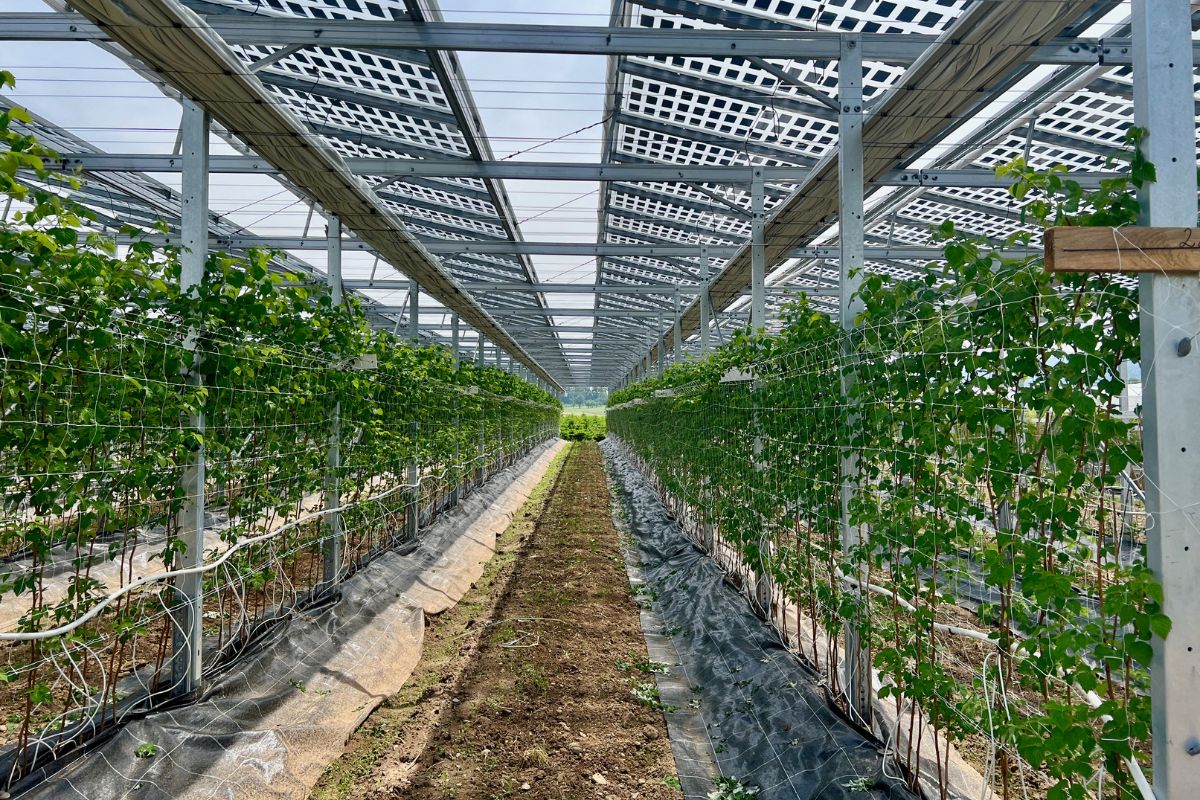
Swiss scale-up Insolight is on a mission to bring the next generation of solar modules to market to enable farmers to protect their crops while producing solar energy and help build resilience against climate change. Their dynamic Agrivoltaic solution has now been deployed at bioschmid GmbH in Lucern. 

Partnering with growers

This joint installation with Monika and Heinz Schmid, who both run organic farms, is part of a project in which three different agrivoltaic systems are being tested in comparison with a control area. The plant is built over an area of 2600 m2 of raspberries and is expected to produce around 190 MWh of electricity per year in addition to the raspberry yield.

Insolight's dynamic agrivoltaic solution insolagrin is an agronomic tool designed to protect crops while simultaneously producing solar energy - supporting growers in the transition to a more sustainable and resilient agricultural production. It offers an alternative to protective plastic tunnels and enables consumers to choose energy positive fruit. 

Project supporters

Following the construction phase in 2023, the Swiss Federal Research Station Agroscope Conthey and the Bern University of Applied Sciences will conduct research at the site and accompany the project for the next three years.

The pilot plant, which was launched by bioschmid gmbh, is supported by the Swiss Federal Office of Energy, the Canton of Lucerne (Swisslos), the Fondation sur la Croix, the Foundation Valery and other foundations, as well as the system suppliers involved.

Driving the energy transition

This new installation represents a major step towards the energy transition in Switzerland. It shows that scalable innovative solutions to protect crops, and produce food and green energy on the same land are available and brings us closer to realizing the vision set out in Switzerland's new Climate and Innovation Act that was approved by Swiss citizens on the 18th June 2023.

Never miss a Swiss food innovation morsel.

Latest News

EPFL’s Prof. Jeremy Luterbacher on turning plants into plastic

EPFL’s Prof. Jeremy Luterbacher on turning plants into plastic

Mirai foods burger

Prof. Jeremy Luterbacher from EPFL’s Laboratory of Sustainable and Catalytic Processing has developed a way to turn plant by-products into materials that could serve as an alternative to some types of plastic.

Researchers at EPFL found that some types of sugar are particularly well-suited to functionalization reactions. One sugar – xylose – is ideal, and plant residue contains a lot of it - up to 20–30%. This means that by using functionalization reactions, they can produce 300 grams of bioplastic out of one kilogram of corn cobs.

“It must be because I’m a chemist, but I find functionalization reactions fascinating. They involve adding a functional group to a chemical compound in order to give it additional properties, but without changing its base structure. These reactions are fairly easy to perform and consume little energy and other resources. You don’t have to break down complicated chains.", commented Jeremy Luterbacher from EPFL's Laboratory of Sustainable and Catalytic Processing.

A wide range of applications

The process for producing bioplastic from xylose is simple to carry out and it employs materials that are readily available. It doesn’t alter the base xylose molecules, meaning that as the bioplastic degrades, it simply releases the sugar – which is harmless to the environment.

The resulting material is both tough and heat-resistant and could be used in a variety of application. It can be manufactured as a film, as thread for making fabric or fishing nets, or rolled up in spools for use with 3D printers. It can also make polyesters and polyamides such as nylon with excellent properties, sometimes even better than those made from petroleum-based products. Food packaging could be another application, but the material still needs to go through various certification processes.

Bringing the bioplastic to market

To bring the bioplastic to market, EPFL need to be able to manufacture it at a competitive cost. This would mean around half the price of existing bioplastics and on par with petroleum-based plastics. But their estimates show that this is possible. 

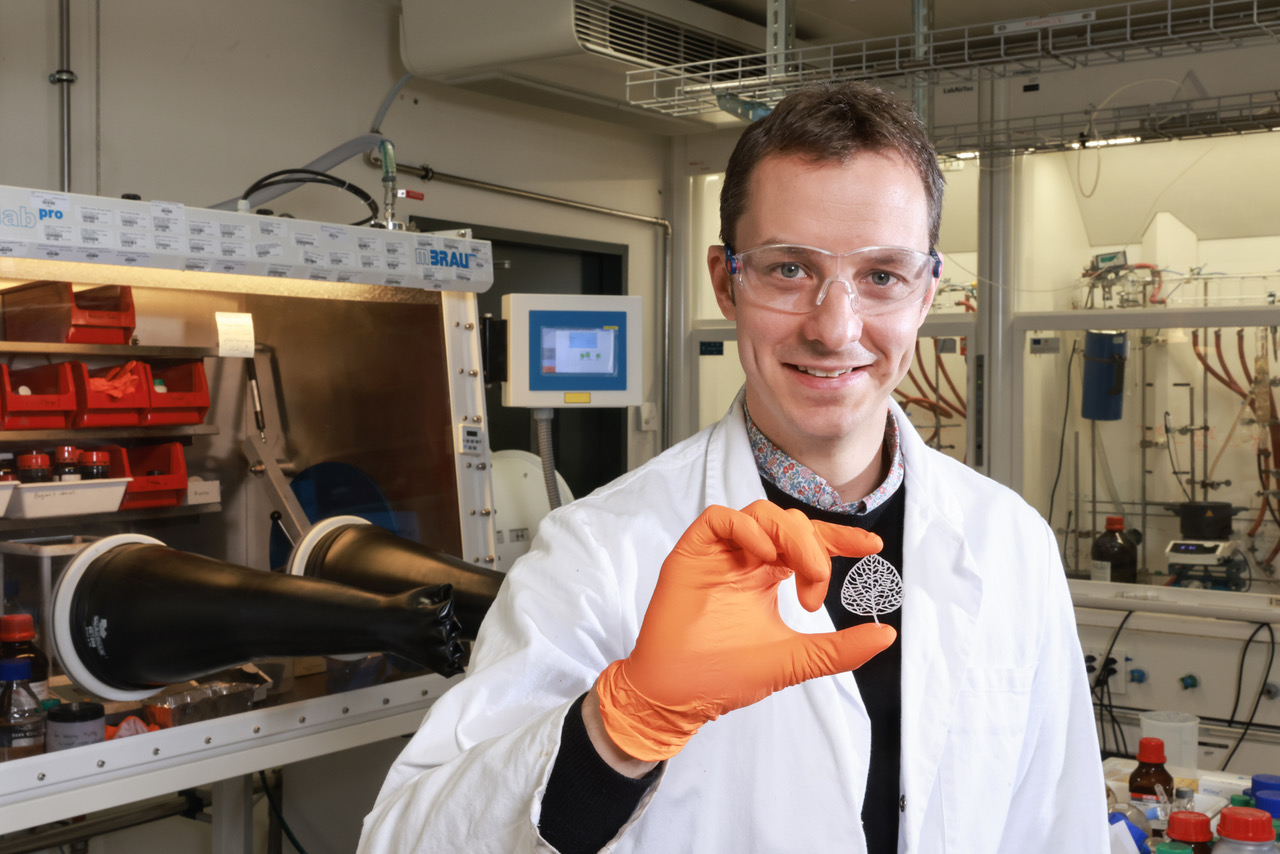
"The leaf I’m showing here illustrates the vast potential for our bioplastic. You can see that it allows for extreme precision for producing objects of all kinds. We’re right at the beginning of our journey and we still have a lot of work ahead of us, both in the research lab and with Bloom Biorenewables, a startup we founded to market the technology coming out of our lab. But that just makes our work all the more exciting!” concluded Jeremy.

Never miss a Swiss food innovation morsel.

Latest News

Nestlé and EPFL collaborate on biobased food packaging with Project BIOPACK

Nestlé and EPFL collaborate on biobased food packaging with Project BIOPACK

Mirai foods burger

In our first Co-create & Innovate case study, we find out more about Project BIOPACK – a collaborative partnership between EPFL’s Laboratory for Processing of Advanced Composites, Algaltek, an EPFL spin-off and Nestlé Research.

The challenge

Rethinking the way that packaging materials are produced is key to a sustainable, waste-free future. But some packaging elements are still not recyclable, or are not sorted or collected correctly. This means that they’re still sent to landfill or end up polluting our oceans.

The opportunity

In 2019, Nestlé opened a dedicated Institute of Packaging Sciences in their Research Center in Lausanne to enable them to play a leading role in finding alternatives to single use plastic. As a member of the Integrative Food and Nutrition Center, the Nestlé team was able to connect with EPFL’s Laboratory for Processing of Advanced Composites and the GR-LUD, an algae specialized laboratory at EPFL. This gave them access to specific scientific capabilities that could accelerate their work - and Project BIOPACK was born.

The collaboration would focus on creating life-cycle engineered, bio-based food packaging solutions that would minimise their environmental impact. But that wasn’t all. The project would also consider how these materials would be treated at the end of their lives – something that is key for a sustainable waste-free future. The project aimed to contribute to both organisations’ visions of a zero-waste food sector.

The collaboration

The partners decided that they wanted to adopt a “holistic life-cycle” perspective. This meant moving away from non-renewable and non-recyclable resources and instead concentrating on cost-efficient bio-based materials with reduced environmental footprints.

These materials are typically based on microfibrillated cellulose - MFC, a new form of engineered cellulose - that’s made from renewable biomass sources like microalgae and wood. The materials are designed to be compatible with existing end-of-life valorisation methods.

Reflections & next steps

The collaboration allows both partners to play to their respective strengths: EPFL focuses on the production and disposal of bio-based materials and their characterization, while Nestlé contributes with Life Cycle Assessment studies that take the entire life cycle into consideration. Nestlé also provides inputs for specific case studies related to target markets and product types for which the packaging materials will be designed.

Both stakeholders plan to continue their collaboration to develop a comprehensive understanding of the entire packaging life cycle and their performance in relation to relevant sustainability criteria. 

A few words from the partners

Commenting on the collaboration, Yves Leterrier, senior scientist at EPFL’s Materials Science Institute, said: “Sustainable packaging does not exist, but an approach based on a sustainable product life cycle can help to optimise the net system impact of new packaging solutions.”

Lise Zeboudj, Department Manager, Packaging Materials at the Nestlé Institute of Packaging Sciences, said: “The development of new high performing, sustainable alternative packaging materials is a key part of our waste-free strategy. This requires a fundamental understanding of material structures and performance - which is why we are collaborating with our partners at EPFL.”

Eya Damergi Nicodeme, Posdoc researcher and co-founder of Algaltek added: "We, the research team at GR-LUD led by Prof. Christian Ludwig, have developed a unique culturing technique for algae that yields pure, high-yield microfibrillated cellulose. With a filed patent and a partnership with Nestlé, we aiming to scale this technology and explore the limitless possibilities this algae offers."

Find out more about EPFL’s Laboratory for Processing of Advanced Composites (LPAC), GR-LUD and Algaltek.

Valley partner? Share your own collaboration case study!

Latest News

Meet the woman tackling a neglected environmental challenge by transforming urine into fertiliser

Meet the woman tackling a neglected environmental challenge by transforming urine into fertiliser

Farmer Connect and SCANTRUST join iforces

When Nadège de Chambrier decided to study environmental engineering she didn’t think she’d end up talking about urine all day long. Her startup has created a unique solution that relates to two resources that are critical to effective food systems: water and fertiliser. And now she’s gearing up to set up three treatment systems in France, Switzerland and Germany as part of a joint programme with the European Space agency.

Tell us a bit about you and your VunaNexus story.

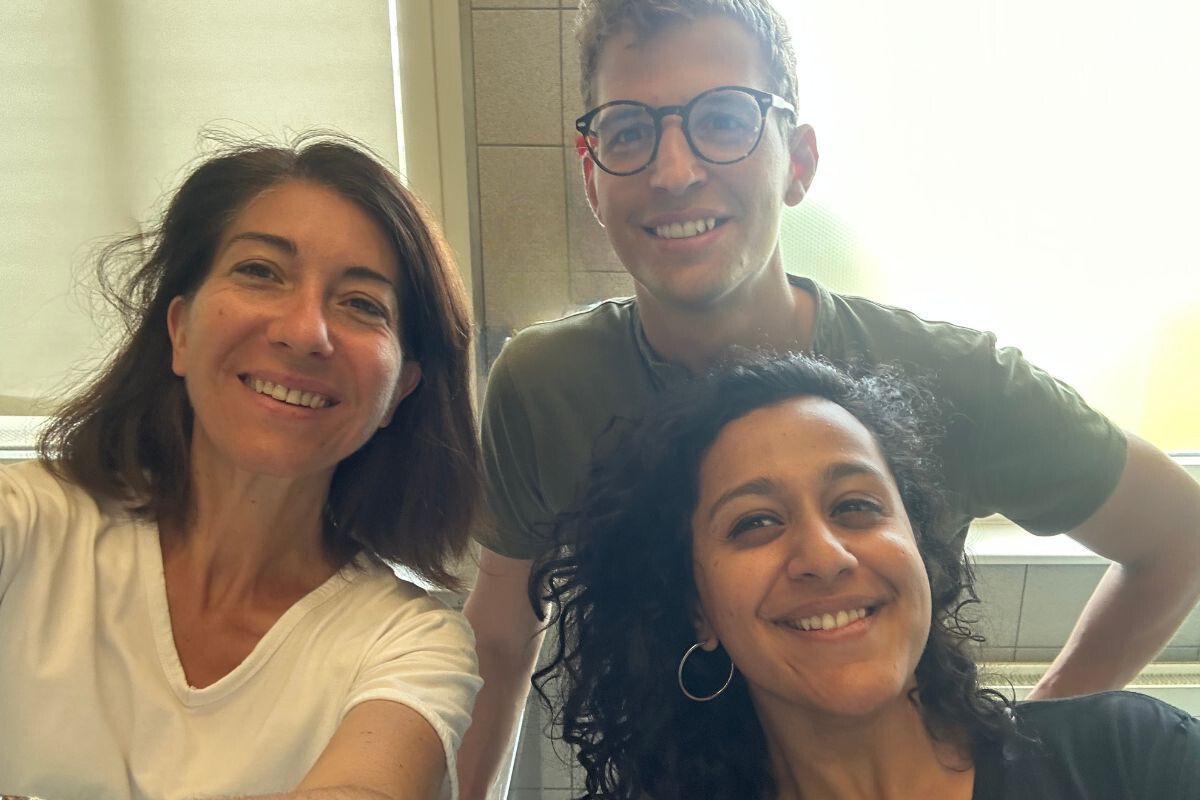
My name is Nadège de Chambrier and I studied Environmental Engineering at EPFL and ETH Zurich, specialising in wastewater treatment. About 2 years ago I joined forces with my brother David and two other co-founders Kai Udert and Bastian Etter and together we founded VunaNexus AG. 

Kai and Bastian had previously been researching how to recycle the nutrients contained in urine for around 15 years with the help of the Eawag (the water research institute of the ETH Domain) and the Bill and Melinda Gates Foundation, so we had a great deal of knowledge and practical research to draw on. 

I’ve been working on developing and implementing this urine treatment technology for 5 years now. During the first lockdown, David, who had a background in business, started helping us to build a business case out of it. Then we decided to go ahead and found a company focused on selling the technology. 

Describe what your company does in a single sentence.

VunaNexus uses a patented technology to transform human and livestock urine into two valuable products: an authorised NPK fertiliser, Aurin,  that is free of all dangerous pollutants and water that can be reused, while drastically reducing ammonia emissions and water pollution.

What gets you out of bed in the morning? 

CO₂ has become “the” topic when it comes to sustainability, but there are many other issues that impact our ecosystem more than global warming - and of which most people are not aware.  

If we look at the planetary boundaries, the cycles of nitrogen and phosphorus have been radically changed by humans and this has a devastating impact on the environment. Raising awareness of the multiple problems linked to wastewater and sanitation, and recycling these precious nutrients, as well as trying to change the linear system we’re currently working within thanks to great technology - this is what gets me up in the morning.  

It’s not always easy to talk about pee and poo, but people are actually really interested in better understanding the challenges associated with this topic, and appreciate that everyone can contribute in their own way to closing the nutrient cycle.

What key milestones have you hit so far?

So far, we’ve bootstrapped the business. But we recently got accepted into a business support program run by the European Space Agency. This will help us install a treatment system at the European Space Agency headquarters in Paris, one at BlueFactory in Fribourg and one in the region of Berlin in the context of the projekt Zirkulierbar. 

At the moment, we don’t think that external investment is the right choice to accelerate the adoption of the technology, as we need to make sure the market can absorb the fertiliser we will produce. Over the next two years we aim to prove that our model can scale, that we can resell fertiliser locally and that these treatment plants are financially viable.

What projects are you and your team working on at the moment? 

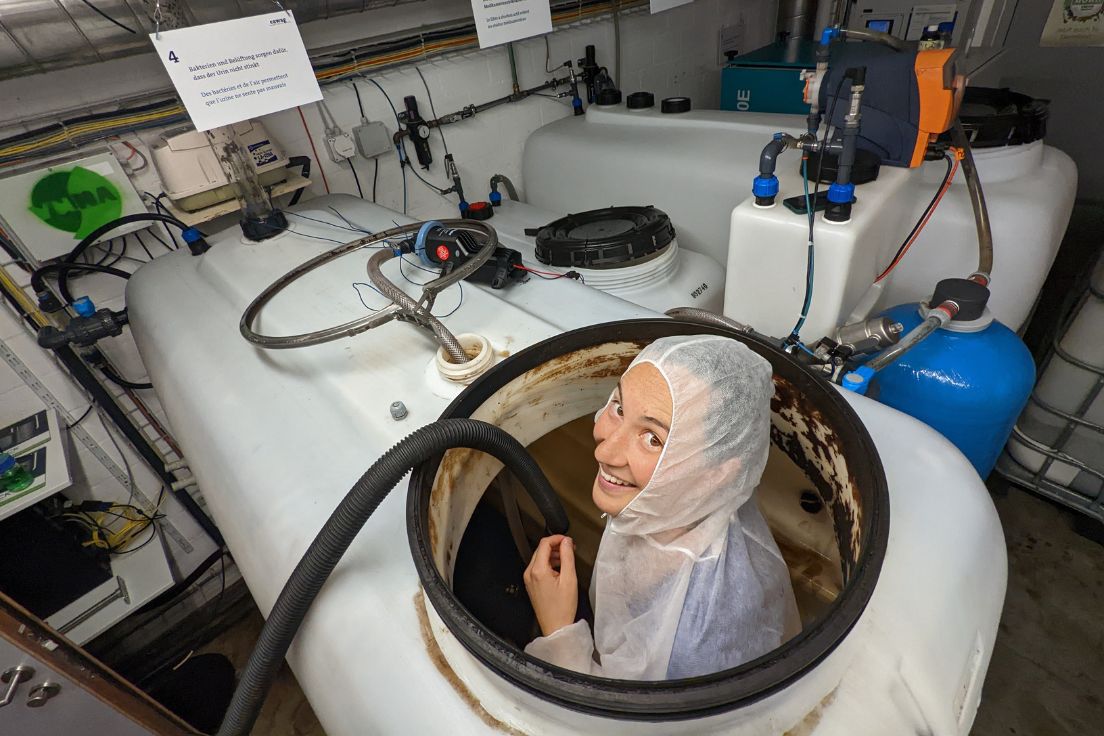
We have an ongoing project with Innosuisse that aims to test our technology on animal urine on a larger scale. We have a test reactor that can process up to 3000 litres of urine a day. When it comes to reducing ammonia emissions, this could be a huge step for many farms all over the world. It could also help to tackle micropollutants including antibiotics and other drugs before spreading the manure on fields. 

How do you collaborate and support others in the ecosystem? 

We’re currently new to the ecosystem so we haven’t had the chance to support other Valley partners yet. But we have lots of knowledge and a strong network around wastewater and sustainable fertilisers that we would be more than happy to share! 

What support could the Valley community offer to further your work?

We’re looking for contacts that would be interested in experimenting with a novel fertiliser, and would love to connect with anyone open to collaborating around wastewater recycling more generally. Please get in touch! 

Tell us something we don’t know about your company.

Vuna started as a project in South Africa to tackle two connecting issues that affected decentralised communities: how to treat their wastewater and how to find an economical fertiliser for their fields. The word Vuna means harvest in isiZulu. First there was Vuna GmbH, a company specialised in decentralised sanitation alternatives, and then we created VunaNexus, a sister company. 

Connect with Nadège & David on LinkedIn. 

Never miss a Swiss food innovation morsel.

Latest News