Mirai Foods collaborates with Rügenwalder Mühle to develop a hybrid product

Mirai Foods collaborates with Rügenwalder Mühle to develop a hybrid product
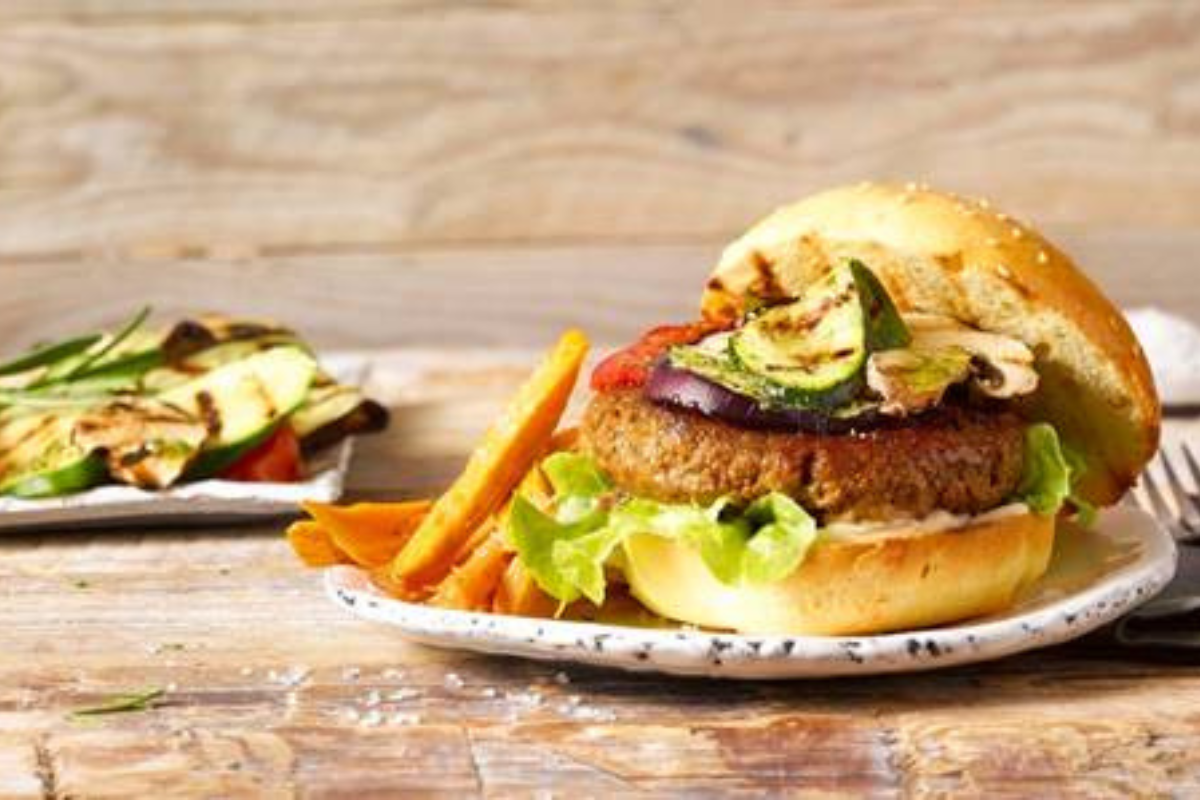
Mirai Foods, the Swiss cultivated meat startup from Zurich, has partnered with Rügenwalder Mühle, the sustainability pioneer and meat alternatives market leader in Germany, to develop a hybrid product. 

Rügenwalder Mühle plans to build on their positioning as an innovation leader in the area of vegetarian and vegan meat alternatives by incorporating cultivated meat into their portfolio. The family run business from Bad Zwischenahn (Germany) will partner with the Swiss cultivated meat startup, Mirai Foods to create a new, hybrid product including plant-based proteins and cultivated fat.

Pooling knowledge and skills for sustainable innovation

The two partners will combine their respective knowledge and skills to develop this innovative product. Rügenwalder Mühle will provide its know-how in the area of plant-based meat alternatives, while the Mirai Foods team will share their knowledge around cultivated fat. Mirai has already developed technologies that enable the production of high quality muscle and fat tissue by utilizing bioreactors.

The final product will be a combination of plant-based proteins and cultivated beef fat – a real innovation. The cultivated fat will replace coconut oil, an ingredient currently used in many vegan and vegetarian meat alternatives, and will significantly enhance the taste of the final product. 

“It's the fat in a burger that gives beef the distinctive taste of grilled meat. Until today, it has not been possible to recreate this taste with plant-based fat alternatives,” says Patrick Bühr, Head of Research and Development at Rügenwalder Mühle. The new product will be designed for environmentally conscious flexitarians and meat lovers. The cultivated beef will be completely free of fetal bovine serum (FBS).

“The partnership with Rügenwalder Mühle underscores our claim to leadership in the area of cultivated beef. We are delighted that Rügenwalder appreciates our innovative power and we are looking forward to developing new products together, which will convince even the greatest meat lovers,” says Christoph Mayr, CEO and co-founder of Mirai Foods. 

“Through the collaboration with Mirai, we will expand our vegan protein competence with the area of cultivated meat. By combining plant-based proteins and cultivated fat, we close the last remaining gap in terms of taste and continue to defend our claim to co-shape the change in nutritional preferences and to be ‘open for innovation’,” elaborates Patrick Bühr.

Long journey ahead for cultivated meat in Germany

The development of one of the first hybrid products in Germany is part of Rügenwalder Mühle's journey towards more sustainable meat consumption. Cultivated meat is grown outside of the animal’s body, meaning that no cow has to be slaughtered to produce the product.

"Cultivated meat is one of the largest levers for sustainable meat consumption. The approach significantly reduces the drawbacks of conventional meat production like land usage, water consumption and greenhouse gas emissions,“ explains Patrick Bühr. “However, the necessary regulatory frameworks and approvals still need to be set in Germany and also in the EU. We expect our product to come to the market in 2025 at the earliest. Nevertheless, we are starting with the development today, so that we are ready to act when the regulatory approval is granted.”

Find out more by visiting the Mirai Foods website.

Never miss a Swiss food innovation morsel.

Latest News
Fruitful closes pre-seed round to develop software that helps vertical farms speak plant

Fruitful closes pre-seed round to develop software that helps vertical farms speak plant

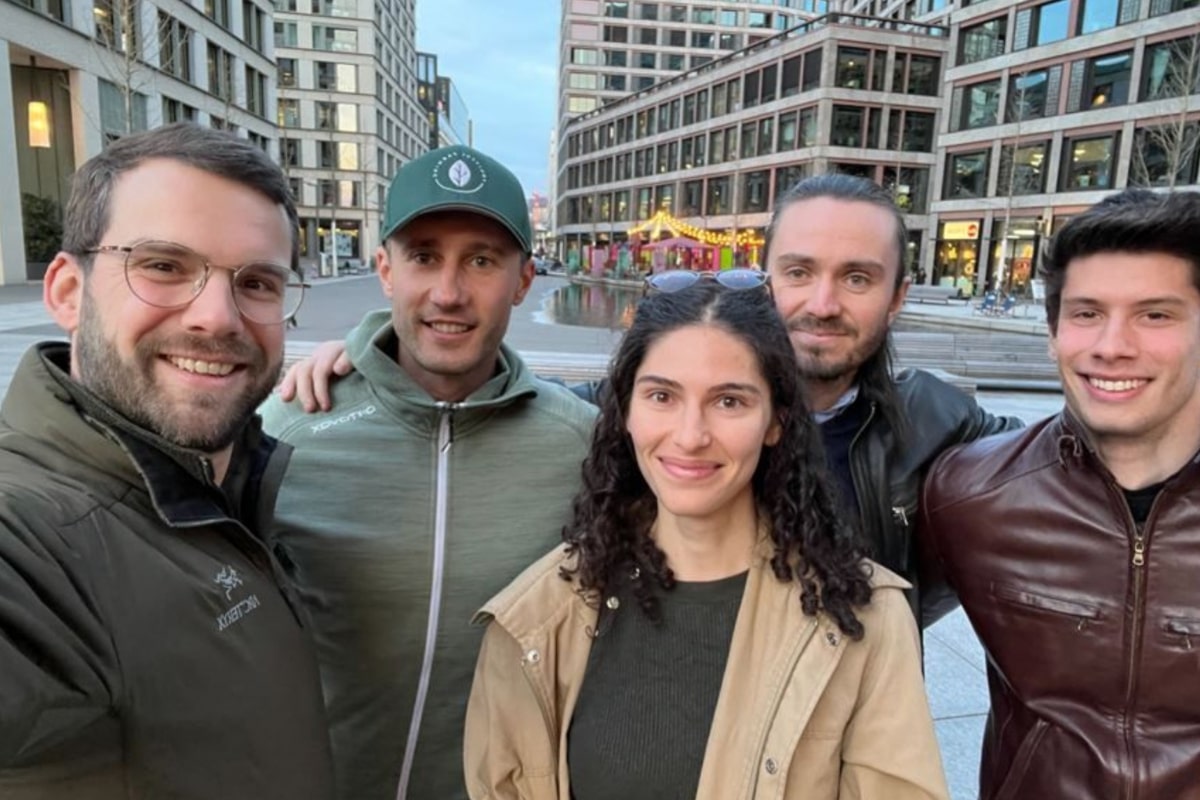
Fruitful Farming team photo

Valley member Fruitful Farming AG, a Swiss startup developing optimization software for greenhouses and vertical farms, has secured CHF 500,000 in its pre-seed round. The team now plans to accelerate the development and distribution of its AI-based decision-making solution.

The future of farming

Studies show that crop production will need to increase by 70% to sustainably feed a global population of ten billion by 2050. Greenhouses and vertical farms will undoubtedly play a key role in shaping the future of farming.

But particularly in the context of rising energy prices, farm owners need to be mindful of how they invest resources to ensure that their operations are both financially and environmentally sustainable. As small variations in a growth environment can have a significant impact on outputs, growers must find ways to reduce their operational expenses while maintaining or increasing the quality of their produce.

Network-driven, AI-powered decision making

Fruitful Farming AG’s software democratizes access to AI-based decision making. It allows clients to focus on operations without having to hire a team of in-house data scientists. Their models facilitate the growing process by shortening learning cycles and makes tailored recommendations to save time and resources, while improving crop quality. Clients also become part of a broader network of farms, allowing them to learn and apply best practices quicker than isolated in-house analytics teams.

The team currently offers two key products. The Fruitful Monitor provides a cloud-based growth monitoring system that facilitates production and allows clients to scale with no or limited additional labor costs. The Fruitful Optimizer allows clients to receive active intelligence and dynamic growth recipes based on live analytics.

Their technology – developed by founders Thomas Kleiven, Giulia Schneider, Mihai Grigore, and Patrick Albrecht – uses computer vision to capture the plant biorhythm and then connects it with data points from the growth environment.

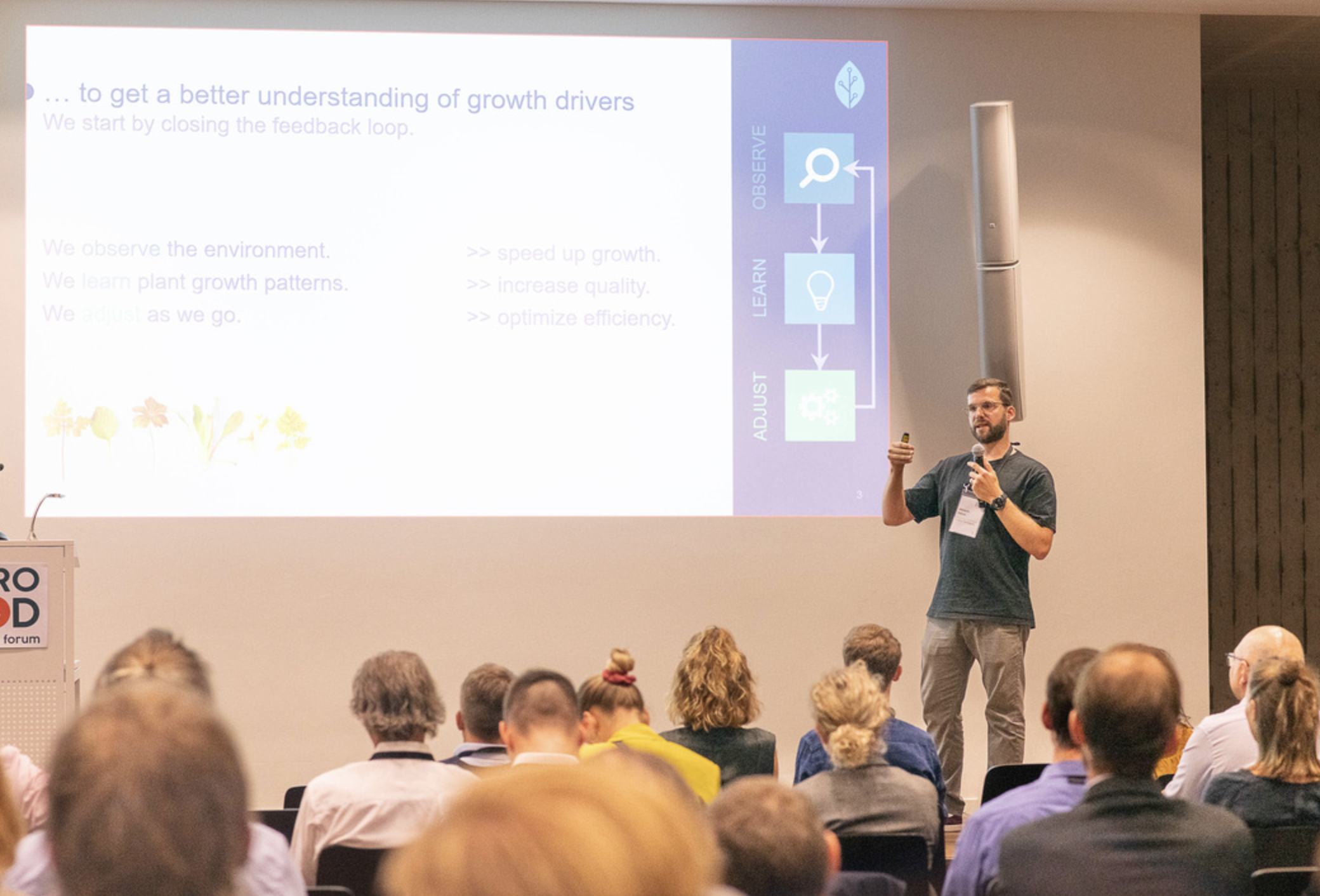
Co-Founder and CEO, Patrick Albrecht explains how Fruitful optimizes growing conditions by closing the feedback loop.

Next steps

This pre-seed funding will allow the team to accelerate the development and distribution of their solution. They’re now actively looking to connect with growers and vertical farm owners across Switzerland and Europe.

Patrick Albrecht, Co-founder and CEO, said: “Controlled environment agriculture will play a huge role in the future of farming. We’re thrilled to have secured investment to continue to develop our solution that offers modern farmers a growth control system that supports their data-driven decision making – for better quality produce with fewer resources.”

Find out more in our feature article or visit the Fruitful Farming website

Never miss a Swiss food innovation morsel.

Latest News

Meet Maëlle, the Valley’s Swiss army knife

Maelle from SFNV

"Travelling to new countries and discovering new cultures opened my eyes to all the amazing tastes out there."

Tell us a bit about yourself.

I’m the French girl of the Valley! Born in Brittany, I moved to Switzerland to study for my Bachelor degree at EHL - Hospitality Business School in Lausanne.  

As a child, I pretty much only ate canned food and was a really picky eater. But travelling to new countries and discovering new cultures opened my eyes to all the amazing tastes out there and I finally fell in love with food. Although, I must admit that a true French crêpe is still my all-time favourite.

What motivated you to work for the Valley?

Throughout my studies and internships, I saw the huge challenges relating to tackling food waste in the food service sector first hand. So after graduating, I wanted to find a green job with a positive impact, while developing my experience and taking on new responsibilities. 

I joined the team when the Valley was just being set up. The vision was enormous, but the objectives and activities to achieve it were still being shaped and defined. I really loved being able to help build this exciting new initiative and see it grow! 

18 months later and it’s the Valley’s purpose that gets me out of bed every morning. I’m not a food innovation expert yet, but it’s fascinating to learn so much about ecosystem developments and get in touch with so many amazing leaders every day. 

What are you working on at the moment?

My role is really varied. One day, I can be helping our Managing Director, Christina, work through her ever-growing things-to-do list and tackling admin tasks. The next day I might be setting up meetings and supporting Valley partners. At the moment, I’m working on re-organizing our Partner’s database to help us spot synergies and support them more effectively. 

What is your now-not-so-secret super power?

Given that I have to juggle so many different projects every day, I’ve become a very good multitasker. Christina often says that I'm a bit of a Swiss army knife!  

Tell us something else we still don't know about you.

It’s easy to know when I’m enjoying my food as I sometimes do a little dance while I’m eating it!

Meet Christina, the Valley’s Chief Connector

orange fruit tree

“The way our food systems work today is coming up to its expiry date. We urgently need to do things differently.”

Tell us a bit about yourself.

I grew up in Denmark as part of a family with roots in agriculture and food production. This connection with where our food comes from inspired me to study Food Science & Technology and develop a career in the food industry.

After studying and working in 14 different countries, I learned that food is – and will always be – a vital part of our culture and wellbeing. But the way our food systems work today is coming up to its expiry date. We urgently need to do things differently.

So this became my new personal mission: I want to do whatever I can to boost food innovation and drive more sustainable and regenerative food systems.

What motivated you to work for the Valley?

Here in Switzerland, we’re very fortunate. We have a dynamic ecosystem made up of leading research institutes and universities, global companies, accelerators and a thriving food startup scene that is driving new food innovations. But we also have a huge responsibility to work together to mitigate climate change and consider how our science and technology can be applied across the globe, wherever it will have the most impact.

This is where the Valley comes in. We work to unite this ecosystem and unleash its full potential by helping Swiss food actors come together to collaborate, co-create and innovate to shape the future of food.

What are you working on at the moment?

There’s a huge amount going on in the Swiss food innovation ecosystem at the moment! As just one example, we’re currently bringing together the key players working on cultivated food and looking at how we can pool their respective knowledge and technologies to accelerate this agenda.

Working alongside Valley partners, we’re also developing projects exploring how the concept of precision nutrition can be applied in lower and middle income countries and the role of regenerative farming in future-proof food systems.

What is your now-not-so-secret super power?

I love bringing people from different sectors together and spotting how their unique knowledge and talents can contribute to building better food systems. I would walk on hot coals to help our Valley Partners succeed. Maybe this is also my kryptonite. Please don't tell anyone...

Tell us something else we still don't know about you.

I have my own urban rooftop garden in the middle of Zurich, where I like experimenting with everything from potatoes in a pot to growing mini kiwi plants.

Givaudan teams up with Berkeley to publish new research on the future of alternative proteins

Givaudan teams up with Berkeley to publish new research on the future of alternative proteins

Givaudan has launched its latest white paper entitled ‘The Protein Horizon: the landscape of alternative protein technologies enabling future food experiences,’ its fourth collaboration with the University of Berkeley, California. This paper provides cutting-edge information on current, emerging and future technologies for manufacturers producing meat and fish alternatives.

Innovating to meet rising demand

No longer considered niche, the growth of plant-based alternatives has been fuelled by rising consumer desire for food products that are healthier and have less impact on the planet. Constant innovation and new technologies are central to meeting growing demand both in terms of volume and in relation to the product characteristics that consumers want to purchase.

The research takes a future perspective, highlighting the benefits of emerging 3D printing technology, the ‘near future’ techniques of cultured meat, and Mycelium biomass fermentation producing fungi-derived protein. It also looks further over the horizon to lab scale technologies such as shear cell, which is set to attract significant investment. Recognizing that no single technology is a ‘silver bullet’, the report notes that collaboration between companies and organisations is essential to making progress in this space.

A market poised for rapid growth

Commenting on the research, Sudhir Joshi, Product Development Programme Coach at the University of California, Berkeley said: “The rise of meat alternatives is significant. The market is poised for rapid growth. While the existing technologies offer a major opportunity for innovation, the main challenges in this sector remain cost and scale.”

“This new white paper provides a comprehensive review of current and upcoming technologies. It also offers insights into adoption, market potential, challenges and the opportunities for future development.”

Flavio Garofalo, Givaudan’s Global Director, Culinary & Plant Attitude said: “Givaudan’s passion for creating outstanding future food experiences is at the heart of our ongoing collaboration and research with University of California, Berkeley. We have an insatiable appetite for knowledge and understanding that ultimately leads to innovative breakthroughs.

In order to create delicious new products, companies need to be agile, efficient, and innovative. Flavio continues: “Only by working together can we build the ecosystems necessary to develop the meat and fish alternative proteins of tomorrow. Our ongoing research with Berkeley is a great example of the kind of collaboration that will allow us to imagine the future of alternative proteins. 

Collaborating to explore new technologies

In addition to this research partnership, Givaudan is also actively exploring some of the latest technologies in this space in collaboration with Bühler and Migros, with whom it has formed the Cultured Hub, in Kemptthal, Switzerland, focussing on cultured meat, cultured fish and seafood, and precision fermentation.

The Hub is part of Givaudan’s network of alternative protein innovation centres across four continents that includes MISTA in California, the Protein Innovation Centre in Singapore, the Protein Hub in Zurich, and soon, the Tropical Food Innovation Lab in Brazil.

Download the Protein Horizon white paper here or watch Givaudan’s webinar with a panel of industry experts from consumer insights to venture capital who discuss future technologies for alternative proteins. 

About Givaudan

Givaudan is a global leader in Fragrance & Beauty and Taste & Wellbeing. Together with their customers, the company delivers food experiences, crafts inspired fragrances, and develops beauty and wellbeing solutions that make people look and feel good. With a heritage that stretches back over 250 years, the Givaudan team is committed to driving long-term, purpose-led growth by improving people’s health and happiness and increasing our positive impact on nature. This is Givaudan. Human by nature. Discover more at www.givaudan.com.

About Taste & Wellbeing

Powered by innovation and creativity, Givaudan Taste & Wellbeing aims to shape the future of food by becoming the co-creation partner of choice to its customers. Built on its global leadership position in flavours and taste, the Company goes beyond to create food experiences that do good and feel good, for body, mind and planet. With an expanded portfolio of products across flavours, taste, functional and nutritional solutions and a deep knowledge of the food ecosystem, Givaudan’s passion is to collaborate with customers and partners to develop game-changing innovations in food and beverage. This is Givaudan. Human by nature. Discover more at https://www.givaudan.com/taste-wellbeing

Never miss a Swiss food innovation morsel.

Latest News