Healthy eating – can we close the gap between evidence and public belief?

Healthy eating – can we close
the gap between evidence
and public belief?

Executive Director
World Food System Center, ETH Zurich

Jeanne Tomaszewski

Research Coordinator
World Food System Center, ETH Zurich

This is a guest contribution. The views expressed are those of the authors.

The science behind how food, nutrition, and health interact is highly complex. This complexity drives scientific debate but also makes it difficult to translate evidence into simple, actionable guidance for policymakers and consumers. Navigating this intricate landscape, international organizations and national governments work closely with scientists to define what healthy and sustainable diets should look like. The 2025 report by the EAT‑Lancet Commission is a recent example of a broad, global scientific assessment.

However, many people today trust wellness influencers more than science-based recommendations, widening the gap between evidence and public belief. This fuels lively discussions but also uncertainty and frustration.

The ongoing discussion around ultraprocessed foods (UPFs) in particular is a clear example of this disconnect, with science, media, policy and public perception often moving in different directions as evidence continues to evolve. 

Diets evolved within globalized food systems

At a recent event on Planetary Health and Healthy Diets at the Istituto Svizzero in Rome, co-organised by the World Food Systems Center, we explored the bigger picture: 

  • What’s the purpose of our food system? 
  • Who shapes it? 
  • How can we work together to make healthier diets easier for everyone? 

A clear message emerged: the debate is not about blaming people or demonising foods, but about understanding how our diets evolve and how they can be improved. 

For thousands of years, humans have fermented, dried, milled and cooked food to stay safe and reduce waste. In the last decades, processed foods, frozen meals, and canned ingredients were symbols of progress, comfort and convenience. Modern lifestyles and industrial marketing made them feel essential. Processing remains essential for safety, affordability, and functioning global food supply chains. Today, they remain the reality for millions in a globalized world where highly processed options are cheap, available everywhere, and heavily advertised. As a result, fresh fruits and vegetables are increasingly less accessible than processed options. Still, processed foods should not dominate our diet.

The concern is not processing, but ultraprocessing, where food is transformed so much that its structure and function change in ways that may have health implications that are still not fully understood. The NOVA classification helps describe this by grouping foods according to the degree of processing and defining UPFs as industrial formulations with multiple processing steps and additives such as emulsifiers and sweeteners.

Science on healthy diets is complex

Tools like NOVA can help consumers or regulators to identify broad patterns, but they are not the ideal foundation for scientific debate. Research shows a clear trend: people who eat many UPFs face higher risks of various diseases. Yet UPFs differ widely. Sugary drinks, processed meats, and additiverich products show consistent negative effects. Meanwhile, nutrientrich UPFs like tofu, fortified plantbased milks, or wholegrain breads can still offer important nutrients or affordable calories (Chen Z. et al., 2023; Cordova R. et al., 2023; Touvier, M., 2026).

The scientific question is not whether some UPFs can harm health, but why, and how. Many researchers are, for example, examining whether the risks come from ultraprocessing itself or from the typical composition of some UPFs: high sugar, salt, and unhealthy fats and low beneficial nutrients. The microbiome adds another layer of complexity. This vast, constantly shifting community of microbes affects metabolism, nutritional uptake, and health impact. Science is only beginning to understand how it responds to different food items, their degree of processing, structures, additives and contaminants. 

Because of these uncertainties, it is difficult to determine precisely how UPFs influence metabolism, longterm health and the future role of personalized diets. They also show why nutrition science matters: clearer guidance depends on a deeper understanding of how the human body works. This requires more research, not less.

Who should we trust?

Despite the complex links between nutrition, processing and health, some principles are simple. No single meal determines health but consistent patterns do. Regularly eating vegetables, fruits, whole grains and pulses, with processed foods kept occasional, remains one of the strongest and most consistent findings in nutrition science. Reports such as the one on the Planetary Health Diet offer clear, evidencebased guidance while still allowing flexibility for culture, taste and access.

Yet how these messages are received depends strongly on cultural context. Food science research and practice helps develop evidencebased guidance, but this guidance only works if people trust it. Personalities often overshadow facts, and myths can spread faster than evidence. Wellness content on social media frequently circulates long before scientific research is communicated or understood. 

Scientific communication is a delicate balance. If scientists emphasise too much complexity, they risk losing the audience; if they simplify too much or call for transformative or drastic individual behavioural change, they risk being accused of activism. In this environment, good science communication requires storytelling, transparency, and a good understanding of the larger context to support better choices for policy makers and consumers alike.

Who is responsible?

We all should help move diets in a healthier direction. Simple guidance can help: a colourful plate filled with fruits, vegetables and whole foods provides diverse phytonutrients is a practical starting point for eating in ways that support both human and planetary health.

Research on UPFs and their links to health outcomes must continue, but this should not delay action to restore, protect and promote diets based on whole foods. Scientists and research institutions must communicate clearly and honestly. Policy makers must use evidence to shape policies and regulations supporting healthier food environments. Industry and retailers must contribute by reformulating products and offering healthier options at fair prices. And citizens need to understand that science evolves; not because experts are confused, but because evidence deepens over time.

Closing the gap between evidence and public belief will depend not only on better science, but on building trust in how that science is shared, understood, and applied.

Hungry for more food for thought?

From GLP-1 to gut health: the future of food as preventive health

From GLP-1 to gut health: the future of food as preventive health

Adopting healthier, nutrient dense and balanced dietary patterns can improve life expectancy and reduce the risk of age-related diseases. 

Today, advances in metabolic medicine, microbiome science and personalised nutrition are reshaping how we think about the role of food in health. Many of these breakthroughs begin with scientific discovery — from understanding how our cells produce energy, to how gut microbes interact with nutrients, or how individuals respond differently to diet. Yet the real challenge lies in translating these insights into breakthrough solutions that fit seamlessly into everyday life.

Across Switzerland’s food innovation ecosystem, companies are tackling this challenge from multiple angles. Ingredient specialists are improving the nutritional profile of everyday foods, large companies are investing in targeted nutrition platforms, and emerging brands are developing functional products designed around gut health and energy. At the same time, digital health tools are helping individuals turn complex biological insights into practical daily habits. 

In this article, six Valley partners share their take on how emerging science is shaping the future of preventive nutrition. Interested in a specific area? Click on the links below to jump to the most relevant content:

The biology behind preventive health

  • Cellular health is emerging as a new frontier in nutrition science: In our research, we are increasingly exploring how nutrition can support cellular processes that are essential for healthy ageing. Recent clinical findings show that the nicotinamide, a form of vitamin B3 (niacin) and pyridoxine, a form of vitamin B6, can significantly boost muscle stem cell activity and aid in the muscle repair process after intense exercise or injury. The understanding of how such bioactives enhance muscle recovery opens the door for new opportunities to support strength, resilience, and long‑term functional health across the lifespan.
  • The gut microbiome is becoming a key pathway linking diet and longevity: Molecules such as NAD⁺, a co enzyme found in all living cells play a key role in energy production and cell function, yet their levels naturally decline over time. Our recent work highlights how certain NAD⁺ precursors interact directly with gut microbes, enhancing their activity and driving the production of beneficial metabolites that support healthy aging. This reinforces the idea that nutritional solutions containing NAD+ precursors could influences health not only directly, but also through interactions with our microbial ecosystem.
  • Nutrition science is opening new opportunities for targeted preventative health solutions: As our understanding of the links between dietary quality metrics, cellular metabolism and the microbiome deepens, it is becoming possible to design more targeted nutrition solutions to support healthy ageing. In addition, as people reach midlife and beyond, their nutritional needs change and they may face challenges linked to metabolic health, mobility, cognition, digestion and sleep. These insights are opening new avenues for nutritional solutions that help individuals proactively support their health as they age. We recently launched Nestlé Vital to complement these shifting needs with science‑backed nutritional drinks. Additionally, emerging research also shows that nutrition may influence the pace of ageing, an area we continue to explore.

Learn more


  • Precision nutrition starts with understanding our genes and how they respond to our environment: Not everyone responds to food in the same way. Advances in nutrigenomics are revealing how genetic differences influence how individuals metabolise nutrients and respond to different dietary patterns. Epigenetics, the science of how genes are used, also allows us to estimate how our diet will impact our future health. These insights are helping researchers and health professionals better understand why some people are more vulnerable to certain health risks than others.
  • Epigenetic insights can help identify risks before symptoms appear: By analysing how genes interact with diet and lifestyle, it is possible to identify early signals linked to metabolism, nutrient utilisation and long-term wellbeing. This creates new opportunities to take a more preventive approach to health by adapting nutrition strategies earlier in life.
  • Genomics and Epigenomics are laying the foundation for precision nutrition: As epigenetic research continues to advance, nutrition recommendations are likely to become more tailored to individual biology. Integrating genomic and epigenomic insights with nutrition science could help create more targeted strategies that support long-term health and disease prevention.

Learn more

Rethinking how food is designed

  • GLP-1 therapies are changing how people eat: The rapid adoption of GLP-1 medications is beginning to change eating behaviours. Early data shows that more than half of users report eating smaller portions, highlighting how appetite regulation is shifting consumption patterns.
  • When people eat less, every bite matters more: As portion sizes decrease, the role of food experience becomes even more important. Consumers still expect foods to deliver enjoyment and satisfaction, even in smaller quantities. This creates new opportunities to design foods that deliver flavour, satiety and appropriate nutrient density in smaller portions while supporting balanced nutrition.
  • A new opportunity to rethink how food supports wellbeing: GLP-1 therapies are part of a broader shift toward metabolic health and preventative care. For the food industry, this opens the door to rethinking product design — from taste and texture to nutrient composition — so that food continues to play a positive role in people’s health journeys.

Learn more

  • Closing nutrient gaps is essential for preventive health: Many people worldwide still fall short of essential nutrients such as vitamins, minerals and omega-3 fatty acids. These nutrient gaps can have long-term consequences for metabolic health, immunity and overall wellbeing across all life stages. Addressing these deficiencies therefore represents one of the most powerful opportunities to improve public health through nutrition.
  • Improving everyday foods can have a major health impact: While breakthrough innovations attract attention, improving the nutritional quality of foods people already eat may be one of the fastest ways to support healthier diets. Reformulating products to reduce sugar, salt and saturated fat, while enriching them with fibre and essential micronutrients, can help improve nutrition at scale.
  • Personalised nutrition will help deliver the right nutrients to the right people: As nutrition science and digital health tools advance, it is becoming possible to better understand individual needs and dietary patterns. This opens the door to more personalised approaches that help ensure people get the nutrients they need to support long-term health.
  • Taste plays a critical role across all the above. In the world of medical nutrition and OTC (over-the-counter) products, it impacts adherence: Poor flavour, aroma or ‘flavour fatigue’ can significantly reduce intake, especially among populations such as elderly or oncology patients, who commonly experience taste alterations. Ensuring products deliver both optimal nutrition and an enjoyable sensory experience is therefore essential to support compliance and improve health outcomes

Learn more

Turning nutrition science into new daily choices

  • Functional drinks are becoming part of everyday health rituals: As consumers become more proactive about their wellbeing, beverages are evolving beyond simple hydration or refreshment. Functional drinks are increasingly designed to support areas such as energy, focus, gut health and stress resilience. Because beverages are already part of daily routines, they can offer a simple way for people to integrate health-supporting ingredients into their lifestyles while maintaining convenience.
  • Ancient ingredients are meeting modern nutritional science: Many functional beverages draw inspiration from traditional botanical ingredients that have been used for centuries. Today, advancements in formulation and nutritional science bring these long-used ingredients forward into modern formats, creating new opportunities to combine ancient wisdom with contemporary approaches to wellbeing.
  • Convenient formats help translate nutrition science into daily habits: For long-term preventive health to succeed, solutions must be easy to adopt and enjoyable to consume. Convenience is what turns complex nutrition science into sustainable habits. Functional foods and drinks play a crucial role in this shift, acting as a delivery system for emerging health insights in formats that are accessible, delicious, and easy to maintain.

Learn more 

  • Healthy diet, healthy metabolome: Healthier dietary patterns look different for everyone. What we eat, when we eat, and how we live all shape our internal metabolic environment. Metabolomics is the science of assessing this metabolic environment by measuring small molecules in the body that reflect our internal processes, offering a clearer picture of how diet and lifestyle influence metabolism in real time.
  • Metabolism can be measured directly: We can now track metabolic changes through metabolomics and advanced algorithms, offering a direct view of how the body processes food, produces energy and responds to daily influences. Meals, movement, stress and sleep can all shape our metabolic state across the day and this influences how people feel in everyday life, including their energy, focus and mood.
  • Turning metabolic insights into actionable recommendations: This new frontier in metabolic testing creates new opportunities to translate metabolic data into clearer and more personalised guidance. Understanding how individuals respond differently to food, activity or recovery can help shape more tailored approaches to nutrition and prevention. For the food and health system, this opens the door to solutions that are better aligned with individual needs and can support long-term health.

Learn more

From nutrition science to everyday health

Taken together, these perspectives point to a profound shift in how we think about food and health. Advances in biology are revealing new pathways through which nutrition influences metabolism, resilience and long-term wellbeing. At the same time, food innovation is making these insights more accessible through better products, improved formulations and new digital tools.

The challenge now is not only to deepen scientific understanding, but to translate it into solutions that people can adopt and sustain in their daily lives. This means designing foods that are not only nutritious, but desirable, convenient and tailored to individual needs.

For food businesses, the opportunity lies in bridging this gap — connecting cutting-edge science with real-world behaviour. Those that succeed will help shape a future where preventive health is not an aspiration, but an everyday reality.


Sign up for quarterly Swiss food innovation updates.

World Food Academy 4 Sustainable Food Systems founded for knowledge sharing and capacity building

World Food Academy 4 Sustainable Food Systems founded for knowledge sharing and capacity building

Nestlé and The United Nations University Institute for Water, Environment and Health (UNU-INWEH) have entered into a strategic partnership to establish the World Food Academy 4 Sustainable Food Systems.

Envisioned as a multi-partner ecosystem, the Academy will strengthen education, career development and knowledge exchange for university students, early career researchers, and young professionals working in food and nutrition research and production, particularly those from priority regions in the Global South.

Prof. Kaveh Madani, Director of UNU-INWEH stated: “The World Food Academy represents a platform to translate interdisciplinary research into actionable solutions by equipping emerging leaders, particularly in the Global South, with the scientific, technical, and policy competencies required to address systemic challenges in food security, nutrition, and sustainability. This collaboration with Nestlé further strengthens our ability to bridge science and policy, ensuring that knowledge is effectively translated into practice while advancing sustainable and resilient food systems for future generations.”

The World Food Academy will incorporate Nestlé’s existing Science & Technology Seminars, a key initiative under Nestlé needs YOUth. First launched in 2023, the free, expert-led seminars cover topics such as agricultural science, food science and technology, as well as nutritional science. They also offer technical expertise related to affordable and sustainable food production. Initially offered through partner universities, the Nestlé seminars reached around 7 000 students across over 300 academic institutions in more than 90 countries last year.

UNU-INWEH will contribute its expertise in research, capacity building, policy engagement, and knowledge dissemination to support the seminars. This will help to ensure that participants receive up-to-date knowledge, practical insights and tools to support their professional development. It will also share its knowledge related to sustainable agriculture and responsible land management which are vital for food security, biodiversity, and climate resilience. The initiative complements UNU-INWEH‘s broader efforts in online education through the Online Learning Centre, the Media Academy, and the UN Water Conference Academic Hub, while further strengthening capacities built over the Institute’s 30 years. All activities will align with the United Nations Sustainable Development Goals (SDGs), in particular on advancing quality education and reducing inequalities.

Educational resources developed through this partnership will remain publicly accessible at no cost, ensuring free access for learners worldwide, particularly those in low-income regions.

Professor Stefan Palzer, Chief Technology Officer at Nestlé, said: “Ensuring global food security and driving the transition to sustainable food systems requires intense collaboration along the food value chain. Through this joint initiative with the United Nations University, we will share our broad and deep scientific expertise, along with our practical knowledge of food and nutrition, with underprivileged students and young professionals around the world. This know-how will enable them to more effectively transform both global and local food systems, making food more nutritious, accessible and sustainable.”

Both partners will explore opportunities to expand the Academy’s scope over time. This includes by building a global network of educational institutions, industry partners, and research organizations, while offering career development opportunities, specialized capacity development programs, sabbaticals, internships, and fellowships.

Later this year, UNU-INWEH and Nestlé will jointly host a symposium on Sustainable Food Systems. The event will bring together policymakers, researchers, private sector representatives, and civil society to explore practical solutions for improving access to nutritious, affordable food while supporting sustainable agricultural practices.

To learn more visit the World Food Academy website.

Sign up for quarterly Swiss food innovation updates.

BIOKET 2026: Fribourg Shines on the International Bioeconomy Stage

BIOKET 2026: Fribourg Shines on the International Bioeconomy Stage

For the first time in Switzerland, Fribourg hosted the international BIOKET congress, dedicated to key enabling technologies in the bioeconomy. Over three days, 485 experts from around 30 countries gathered to explore solutions for more sustainable production models. This edition reinforces the canton’s position as a credible and well-connected player on the global stage.

The seventh edition of BIOKET took place from March 17 to 19, 2026, at Forum Fribourg and closed on a highly positive note. Over three days, 485 participants from around 30 countries turned Fribourg into an international hub for key enabling technologies in the bioeconomy. Organised by the Bioeconomy For Change (B4C) cluster, in partnership with the Fribourg Development Agency (FDA), BIOKET featured a dynamic programme of conferences, technical sessions, B2B meetings, workshops and site visits. Around fifty exhibitors and partners also showcased their solutions, providing hands-on insight into ongoing initiatives.

“This edition in Fribourg truly captures the spirit of BIOKET: building bridges between research, industry and regions. We found here a particularly supportive environment, well suited to accelerating collaborative projects,” said Johan De Coninck, Head of Connexions & International at B4C.

A Key Driver in Transforming Production Models

At the heart of the discussions was the bioeconomy – encompassing all activities that use biological resources to produce food, materials, molecules, biopolymers and energy. Sitting at the intersection of industry, research and innovation, it plays a central role in the transition towards a more circular economy.

Recent developments in the Middle East have once again highlighted how dependent our economies remain on fossil resources. In this context, the bioeconomy offers tangible alternatives to reduce this dependence and strengthen the resilience of value chains.

Showcasing Fribourg’s Ecosystem

Beyond the conference programme, BIOKET 2026 offered participants a first-hand look at Fribourg’s ecosystem through visits to key sites: the Liebherr Group and its technologies, particularly in hydrogen engines; the AgriCo campus, dedicated to agri-food innovation and biomass valorisation; and the innovation ecosystem bringing together bluefactory, the ChemTech institute of the School of Engineering and Architecture of Fribourg, and the Marly Innovation Center. These visits highlighted the canton’s ability to cover the entire value chain, from applied research to industrialisation.

“BIOKET 2026 shows that Fribourg is a place where ideas become concrete solutions. The bioeconomy is no longer just a promise or a potential – it is a fast-growing industrial reality in our canton, as illustrated by start-ups such as Bloom Biorenewables and Seprify. The latter has recently raised more than 12 million Swiss francs,” said Jerry Krattiger, Director of the FDA

A Clear, Long-Term Strategy

Hosting BIOKET 2026 is part of the canton’s enomic development strategy, which identifies the bioeconomy – alongside Industry 4.0 – as a key priority. Following the Bioeconomy Forum in 2024, this international edition marks a new step forward and confirms Fribourg’s strong positioning within European and global bioeconomy networks.

Sign up for quarterly Swiss food innovation updates.

Ecorobotix Reaches Milestone: 1,000 ARA Ultra-High Precision Sprayers Sold Worldwide

Ecorobotix Reaches Milestone: 1,000 ARA Ultra-High Precision Sprayers Sold Worldwide

From the vegetable fields of Europe to farms in the United States, Canada, and Australia, Swiss agricultural innovation is now supporting farmers across multiple continents. Over the past five years, 1,000 ARA ultra-high precision sprayers developed by Ecorobotix have been deployed worldwide, helping farmers transition toward smarter and more sustainable crop protection.

Developed in Switzerland and now used by farms around the globe, ARA sprayers highlight the growing role of Swiss technology in modern agriculture. Reaching the milestone of 1,000 machines marks an important step for Ecorobotix, and for the thousands of farmers adopting precision spraying in their fields.

From a Swiss Idea to a Global Technology

More than a decade ago, Ecorobotix co-founders Aurélien Demaurex and Steve Tanner asked a simple but ambitious question: What if every weed could be treated individually instead of spraying an entire field? Their vision combined artificial intelligence, robotics, and agronomy to rethink how crop protection could be applied. That idea led to the creation of Ecorobotix, which has since grown into an international ag-technology company with more than 250 employees and operations across Europe, North and South America, and additional global markets.

The sale of 1,000 ARA sprayers demonstrates how this original concept has moved from research and development to widespread use in real farming conditions.

Precision Spraying That Transforms Crop Protection

Since its introduction, ARA has redefined field spraying through its ultra-precise 6 x 6 cm treatment footprint, allowing the system to target only the plants that need treatment. The result is a dramatic reduction in crop protection inputs, up to 95% less herbicide compared to conventional broadcast spraying.

For farmers, this precision technology delivers several key benefits:

  • Significant savings on crop protection products
  • Reduced spray drift toward neighboring crops and ecosystems
  • Lower exposure risks for operators and wildlife
  • Improved resistance management through targeted application

Today, thousands of growers, particularly in high-value vegetable crops, are adopting precision spot spraying as a smarter approach to crop protection, with measurable benefits for soil health, water protection, and the long-term resilience of farming systems.

Swiss Roots, Global Impact

The milestone of 1,000 machines also reflects Ecorobotix’s rapid international expansion. Through regional offices and a growing global distributor network, the company provides local training, technical support, and algorithm development tailored to specific crops and regional farming conditions.
From a Swiss start-up to an international agtech company, the mission remains unchanged: to reduce the use of chemical inputs in agriculture through intelligent automation and Swiss precision.

Sign up for quarterly Swiss food innovation updates.

Canton of Fribourg highlights progress of its agri-food innovation ecosystem

Canton of Fribourg highlights progress of its agri-food innovation ecosystem

The Canton of Fribourg presented the results and future outlook of its agri-food strategy Fribourg Agri&Food at the School of Engineering and Architecture of Fribourg (HEIA-FR). State Councillors Olivier Curty, Didier Castella and Sylvie Bonvin-Sansonnens highlighted a unique ecosystem in Switzerland, where business, education and research work hand in hand to strengthen innovation, sustainability and the economic impact of the agri-food sector.

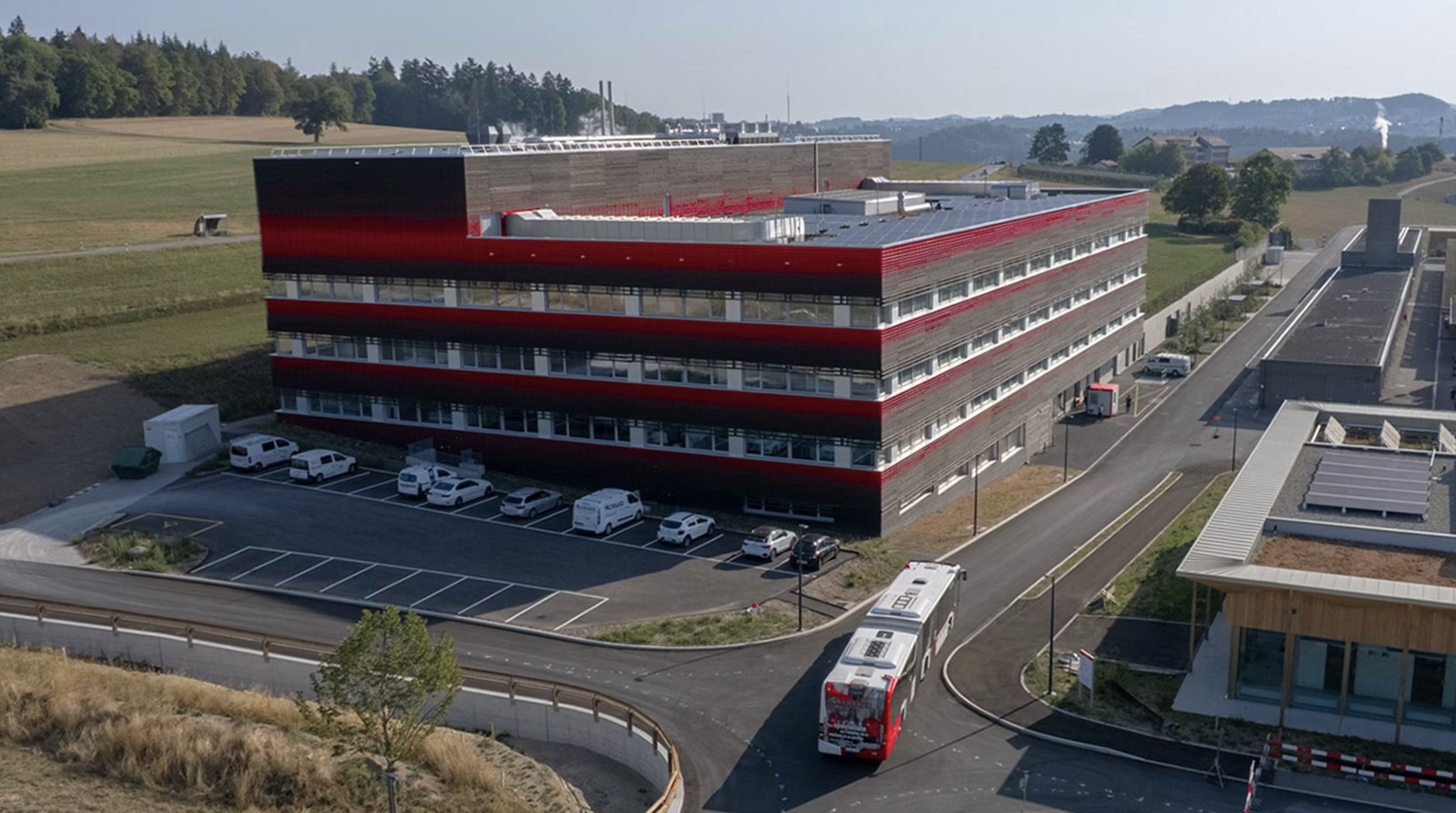
Fribourg Agri&Food lies at the heart of the cantonal agri-food strategy and works in close complementarity with key pillars of the Fribourg ecosystem. Alongside Agroscope, the national centre of excellence for agricultural research, AgriCo, an innovation and establishment campus for agri-food companies, and the Food Research and Innovation Center (FRIC) of the University of Fribourg, an interdisciplinary centre dedicated to food sciences, Fribourg Agri&Food helps connect research, education and innovation.

This dynamic is driven by the collaboration of three cantonal directorates — Economy, Employment and Vocational Training (DEEF), Institutions, Agriculture and Forests (DIAF), and Education and Cultural Affairs (DFAC) — which combine their strengths to stimulate innovation, reinforce sustainability and energise a key sector of the Fribourg economy.

State Councillor Didier Castella, Director of Institutions, Agriculture and Forests, emphasised: “Agri-food is a pillar of our economy, and thanks to Fribourg Agri&Food, we are strengthening the canton’s competitiveness and attractiveness while positioning Fribourg as a leader in Swiss agri-food.”

Two instruments to support innovation

Fribourg Agri&Food deploys two complementary levers to support agri-food stakeholders:

  • Funding through Innovation Vouchers (up to CHF 15,000 to test or prototype an idea) and Systemic Project Calls (up to CHF 150,000 to support high-impact collaborative projects).
  • Services, offering a comprehensive set of tools designed to create a living laboratory, supporting farmers, entrepreneurs and project leaders from idea through to market launch.

Innovative projects transforming Fribourg’s agri-food sector

Three recent projects supported by Fribourg Agri&Food illustrate how innovation is concretely transforming the canton’s agri-food sector. Each highlights one of the programme’s key thematic areas:

  • Wheydrogen (Biomass Valorisation): transforming whey, a by-product of the dairy industry, into green hydrogen and sustainable fertilisers.
  • Rumex Fork (Agriculture & Industry 4.0): eliminating dock weeds without herbicides through artificial intelligence and electrification. The machine was presented on site during the press conference.
  • ALI IMPACT (Consumers & Innovation): identifying and testing new psychological and marketing levers to encourage healthier and more sustainable food choices in collective catering.

State Councillor Olivier Curty, Director of Economy, Employment and Vocational Training, stated: “Agri-food innovation transforms challenges into opportunities: it opens up new prospects for our companies and strengthens the vitality of the Fribourg economy.”

State Councillor Sylvie Bonvin-Sansonnens, Director of Education and Cultural Affairs, noted that: “The strength of these projects lies in bringing together researchers and agri-food economic actors from Fribourg, who combine their expertise to create concrete solutions.”

Following the 2025 systemic project call, three new systemic projects have recently been selected. Full details are available here: www.fribourg-agrifood.ch/projets-soutenus  

Sign up for quarterly Swiss food innovation updates.