When Voltiris won the Helbling Venture...
New SFNV Steering Committee member Dr. Ian Roberts on innovation and collaboration in sustainable food systems
New SFNV Steering Committee member Dr. Ian Roberts on innovation and collaboration in sustainable food systems
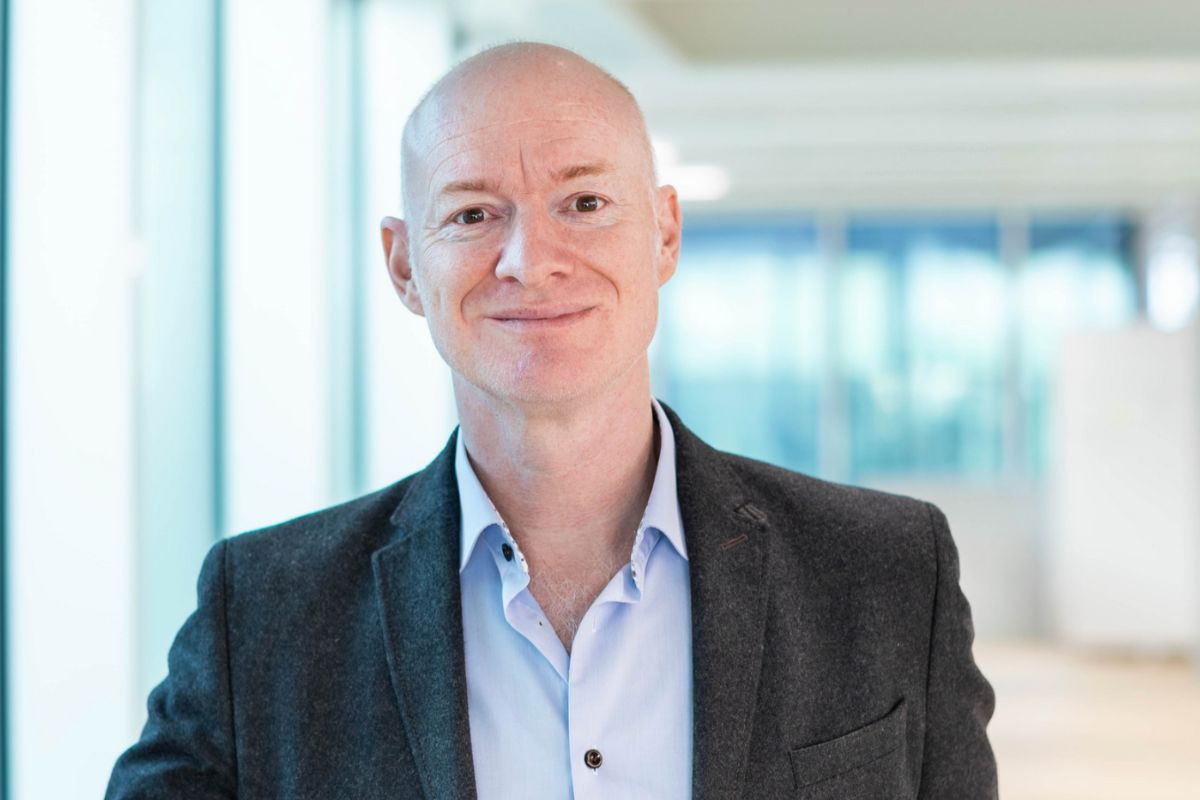
Collaboration, technology, and ecosystem thinking will be essential to transforming the global food system, according to Dr. Ian Roberts, who recently joined the Swiss Food & Nutrition Valley Steering Committee. Ian brings more than 30 years of international experience across food, processing, innovation, and sustainability, including leadership roles at Bühler, where he helped drive the company’s transformation in innovation and sustainability. Passionate about building scalable solutions through collaboration, he believes Switzerland is uniquely positioned to demonstrate how industry, academia, startups, and technology can work together to accelerate food system change. We recently caught up with him to discuss the power of ecosystems, the role of technology in food innovation, and Switzerland’s opportunity to lead by example.
Ian, welcome to the Valley! What inspired you to join the Swiss Food & Nutrition Valley Steering Committee?
Thank you. I’m delighted to join the Steering Committee of the Swiss Food & Nutrition Valley. I’ve been involved with the Valley for a number of years, and I really believe it has the potential to help us transform towards a more sustainable food system.
And the reason I say this is that, in my 30-plus years working in food, whether with consumer goods companies, in B2B and processing, or with startups, what I have seen is that real change doesn’t come from one single point. You need to build a very strong and profound ecosystem if you want to drive transformation.
Switzerland is very well equipped for this. We have fantastic multinational food companies, strong B2B players, process technology companies, flavour companies, ingredient companies, consumer goods companies, and also some of the best universities and research institutes in the world. When you combine that with informed consumers, you create an ecosystem around food that can truly drive change.
What excites me is the opportunity to help focus this extraordinary ecosystem. To play to the strengths of Switzerland, demonstrate solutions here, and do so in a way that can be replicated in other regions of the world.
You’ve led Bühler’s transformation in innovation and sustainability. What key lessons from that journey can be applied to the broader food system?
One of the key lessons is that innovation and sustainability cannot sit at the side of the business. They have to be embedded into the core of how you think, how you invest, and how you make decisions.
At Bühler, we learned that if you want to drive meaningful change, you need a very clear ambition, but you also need the mechanisms to make it happen. That means building capabilities, building partnerships, and creating the right culture so that people are empowered to work differently.
The other important lesson is that no company can solve these challenges alone. The food system is interconnected. It includes farmers, processors, technology providers, brands, retailers, consumers, regulators, academia, and investors. So the ability to collaborate across boundaries becomes absolutely essential.
And finally, we need to move from talking about sustainability to demonstrating it. We need scalable solutions, we need measurable impact, and we need to show that sustainability and economic viability can go hand in hand.
With your background in engineering and digital transformation, how do you see technology reshaping food production and processing in the coming years?
I think technology will play a very significant role in reshaping food production and processing, but we have to be clear that technology is an enabler, not an end in itself.
Digital technologies, for example, can help us understand processes much more deeply. They can help us reduce waste, improve yield, optimize energy use, and increase food safety. If we can measure better, we can manage better, and that is hugely important in a food system where resources are under pressure.
Engineering also has a major role to play. We need processing technologies that are more efficient, more flexible, and better adapted to new raw materials and new food concepts. Scaling technologies for example sustainable proteins, cost-effective precision fermentation and sidestream upcycling are essential.
I see the future as one where food production becomes more intelligent, more resource-efficient, and more connected. But the key will be to ensure that these technologies are applied to solve real problems and can bring impact at scale.
You’ve been deeply involved in building innovation ecosystems and startup accelerators. What role do startups play in driving food system change?
Startups play an important role because they often bring a different mindset. They challenge assumptions, they move fast, and they are willing to take risks in areas where larger organisations may be more cautious.
In food system transformation, we need that energy. We need new ideas, new business models, new technologies, and new ways of thinking about consumers and value chains. Startups are often very good at identifying specific pain points and creating focused solutions around them.
But we also have to recognise that food is a complex industry. Scaling in food is not easy. You need infrastructure, regulatory understanding, quality systems, market access, and often significant capital. This is where ecosystems become so important.
The real opportunity is to connect startups with established companies, universities, investors, and technology providers in a way that helps them scale faster and more effectively. Startups bring the spark, but the ecosystem can help turn that spark into something that has real impact.
Sustainability is a core focus of your work. What do you see as the most urgent challenges the food system must address today?
There are several urgent challenges, and they are all connected. We need to reduce greenhouse gas emissions, reduce food loss and waste, use water and energy more efficiently, protect biodiversity, and at the same time provide nutritious, affordable food to a growing population across the globe.
That is a very complex equation. It is not enough to optimise one part of the system if we create problems somewhere else. It is important to approach this with a systemic perspective.
Food loss and waste, for example, is an area where we can have a very significant impact. If we can make better use of the raw materials we already produce, that is one of the most powerful levers we have. At the same time, we need to look at how we produce and consume proteins, how we improve nutrition, and how we make supply chains more resilient.
The urgency lies in moving from isolated initiatives to systemic transformation. We have many solutions already available, but we need to scale them, connect them, and make them economically viable.
How can industry, academia, and entrepreneurs collaborate more effectively to accelerate scalable solutions?
The first point is that we need a shared ambition. Collaboration works best when different actors are aligned around a clear challenge and a clearly defined desired outcome.
Industry brings market understanding, scale, and operational experience. Academia brings deep knowledge, research capability, and scientific rigor. Entrepreneurs bring speed, creativity, and the willingness to challenge existing models. Each of these is powerful on its own, but the real magic happens when they come together.
Collaboration also needs structure. It is not enough to say we want to collaborate. We need platforms, programmes, and environments where people can work together with trust, transparency, and a focus on impact.
This is where Switzerland has a real opportunity. We have the concentration of players, the quality of institutions, and the entrepreneurial energy to create these connections. The challenge is to focus them on the areas where we can make the greatest difference and then move quickly from ideas to implementation.
Switzerland is known for its strong innovation ecosystem. In your opinion, what sets it apart?
I think Switzerland has a very unique combination of strengths. It has world-class universities and research institutes, a strong industrial base, leading food and technology companies, and a culture of quality and precision.
It is also a country where people are used to working across languages, regions, and disciplines. That may sound simple, but it is actually very valuable when you are trying to build ecosystems. Collaboration is part of the way the country works.
Another strength is that Switzerland is small enough to connect people quite quickly, but influential enough to have global relevance. That means we can test, demonstrate, and scale ideas in a very effective way.
To maintain its leadership, Switzerland needs to continue investing in innovation, but also in openness. We need to remain connected to global challenges and global markets. The opportunity is not only to create solutions for Switzerland, but to demonstrate solutions in Switzerland that can inspire and support transformation elsewhere.
Is there a message you’d like to share with the SFNV community?
My message would be that we have a tremendous opportunity, but also a tremendous responsibility.
The food system touches everything from health, climate, nature, culture, and economy, to society. If we want to transform it, we need to work together in ways that are perhaps deeper and more practical than before.
The Swiss Food & Nutrition Valley can play a very important role in this. It can bring people together, focus on the ecosystem, and help demonstrate what is possible when industry, academia, startups, and public institutions align around a common goal.
I very much look forward to working with the community, with my colleagues on the Steering Committee, and with Christina and the team. I believe Switzerland has the ingredients to drive profound change — and to do so in a way that can be relevant far beyond its borders.
Never miss a Swiss food innovation morsel.
Latest News
How Voltiris is building on its Helbling Venture Challenge success
Atinary Named a World Economic Forum 2026 Technology Pioneer
Valley partner, Atinary, the pioneer...

Basel, Lucern and Zurich launch Food2050’s MenuCheck to help restaurants offer more sustainable menus
The cantons of Basel-Stadt, Lucerne,...

Alessandre Keller joins the SFNV Steering Committee to drive innovation across health, nutrition and food
The future of health will increasingly...