New production facility will support the evolution of fermentation-based food systems in Switzerland

New production facility will support the evolution of fermentation-based food systems in Switzerland

The construction of the new building dedicated to the production of Liebefeld Kulturen AG marks a key milestone for the future of Swiss cheese cultures. The building will be equipped with state-of-the-art technological infrastructure. The site will open in spring 2028.

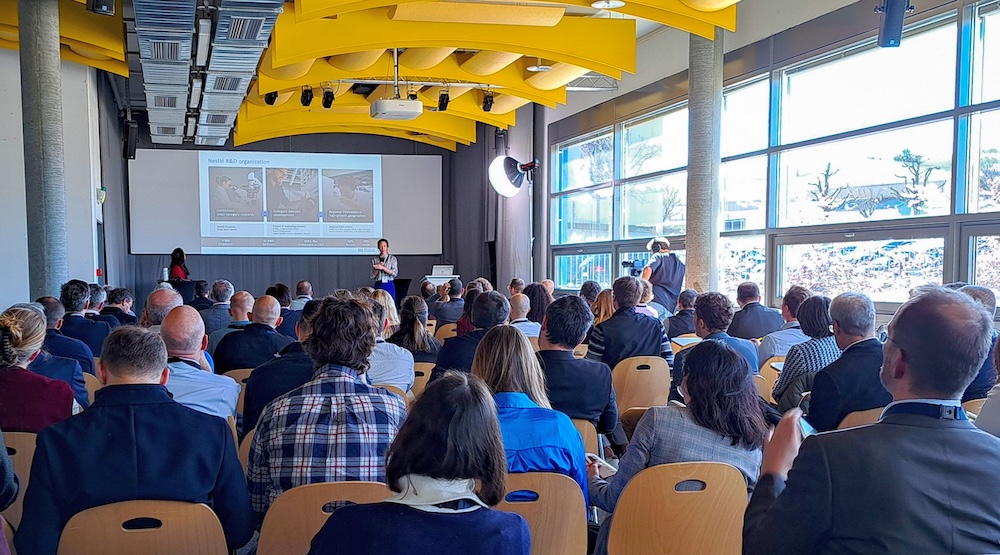
The new building intended for the future production of Liebefeld Kulturen® will be erected on the site of the Grangeneuve competence centre, just a few hundred metres from the new Agroscope campus in Posieux. On 19 January, the groundbreaking ceremony officially marked the start of construction works, in the presence of representatives from Liebefeld Kulturen AG, the Canton of Fribourg and Agroscope.

A broadly supported collaboration

The new building, with an estimated cost of around CHF 20 million, is being developed and financed by the private company Liebefeld Kulturen AG, supported by the Swiss dairy and cheese sector.

The building, covering approximately 1,500 m² over three floors, will house production facilities, laboratories, warehouses, offices, as well as social and technical rooms, all equipped with cutting-edge technological infrastructure. Once completed in spring 2028, it will also accommodate around ten Agroscope employees.

This project is part of the ongoing development of the Agroscope Grangeneuve campus and the national competence centre for raw milk dairy products and foodstuffs.

Connecting R&D with practical application

This new building ensures that the Swiss cheese and food sector will continue to benefit from Liebefeld Kulturen®, which are recognised for their quality. More than 500 cheese dairies across Switzerland use these cultures to produce iconic cheeses such as Gruyère, Emmentaler, Appenzeller, Vacherin Fribourgeois and many others. A significant increase in capacity in the field of freeze-dried cultures will also enable the production of new innovative products. Proximity to Agroscope ensures that research and development remain directly and continuously linked to practical application.

Sign up for quarterly Swiss food innovation updates.

OneAgrix appoints Philippe Chatelain to Board of Advisors

OneAgrix appoints Philippe Chatelain to Board of Advisors

OneAgrix, a Swiss–Singapore headquartered trusted trade infrastructure company, has appointed Philippe Chatelain to its Board of Advisors as it advances its platform for regulated global trade.

Operating across regulated supply chains requires infrastructure capable of delivering end-to-end traceability, verification, and regulatory readiness across the full lifecycle of a product. OneAgrix is building systems designed to embed these capabilities directly into how trade operates, supporting auditability, cross-border execution, and long-term operational resilience.

Philippe Chatelain brings decades of hands-on experience designing and deploying traceability, serialization, authentication, and digital product passport systems across FMCG and industrial supply chains. His work spans full lifecycle monitoring, from production and marking through distribution, consumer verification, and regulatory oversight.

His appointment strengthens OneAgrix’s in-house capability to operate and govern traceability and verification systems at scale, supporting regulated trade across jurisdictions and compliance-intensive industries including food and FMCG.

“Trusted trade depends on infrastructure that works across the entire lifecycle of a product, not fragmented tools,” said Diana Sabrain, Founder and CEO of OneAgrix. “Philippe’s experience reinforces our focus on building systems that support regulatory integrity and execution discipline.”

In his advisory role, Chatelain will work closely with the OneAgrix leadership team on infrastructure strategy, governance priorities, and the scaling of trusted systems across global markets.

About OneAgrix

OneAgrix is a Swiss–Singapore headquartered company building compliance-first infrastructure for regulated food, FMCG, and adjacent industries. The platform enables lifecycle traceability, verification, and cross-border trade readiness across complex regulatory environments.

Find out more: https://www.oneagrix.com/

Sign up for quarterly Swiss food innovation updates.

The Cultured Hub unveils plant cell culturing for cocoa, coffee, and other ingredients

The Cultured Hub unveils plant cell culturing for cocoa, coffee, and other ingredients

The Future of Food: Givaudan, Nestlé R+D Accelerator Lausanne and FoodHack launch the 2025 FoodTech World Cup
Valley partner, The Cultured Hub, has announced an expansion of its service offering with the addition of plant cell culturing capabilities, broadening its activities beyond cultured meat and leveraging this technology platform to support the growing field of alternative ingredient production. To mark this milestone, the Hub hosted the first Cultured Plant Cell Event 2025, bringing together start-ups, corporate leaders, and researchers to explore how plant cell culture can complement traditional agriculture and strengthen global supply chains for high-value ingredients such as cocoa, coffee, and citrus.

Originally created to accelerate cultivated meat and cellular agriculture technologies, The Cultured Hub now extends its infrastructure and expertise to plant cell-based processes. This expansion comes at a time when rising commodity prices, climate volatility, and increasing pressure on agricultural systems are driving demand for resilient, sustainable sourcing pathways. Plant cell culture offers a promising approach to enabling controlled, year-round production of key plant compounds independent of farmland, weather, pests, or disease.

“Plant cell cultivation represents an important new frontier in sustainable food and ingredient production,” said Ian Roberts, Chief Technology Officer at Bühler Group. “Many of the same challenges we see in cultivated meat – the need to scale, reduce cost, and ensure quality at industrial levels – also apply here. By expanding The Cultured Hub’s offering into plant cell culture, we are supporting innovators in this transition and giving the food industry a unique platform to explore new, climate resilient ingredient pipelines.”

A dynamic ecosystem of innovators

Throughout the event, participants discussed the pressures facing cocoa, coffee, and citrus supply chains, and how plant cell culturing can serve as a complementary production method for stabilizing ingredient availability. Scientific and technical sessions covered the state of the technology, recent breakthroughs, scale-up challenges, and the path from lab to market.

Start-ups actively pitched their technologies and solutions directly to industry leaders specializing in cocoa, chocolate, and coffee processing, fostering collaboration and potential partnerships. Multiple innovators in plant cell culture also presented their work across coffee, cocoa, and next-generation ingredients, including companies such as Ergo Bioscience, Coffeesai, Phyton Biotech, Spicy Cells, Kokomodo, Food Brewer, Celleste Bio, and GALY. Their contributions illustrated the diversity of approaches underway globally – from cocoa biomass grown in bioreactors to stabilized coffee cell lines and high-value plant compounds produced using controlled fermentation.

“Demand for alternative, climate-resilient ingredients is growing rapidly, and plant cell culture is emerging as a credible sourcing platform,” said Yannick Jones, CEO of The Cultured Hub. “Yet the field still faces high costs and complex technical challenges. By providing shared bioprocess infrastructure and a collaborative environment, The Cultured Hub enables both start-ups and corporates to scale more efficiently, shorten development timelines, and explore where strategic partnerships and investments can unlock the next wave of innovation.”

A scientific frontier with commercial momentum

The event also featured a keynote from Prof. Dr. Ing. Regine Eibl-Schindler, ZHAW School of Life Sciences and Facility Management, who introduced the emerging discipline of microbotanics – the cultivation of plant cells to produce targeted metabolites, flavors, and functional compounds with precision and consistency. This global network advancing plant cell research and its applications, connects researchers, start-ups, and industry to accelerate innovation in sustainable plant biotechnology.

“Plant cell factories allow us to produce molecules or biomass that are difficult, slow, or expensive to obtain from fields, while reducing exposure to climate and disease risks,” said Philippe Jutras, Founder of the Plant Cell Institute. “But as with any new technology, scaling is the bottleneck. Events like this create essential alignment between researchers, start-ups, and industry so we can move from promising lab results to meaningful commercial impact.”

A new offering to accelerate the future of ingredients

Plant cell culturing remains an emerging field, with costs driven by sterile bioreactors, energy-intensive controlled environments, and the complexity of plant cell biology. Scaling from flasks to pilot systems is technically demanding and often beyond the reach of early-stage companies. The Cultured Hub’s expansion directly addresses these challenges by providing access to advanced bioprocess equipment, expert process development support, and a neutral platform for collaboration.

Sign up for quarterly Swiss food innovation updates.

Pow.Bio and Bühler join forces to advance next-generation precision fermentation

Pow.Bio and Bühler join forces to advance next-generation precision fermentation

The Future of Food: Givaudan, Nestlé R+D Accelerator Lausanne and FoodHack launch the 2025 FoodTech World Cup
Pow.Bio, the pioneer in AI-enabled continuous fermentation technology, and Bühler Group, the global solution provider for food, feed, and advanced materials, are teaming up to bring an integrated continuous precision fermentation platform to market.

The collaboration advances industrial biomanufacturing by accelerating process development, reducing unit production costs thanks to a continuous process, and improving operation performance. Bühler and Pow.Bio are now ready to begin onboarding customers.

Unlike traditional fermentation approaches that rely on batch or fed-batch processes – stop-and-start methods that require the tank to be emptied and cleaned between runs – the companies now offer an ultra-efficient and streamlined solution. The offering brings together Pow.Bio’s proprietary continuous fermentation technology with Bühler’s 165 years of engineering, delivery, installation, and commissioning services – all supported by advanced model-driven control software. The result is a platform that allows customers to establish precision fermentation capacity faster, with predictable performance, lower unit costs, and a direct path to scale.

The platform is designed for companies commercializing fermentation-derived products that are currently produced in fed-batch systems but constrained by cost, scalability, or inconsistent output. From established ingredients such as enzymes and organic acids to categories like functional proteins, specialty lipids, and bioactive compounds, the Pow.Bio-Bühler solution offers a continuous, more efficient production pathway. By replacing traditional fed-batch processes with a continuous, model-driven system, customers can achieve significantly higher productivity, improved process consistency, and more cost-effective manufacturing through an established, low-risk pathway from lab to pilot and full industrial scale.

“Our collaboration with Bühler sets a new benchmark for biomanufacturing: not just faster, but smarter and more robust,” said Shannon Hall, CEO and co-founder of Pow.Bio. “Clients can now capitalize on proven technology and global deployment expertise to unlock commercial-scale production with lower risk and unprecedented efficiency. This partnership solidifies Pow.Bio’s position at the forefront of industrial biotechnology, enabling us to deliver enduring value for our clients and the sector as a whole.”

The partnership fully aligns with Bühler’s innovation culture and its focus on applied scalable technologies. “Precision fermentation has the potential to impact the food, feed, and specialty ingredients industries. Companies are already using it to produce dairy, meat, and egg substitutes, alternative oils and fats, and even novel pet food – and we are only at the beginning of what this technology can unlock,” said Thierry Duvanel, Bühler’s North American Director of Innovation. “By joining forces with Pow.Bio, we take a clear step toward reducing unit production costs in biomanufacturing, combining complementary expertise to accelerate innovation and deliver a fully integrated system backed by experience, service, and reliability.”

Accelerating commercialization 

Following Pow.Bio’s successful 3,000 L scale-up with ATV Technologies, achieved with Bühler’s support, this partnership is now positioned to accelerate adoption across the industry. By giving companies a clearer route from development to commercial production, the joint solution addresses hurdles that have long slowed scale-up in the sector. “With the technology validated and the full system in place, we are prepared to onboard customers and support them through deployment and scale-up,” said Adham Rizk, Sales and Commercial Manager at Bühler Group.

Sign up for quarterly Swiss food innovation updates.

The perfect mix of talent and tech: empowering startups in the Swiss food ecosystem

The perfect mix of talent and tech: empowering startups in the Swiss food ecosystem

Impact Digest | Cultured foods: How can we drive impact at scale?
Innovation succeeds when the right people connect around the right opportunities, supported by technology that brings clarity, focus, and speed. From communities and global connections to structure, speed and intelligence, here’s how two Valley partners featured in the SFNV Navigator are helping startups and corporations to innovate faster and smarter.

Matthew Lashmar | Managing Director, MassChallenge Switzerland

Since 2016, MassChallenge Switzerland has supported more than 1,175 startups, helping them collectively raise over CHF 2.9B across food, climate tech, health, and sustainable industries. Their programmes are equity-free, and the next application call for the early-stage accelerator will open in mid-January. Experts who want to join the MC Experts community can register here.

Q: MassChallenge is known for connecting startups with the right partners. How do you describe your role in the innovation ecosystem?

At MassChallenge, our strength lies in our global network — founders, experts, and corporate partners who are deeply committed to turning bold ideas into real-world solutions. We support startups at the moment when human connection matters most: finding the right partners, gaining clarity on expectations, and understanding the market. Innovation scales when relationships are strong.

Q: What makes MassChallenge particularly effective for startups entering or growing within Switzerland?

Switzerland is an incredible place to innovate, but difficult to navigate if you’re new. We focus on the people needed to innovate effectively: connectors, collaborators, and relationship builders. Startups benefit from our experience supporting hundreds of founders and partners. We help them gain direction, confidence, and traction.

Q: If you could give one piece of advice to startups setting out in food, what would it be?

Being a food startup is hard. Look for people who’ve walked your journey. This could be one of the many corporate partners who support MassChallenge – or one of the many expert mentors that give advice to startups in our programme. When you find someone who can help, be clear about what you want and what value you bring to the other entity, but stay open minded to learn and adapt your plan. Startup and partner collaborations only work if there is strategic alignment, so startups must put in the effort to make sure they fit and can be part of the corporate’s agenda.

However, when the conversation starts, MassChallenges experts and partners will likely have strong feedback about how to scale and operationalise the startups’ idea. At this point, the startup should listen and adapt to advice. Experience can save them significant time and money, and get their solution to market faster delivering impact and adding value to society.

Find out more about Masschallenge Switzerland

Olga Guerous-Roquebert | CEO, Innopearl

Innopearl is a next-gen platform that streamlines how corporations prioritise innovation needs, scout startups, and make decisions.

Q: For readers new to Innopearl, what challenges does your platform solve for corporates and innovation partners?

Working with large companies can be incredibly valuable for startups, but progressing from an introduction to a pilot, and then to a commercial contract, is often slow and unclear. That’s because the challenge isn’t just about the innovation. It’s structural.

Within a corporate, no single R&D or Innovation leader can champion an opportunity all the way through. It requires a joint, cross-functional effort. But each function, Marketing, R&D, Operations, Procurement, has its own priorities. When information is scattered and discussions happen in silos, aligning everyone around a clear use case can take months.

Innopearl solves this by creating a digital structure where there was none. Our AI-powered platform guides teams end-to-end. It turns fragmented inputs, such as strategic priorities, market shifts, technical requirements, into clear, actionable innovation briefs. From there, it enables teams to evaluate opportunities consistently, collaborate in one workspace, and make better decisions much faster. For startups, this means clearer expectations, fewer delays, and faster traction with potential corporate partners.

Q: How does Innopearl complement organisations that emphasize the human side of innovation?

These organisations bring strong knowledge and connections, which allow them to select high-quality startups; and let’s say around 10% of those go on to sign real partnerships. It is a great conversion rate. But the question is, why not more?

Too often, this is not because other startups are not good enough or mature enough. It’s because large organisations lack a systemic, powerful way to include partnerships into a holistic solution design. Combining the human side of innovation and technology helps bridge this gap by providing clarity on why innovation is needed, what solutions exist, and how to align internally to make partnerships work.

  • Clarity on the WHY: Innopearl’s AI-powered opportunity engine analyzes internal priorities and market context, producing ready-to-use, strategically aligned challenge briefs for R&D in minutes instead of weeks.
  • Clarity on WHAT is possible: Startup networks will identify the innovators that fit the organisation’s needs, drawing on their global community and experience. When uploaded to the Innopearl platform, AI-ranking will compare innovators to find the best solution.
  • Alignment on the HOW: Innopearl’s Alignment Accelerator strengthens cross-functional collaboration and decision-making through structured assessments, insight-driven use cases, and clear next steps.

As society evolves and requires faster, bolder responses, companies that want to stay relevant need both: human insight and technology. Together, they accelerate innovation far more effectively than either could alone.

Q: What has surprised you most about how innovation teams use the platform?

What’s surprised us most is how quickly teams move from “discovery mode” to real operational decision-making once they have structured visibility. Many teams come in expecting inspiration; instead, they end up using Innopearl to validate assumptions, map internal and external needs, and make faster go/no-go calls.

Another pleasant surprise is the cross-functional engagement: R&D, procurement, sustainability, and strategy functions often end up collaborating on the platform far more than they anticipated. It shows that when information is transparent and contextualized, silos disappear naturally.

Find out more about Innopearl

Two distinct approaches, one shared mission

Although MassChallenge and Innopearl operate in different ways — one through human networks, the other through structured intelligence — both serve the same purpose: to help startups and corporates collaborate more effectively.

Their support allows startups to benefit from clearer corporate challenges, faster connections with the right partners and experts who understand their journey and technology that brings transparency and structure. At the same time, corporates benefit from well-defined innovation briefs, access to qualified, relevant startups, improved internal alignment and measurable impact on innovation projects. 

It’s a reminder that innovation moves fastest when people and technology pull in the same direction — and the SFNV Navigator is here to help you find the partners who make that possible.

The SFNV Navigator is your guide to scaling in the Swiss food ecosystem.

Tetra Pak acquires Bioreactors.net to accelerate solutions for New Food

Tetra Pak acquires Bioreactors.net to accelerate solutions for New Food

The Future of Food: Givaudan, Nestlé R+D Accelerator Lausanne and FoodHack launch the 2025 FoodTech World Cup
Tetra Pak Processing Equipment SIA has acquired Bioreactors.net, a Latvia-based company with close to three decades of experience in designing and manufacturing bioreactor systems. 

Founded in 1996, Bioreactors.net specialises in delivering cutting-edge biomass and precision fermentation solutions for New Food, with its bioreactors able to produce a range of proteins and other products. The company brings extensive experience working with businesses of all sizes, from laboratory and pilot setups to full commercial production systems. Approximately 15 employees will join Tetra Pak as part of the acquisition.

This strategic acquisition will strengthen Tetra Pak’s processing expertise, bioreactor equipment and design portfolio within the New Food category, enabling the company to offer more advanced production systems for precision and biomass fermentation-derived foods and ingredients.

“The addition of Bioreactors.net complements our existing upstream and downstream processing portfolio with fermentation capabilities. Together, we will deploy their full portfolio of bioreactor solutions under the Tetra Pak brand – offering advanced food production systems.” says Rafael Barros, Director of the New Food Business Stream at Tetra Pak. “This acquisition will enable us to accelerate the development of next-generation bioreactors, empowering both emerging innovators and established producers to scale sustainably.”

“Joining Tetra Pak is a major milestone for us,” says Janis Misins-Jubels, Head of Manufacturing at Bioreactors.net.  “Our decades of expertise in bioreactors, paired with Tetra Pak’s existing portfolio, global reach and resources, will accelerate the delivery of world-class fermentation solutions to customers around the globe.”

Biotechnology is predicted to play a vital role in addressing the challenges of feeding a growing global population, and fermentation and bioprocessing technologies are projected to be crucial innovations when building more circular and resilient food systems.

Sign up for quarterly Swiss food innovation updates.