Nestlé launches new Youth Entrepreneurship Platform

Nestlé launches new Youth Entrepreneurship Platform

As part of its Global Youth Initiative, Nestlé recently launched the Nestlé Youth Entrepreneurship Platform (YEP), a new digital platform for young innovators and entrepreneurs who want to learn new knowledge and skills, test an idea or grow their businesses, in areas ranging from food science and technology to the development of products and services – including regenerative agriculture and sustainable packaging.

 A dedicated program young innovators and entrepreneurs

The YEP brings together all Nestlé’s existing innovation initiatives and programs in one place and gives young innovators access to The Nestlé Entrepreneurship Academy plus dedicated programs to grow knowledge, learn new skills and gain experience. It also offers customized content and resources from specific geographies.

Stefan Palzer, Nestlé CTO said, “At Nestlé we work with startups, entrepreneurs, innovators and researchers to drive innovation, bring good ideas to market fast and provide nutritious,sustainable and affordable products for a growing world population. Our new digital platform supports young people to bring great ideas to life across the food value chain, shaping the future of food!”

Key programs available on Nestlé’s Youth Entrepreneurship Platform include:

  • Nestlé R+D Accelerator: entrepreneurs can apply for challenges at one of Nestlé’s 12 Accelerators across the world, to focus on developing disruptive food and beverage innovations and bringing them to market in six months. Participants can work together with Nestlé’s R&D experts from around the world, such as food technologists, nutritionists, regulatory and food safety experts, designers and packaging experts. Each team also receives hands-on support from dedicated innovation coaches and mentoring from Nestlé’s senior management. 
  • Purina Unleashed: the first and only pet care program designed to identify and support innovative start-ups, focused on leveraging technology to improve the lives of pets and owners.
  • Numerous Nestlé market initiatives. For example, Ignite Ideas (Nestlé Hellas) supports startups and individuals; Reto Culinario (San Salvador), is an entrepreneurial contest and TV show that showcases youth culinary innovation; CEO X Youth Connect (East and South Africa), enables young people to engage with CEOs of large companies active in Nestlé’s Alliance for YOUth.
A global youth initiative

According to the International Labour Organization (ILO), two out of every five young people are either unemployed or have a job that keeps them in poverty. For this reason, Nestlé launched Nestlé Needs YOUth in 2013. The company’s Global Youth Initiative helps young people gain the skills they need to thrive in tomorrow’s workplaces. Around the world, it has benefited more than 4 million young people across the three pillars, employability, agripreneurship and entrepreneurship. 

Entrepreneurship can be a positive choice, a means of unlocking innovation, skills and energy to drive economic and social progress. Through the new platform, Nestlé is encouraging this, and is investing in early-stage companies and helping young entrepreneurs to put their ideas into practice. 

Young entrepreneurs need guidance, support, and above all, opportunities and platforms where their voices can be heard and their ideas realized. This includes building their knowledge and skills, testing their ideas in real-life situations, getting feedback from their audiences and receiving support to take their concept to the next level” said Laurent Freixe, Nestlé’s CEO for Latin America and founder of the Nestlé Needs YOUth initiative. “The Nestlé Youth Entrepreneurship Platform will help equip them with the skills, experience and mindset they need to kick-start their idea and business.” 

Check out the Nestlé Youth Entrepreneurship Platform to find out more and apply for free.

Never miss a Swiss food innovation morsel.

Join the Swiss Food & Nutrition Valley ecosystem.

Time to grow: YASAI’s crowd-invested funding round gets off to a strong start.

Time to grow: YASAI’s crowd-invested funding round gets off to a strong start.

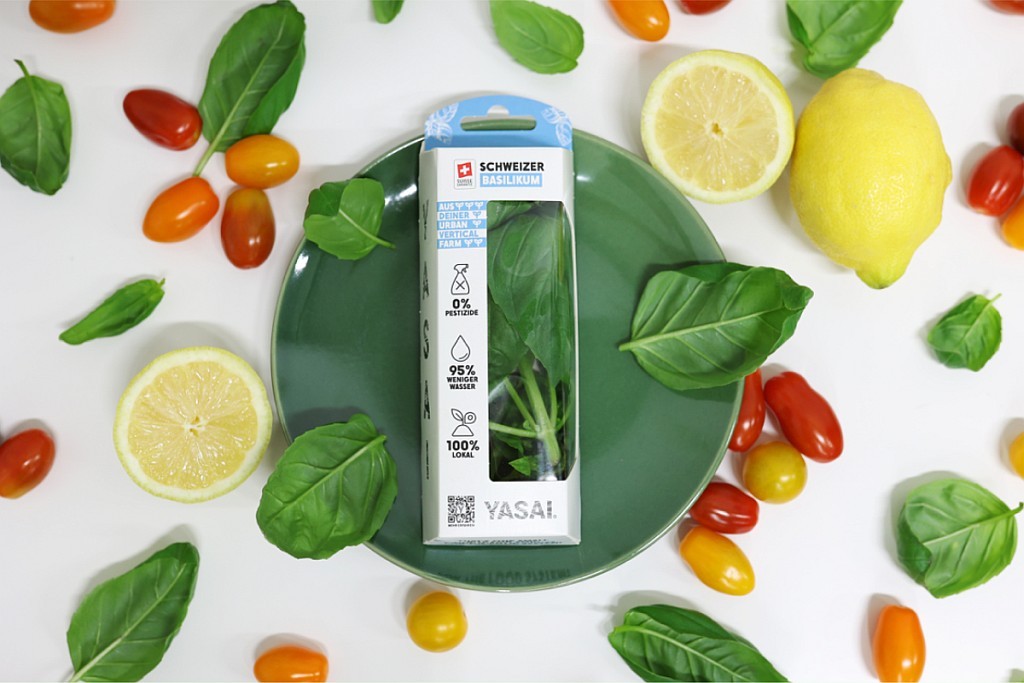
Growing up as a company is normally meant metaphorically, as startups move from young entrants to more mature businesses. But for YASAI, growing up also has a literal meaning. The Swiss agtech startup is redesigning the way food systems work by integrating vertical farming methods into herb production. Now they’ve launched a crowdinvesting campaign to double their production capacity.

Meet Yasai

YASAI’s Founder and CEO Mark Essam Zahran became interested in vertical farming – the practice of growing crops in vertically stacked layers in a climate-controlled environment – after stumbling upon a book about the method in his twenties. Leaning on his training as an architect, he decided to join forces with an ecological engineer and a banker to tackle one of the most pressing challenges of our time: feeding a growing global population on a planet with shrinking natural resources.

Together, the trio founded YASAI in 2020. Headquartered in Zürich, the company’s mission is to cover the food value chain holistically, from farm to fork, in a hyperlocal and traceable manner. The team has already funded and built their first vertical farm – already in operation as the first automated facility of its kind in Switzerland. Based on 100% renewable energy, their system is both economically and ecologically viable. Now the plan is to replicate this approach by scaling up with further hydroponic, vertical farming facilities. 

The story so far

In 2021, the company was generating a €-1.14m loss pre-revenue. However, YASAI’s initial market launch in January this year proved a great success, with their vertically farmed herbs now available in 80 locations at Switzerland’s largest grocery retailer, Coop.

Today, demand from prospective customers already exceeds the farm’s estimated current maximum output capacity by 2.8 times. In order to continue to offer a robust alternative to food imports in the country and expand to farming leafy greens, the company requires additional funding.

What’s next?

YASAI is crowdfunding to raise the money it needs to scale. Conventionally, investing in startups requires significant funds and is therefore limited to venture capitalists and angel investors, with contributions of six figures and above being the norm. Crowdinvesting allows for more conventional earners to invest in companies they care about. 

“Investing in a start-up shouldn’t be a privilege for only a handful of people. This is why we chose to invite supporters to crowdinvest. Everyone should be able to invest in vertical farming as a contribution to more resilient food systems” – Yasai Founder & CEO Mark Essam Zahran

Vertical farming has the potential to increase yields by up to 200 times per square metre and uses 95% less freshwater – something that is particularly pertinent as much of Europe is afflicted by drought. YASAI hopes that opening up their latest funding round to a wider demographic will allow those who care about the future of farming to put their money where their mouth is.

And the team seems to be right. Pre-registered users got priority access from August 15 and at the time of publication Yasai had secured €1,225,750 from 183 investors – already exceeding their initial €850,000 target. As of August 23, the campaign is public and open to everyone.

Next steps for the company, besides scaling up their farming facilities, include opening a branch office in Singapore and continuing to develop their presence in the European market.

Find out more about Yasai’s crowdinvestment round on Crowdcube.  

About YASAI

YASAI build and manage vertical farms based on a circular economy to transform food systems. Their mission is to contribute to local food production, independent of climate circumstances. They grow more with less fresh water, less fertiliser, and less land. They achieve more yield per square metre with zero pesticides all year round right at your doorstep.

Never miss a Swiss food innovation morsel.

Join the Swiss Food & Nutrition Valley ecosystem.

MIRAI FOODS and Shiok Meats enter into a strategic partnership agreement

MIRAI FOODS and Shiok Meats enter into a strategic partnership agreement

MIRAI FOODS – a Swiss company at the forefront of cultivated meat production – has entered into a strategic partnership agreement to develop cultivated beef production in Singapore and accelerate regulatory approval.

MIRAI FOODS has entered into a partnership agreement with Gaia Foods, a company specializing in cultivated red meat technology in Singapore and a subsidiary of Shiok Meats, the first cultivated seafood company in SE Asia.  The collaboration will enable the two innovators to exchange know-how and supplies to bring cultivated beef to Singapore. 

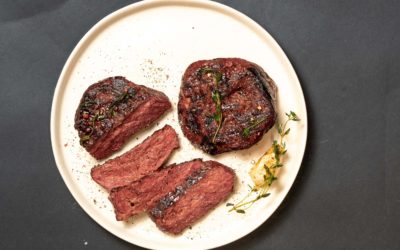
MIRAI FOODS will supply Gaia Foods with its one-of-a-kind bovine muscle and fat stem cells – the essential raw material for producing cultivated beef. These are natural, highly pure, non-genetically modified cells collected from premium cattle breeds, which are hard to come by in Singapore.

A growing appetite

We are excited to partner with one of the world’s leading cultivated seafood producers and their subsidiary cultivated meat company to extend the culinary choice for Singaporean consumers to premium, Swiss quality cultivated beef”, shares Christoph Mayr, CEO at MIRAI FOODS. “Partnering with a Singaporean company is particularly interesting for us given the country’s strong distribution and partnership network across the Asia Pacific region, which has been showing a growing appetite for safe, high-quality beef”, he adds.

Shiok Meats will provide MIRAI with its advanced regulatory information and know-how, gained from being located in the first country in the world to approve the sale of cultivated meat and home to the largest cultivated meat facility in Asia. MIRAI’s regulatory dossier filing in Singapore will be a first crucial milestone for the Swiss company to enter markets outside of its home ground. 

Sandhya Sriram, Group CEO at Shiok Meats and Gaia Foods, reveals that “this partnership is the result of a strong relationship we have been building with MIRAI. We already started working with MIRAI’s stem cells and are very happy with their performance. Whilst we will leverage our regulatory status and expertise to help MIRAI accelerate its market entry in Singapore, we are also looking at the potential production and distribution of our seafood products in Switzerland, a high purchasing power market with a strong first adoption mindset.

About MIRAI FOODS

MIRAI FOODS is a Swiss deep tech food company and one of the fastest moving 2nd generation cultivated meat start-ups, focusing on non-GMO, premium beef. Since its inception in 2019 the company has developed ground-breaking technologies that enable the cost-efficient and scalable production of natural, highest quality, 100% cultivated beef that is tasty, nutritious, and healthy. The unique combination of its patented technologies allows the company to produce whole cut filets and steaks. MIRAI has raised six million USD in seed equity, received three million USD in non-dilutive research grants and filed three defensible patents.

About Shiok Meats and Gaia Foods

Shiok Meats is a cultivated meat and seafood company – the first of its kind in Singapore and South-East Asia. “Shiok” in Singapore and Malay slang means fantastic, delicious, or simply put – pleasure. Shiok Meats owns SEA’s first cultivated red meat company, Gaia Foods. Their mission is to bring delicious, sustainable, and healthy seafood and meats to the table, using their technology to grow meat from healthy cells instead of animals. Currently, Shiok produces crustaceans like shrimps, crabs, and lobsters and are the first in the world to do so using cellular agriculture technology. Their meats are real meat, delicious and nutritious. Their meats are ethical and environment-friendly. Gaia Foods specializes on textured red meat like beef steaks.

Never miss a Swiss food innovation morsel.

Join the Swiss Food & Nutrition Valley ecosystem.

ALDI SUISSE becomes the first Swiss retailer to join Swiss Food & Nutrition Valley

ALDI SUISSE becomes the first Swiss retailer to join Swiss Food & Nutrition Valley

ALDI SUISSE is the first Swiss retailer to become a member of the Swiss Food & Nutrition Valley. By taking this step, ALDI strengthens its commitment to innovating to drive a more sustainable food system.

A new partnership for even more sustainable innovation

ALDI SUISSE is the first retailer in Switzerland to become a member of Swiss Food & Nutrition Valley. This move demonstrates its commitment to even more sustainability along its supply chains and driving innovations in agriculture and the food industry. The Swiss retailer believes that scientific and technological solutions will play a key role in shaping a more sustainable future.

Celebrating their membership, Jérôme Meyer, Country Managing Director at ALDI SUISSE said: Healthy and sustainable nutrition is an essential part of our lives. That’s why agriculture and food affect everyone. There is still great potential here. We are therefore very pleased to be the first Swiss retailer to become part of Swiss Food & Nutrition Valley’s extensive network and we look forward to discovering, promoting and supporting exciting agricultural and food innovations.

Major distributors play a key role in shaping a more sustainable food industry

Large distributors play an essential role in shaping more sustainable food systems. By becoming a Swiss Food & Nutrition Valley member, ALDI SUISSE makes an important contribution to driving a more future-focused food industry.

Swiss Food & Nutrition Valley Managing Director, Christina Senn-Jakobsen said: “Retailers play a vital gatekeeping role in driving more sustainable food systems. They shortlist the products that make it onto our dinner plates – shaping our supply chains from farm to fork and making it easier for consumers to make healthier and more sustainable choices. That’s why we’re thrilled to welcome ALDI SUISSE to the Valley. We look forward to welcoming them to the SFNV family and collaborating to create new programs to accelerate purpose-driven innovation! ”

About ALDI SUISSE

ALDI SUISSE AG is a Swiss company headquartered in Schwarzenbach (SG) and belongs to the group of companies ALDI SÜD, a global retail company. ALDI’s key values are simplicity, consistency and responsibility. In addition to high-quality products and affordable prices, this means ensuring sustainable, environmentally-friendly and animal-friendly production. A large proportion of sales from the ALDI SUISSE standard range of around 1800 products is generated from articles produced in Switzerland. With more than 3,900 employees and 230 branches, ALDI SUISSE has established itself as one of the largest employers in the Swiss retail trade since 2005.

About Swiss Food & Nutrition Valley

Swiss Food & Nutrition Valley (SFNV) is a not-for-profit association that strengthens and promotes food system innovation within Switzerland with global impact. SFNV’s diverse member organizations collaborate to address the most pressing challenges in food, agriculture and nutrition, and co-create innovative solutions that drive better planetary and human health.

.

Join the Swiss Food & Nutrition Valley ecosystem and be partof the journey!

Why SFNV’s President Martin Vetterli is quietly confident about the future of food

Why SFNV’s President Martin Vetterli is quietly confident about the future of food

Martin Vetterli was unanimously voted in for another term as SFNV President at SFNV’s General Assembly in May. We sat down with Martin to talk science, vegetables and why he is quietly confident about the future of food.

What does sustainable food mean to you personally?

Health and pleasure. I’ve eaten a largely vegetarian diet for many years now. I also like to grow my own vegetables, which I enjoy immensely and this gives me the chance to eat local and seasonal products.

What are your predictions for how we will produce, buy and eat food in 2050?

Science will become increasingly important in understanding the processes involved in food assimilation and food processing in particular. Take sugar – materials science has shown that by changing its molecular structure, it can satisfy our sweet tooth in much smaller quantities.

Thanks to science, my hope is that we produce and eat in a much more sustainable way, without losing the mealtime fun.

What has Switzerland got to offer as a food innovation nation? 

Switzerland is the ideal laboratory for healthy and sustainable food. We already have a rich ecosystem of startups, SMEs and multinationals in the fields of biotech and foodtech. SFNV has a good foundation and the ambition to become a globally recognized competence center.

Where do you see the biggest opportunities for impact? 

Precision nutrition or personalized nutrition is certainly a key opportunity. Everyone’s reaction to a specific food is different and unique. Evaluating an individual’s DNA, microbiome and metabolic response to specific foods helps to determine the most effective dietary plan to prevent or even treat disease. In order to help tackle the climate crisis, we should also focus on the production of new sources of protein with reduced environmental impact. Digitalization will also play an important role in driving more sustainable food systems.

In your opinion, what are the most significant challenges that need to be overcome?

Changing habits. These changes must be of interest to the market economy, which is why the presence of strong partners like Nestlé is so important in associations like SFNV. I also see the role of science as fundamental in this regard. Take food packaging, a topic that EPFL is currently exploring. We have to find solutions that are sustainable, economically feasible, and accepted by consumers.

I’m also a big believer in making small lifestyle changes, like traveling with public transport. Again, this often comes down to our daily habits. We need to shift the default.

What’s the role of academic and research institutions specifically in shaping the future of food?

The role of academic research – with all the academic freedom that this implies – is to provide answers to scientific and societal questions that may arise. And the most burning issue today is very clear: we need a more sustainable food system.

How can we help young people develop the mindset and skills needed to take action on complex issues, like the climate crisis, which impact on individual and planetary health?  

We can see that millennials are changing their eating behaviours for a variety of reasons, including health, ecological and economic factors. I am therefore confident. On the EPFL campus, we do whatever it takes to support everyone willing to contribute to a better future: from meatless meals and washable lunch boxes to participatory gardens. I wish that there were initiatives like this when I was a student!

What role does collaboration play in driving change? 

We need people from different backgrounds and professions to spread the message and to design solutions that meet diverse needs. In the end, food products have to taste good. Taste is central, otherwise eating habits will not change. The École hôtelière de Lausanne and similar institutions have a major role to play here. And I’m particularly pleased that Chef Franck Giovannini of the Hôtel de Ville de Crissier is one of our ambassadors. Farmers are also central actors in the production chain and must be included in the change process. Science works better when it doesn’t operate in a silo!

How two lifelong friends are redesigning the beekeeper economy

How two lifelong friends are redesigning the beekeeper economy

Beehives

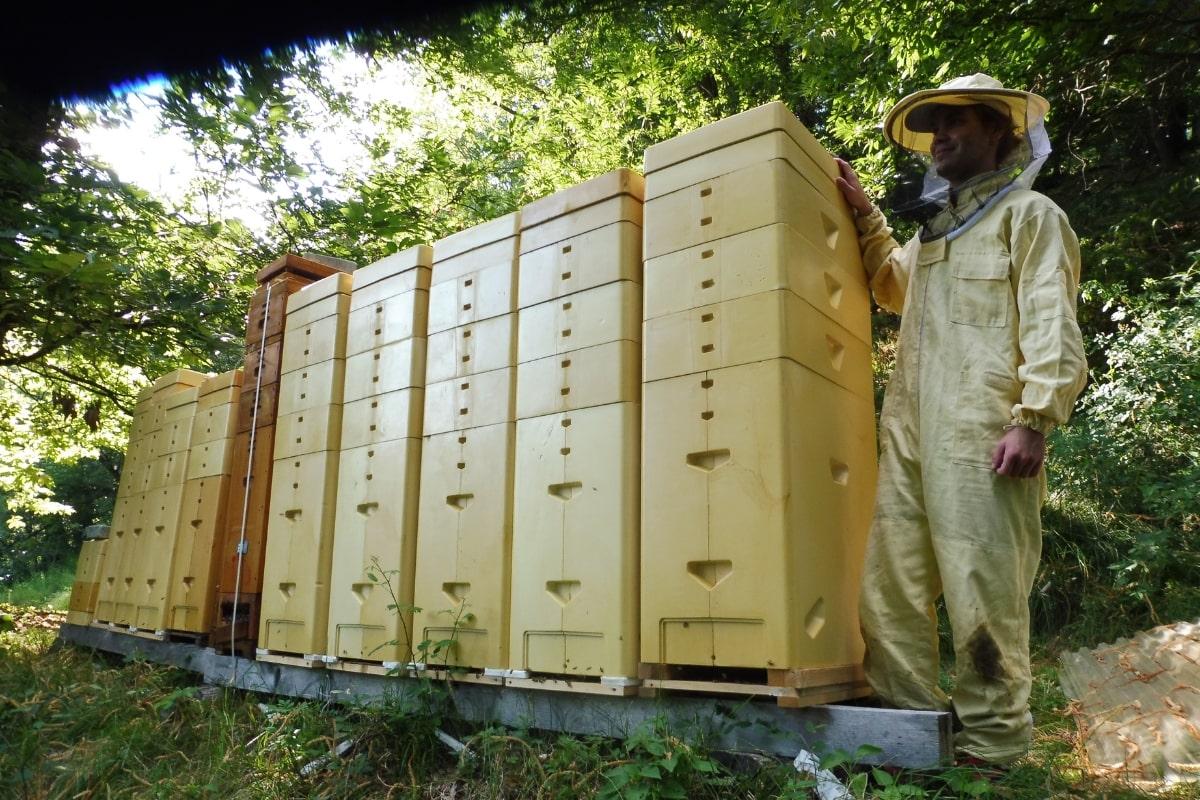
When Alex and Giangio started making honey in their spare time, they had no idea it would eventually lead to them founding a bee-focused startup. Inspired by nature, PrimalBee® is disrupting a product that has barely seen innovation in 170 years: the beehive. Now they’re looking for investment to scale.

Spotting an opportunity

Alessandro (‘Alex’) Gamberoni and Gianmario (‘Giangio’) Riganti first met in high school and have been friends ever since. Brought together by a mutual love of outdoor sports, they often went on climbing or skiing trips together and frequently spent these outings advising each other on their respective business ventures.  

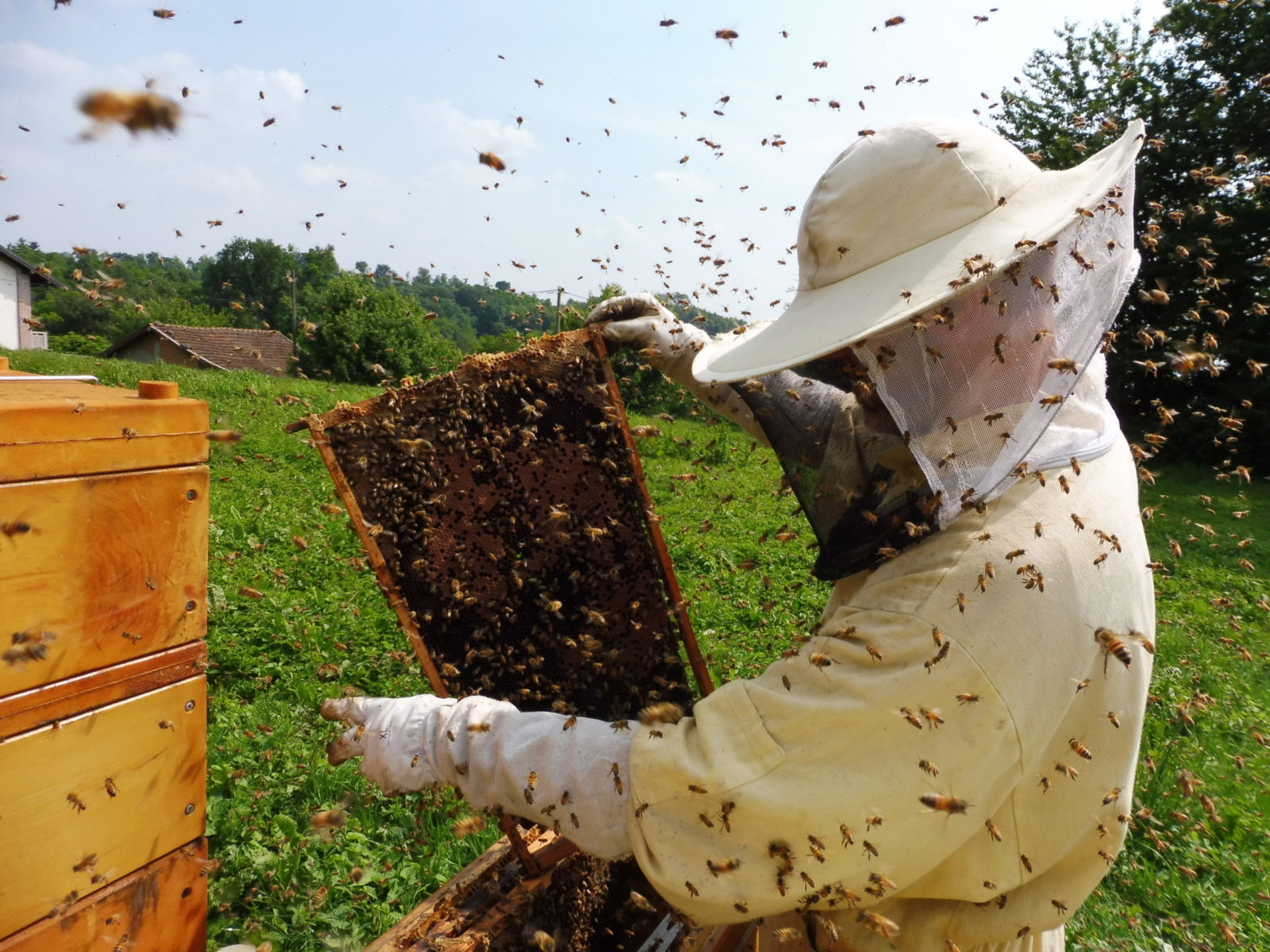
After several years working hard as entrepreneurs, Alex decided to close his workshop and started making his own honey as a hobby. He invited Giangio along – making honey became an opportunity for the two men to spend time together. The pair gradually became more and more involved in beekeeping; they took a course and became members of a local beekeeping association. But something wasn’t right – they kept losing their colonies. 

The breakthrough came when a beekeeping contact called and invited the pair to see a huge colony he’d discovered. Inside a huge hollow cedar tree, they were surprised to discover an entire hidden world of honeybees – living entirely differently to the way they did in human-raised hives. This planted the seed of an idea that would later become the PrimalBee® Hive.

Taking inspiration from nature

The classic beehive design was created around 170 years ago. It is essentially a wooden box, and limited innovation has been applied since its inception. Anyone with a basic knowledge of carpentry can build one and the market is huge, but it’s far from the best solution for bees. Even high-tech solutions don’t offer much of a benefit – it’s like adding sensors to track your bank account when the balance is always at zero. 

PrimalBee®’s founders realized that allowing the bees to utilize their own resources was crucial and the key to ending hive losses. ‘In a standard hive, honeybees are forced to throw 90 per cent of their resources out the window, so to speak,’ says Gianmario. 

Honey bees, they proved thanks to 12 years’ of R&D, are thermally sensitive. Tiny variations can have an outsized impact on the colony as a superorganism. Bee colonies need to remain at a certain temperature to survive: the role of the worker bees is to keep the queen warm so she can produce a new brood as soon as possible. Once the temperature inside the hive hits 36 degrees Celsius, the queen will begin to lay eggs. These eggs quickly become more important than the queen itself – as the next generation of bees. Over winter, when the colony is broodless, the queen needs to be kept at 28 degrees Celsius to survive and be able to lay eggs the following spring. The hive is the hardware connecting two environments at very different temperatures: the inside and the outside.

Redesigning the beekeeper economy

Alex and Giangio’s patented solution – the PrimalBee® Hive – redesigns the beekeeper economy, protects honeybee populations and fosters a solution that works with the bees rather than against them. It is the first hive designed with bees at the very core of it, thanks to an altered nest shape and material aiming for better thermal efficiency of the box itself.

‘We wanted to create a solution that works from the point of the view of the bee,’ Alex explains. The company’s aim is to let the bees do what they are programmed to do. That is: collect pollen and nectar,  increase the brood population, and produce more honey. Ultimately, that also means better pollination and a more secure food system for humans, too.

From Alaska to Israel

After coming up with their prototype, the team reached out to beta testers. The hive management system was tested first in Alaska, where it showed great promise – the bees survived the winter for the first time. In the Negev desert in Israel, where extremely hot temperatures usually ‘cook’ the bees, the PrimalBee® Hive performed well too, even surviving five years in a row without any chemical treatments. 

Since Alex and Giangio started testing the first iteration of the PrimalBee® Hive almost a decade ago, their hives have not experienced any brood diseases: something unheard of elsewhere, anywhere else in the world. The product also saves beekeepers time and money. Today orchards pay a significant amount of money to professional beekeepers to rent their hives for pollination services, as a means of increasing food production.

Looking ahead

The PrimalBee® team is now looking to scale their solution, setting up a dedicated supply chain in their target markets: USA, Australia and New Zealand, Europe. Aiming for a competitive retail price, the team has redesigned the whole hive system, opting for different production technology and alternative materials. Many of their customers’ suggestions have also been implemented, improving design and operational efficiency. The latest version of the PrimalBee® Hive will be available five to six months after the seed funding round concludes.

Any additional funding will go towards expanding the team, developing their marketing capacities and creating a more affordable version of the system. Their innovation has already won positive reviews from beekeepers and interest from international investors in the US, Singapore, China as well as in Switzerland. 

Connect with Alessandro or Gianmario on LinkedIn, or visit the PrimalBee website to find out more.

Never miss a Swiss food innovation morsel.

Join the Swiss Food & Nutrition Valley ecosystem and be partof the journey!