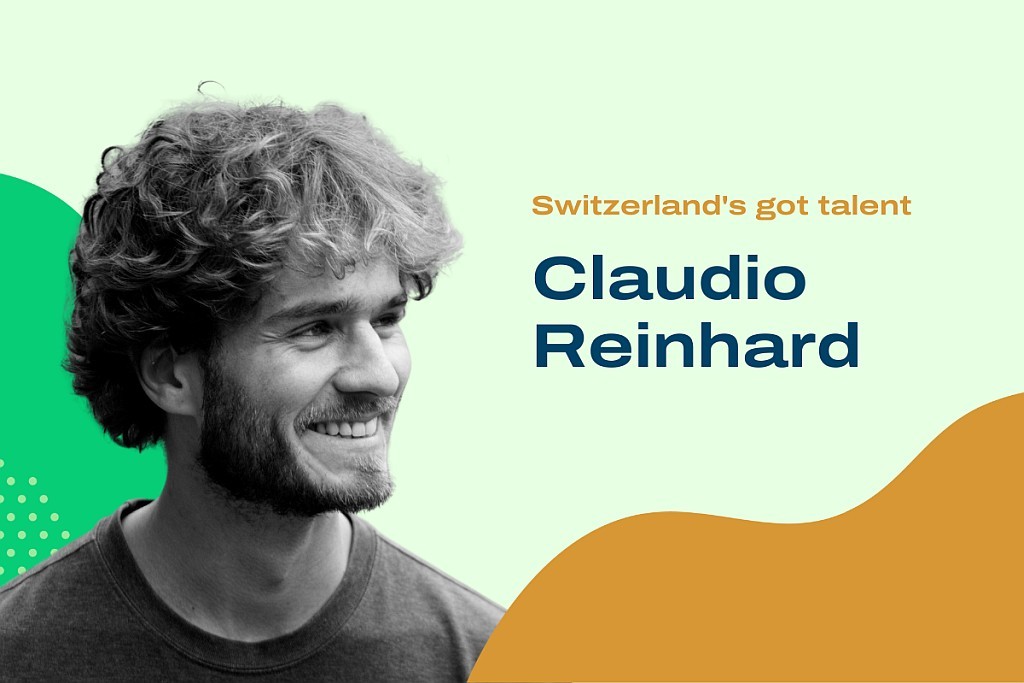
Why an ETHZ researcher founded a startup to tackle waste in the olive oil industry

Why an ETHZ researcher founded a startup to tackle waste in the olive oil industry

Claudio Reinhard set out to write his Master’s Thesis on soil regeneration in Tunisia. But after discovering a huge untapped opportunity in the olive oil industry, Claudio has transformed his findings into an award-winning collaborative research project and founded a startup to bring the developed solution to market. Now he’s looking for partners to scale his impact. 

Tell us a bit about yourself

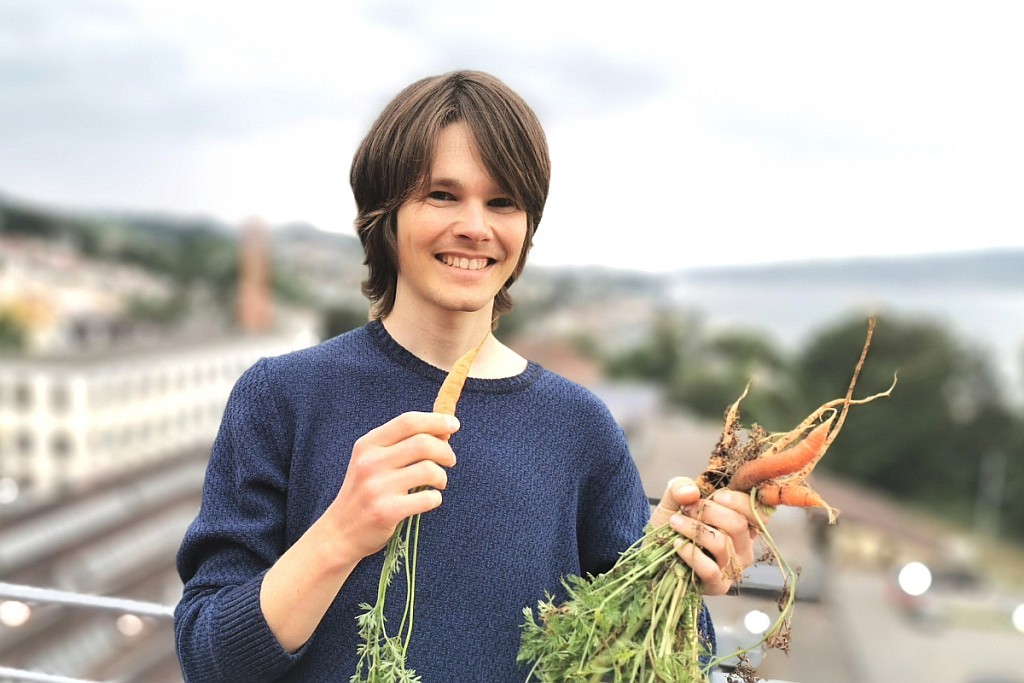
Hello, I’m Claudio – a mechanical engineer and ETH Zurich Project Lead who’s passionate about circular economy and entrepreneurship.

What’s the story behind your research?

I’ve always been interested in the concept of biorefineries and biochar and soil health in particular. Back in 2015 I’d planned to write my Master’s Thesis on how to use biochar in soils in Tunisia. While searching for a suitable source of biomass, I came across the topic of olive side streams. 

I was surprised to discover that olive oil production is responsible for a huge amount of agricultural by-products. Only 20% of the olive fruit harvested is transformed into extra virgin olive oil. The remaining 80% pile up as massive amounts of a side stream known as olive pomace. If released uncontrolled to the environment, olive pomace can cause serious damage to soil and water bodies due to its phytotoxic and antimicrobial properties. 

Nowadays, olive pomace is mostly used for the extraction of residual low-quality oil (pomace oil) before the remaining biomass is burnt. But this is a huge loss of value. Olive pomace is very rich in valuable, natural substances, called antioxidants. Olive antioxidants are known for their tremendous health benefits and strong antioxidant potential. I recognized that there was a huge opportunity to transform this abundant and low-cost by-product into a wide range of value-added products. 

Eager to build upon the promising results of my Masters thesis, I teamed up with Prof. Laura Nyström from Laboratory of Food Biochemistry at ETH Zürich, to initiate the EIT Food project Phenoliva, which kicked off in October 2019.

Tell us a bit more about the Phenoliva project

The Phenoliva project is an EIT Food innovation project. It brings together partners from the food industry, research and academia to develop and implement an integrated waste management concept for the olive oil industry. 

Using a novel process, the project partners extract olive antioxidants from olive pomace, and process the resulting extract into an innovative antioxidant that can be used as a valuable natural additive in food and cosmetics. The process is circular and all by-products are recycled.

We were thrilled to win the EIT Food Impact Prize in the circular economy category last year and to be nominated for this year’s EIT Awards. This recognition keeps us motivated and moving forward!

So how are you taking the results of your project forward?

In 2021 Laura Nyström and I decided to found a company to commercialize our findings. Over the last few months I’ve teamed up with Enrico Tenaglia, a biomolecular scientist, and Samuel Bühlmann, a business and marketing specialist, to develop and implement a go-to market strategy. 

So far this year, we’ve been selected to take part in the Startlife accelerator in Wageningen and have travelled to Africa as part of the SASBI program to explore the potential of sidestream valorisation in the coffee industry. We have also made it into the MassChallenge Switzerland 2022 Accelerator as one of the top 100 start-ups in their Sustainable Food Solutions track. We’re very excited about what’s coming in the next few months! 

What are your next steps?

We’re now starting discussions with industry partners so that we can develop a network of potential customers. We’ll be initially focusing on the cosmetics industry – a sector that has already shown significant interest in our ingredients.

We’re also working alongside local partners to set up a production site in Andalusia to produce antioxidant extracts from olive pomace. This should be up and running in 2023.

How can other ecosystem actors get involved in your work?

Actors from the cosmetics, food, supplements or feed and pet food sector are very welcome to reach out to us to discuss how our product could be used in their product lines. 

In the last few months, we’ve received some requests from agribusinesses that are interested in applying our upcycling process to their own harvest and production waste. We’re now working closely with an almond farm in Portugal in order to help them transform thousands of tons of almond husks and shells into added-value products. If any businesses are interested in exploring how they could valorize their harvest or production waste, I’d love to connect. 

You can also tune in and watch me pitch the project at the EIT Awards semi-finals on September 29. If you like what you hear, you can vote for us from September 29 to October 11.

What advice do you have for other researchers who would like to transform their findings into practical projects or businesses?

Find advocates who believe in the potential of your project. Prof. Laura Nyström has been a supporter from the beginning and remains actively involved in Gaia Tech as an advisor. Her support and encouragement has made a huge difference! 

Find out more on the Gaia Tech website. 

About the Phenoliva project

The Phenoliva project is an EIT Food innovation project funded by the European Institute of Innovation and Technology (EIT), a body of the European Union. Funded with over €2M, the project started in October 2019 and ends at the end of 2022. The interdisciplinary Phenoliva consortium consists of eight partners from academia, applied research and food industry. Gaia Tech was founded to bring the project results to the market.

Never miss a Swiss food innovation morsel.

Latest News
Join the Swiss Food & Nutrition Valley ecosystem.

How this end-to-end innovation platform is helping to close the data gap on nutrition status in children and adolescents in Switzerland.

How this end-to-end innovation platform is helping to close the data gap on nutrition status in children and adolescents in Switzerland.

With Serge Rezzi at the helm, the former Swiss Vitamin Institute has transformed into the Swiss Nutrition and Health foundation – a foundation of public utility owning an end-to-end innovation platform in the field of nutrients and health. We sat down with Serge to talk about science, collaboration and an unprecedented national study that his team helped kick off this year.

Tell us a bit about yourself.

I’m Serge Rezzi, CEO of the Swiss Nutrition and Health Foundation. But ultimately I am a scientist passionate about nutrient chemistry and biology – nothing more, nothing less.

Pitch your company in 20 seconds.

We’re a one-stop shop for nutrient analytics dedicated to food and nutrition research. We’re most well known for testing nutrients in food products providing world-renowned independent certification programs. But I like to say we are scientists specialized in tracking the nutrient journey from foods to human cells, bridging chemistry to biochemistry and nutritional status. We’re also a medical analysis laboratory for nutrient status and support innovation through translational research projects.

What gets you out of bed in the morning?

Nutrients are key to maintaining physiological functions and we get them from the food we eat every day of our lives. Nutrition is so vital to maintaining health. So when I get up in the morning, I think: what good can I do to evidence the role of nutrients on health today? How can I have an impact on raising public awareness about the importance of nutrition? And how can I support companies to develop innovative and nutritious products?

What does a typical day at work look like for you? 

Well, it always starts with a good coffee! I connect with my team, always trying to lead with empathy, positive energy and sense of humor. Then maybe I’ll have a meeting with partners about an R&D project or certification. Or perhaps I’ll update my board members on our progress and assess how our strategy is bringing us closer to achieving our mission. I also make sure I leave plenty of time to continuously study nutrient biochemistry, identify potential opportunities for innovation in nutrition status assessment and nutritional biomarkers, especially to develop science-based concepts for precision nutrition. I also strive to contribute to scientific publications as I see peer review as a hallmark of scientific quality. I am also teaching at EPFL and in several other education programs.

Which projects are you and your team currently working on? 

This year we kicked off a very exciting new project. Together with unisanté and other partners, we won the tender from the Federal Food Safety and Veterinary Office (FSVO) to perform the menuCH-Kids, an unprecedented national survey to assess dietary habits and nutritional status of children and adolescents (6-17 years) in Switzerland. This unique project represents a stepping stone to assess reference ranges of nutritional status biomarkers in Switzerland. 

We also started working on a new project on biomass valorization with the Canton of Fribourg as part of its agrifood strategy. We are tracking nutrient-rich co-products to enable their upcycling into high value nutritional ingredients. We’re aiming to validate new proof of concepts with novel prototypes by the end of the year.

And that’s not all. We’re also working on an EU funded H2020 project that aims to develop a precision nutrition platform for the youngest members of our population and we’re contributing to a project around vitamin D bioavailability. There’s never a dull day in the Swiss Nutrition and Health Foundation office!

Tell us about how you work with others in the ecosystem to innovate 

We’re lucky to collaborate with lots of great partners and fellow SFNV members, including Cluster Food & Nutrition and EPFL. 

Our slogan is “anchoring trust through science” and this provides the basis for our collaborations. We start by focusing on our expertise in nutrient analytics and biochemistry, then we partner with other organizations to bring in complementary skills as required on a per project basis. 

Thanks to our strong network of academic, startups and industry partners, we can mobilize resources and skills to tackle a broad range of topics in agro-food-nutrition research pretty quickly.

How can SFNV members get involved in your work? 

We can partner with startups that are looking for specific scientific expertise through a number of Innosuisse or other funding programs. We’re always eager to further strengthen our network and to support the development of science-based and healthy nutritional solutions. So if you see parallels with our work, please do get in touch. 

Precision nutrition is a key area that you explore through your work. Which key opportunities do you see here?

We believe that any type of precision nutrition should be based on solid science that begins with reliable nutrition status diagnostics. There is a lot of market-driven opportunism trying to position new services and product offerings with science gaps or shortcuts about biomarkers or their measurement technologies.  

We see a great opportunity to invest in understanding the biochemical/physiological fundamentals that underpin the dynamics of nutrition status biomarkers in cells and circulating biofluids. There is still work to be done on validating translation of these biomarkers on minimally invasive measurement technologies. At the same time, it’s important to develop next generation biomarkers that will be able to capture the complex molecular interactions between nutrients, host and microbiome.  

We also need to initiate a paradigm shift about nutritional biomarkers. We need to develop them to provide more insight into long term metabolic consequences on health as opposed to using them to indicate an immediate nutrition deficiency.   

Tell us something we didn’t know about your foundation

The Swiss Nutrition and Health foundation has been collaborating with the Centres for Disease Control and Prevention in Atlanta on the standardization of a folate status (vitamin B9 status) for many years now. Despite the advent of modern analytics, we’re still interested in using fairly old techniques using specific microorganisms to quantify bioavailable forms of vitamins, as these microbiological assays remain highly valuable in many cases. This collaboration is now being extended to vitamin B12 diagnostics. The foundation laboratory is also developing a platform for the in vitro measurement of the protein digestibility aiming to quantify protein nutritional quality.

Connect with Serge Rezzi on LinkedIn and visit the Swiss Nutrition and Health foundation website for more information.

Never miss a Swiss food innovation morsel.

Latest News

Join the Swiss Food & Nutrition Valley ecosystem.

How a climate-friendly sandwich is giving consumers a taste of our culinary future

How a climate-friendly sandwich is giving consumers a taste of our culinary future

Food2050’s Christian Kramer is using his unique sustainability system to raise awareness of the environmental impact of our meals. But he’s not stopping there. He’s also using what he’s learnt to develop 1.5 degree recipes. Shroomy is his first innovation – a climate-friendly sandwich that gives consumers a taste of the future.

Step into the culinary future

This week Zurich is taking a trip into the culinary future. The 10-day FOOD ZURICH Festival is providing an opportunity to explore the innovative food solutions that will reshape how we eat.

Amongst a host of booths and stands, you’ll find Christian Kramer, a restaurant industry veteran who is passionate about global food system transformation. His startup FOOD2050 is developing an integral sustainability system for the food service industry to digitally map recipe’s environmental impact based on their CO2e emissions in degrees Celsius. Following on from a promising pilot project earlier this year, he’s now ready to test out new ways to share his methodology – and the climate-friendly products it produces – with the general public.

In collaboration with Eaternity Institut, Christian and his team have set up a giant screen that visualizes the CO2e-footprint of the festival’s food stands and translates it into global warming potential in degrees Celsius.The project aims to raise awareness amongst attendees and drive a shift in their consumption behavior.

On the first day of the Festival, seven of Zurich’s 5 star hotels presented their indulgent but sustainable menus – and FOOD2050’s screen showed that that event had managed to keep its climate impact below Switzerland’s average consumption of 3°C. A few days later, the impact of the festival has fallen to 2.5°C and the team expects it to drop even further, based on the numbers they’ve seen coming through in the last few days.

1.5 degree recipes

But Christian is already thinking one step further. He wants to use the knowledge gained through FOOD2050 to develop environmentally friendly and tasty “1.5 degree recipes” – recipes that will keep the level of global warming below the 2°C set out in the Paris climate agreement.

In collaboration with the cooperative ZFV-Unternehmungen (ZFV), his new 1.5°FOOD brand has launched its very first innovation: the Shroomy. The climate-friendly sandwich is purely plant-based, with 98% of ingredients sourced from certified Swiss production and 2% from a Norwegian organic seaweed farm. The pressed oyster mushrooms, seasoned and fried like a steak, act as a juicy alternative to meat, are served with microgreens, organic seaweed, and rescued veggies in a spelt bun.

For Christian, the sandwich illustrates how food service partners can easily develop tasty and environmentally friendly bestsellers.

Next steps

Towards the end of September, FOOD2050 and ZFV-Unternehmungen will launch the second pilot operation at the University of Zurich. All meals served in the Irchel canteen will be evaluated and the results will be shared publicly on multiple screens throughout the university.

Once the data analysis provides a clear picture of where the biggest potential for reduced climate impact lies, 1.5°FOOD will work alongside partner organization Gastronomics to develop targeted recipes to bring down the measurements. The entire project will be supported by various communication measures that will help consumers and food service operators to make more sustainable food choices.

The team is now looking for funding to scale and is eager to connect with ecosystem actors with food innovations that help consumers to reduce their environmental footprint as well as companies interested in using their solution.

Connect with Christian on LinkedIn or drop by the booth at FOOD ZURICH Festival until September 17 to taste the Shroomy for yourself.

Never miss a food innovation morsel

Latest News

Join the Swiss Food & Nutrition Valley ecosystem and be partof the journey!

Nestlé explores emerging technologies for animal-free dairy proteins

Nestlé explores emerging technologies for animal-free dairy proteins

Nestlé has announced that it is exploring emerging technologies for the development of animal-free dairy protein-based products. Its novel product – developed by Nestlé R&D teams in Switzerland – will be piloted in the US market later this year as a test-and-learn.

Piloting a novel product

Nestlé announced yesterday that it is exploring emerging technologies for the development of animal-free dairy protein-based products. This move complements investments the company has made in plant-based meat and dairy alternative offerings over the years to meet the growing consumer demand for nutritious, more environmentally friendly diets.

Nestlé will pilot a novel product through the company’s newly established U.S. R+D Accelerator, bringing it to the U.S. market later this year as a test-and-learn. The product is made with animal-free protein from Perfect Day, a food technology startup company based in Berkeley, California. According to Perfect Day, the protein, made through precision fermentation, is identical to the whey protein found in cow’s milk but is lactose free and suitable for vegans.

A Swiss innovation

The product was developed by Nestlé R&D teams based in Switzerland. With expertise in both great-tasting nutritious dairy and plant-based dairy alternatives, Nestlé is well-equipped to deliver a relevant consumer solution in this emerging space, in collaboration with start-ups and other ecosystem actors.

Heike Steiling, Head of Nestlé’s Development Center for dairy products: “As the world’s largest food and beverage company, delivering foods and beverages that are good for people and the planet is a priority. We are exploring emerging technologies that can lead to animal-friendly alternatives that are nutritious and sustainable, without compromising on taste, flavor, and texture. Bringing together our unmatched R&D expertise, innovation capabilities and scale, we are working to develop and test novel animal-free dairy protein-based products to complement our wide-ranging portfolio of plant-based alternatives.”

Rapid US market entry

The recently created U.S. R+D Accelerator is focused on identifying opportunities and aims to bring highly differentiated product concepts to the market in just six months.

“We are excited to pilot Nestlé’s first animal-free dairy protein-based products through our U.S. R+D Accelerator,” said Joanna Yarbrough, head of the R+D Accelerator. “While this category is still very young, we know consumers are looking for products that have a reduced environmental footprint, and we are evaluating this avenue as a future growth opportunity for our business.”

Through investing in initiatives to reduce the carbon footprint of dairy, launching more plant-based dairy alternatives, while exploring emerging technologies for animal-free dairy proteins, Nestlé aims to to transform its dairy product portfolio as a part of its broader commitment to provide food that’s good for people and the planet.

Never miss a Swiss food innovation morsel.

Latest News

Join the Swiss Food & Nutrition Valley ecosystem.

Ice cream innovation from Geneva-based startup Konoï

Ice cream innovation from Geneva-based startup Konoï

Genevan company Konoï creates fresh frozen ice cream treats made from Cannabis sativa seeds. Their innovative process aims to reintroduce hemp – the “Royal Seed” – into Swiss diets.

Konoi’s products are more than “just” ice cream. In addition to their gourmet flavors, their products are made from hemp milk, a unique artisanal product that the company is looking to reintroduce to Swiss diets.

As well as being healthy and rich in protein, this plant-based milk is great for the environment. Hemp can be grown locally and requires  minimal water and no pesticides. Its production actually requires about ten times less water and CO2 compared to cow’s milk,” says Benoît Fanin, co-founder of Konoï, a startup based in Meyrin, Geneva. Alongside his partner Kumiko Kuwabara, Benoît has carried out several years of research and development, working between Switzerland and Austria to perfect their process. Their long-term objective has always been to create hemp-based treats to gradually reintroduce these nutritious seeds to our diets – starting with frozen sweet desserts.

“Hemp was one of the first plants that humans cultivated. Since the Neolithic era, it’s been used for food and clothing, as a medicine and for making tools. The Persians even called it the “Royal Seed”.” Unfortunately hemp was banned in the 20th century, due to its psychotropic properties. “Today, we’re doing all we can to remove the stigma around hemp and show consumers its many benefits.”

Producing white nectar

To produce hemp milk the organic seeds are harvested, mixed with water and ground. The mixture is then poured through a cheesecloth to filter the milk. “It’s actually a very simple process,” says Benoît.

The smooth white liquid has slightly ‘green’ taste, with a subtle touch of hazelnut. “It’s a fairly neutral and discreet drink. We market it raw – unpasteurized – in order to preserve all its properties, contrary to the industry norm”, he remarks, and estimates that there are roughly ten hemp milk producers in the world.

Once this step is complete, the liquid is infused for more than eight hours with different ingredients to create a selection of gourmet flavors, such as balsamic strawberry, ginger pear or even black sesame. The ingredients are then poured into moulds, moved into the freezer and packaged once frozen. The bright and colorful packaging was designed by Kumiko, his partner, who happens to be a professional designer. 

Changing mindsets

Given increasing awareness of the climate crisis and the growing popularity of veganism, demand for their products is certainly present – but many stereotypes still exist.

Some adults are afraid to give hemp to their children, but the seeds are far from being a drug! When we created the company, banks weren’t even willing to open a business account for us and we’re still not able to do advertising campaigns on social networks. Mindsets need to change.”

In addition to the legalization of CBD, the recent lifting of the ban on cannabis for medical use in Switzerland is helping to revive the Swiss hemp industry. Konoï also recently became a Swiss Food & Nutrition Valley member. “This gives us credibility both in the food industry and with customers. It’s a great step forward.” 

But Benoît and Kumiko do not intend to stop there. In addition to their frozen desserts, they also produce multi-functional pancake mix and herbal teas and are planning to launch a range of sugar-free biscuits and a plant-based milk concentrate in the autumn, with a view to becoming market leaders. “This plant played a central role in the development of our societies. It is time to give it the credit it deserves, as part of a healthy, sustainable and local food supply chain.


About the producers: Benoît Fanin and Kumiko Kuwabara

While studying Education Sciences at university, Benoît Fanin ran a small shop specializing in ethical consumption, where he sold, among other things, hemp seeds. “Initially, I was making milk for my personal consumption, then I decided to transform it into a business.” With the support of his partner Kumiko, originally from Tokyo, Japan, the 40-year-old developed his first ice cream in 2014, before founding his company three years ago. Today, the brand’s products are available in around twenty points of sale, from Geneva to Vevey.

Connect with Benoît Fanin on LinkedIn or find out more on the Konoi website. 

This article was originally published in French by Terre & Nature
Text: Lila Erard
Photos: Nicolas Righetti/Lundi13

Latest News

Join the Swiss Food & Nutrition Valley ecosystem and be partof the journey!

Cultivated Biosciences raises $1.5M pre-seed to tackle fats and mouthfeel

Cultivated Biosciences raises $1.5M pre-seed to tackle fats and mouthfeel

Cultivated Biosciences, an innovative ingredient company founded by Swiss entrepreneurs Tomas Turner and Dimitri Zogg, has just raised a $1.5M pre-seed round. The funding will enable the growing team to further optimize its production processes, research food applications and start product development with their first clients.

Tackling the next frontier in animal-free food

The company’s financing round was led by leading Swiss venture fund Wingman Ventures and involved other leading foodtech venture capital investors such as Big Idea Ventures, Blue Horizon, Proveg International and the FoodHack syndicate. The round is also supported by other founders in the alternative protein space such as the CEO & Co-Founder of US-based foodtech forerunner EVERY Company, Arturo Elizondo and Lukas Böni, Co-Founder of Planted who are both acting as advisors to the company.

“Fats are the next frontier in accelerating the world’s transition to an animal-free food system, and I’m thrilled to be personally backing Cultivated Biosciences and their approach”, said Arturo Elizondo, CEO & Co-Founder of EVERY.

Creamy, clean label dairy alternatives

From their laboratories in Zurich, Cultivated Biosciences are developing a creamy ingredient from GMO-free yeast which offers the mouthfeel needed to make plant-based dairy an alternative for average consumers. The ingredient is clean label and has a sustainable production process. This way, Cultivated ensures that in the future all consumers will be able to enjoy a delicious creamy experience in a kind, sustainable and affordable way. “We are beyond excited to build a solution that will elevate the mouthfeel of the plant-based dairy category and ensure that it’s simply better and cheaper than its factory farmed equivalent,” adds Tomas Turner, CEO & Co-Founder.

Arman Anatürk from FoodHack syndicate commented “I’ve been lucky to watch Tomas and the team develop Cultivated Biosciences since their early days, and the progress they’ve made in such a short time is what really convinced us. We all want to reduce our carbon footprint and eat more plant-based dairy, and Cultivated Biosciences are there to make this future possible – and tasty.”

Next steps

In 2023 the company will start testing its creamy ingredient with selected clients for high-value savoury applications and is open to working with partners, especially from the Swiss gastronomy sector and the European and US FoodTech ecosystem. 

About Cultivated Biosciences

SA Cultivated is a food and biotech startup solving the problem of texture in plant-based dairy. It is developing an ingredient from GMO-free yeast, which offers the creaminess needed for plant-based dairy to appeal to flexitarian consumers. This ingredient has the same texture and color as dairy products, low lipid oxidation and natural emulsification properties. The team has been backed by leading investors in the field and won several grants and awards in Switzerland and Europe. Featured in several reports from the Good Food Industry, Gottlieb Duttweiler Institute and articles from food magazines, the solution has driven huge excitement from food producers. 

Find out more on the the Cultivated Biosciences website.

Never miss a Swiss food innovation morsel.

Latest News

Join the Swiss Food & Nutrition Valley ecosystem.