New meat alternative made from brewer’s grains will be produced in Switzerland

New meat alternative made from brewer’s grains will be produced in Switzerland
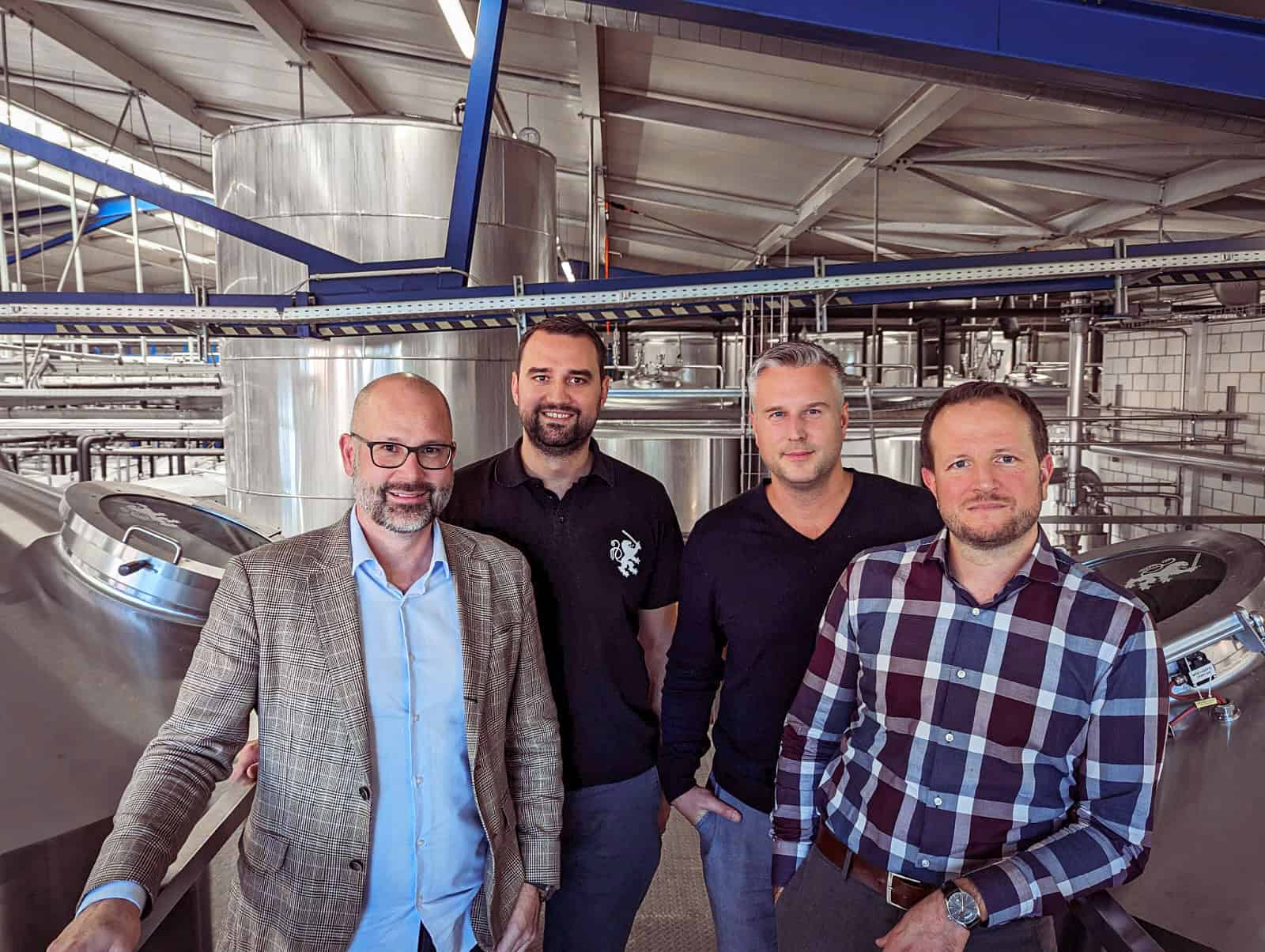
Photo of circular food solutons team

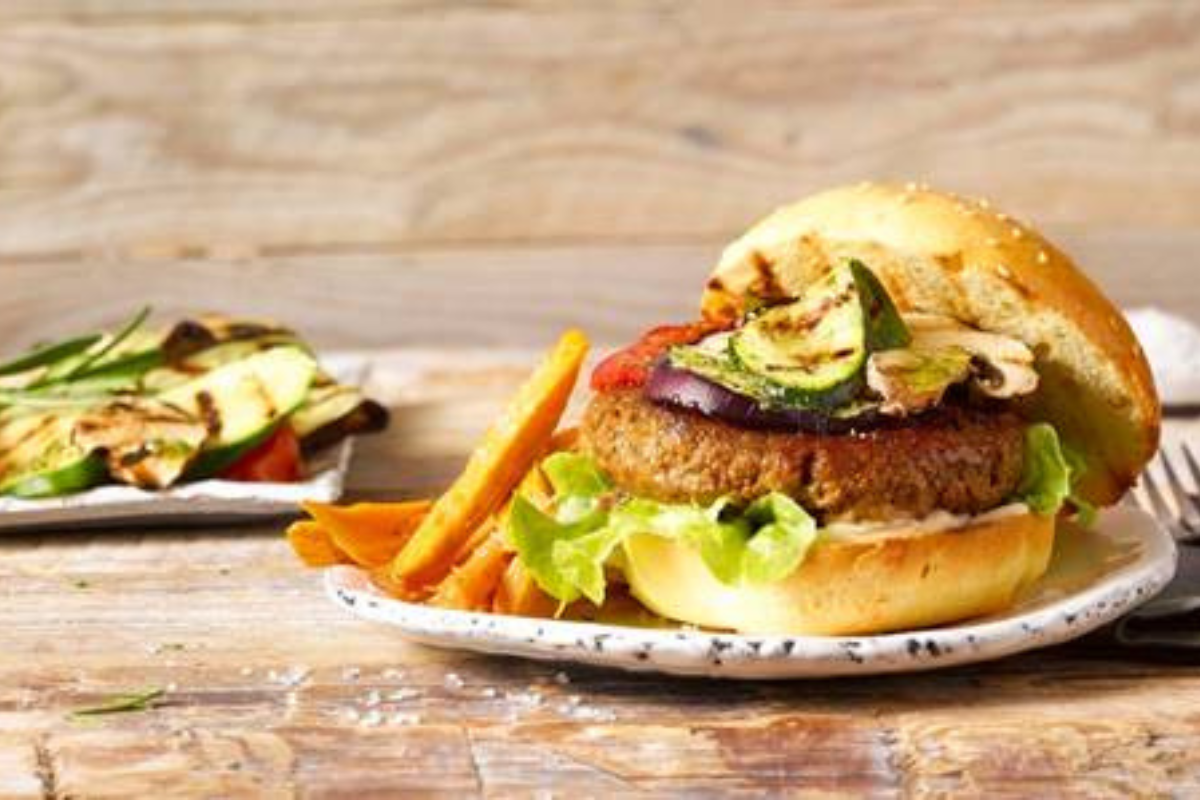
Circular Food Solutions Switzerland AG and the Doppelleu Boxer AG brewery will turn a brewing industry byproduct into next generation meat alternatives using Swiss raw materials. With a total investment of over five million Swiss francs, the Chopfab brewery site is now being transformed into the most advanced upcycling plant in the world for spent grain. Production will kick off in early 2023.

Inspired by Bühler’s research

What started as a spin-off idea from the Bühler Group in 2015 is now becoming reality. Circular Food Solutions Switzerland AG and the Winterthur-based Doppelleu Boxer AG brewery will start producing a premium Swiss meat alternative in 2023. Previously, the brewery’s by-products were transformed into animal feed. But now, thanks to this new collaboration, the companies will turn it into a protein-rich byproduct that that can be used as plant-based meat alternative.

Circular Food Solutions Switzerland AG uses an innovative and globally exclusive upcycling technology that draws on Bühler AG’s proprietary research and covers both wet and dry extrudates. With exclusive rights to use the method in Switzerland, the joint venture with the young, creative Swiss brewery
Doppelleu Boxer AG will create flavorful, plant-based meat alternatives. The product will be made from Swiss brewer’s spent grain, making more efficient use of valuable resources and will also have a lower environmental impact due to reduced transportation routes, land use and greenhouse gas emissions.

A cutting-edge upycling plant

Over five million Swiss francs will be invested in the creation of a new cutting-edge upcycling plant for spent grains in Winterthur, with construction due to start in early 2023. The spent grains will be processed in the brewhouse and then extruded in a continuous process.

Partners have been working closely with leading Swiss meat processors to develop their product that is set to hit the market from  mid 2023. They then aim to develop the first meat alternative product made from 100% Swiss raw materials by the end of 2023.

Carsten Petry, CEO of Circular Food Solutions said: “We wanted to create a locally sourced and locally produced product. I’m thrilled that our first Swiss meat alternative product made with spent grains from Swiss malt will hit supermarket shelves in 2023.”

Find out more on the Circular Food Solutions website.

About Circular Food Solutions

Founded in 2015 as a Bühler Group spin-off, Circular Food Solutions AG uses innovative upcycling technologies to transform these byproducts into healthy, protein-rich foods for human consumption. It promotes more sustainable food production with lower greenhouse gas emissions by minimizing food transit and creating a delicious meat alternatives.

Never miss a Swiss food innovation morsel.

Latest News

PowerAPI raises $5.5 million in seed funding round

PowerAPI raises $5.5 million in seed funding round

Foodetective funding round

Valley Partner PowerAPI, a tech-enabled hospitality startup, has raised $5.5 million (CHF 5.25 million) in a seed round led by Prediction Capital. The team is now building its most sought-after feature, ‘Intelligence’, which will push smart notifications & actionable insights to allow F&B merchants to seamlessly manage their business based on their tech stack, goals & growth plans.

The backstory

Launched in 2019, PowerAPI co-founders Andrea Tassistro and Edouard Thimon, who have been lifelong friends since secondary school, noticed the increasing demand for digital tools leading merchants to use an average of 18 apps & softwares to manage their business. These tools are all independent, leaving managers with the challenge of decentralised operations and fragmented data across their systems. The solution was to build a single operating system and unified API.

Merchants must first connect their systems and tools through a click-and-connect Integration Hub, where over +250 integrations are now available. This data, centralised and presented on an analytics dashboard, equips them with precise insights to seamlessly manage their entire operations from reviews to orders, reservations, suppliers, stocks, marketing and much more. The new Intelligence feature offers a new way of making informed decisions, decreasing admin time, and increasing revenues, through actionable insights and notifications.

Foodetective dashboard
Next steps

The funding received will enable the company to further develop its technology and IT team, and to start the implementation of machine learning algorithms to provide merchants with intelligent push notifications & actions to reduce inefficiencies and improve their processes. Businesses that use analytics can boost their profits by 8% to 10%, but only 12% of companies currently leverage the power of data. PowerAPI hopes that with the new Intelligence feature, more merchants will now be able to do so.

Andrea Tassistro, Founder & CEO, said: “By opening our API we provide any software, platform, or marketplace with a fully integrated, automated, and now Intelligent, infrastructure. This fulfills our mission to empower restaurants and merchants with a single tool and interface to manage their entire tech stack, operations and marketing seamlessly.”

Find out more in our feature article or visit the PowerAPI website.

Never miss a Swiss food innovation morsel.

Latest News

Mirai Foods collaborates with Rügenwalder Mühle to develop a hybrid product

Mirai Foods collaborates with Rügenwalder Mühle to develop a hybrid product

Mirai Foods, the Swiss cultivated meat startup from Zurich, has partnered with Rügenwalder Mühle, the sustainability pioneer and meat alternatives market leader in Germany, to develop a hybrid product. 

Rügenwalder Mühle plans to build on their positioning as an innovation leader in the area of vegetarian and vegan meat alternatives by incorporating cultivated meat into their portfolio. The family run business from Bad Zwischenahn (Germany) will partner with the Swiss cultivated meat startup, Mirai Foods to create a new, hybrid product including plant-based proteins and cultivated fat.

Pooling knowledge and skills for sustainable innovation

The two partners will combine their respective knowledge and skills to develop this innovative product. Rügenwalder Mühle will provide its know-how in the area of plant-based meat alternatives, while the Mirai Foods team will share their knowledge around cultivated fat. Mirai has already developed technologies that enable the production of high quality muscle and fat tissue by utilizing bioreactors.

The final product will be a combination of plant-based proteins and cultivated beef fat – a real innovation. The cultivated fat will replace coconut oil, an ingredient currently used in many vegan and vegetarian meat alternatives, and will significantly enhance the taste of the final product. 

“It’s the fat in a burger that gives beef the distinctive taste of grilled meat. Until today, it has not been possible to recreate this taste with plant-based fat alternatives,” says Patrick Bühr, Head of Research and Development at Rügenwalder Mühle. The new product will be designed for environmentally conscious flexitarians and meat lovers. The cultivated beef will be completely free of fetal bovine serum (FBS).

“The partnership with Rügenwalder Mühle underscores our claim to leadership in the area of cultivated beef. We are delighted that Rügenwalder appreciates our innovative power and we are looking forward to developing new products together, which will convince even the greatest meat lovers,” says Christoph Mayr, CEO and co-founder of Mirai Foods. 

“Through the collaboration with Mirai, we will expand our vegan protein competence with the area of cultivated meat. By combining plant-based proteins and cultivated fat, we close the last remaining gap in terms of taste and continue to defend our claim to co-shape the change in nutritional preferences and to be ‘open for innovation’,” elaborates Patrick Bühr.

Long journey ahead for cultivated meat in Germany

The development of one of the first hybrid products in Germany is part of Rügenwalder Mühle’s journey towards more sustainable meat consumption. Cultivated meat is grown outside of the animal’s body, meaning that no cow has to be slaughtered to produce the product.

“Cultivated meat is one of the largest levers for sustainable meat consumption. The approach significantly reduces the drawbacks of conventional meat production like land usage, water consumption and greenhouse gas emissions,“ explains Patrick Bühr. “However, the necessary regulatory frameworks and approvals still need to be set in Germany and also in the EU. We expect our product to come to the market in 2025 at the earliest. Nevertheless, we are starting with the development today, so that we are ready to act when the regulatory approval is granted.”

Find out more by visiting the Mirai Foods website.

Never miss a Swiss food innovation morsel.

Latest News

Fruitful closes pre-seed round to develop software that helps vertical farms speak plant

Fruitful closes pre-seed round to develop software that helps vertical farms speak plant

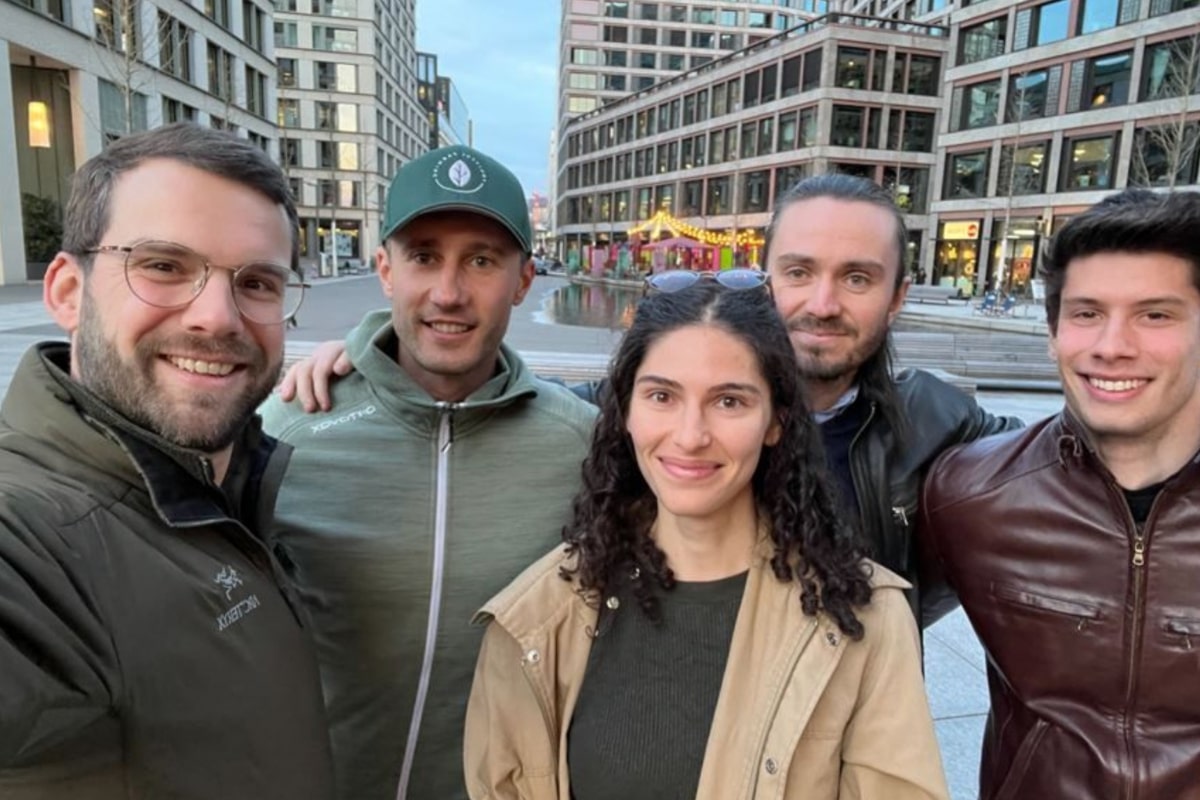
Fruitful Farming team photo

Valley member Fruitful Farming AG, a Swiss startup developing optimization software for greenhouses and vertical farms, has secured CHF 500,000 in its pre-seed round. The team now plans to accelerate the development and distribution of its AI-based decision-making solution.

The future of farming

Studies show that crop production will need to increase by 70% to sustainably feed a global population of ten billion by 2050. Greenhouses and vertical farms will undoubtedly play a key role in shaping the future of farming.

But particularly in the context of rising energy prices, farm owners need to be mindful of how they invest resources to ensure that their operations are both financially and environmentally sustainable. As small variations in a growth environment can have a significant impact on outputs, growers must find ways to reduce their operational expenses while maintaining or increasing the quality of their produce.

Network-driven, AI-powered decision making

Fruitful Farming AG’s software democratizes access to AI-based decision making. It allows clients to focus on operations without having to hire a team of in-house data scientists. Their models facilitate the growing process by shortening learning cycles and makes tailored recommendations to save time and resources, while improving crop quality. Clients also become part of a broader network of farms, allowing them to learn and apply best practices quicker than isolated in-house analytics teams.

The team currently offers two key products. The Fruitful Monitor provides a cloud-based growth monitoring system that facilitates production and allows clients to scale with no or limited additional labor costs. The Fruitful Optimizer allows clients to receive active intelligence and dynamic growth recipes based on live analytics.

Their technology – developed by founders Thomas Kleiven, Giulia Schneider, Mihai Grigore, and Patrick Albrecht – uses computer vision to capture the plant biorhythm and then connects it with data points from the growth environment.

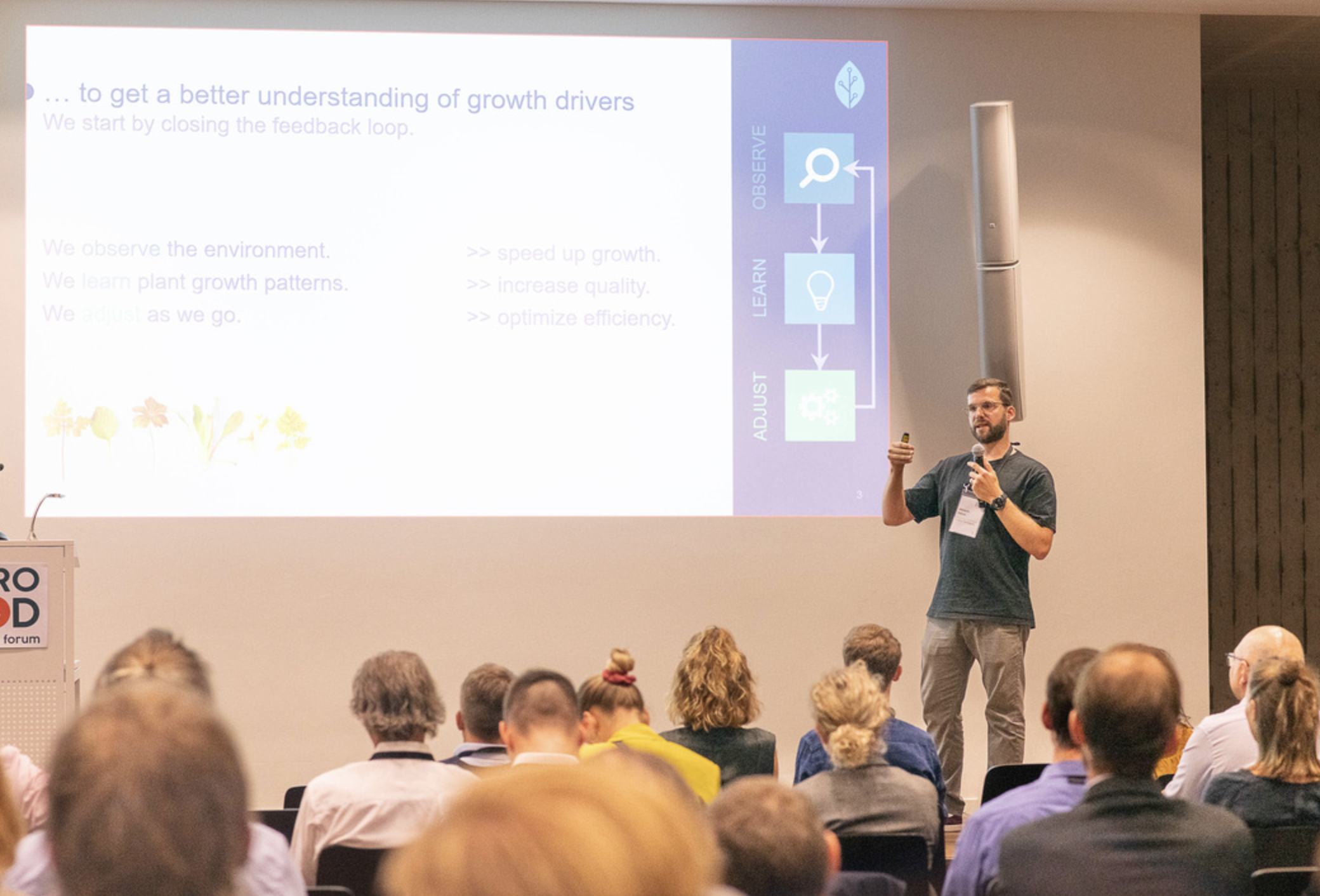
Co-Founder and CEO, Patrick Albrecht explains how Fruitful optimizes growing conditions by closing the feedback loop.

Next steps

This pre-seed funding will allow the team to accelerate the development and distribution of their solution. They’re now actively looking to connect with growers and vertical farm owners across Switzerland and Europe.

Patrick Albrecht, Co-founder and CEO, said: “Controlled environment agriculture will play a huge role in the future of farming. We’re thrilled to have secured investment to continue to develop our solution that offers modern farmers a growth control system that supports their data-driven decision making – for better quality produce with fewer resources.”

Find out more in our feature article or visit the Fruitful Farming website

Never miss a Swiss food innovation morsel.

Latest News

Givaudan teams up with Berkeley to publish new research on the future of alternative proteins

Givaudan teams up with Berkeley to publish new research on the future of alternative proteins

Givaudan has launched its latest white paper entitled ‘The Protein Horizon: the landscape of alternative protein technologies enabling future food experiences,’ its fourth collaboration with the University of Berkeley, California. This paper provides cutting-edge information on current, emerging and future technologies for manufacturers producing meat and fish alternatives.

Innovating to meet rising demand

No longer considered niche, the growth of plant-based alternatives has been fuelled by rising consumer desire for food products that are healthier and have less impact on the planet. Constant innovation and new technologies are central to meeting growing demand both in terms of volume and in relation to the product characteristics that consumers want to purchase.

The research takes a future perspective, highlighting the benefits of emerging 3D printing technology, the ‘near future’ techniques of cultured meat, and Mycelium biomass fermentation producing fungi-derived protein. It also looks further over the horizon to lab scale technologies such as shear cell, which is set to attract significant investment. Recognizing that no single technology is a ‘silver bullet’, the report notes that collaboration between companies and organisations is essential to making progress in this space.

A market poised for rapid growth

Commenting on the research, Sudhir Joshi, Product Development Programme Coach at the University of California, Berkeley said: “The rise of meat alternatives is significant. The market is poised for rapid growth. While the existing technologies offer a major opportunity for innovation, the main challenges in this sector remain cost and scale.”

“This new white paper provides a comprehensive review of current and upcoming technologies. It also offers insights into adoption, market potential, challenges and the opportunities for future development.”

Flavio Garofalo, Givaudan’s Global Director, Culinary & Plant Attitude said: “Givaudan’s passion for creating outstanding future food experiences is at the heart of our ongoing collaboration and research with University of California, Berkeley. We have an insatiable appetite for knowledge and understanding that ultimately leads to innovative breakthroughs.

In order to create delicious new products, companies need to be agile, efficient, and innovative. Flavio continues: “Only by working together can we build the ecosystems necessary to develop the meat and fish alternative proteins of tomorrow. Our ongoing research with Berkeley is a great example of the kind of collaboration that will allow us to imagine the future of alternative proteins. 

Collaborating to explore new technologies

In addition to this research partnership, Givaudan is also actively exploring some of the latest technologies in this space in collaboration with Bühler and Migros, with whom it has formed the Cultured Hub, in Kemptthal, Switzerland, focussing on cultured meat, cultured fish and seafood, and precision fermentation.

The Hub is part of Givaudan’s network of alternative protein innovation centres across four continents that includes MISTA in California, the Protein Innovation Centre in Singapore, the Protein Hub in Zurich, and soon, the Tropical Food Innovation Lab in Brazil.

Download the Protein Horizon white paper here or watch Givaudan’s webinar with a panel of industry experts from consumer insights to venture capital who discuss future technologies for alternative proteins. 

About Givaudan

Givaudan is a global leader in Fragrance & Beauty and Taste & Wellbeing. Together with their customers, the company delivers food experiences, crafts inspired fragrances, and develops beauty and wellbeing solutions that make people look and feel good. With a heritage that stretches back over 250 years, the Givaudan team is committed to driving long-term, purpose-led growth by improving people’s health and happiness and increasing our positive impact on nature. This is Givaudan. Human by nature. Discover more at www.givaudan.com.

About Taste & Wellbeing

Powered by innovation and creativity, Givaudan Taste & Wellbeing aims to shape the future of food by becoming the co-creation partner of choice to its customers. Built on its global leadership position in flavours and taste, the Company goes beyond to create food experiences that do good and feel good, for body, mind and planet. With an expanded portfolio of products across flavours, taste, functional and nutritional solutions and a deep knowledge of the food ecosystem, Givaudan’s passion is to collaborate with customers and partners to develop game-changing innovations in food and beverage. This is Givaudan. Human by nature. Discover more at https://www.givaudan.com/taste-wellbeing

Never miss a Swiss food innovation morsel.

Latest News

EHL President Carole Ackermann joins the SFNV Steering Committee

EHL President Carole Ackermann joins the SFNV Steering Committee

As President of the EHL Foundation and Holding and CEO & Co-Founder Diamondscull – a company that invests in tech startups – Carole will bring unique insight into the fields of innovation, investment and academia. We recently took the opportunity to sit down with her to talk about the climate crisis, the role of the next generation and why we need to collaborate to shape the future of food.

In your opinion, what has Switzerland got to offer as a food innovation nation?
Profound research, excellent innovative food companies, great chefs to create menus, and intelligent people who don’t only care about our planet but are actually willing to take action to protect it.
Where do you see the biggest opportunities for impact?

No industry, company, institution, or country can tackle the challenges facing our food systems alone. To achieve the goals we’ve set ourselves by 2050 and secure a sustainable future, we need to play together. 

What are the most significant challenges that need to be overcome? 

For me, the key question is: “How can we reshape the way we live to protect the planet that we all call home?” Industry stakeholders, decision-makers, and opinion leaders need to join forces as a matter of urgency to develop concrete plans to move things forward. And, of course, substantial investments on a global scale will also be needed to make these changes happen.

How will we produce, buy and eat food in the future?

The direction we need to head in is clear. We all need to consider how to reduce the ecological footprint of our diets and rethink how and what we eat. I have justified hope that technology will help us find smart ways to nourish Earth’s growing population. But of course, we can’t forget that the very fact that the global population is growing is, in itself, contributing to the climate crisis. 

What role do academic institutions and their industry partners play in shaping the future of food? 

They can launch explorative, interdisciplinary research projects to develop new nutrition, packaging, farming, or waste management solutions. At EHL, as a university of applied science, we anticipate changing consumer demands and industry needs and develop innovative concepts for the hospitality industry.

How can we help young people and budding entreprensurs to develop the mindset and skills needed to reshape our food systems?

By supporting them and trusting them to try new things and experiment. Our new EHL campus, for example, was designed to be a safe space where students can think the unthinkable, speak the unspeakable, and question the obvious. 

Could you tell us a bit more about one of your favourite student-led projects?

Two students from the EHL Swiss School of Tourism and Hospitality developed an ambitious sustainability-focused concept called LeftLovers that was used at the Grand Resort Bad Ragaz. Working together with the resort’s F&B Director, they set up a pop-up restaurant that served new, creative meals made from ingredients that could no longer be used in the hotel’s main restaurant. Wasting food is a total no-go for me, so I really loved this idea. 

And of course, I’m always excited to hear about the latest developments in EHL’s Innovation Village, which brings together a broad range of companies to share knowledge and ideas about the future of food and hospitality industries.

Never miss a Swiss food innovation morsel.

Latest News