Two industry leaders join YASAI’s Board as the team prepares to scale

Two industry leaders join YASAI’s Board as the team prepares to scale
Insolight

Valley partner YASAI, a Swiss vertical farming start-up, has welcomed two industry leaders to its Board of Directors – Lorenz Wyss, CEO of the Bell Food Group, and Theo Stolze, former shareholder of the Stolze Group. The company now plans to draw on Mr. Wyss’s retail and market insights and Mr. Stolze’s extensive knowledge of novel farming technologies, to achieve its ambitious growth targets. 

New Board Members bring essential expertise

Overseeing the Bell Food Group as Chief Executive Officer since 2011, Lorenz Wyss is leading an international food company with more than 12,000 employees. Initially known for producing meat, the company now offers a wide range of convenience products, as well as plant-based meat alternatives. The Eisberg food company, part of the Bell Food Group, already serves as YASAI’s nationwide distribution partner. With Mr. Wyss as an industry expert and Bell Food Group as a new investor, YASAI looks set to strengthen its position in the market. The Bell Food Group has invested an undisclosed amount in YASAI’s convertible loan round to accelerate scaling.

Theo Stolze’s extensive knowledge of novel farming technologies forms the professional counterweight of the Board. As export director of the Stolze Group for over 30 years, he led the Dutch company to international success. The Stolze Group specializes in tailored, technical solutions for greenhouse systems and has been in business for more than 50 years. Theo Stolze will now help YASAI to scale, both as an investor and as a new board member. 

A tenfold increase in YASAI’s production capacity

Established three years ago, YASAI has become the leading vertical farming company in Switzerland. The construction of two additional industrial farms, as well as another farm integrated into a residential area, are already planned to scale up production in the next few years. YASAI is planning a tenfold increase in its production capacity to meet constantly growing demand and is set to expand its product portfolio with its trade partners.

About YASAI

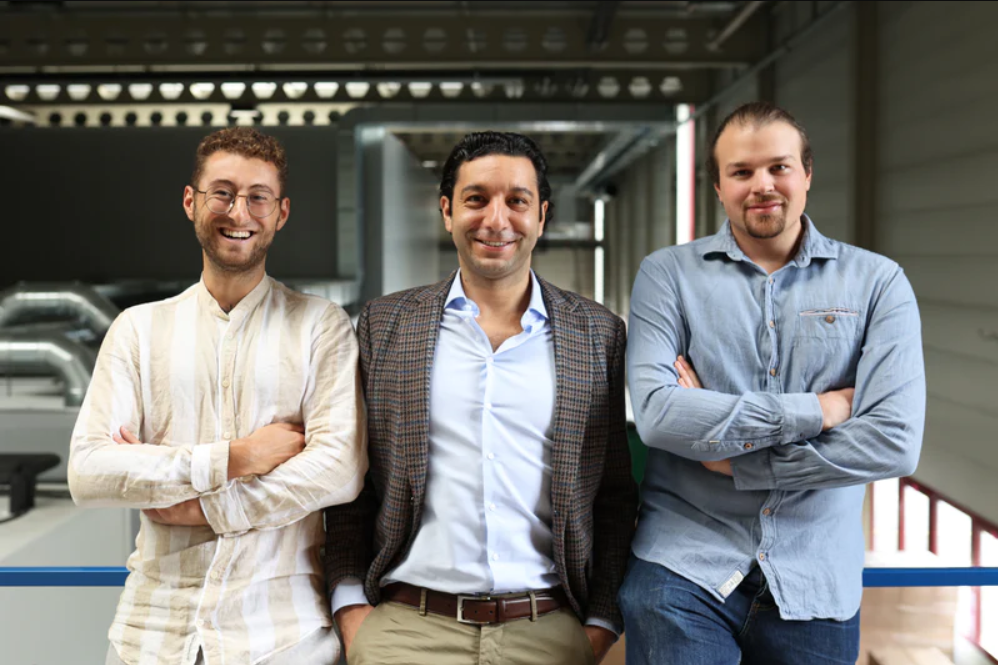
YASAI AG is a vertical farming start-up founded in 2020 by Mark E. Zahran, Stefano Augstburger, and Philipp Bosshard in Zurich. The company builds and manages Vertical Farms based on circular economy approaches to improve food systems. Its controlled environment agriculture technology is independent of local circumstances, and can therefore be used worldwide for sustainable, future-oriented precision agriculture. YASAI is currently focused on growing herbs, but soon intends to extend its product portfolio into leafy greens and cosmetic plants.

Looking for talent or your next opportunity?
Check out the Valley’s new job platform.

Latest News

Insolight secures CHF 4.85 million to accelerate their commercial roll-out.

Insolight secures CHF 4.85 million to accelerate their commercial roll-out.

Insolight

Two new investors will join Insolight on their journey to scale up the deployment of insolagrin, their innovative agrivoltaic solution. The team will now set-up large-scale installations in Switzerland and France before expanding internationally and increasing the number of target crops.

Demeter, a major European venture capital player in the agritech and cleantech industries, and the Smart Energy Innovation Fund, the Corporate Venture Capital Fund of Energie 360°, a Zurich-based sustainable energy and mobility service provider, have joined existing investors Verve Ventures and Zürcher Kantonalbank to support the Vaud-based company’s growth.

The funds will allow Insolight to deploy their first large-scale insolagrin installations that will initially be used by berry growers in Switzerland and France. The company then aims to replicate these installations globally and increase the number of target crops. The round will also support the company’s commercial scale-up and strengthen the development of their project pipeline, targeting multiple tens of millions of Euros in the next two years.

Cyrille Cabaret, Partner at Demeter, who will be joining the Insolight board, commented on the development: “Insolight holds a unique position in the fast-growing agrivoltaics market, with an efficient combination of PV production and agronomical expertise. The company has recently reached compelling milestones and they are now ready to deploy their innovative agrivoltaic solutions throughout Europe. We are delighted to join the team for this new promising chapter and to bring our experience in agriculture and energy alongside renowned investors like Energie 360°”.

Metin Zerman, Investment Manager at Energie 360°’s Smart Energy Innovation Fund said:  “The simultaneous use of land for agricultural crop production and PV power generation is a future market with enormous potential that has not yet been fully utilized today. We are very proud to have found a leading provider for Agri PV in Insolight and are very much looking forward to working with the team and the distinguished group of investors to tackle this huge market”

Laurent Coulot, CEO and Co-Founder at Insolight said: “The round has a very interesting setup for our core markets. We will not only bring agritech and engery experts on board, but we also expand our network in France and the DACH region. Thank you to all our investors. We now look forward to feeding citizens and the grid with our installations”.

About Insolight

Founded in Lausanne (CH) in 2015 by Laurent Coulot (CEO), Mathieu Ackermann (CTO) & Florian Gerlich (Product Architect), Insolight is bringing to market insolagrin – a dynamic agrivoltaic solution. With a single infrastructure, insolagrin enables both agricultural and electricity production on the same land. The system provides protection for the crops and controls light transmission to plants through dynamic shading while harvesting excess light into electricity. By replacing plastic tunnels, the market opportunity is sizable: berries alone represent more than 200 GW p in Europe. Our team is on a mission to deliver a solution that can impact globally both the energy and agriculture sectors. Insolight has developed a Global Partnership Program which Migros and SwissRe Foundation have already joined.

Learn more at www.insolight.ch

Never miss a Swiss food innovation morsel.

Latest News

ADM receives Business Sustainability Award for work to expand regenerative agriculture

ADM receives Business Sustainability Award for work to expand regenerative agriculture

Phot of grass growing

ADM has won the Environmental Initiatives category of the 2022 SEAL Business Sustainability Awards for expanding its regenerative agriculture programs. Granted by a judging panel of renowned environmental and energy industry experts, the award recognizes programs or initiatives that push the frontier on environmental leadership.

ADM’s project, “Providing Economic and Sustainable Solutions Through Regenerative Agriculture,” expands on ADM’s long-term commitment to support growers in their transition to regenerative agriculture. In 2022, ADM launched a number of projects and partnerships, including with the National Fish and Wildlife Foundation (NFWF), US Department of Agriculture, PepsiCo, and the Farmers Business Network, that equip farmers with financial, technical and educational resources to support regenerative farming.

Commenting on the development, Alison Taylor, chief sustainability officer at ADM said, “ADM is uniquely positioned to partner with growers and customers alike to create value for participants across the value chains in which we operate while helping secure a more sustainable future. We’re proud to continue to expand our partnership with growers, providing valuable support to enhance farm-level sustainability and helping their businesses grow and succeed while simultaneously advancing Scope 3 emissions goals for both ADM and our customers.”

ADM’s regenerative agriculture programs not only support farm economics, but also reduce supply chain impacts and protect local biodiversity. Their initiative has covered four continents to date and is expected to expand its reach further in the coming years. It’s engaged with growers to implement regenerative growing practices on more than 600,000 acres. In 2023, ADM plans to continue expansion in North America to cover one million acres by enrolling over 1,000 growers in regenerative programs. This project will also drive carbon reduction and sequestration of 300,000 MT of CO2e, making a significant contribution to ADM’s commitment to curbing emissions.

About ADM

ADM unlocks the power of nature to enrich the quality of life. As a premier global human and animal nutrition company, ADM delivers solutions today with an eye to the future – leading the way to a new future of plant-based consumer and industrial solutions to replace petroleum-based products. They’re also an agricultural supply chain manager and processor, providing food security by connecting local needs with global capabilities. Sustainability is one of their key values and they work to scale across entire value chains to help decarbonize our industry and safeguard our planet. From the seed of the idea to the outcome of the solution, ADM gives customers an edge in solving the nutritional and sustainability challenges of today and tomorrow.

Learn more at www.adm.com 

Never miss a Swiss food innovation morsel.

Latest News

Stefan Palzer on working together to find viable solutions for sustainable and affordable nutrition

Stefan Palzer on working together to find viable solutions for sustainable and affordable nutrition

Photo of Stefan Palzer

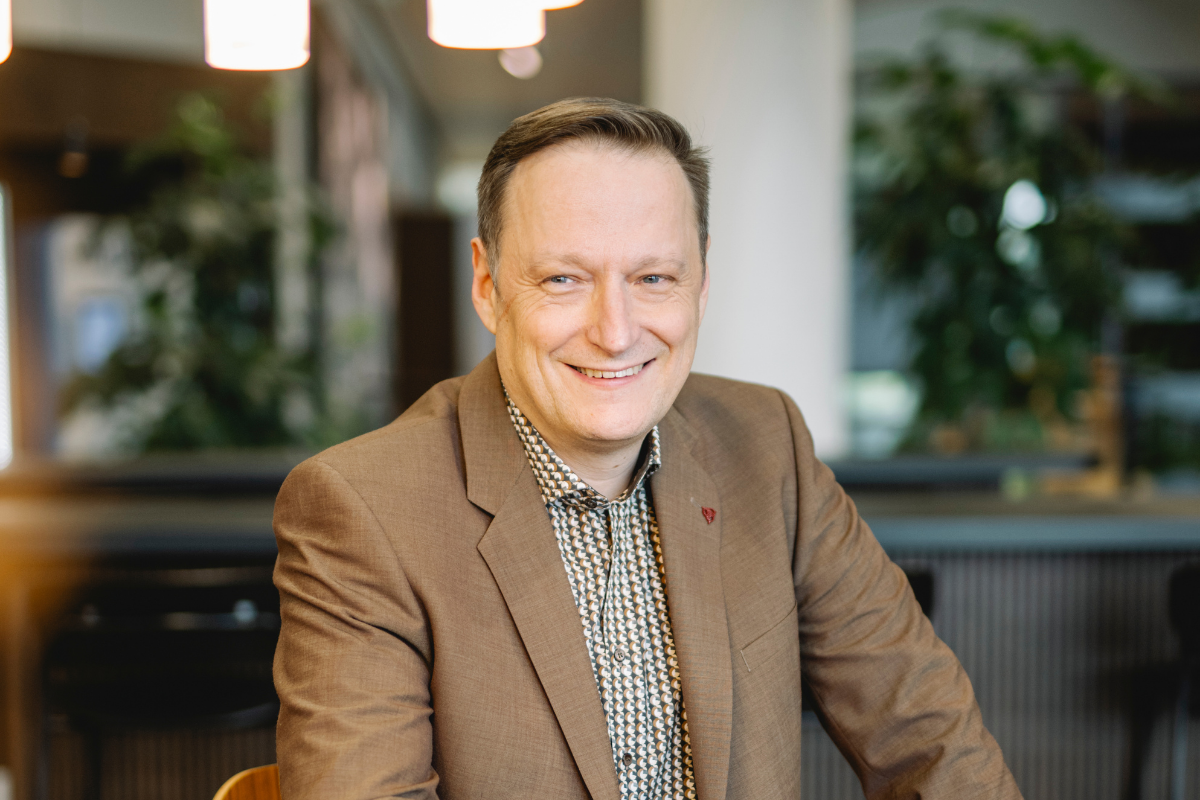
Stefan Palzer, Nestlé’s CTO, Head of Innovation, Technology and R&D, & Executive Vice President and the Valley’s Steering Committee Vice President is passionate about science, technology, and the role that innovation plays in making diets tastier, more nutritious, sustainable and affordable. We sat down with him to chat about what Switzerland has to offer as a food innovation nation.

What does sustainable food mean to you personally? 
I grew up on a family farm which triggered my interest in food and agriculture. After that I did an apprenticeship and studied food technology. Early in my career, I acquired hands-on experience in product development.  Through these experiences, I developed a passion for science and technology, and the key role that innovation plays in making diets tastier, more nutritious, sustainable, and affordable around the world. There is nothing more satisfying than contributing to making food more sustainable or to make nutrition accessible to people in need. 

What has Switzerland got to offer as a food innovation nation? 
Switzerland is deeply rooted in agriculture. The country is characterized by an astonishing density of expertise along the food value chain. The Swiss Food & Nutrition Valley is the result of this unique innovation ecosystem for food and nutrition which includes globally leading multi-national companies, and world class scientific institutions, and a very strong start-up ecosystem. This truly makes it the perfect breeding ground for innovative solutions that can address global nutrition and sustainability challenges, from farm to fork, in a way that is good for the people and the planet. 

In your opinion, what are the most significant challenges that need to be overcome?
The world’s population might reach almost 10 billion in 2050, making today’s food supply more challenging than ever. We need to find the right balance between sustainability, convenience, and taste, while also addressing global health challenges such as access to affordable nutrition, malnutrition as well as obesity. In many cases these priorities conflict with each other. We can only manage the resulting trade-offs through disruptive innovation and collaboration amongst all players. 

What’s the role of large enterprises specifically in shaping the future of food?
Serving our consumers and the planet means tackling global challenges such as climate change, malnutrition, and affordability, while catering for nutritional needs of those with specific health conditions. Solving these challenges requires a sense of urgency and rapid scaling of the most effective solutions. Together with start-ups we are also exploring emerging technologies such as artificial intelligence and cell-based food. Through these initiatives, we can continue to deliver truly innovative solutions that are tasty, nutritious, affordable, and sustainable. 

How can we support consumers to tackle complex issues like the climate crisis through their dietary choices?  
Good food and good nutrition are fundamental to everyone’s health, well-being, and enjoyment, as well as cultural identity. As a food innovator, we can support consumers through delivering more sustainable food choices, that are authentic, delicious, and nutritious.  For example, at Nestlé, we have a great range of plant-based alternatives to fish, meat, dairy, and eggs. We’re also exploring solutions for climate friendly milk, and we upcycle agricultural side streams, while also using more locally sourced ingredients. Additionally, we’re exploring innovative solutions to increase accessibility to affordable nutritious products to help vulnerable consumers around the world. 

What role does collaboration play in driving change?
Transforming the global food systems can only be achieved through strong collaboration by all players – from food companies, academia, governments, and civil society. This is exactly why initiatives like the Valley are so important. They make it easier to spot synergies and co-create breakthrough science and technology solutions that lead to healthier, more sustainable food systems globally.  

 Additionally, collaboration with disruptive start-ups is also key to leverage their creativity and to combine it with the scaling capabilities of large companies. We are focused on helping start-ups refine their value proposition, while giving them access to our expertise and infrastructure to help them bring their products to the market faster through our R+D Accelerator initiative. Additionally, we support programs such as Mass Challenge Switzerland and EIT Food that provide a platform and resources for start-ups and students to bring their innovative ideas to life.  

The situation of the world’s food systems will get more challenging in the next few years, and we need to act now to change the future. Let’s work together to find and deploy the highest performing solutions. Let’s move the needle!

Never miss a Swiss food innovation morsel.

Latest News

Planted invests in scaling the Swiss alt protein supply chain following key Federal Council decision

Planted invests in scaling the Swiss alt protein supply chain following key Federal Council decision

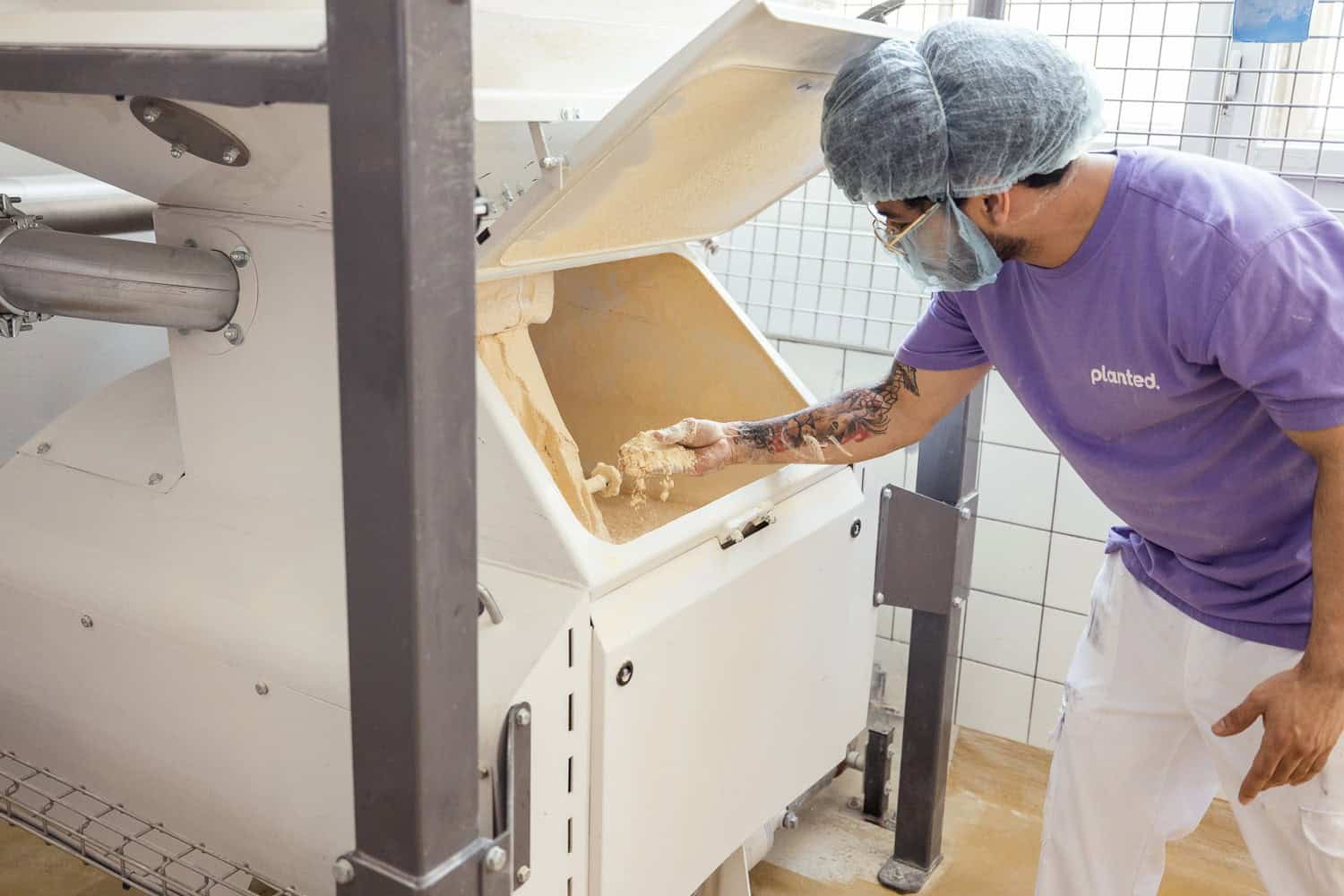
Photo of Planted employee working in a factory

Swiss FoodTech startup Planted, known for its clean-label meat made from alternative proteins, is rounding out 2022 with a landmark shift in the way it acquires its raw materials: the company is now procuring its protein-rich yellow peas from within Switzerland. This step is only possible thanks to a watershed Federal Council package that redresses some of the inequality between plant protein cultivation for animal and human consumption respectively.

A legislative landmark

The Swiss Federal Council ratified the 2022 agricultural ordinance package at the beginning of November. It means that – starting from 1 January 2023 – producers cultivating plant-based proteins for human consumption in Switzerland will also be eligible for individual crop subsidies. It’s a major change given that, previously, grants have only been awarded for the cultivation of specific protein plants in Switzerland when their usage was earmarked for animal feed. To date, Swiss farmers who wanted to supply alternative protein companies making food for humans, like Planted, did not qualify for the same subsidies as animal feed producers.

Sourcing Swiss yellow peas

Planted has long wanted to source its yellow peas – part of the protein-rich blend it uses to manufacture its plant-based meat products, including schnitzel and chicken substitutes – from within Switzerland’s borders, and other Swiss companies with similar goals have also expressed similar aims.

Planted has now announced that thanks to the Federal Council’s decision it has successfully begun procuring yellow peas from Swiss farmers. “With this groundbreaking step, Planted is now able to source Swiss yellow peas in addition to Swiss rapeseed oil. We can now continue to work on shifting the sourcing of the entire value chain to Switzerland, further aligning with the quality our customers want and expect from us,” Planted co-founder Lukas Böni explained.

He continued:  “As a start-up, this marks a major investment on our part in the Swiss protein market. It’s something we really believe in. Scaling the value chain will still take several years, but we are happy to have found partners with whom we can further advance this vision.” 

Advancing the political framework

The adoption of the agricultural ordinance package that narrows the equality gap between plant proteins for human nutrition versus animal feed has been a long-awaited step for many actors in the Swiss alternative protein ecosystem. 

But there is still more work to be done. Planted, as one of the founding partners of SPA (the Swiss Protein Association), will continue to work alongside partners in industry and agriculture to drive the topic of sustainable and local alternative protein sources up the political agenda.

Find out more on the Planted website.

Never miss a Swiss food innovation morsel.

Latest News

The Beelong Eco-score lands in Coop

The Beelong Eco-score lands in Coop

Beelong Eco-Score

Lausanne company Beelong has made it easier than ever for shoppers to make informed and environmentally sound decisions about the foods they buy. Their system, run by 15 staff members, has already analysed more than 150,000 food products and categorised them based on their eco credentials. Now Beelong’s carefully developed Eco-score, based on the environmental impact of food, has been applied to over 2,000 Coop products online, and will soon also be available on food packaging in store.

The Beelong Eco-score – developed by the Vaud startup of the same name – evaluates the impact of products on the environment. By using a uniform set of criteria, the classification system is designed to simplify the shopping process for eco-conscious consumers who want to make the best possible choices for the planet. Now available on more than 2,000 own-brand goods on the Coop website, consumers can use the simple scale, which runs from a maximum of A+ to a low of E-, to make informed purchasing decisions. 

Previously, the implementation of eco labels in supermarkets has been hampered by a lack of reliable information. “There’s a lot of information available on food products, but it’s not displayed in a uniform way,” says cofounder Charlotte de La Baume. “With different labels for each product, it has historically been very difficult to compare them. The Beelong Eco-score makes it possible to compare all food products on the same basis, while enhancing existing labels.” Beelong’s joint cofounder Mathias Faigaux added: “Because Beelong evaluates all products using the same scale regardless of their category, our system enables the comparison of both similar products with one another, and the comparison of products from totally different categories.”

Analysing multiple criteria 

Using a reliable and stringent method of analysis – which is constantly evolving and updated by Beelong’s experts in real time – the Eco-score evaluates multiple criteria related to a food’s ingredients: from the carbon emitted in their cultivation and transport to a crop’s water usage. Other criteria include the quality of the soil a crop is grown in and/or the welfare of animals involved in its manufacture, alongside many more. Further criteria are then applied to the finished product – these vary from the impact of the packaging to the sustainability policy of the processing company.

A turning point for Beelong

The introduction of the Eco-score at Coop brings Beelong new visibility, a boost for the Swiss company founded in Lausanne eight years ago. Beelong is already well established with professionals in the Swiss catering and food ecosystem; the company works with around sixty partner brands, including Hero, Narimpex  and Ditzler, as well as with several hundred private and public restaurants. It also advises private companies, municipalities, cantons and the federal government on the development of sustainable food strategies. 

Visit the Beelong website to find out more, and view the Eco-scores currently online at coop.ch

Never miss a Swiss food innovation morsel.

Latest News