Nexenic raises 1.8 million for series production and market entry of portable mini-steamer Steasy®

Nexenic raises 1.8 million for series production and market entry of portable mini-steamer Steasy®

The Swiss company Nexenic has developed a portable mini-steamer the size of a standard lunch box, and they’ve called it Steasy®. The product is soon to start serial production and enter the market. With a successful funding round to the tune of 1.8 million Swiss francs, its founders are gearing up for their invention’s entrance onto a wider stage.

Meet Steasy®

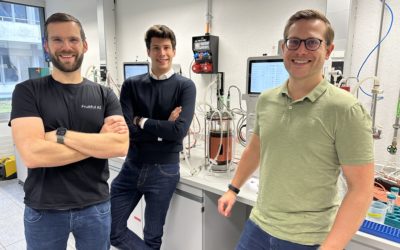
The company’s trio of founders and inventors met while studying at the Zurich University of Applied Sciences (ZHAW), and bonded in the queue to heat up their lunches in the microwave. But now, thanks to their easy yet revolutionary steaming device, those long waits may well be a thing of the past for future students. It turns out queueing has its benefits: the three – Claudio Ruiz, Reto Muhl and Johannes Hofer – used that time (and more) to dream up a solution to their predicament.

Enter Steasy®, their ingenious portable mini-steamer. No bigger than your average lunchbox, the device allows hungry users to heat up their meals gently and efficiently  – no microwave, oven or power socket needed. And now, thanks to a successful funding round, its inventors are one step closer to making their vision a reality.

A prototype of the Steasy® portable mini steamer.

Merging convenience, health and tech

To bring their innovation to the masses, the young entrepreneurs are making the final preparations for serial production and market entry – the portable mini-steamers are already being produced in Europe in partnership with a Swiss manufacturer. 

And the invention will do far more than just save its users the time and boredom of waiting in the microwave line. The steaming technology ensures vegetables retain their vitamins and nutrients, while meat stays moist and succulent. Not only that: the accompanying app means you can heat up your lunch from afar, and time it to coincide with the moment the clock hits noon. 

The founders see their creation adding particular value to students, who find themselves in the same predicament as they once did, as well as office workers – particularly those with health at the forefront of their minds – and those who work outdoors or on construction sites, away from any catering facilities. 

Milestone after milestone

The inventors have already celebrated several significant milestones, with the final prototype developed, tested and convincing enough to win over investors. “The functioning prototype and the successful customer testing phase were decisive in persuading investors to fund our next stage,” says Johannes Hofer, co-founder and CMO. “This meant we could sell not just a vision, but had a finished product including user data that proved the idea really worked.”

The founders closed the latest, oversubscribed funding round with an additional 1.8 million Swiss francs in the bank. With this new injection of cash, Steasy® will be able to enter serial production, paving the way to mass market entry. An initial launch is planned in Switzerland, with preorders for private individuals starting as soon as autumn this year.

A strategic partnership

The Swiss catering group, ZFV-Unternehmungen cooperative (ZFV), will not only invest financially but will also enter into a strategic partnership with the startup. This will include exploring how their solution could support ZFV in providing access to fresh, balanced food throughout the day. Dario Notaro, Chief Business Development Officer at ZFV sees clear synergies between their work: “At ZFV, we’re always eager to collaborate and work with creative partners to spot and develop innovative solutions.”

Find out more on the Steasy® website.

About Nexenic

Nexenic AG is a Swiss startup that aims to make everyday life easier. Nexenic AG works across various engineering fields to achieve this goal. Steasy®, the product developed by the startup, is a smart, lightweight and portable mini-steamer the size of a standard lunch box.

Never miss a Swiss food innovation morsel.

Join the Swiss Food & Nutrition Valley ecosystem.

How FOOD2050 is enabling food service partners to reshape our food system, one meal at a time.

How FOOD2050 is enabling food service partners to reshape our food system, one meal at a time.

Back in 2019 Christian Kramer spotted an opportunity. Restaurants wanted to create more sustainable menus. Consumers wanted to make greener choices. And both were looking for support to help them in this process. This is exactly the gap that Christian’s new venture, FOOD2050, aims to close.

Hello. Tell us a bit about yourself.

I’m Christian Kramer, CEO & Co-founder at FOOD2050. I’m a restaurant industry veteran who is passionate about global food system transformation.

Can you pitch FOOD2050 in a single sentence?

FOOD2050 promotes more sustainable food systems by rating and optimizing food service sector recipes, enabling better consumer choices and making it easy for businesses to achieve their sustainability goals.

How did you come up with the idea behind FOOD2050?

Back in 2019, I was involved in introducing the Beyond Burger in Europe. Throughout this process, it became really clear to me that consumers were ready for more sustainable solutions in the hospitality sector. 

I started talking to food service sector colleagues about what sustainability meant to them. Everyone recognised that there was a market need and that consumers wanted clear and robust information to help them make better choices. But no one had the time to figure out their own solutions.

So together with my business partners, Adrian Hagenbach and Leopold Weinberg, we came up with the idea of creating a platform that allowed restaurants and caterers to connect their sustainability goals with practical measures to achieve them – and help them monitor their progress. This seed then grew into FOOD2050.

What have you done so far?

Using a scientific database, we’ve created a system that evaluates food products for their environmental impact in Eco-Points (EP). This allows our partners to quickly and easily develop delicious recipes that also respect planetary boundaries. They can either choose recipes from our existing database or can use the FOOD2050 system to rate and optimise their own recipes. 

In January we launched a pilot project with the University of Zurich and ZFV, one of Switzerland’s largest caterers. This allowed us to better understand the different ways to measure the impact of food we consume and explore how to make this information tangible and actionable for consumers. After testing out multiple options, we found that Co2 equivalent was the most common metric used in food service businesses and that consumers wanted to understand how that translates into environmental goals we are all trying to achieve. It feels more motivating: it links their choices to the goal of tackling climate change.

We also tested the best ways to share the information with consumers and tested which promotional channels were most likely to drive a change in behaviour.

What are you working on right now?

We’re looking to create software to help us scale our solution. This platform will make it easier for consumers to view and interact with product ratings, as well as providing content that promotes sustainable products and the producers behind them. Participating businesses will also have access to a monitoring dashboard that will track their climate impact over time. Commercial rollout is planned for 2023. We’d be really interested in connecting with other innovators developing software for the food service sector to learn from their experiences.  

Once we’ve created software that guides our recipe development we’ll focus on creating food innovation with our partner Blue Horizon, who has been very helpful in facilitating the access to innovative producers with real environmental impact. 

Also, as a member of the EHL Innovation Village, we’re looking to collaborate with other promising start-ups working on creating a sustainable food system to maximise our long term impact.

How do you see FOOD2050 developing in future?

Our solution is currently focussed on supporting caterers and manufacturers. But in the longer term, we’d like to be able to drive change across the whole food supply chain and share the data gathered with government colleagues to shape positive food and nutrition policies.

How can the SFNV community help you achieve your goals?

We’ve recently submitted a project proposal as part of SFNV’s Impact Platform on sustainable protein to team up with other SFNV members to boost the impact of sustainable proteins within food service operations. We’re eager to work alongside leading alternative protein brands, large scale food service operations, professional chefs and environmental specialists to develop a range of recipes that could be promoted in some of the largest food service operations in Switzerland.

These collaborations would then lay the foundations for an open-source recipe platform, where knowledge is freely shared between key stakeholders to drive innovation for environmental and human health.

Additionally, we want to apply the concept of the Planetary Health Diet from the EAT Lancet Commission in a national context and help to translate it from theory into practice. To make this a reality, we’ll be looking to connect with relevant partners along the entire supply chain. 

SFNV recently launched its third Impact Platform on Food Systems 4.0. How do you see digitalization reshaping the future of food?

We see huge potential in using digital tools to enable food system transformation. In the short term, we can facilitate access to relevant food information to guide consumption choices and raise awareness of how much our diets impact our planet. In the longer term, we believe that data can help us understand the complexity of global food systems and reduce greenwashing to really drive the food revolution that we desperately need.

Tell us something we didn’t know about your company.

Through our pilot operation with a fairly small food offer, we’ve enabled students at the University of Zurich to save a whopping 36 million litres of water since the start of this year. That’s the equivalent of the water used in 1 million showers or baths! This demonstrates very clearly how food choices have a huge impact on our planet and that every individual can have an impact through their actions, however small.

Connect with Christian on LinkedIn or visit the Food2050 website to find out more. 

Got an idea for a collaborative project in this space?

Join the Swiss Food & Nutrition Valley ecosystem and be partof the journey!

Luya Foods launches its first products in over 130 Coop outlets

Luya Foods launches its first products in over 130 Coop outlets

Back in 2021, a foodie, a food scientist and a chef led a successful crowdfunding campaign – and Luya was born. The Swiss startup transforms Okara – or soy pulp – into juicy plant-based alternatives. As of May 30 their products are available in over 130 Coop outlets across Switzerland. 

Meeting growing demand

More than one million Swiss consumers already skip meat completely or partially, once or twice a week. They care about their health and the environment – but they’re not willing to compromise on taste. Luya’s products are designed with these consumers – alongside growing numbers of vegetarians and vegans – in mind.

Made from chickpeas and okara, their organic chunks, nuggets and burger patties aim to offer a juicy alternative to meat and poultry. Two flavours of the chunks – Garden Herbs, and BBQ – are now available in over 130 Coop outlets and Coop’s online store. The two varieties and a Nature version will also soon be available in Luya’s own webshop.

Luya food team photo
The story so far

Back in 2021, Flavio Hagenbuch, Mike Whyte and Tobi Kistler launched a crowdfunding campaign. They’d successfully created a new generation of alternative protein using their proprietary mycelium fermentation platform at the Bern University of Applied Sciences and their early products were already being enjoyed in local restaurants.

After securing CHF 56,000 through crowdfunding to build a larger fermentation chamber and create their brand identity in July, the team went on to close a successful seed funding round led by Redalpine Venture Partners in November. In March this year, they won CHF 150,000 in Venture Kick funds to scale up production and further develop their solid-state fermentation technology.

Luya food packaging
Achieving impact through local and circular production

Luya’s key ingredient Okara is a by-product from tofu and soymilk production that is still not very well known outside Asia. Globally around 14 million tons of Okara end up in biogas production or as animal feed every year, despite its high nutritional value and fiber content. Luya rescues organic Okara produced by Swiss tofu producers from Swiss and Italian organic soy beans. Then Luya uses traditional fermentation process to transform it into their final product.

Their raw material sourcing strategy ensures short transport routes and reduces significantly less land. The team also takes reducing their Co2 footprint seriously and have recently received the maximum 3-star rating from Eaternity in all four sustainability categories (CO2 emissions, animal welfare, water consumption and rainforest protection).

Find out more on the Luya Foods website.

Never miss a Swiss food innovation morsel.

Join the Swiss Food & Nutrition Valley ecosystem.

SFNV launches a new Impact Platform on Food Systems 4.0

SFNV launches a new Impact Platform on Food Systems 4.0

On June 9, food innovators from around the globe came together to explore the opportunities and challenges around Food Systems 4.0. SFNV is now inviting members to submit collaborative project proposals to spearhead purpose-driven innovation in the smart food era.

Food system digitalization

SFNV Impact Platforms are how members come together, inspire and learn from each other, then collaborate to unleash purpose-driven innovations that solve the burning issues we face today. On June 9, we held an online event for everyone in the food innovation ecosystem in Switzerland and beyond to discuss the opportunities, challenges, and real-world examples in Food Systems 4.0.

We had four excellent speakers onboard, with attendees from countries including the UK, Turkey, India and Brazil. The overarching message was that the food industry needs to transform to feed a growing global population in a time of climate change and economic upheaval. However, we have the tech and the knowledge to make it possible.

Watch the replay below or read on to find out more about this enlightening and inspiring event.

Monitor Deloitte: Winners coordinate vertically throughout the value chain

Our first speaker was Ben Ninio from Monitor Deloitte. Ben started by laying out the challenge in stark terms. There will be 10 billion people in the world by 2050. How will we provide them with healthy, nutritious food with 33% less arable land and a polarized economy? But despite this context, Ben sees light at the end of the tunnel.

‘Agriculture, specifically, is the biggest opportunity for carbon sequestration at the lowest marginal cost of abatement that we see across any industry. So it’s really up to us.’
– Ben Ninio, Digital and ESG Transformation Managing Director, Monitor Deloitte

When Ben speaks to clients, it’s clear that the companies that will win in the smart food era aren’t the ones with the best branding or best data capabilities. Instead, the winners will be the ones who can coordinate vertically up and down the value chain and engage with non-traditional partners. Digital and data can make it happen, but it will take more. We need to open our minds and be more flexible about how we work together to execute.

Scantrust: QR codes help gain insight into the supply chain

After Ben gave us the big picture, Ricardo Garcia from Scantrust took us to a small, focused part of the supply chain ecosystem. Scantrust uses QR code technology to provide supply chain insights for stakeholders and consumers alike. For example, Scantrust created a QR code for Melitta coffee that shows the consumer exactly which farm their coffee beans come from.

‘Each product has a unique QR code. It gives each product a fully traceable supply chain to demonstrate to their end-users where exactly it comes from, down to the name of the farmer.’
– Ricardo Garcia, Director of Sales and Partnerships DACH, Scantrust

Scantrust’s QR codes can also help fight the scourge of counterfeiting and build brand engagement with the consumer. For example, Baia wine drinkers love to see the story of how their wine was made and came to be at their table. Scantrust makes it possible. From a climate change standpoint, QR codes allow consumers to see how much CO2 was used in the production process.

Givaudan: Smart people and smart technologies enabled with digital solutions

Our next speaker was Gilles Halotel from Givaudan, a global leader in creating flavors and game-changing innovations in the food and beverage industry. Gilles spoke about the need to move forward into the smart food era and the tech that enables us to do it.

‘We all know how the world is changing fast, faster than ever. We are all impacted by market trends. We also need to be ready for the unexpected’
– Gilles Halotel, Global Head Procurement Innovation, Givaudan

The good news is that solving global problems is a business challenge with a business need, so business will find solutions to make it happen. However, we need to keep in mind why we do what we do and grasp the opportunity to make the world better.

Image of the sea between two large rocks
nutriMenu.ch: Measurement is the key to impact

The final speaker was Maryam Yepes from nutriMenu.ch. Nutrimenu is a digital monitoring tool that delivers traceability and transparency in nutritional quality and environmental impact of meals served in collective restaurants, such as school cafeterias. Maryam explained how the nutriMenu and ecoMenu apps help cooks make better nutritional and sustainability choices while giving consumers more insight into what they eat.

‘It was really surprising from the get-go to see how easy it was to help chefs transform their practices. We realized it was simply because they didn’t know they had too much salt in their food. When they got the information, they put in place the measures needed to improve.’
– Maryam Yepes, Founder, nutriMenu.ch

Of course, Maryam faces challenges. Some organizations don’t consider measuring and monitoring nutrition and environmental impact a priority, while others are simply hesitant to adopt new tech. But nutriMenu.ch shows that when you measure something, you can manage it – and make an impact.

Challenges and solutions

The final part of the event was a Q&A where our audience could put questions to our speakers. Replying to a question about how organizations respond to change, Ben told us that change is happening, but not fast enough. Cultural and operating models are ingrained in organizations. In many cases, the people are receptive, but the structures are not.

Many people in the audience wanted to know how Ricardo actually gets his QR codes onto bottles of wine or boxes of coffee. The answer is that it depends. Each project is different and requires a lot of scoping work before you can go live. However, Ricardo revealed that they’re often applied as an extra label to the product. Some plants will have a small inkjet printer somewhere along the line to print the QR code, which can then be added to the product.

Over to you: A call for projects

At SFNV, we believe that we can only succeed in the smart food era if we work together. So, we invite Swiss Food & Nutrition Valley members to submit collaborative project proposals that can shape Food Systems 4.0. Once we receive your proposal, we’ll get in touch and see how we can work with you to get your idea off the ground, driving purpose-driven innovation in this space.

Not a SFNV member? Follow us on Linkedin or sign up for our newsletter to receive updates on our Impact Platform projects and opportunities to get involved.

Would you like to find out more about our Impact Platforms?

Yasemin Sharityar

Head of Impact Platforms
yasemin@sfnv.ch

Join the Swiss Food & Nutrition Valley ecosystem and be partof the journey!

How iSense is mapping taste just like Google mapped the Earth

How iSense is mapping taste just like Google mapped the Earth

Up until now, flavors have been functional black boxes. But Mathieu Asté, Founder and CEO of iSense, is eager to disrupt this 120-year old, $14 billion industry. His solution standardizes flavor taste measurement to enable comparison and provides a software (SaaS) to accelerate flavor selection, matching, creation and sourcing.

Hello. Tell us a bit about yourself.

My entrepreneurial journey began at the age of 16, building windsurf boards. At age 22, I backpacked through West Africa looking for the ideal spot to start a fish farm, another passion of mine. Two years later I traveled to Colombia, near Cali, where I learned about cassava flour processing — a topic I dived into for my master thesis.

After graduating, I worked for two great US companies, first at Ingredion and then at IFF (International Flavors & Fragrances Inc.) where I discovered Sensory Sciences and Consumer Insights.

Creating a startup had always been in the back of my mind. But you need a strong idea — and they don’t come easy or often! While hanging out with friends one day, we were chatting about how flavors are like these functional black boxes. Then and there we realized that the world needed a better way to define flavors.

Can you pitch iSense in a single sentence?

iSense is the first flavor tech company that defines flavors in the same way that Pantone defined color, and provides software to make it easier to choose, match, create, and trade flavors.

What gets you out of bed in the morning?

The extraordinary people I meet along the way who share the vision of mapping taste to redefine the flavor industry.

This week I met the CEO of a French tech sensor company, and we explored how to translate chemical signatures into taste representations. The week before it was the chairman of a Swiss flavor house, talking about digital customer engagement. 

What does a typical day at work look like for you?

It typically starts with a few calls about key topics and continues with planned meetings to monitor the progress of our operational roadmap. Then it’s all about customers and investors. The best part is when we can meet as a team – employees, consultants, industrial partners and IT developers.

What were your key achievements in 2021?

We released the first open-source taste language to describe chicken flavors. Imagine a color palette with different shades of blue to help you select the right color. It’s exactly the same with flavor. The iSense Chicken Toolkit helps marketing and product developers to define and select the right chicken flavor.

We also developed a software to match any flavor in a matter of seconds. The first proof of concept with a large beverage manufacturer was successful, and we’re now developing the technology further to support flavor creation.

I genuinely believe that digital customer engagement will change the flavor industry. So we launched a distributor engagement portal for flavor houses. It works as a SaaS, so it’s accessible to every company with a license.

What projects are you and your team working on this year?

This year is all about commercializing our tools and services, and preparing to launch our tech-driven flavor marketplace next year. That includes building preference maps to guide flavor choice, and launching a flavor briefing and creation portal.

Tell us about how you work with others in the ecosystem to innovate.

As a small company, we collaborate with experts, service providers and involve customers early on in our taste language creation and portal development. It starts with sharing our vision: disrupting how we source flavors with tech. It’s about offering flavor selection, matching, and creation within minutes instead of weeks, and making flavor trade easy, quick, and affordable. From there, we co-create a strategic roadmap and set objectives for each phase.

How do you support the Swiss ecosystem beyond your core business offer?

We initially reached out to large flavor houses and F&B manufacturers in Switzerland, looking to collaborate and gain visibility. Then we created proof of concepts and built strong commercial relationships. Now we’re at a point of maturity where we can start to give back and help the ecosystem with taste mapping, flavor guidance and flavor sourcing.

iSense team photo
How can the SFNV community help you achieve your goals?

SFNV represents iSense and the startup ecosystem at events when we don’t have the time or funds to attend ourselves.

The global startup and investment scene is also very focused on solutions that help save our planet, like plant-based alternatives, fermentation, and cultured meat. Being part of a well-known network and community that represents these different streams of innovation is important to us.

SFNV also allows us to meet with very busy people! They can bring Stephan Palzer, Fabio Campanile, Martin Vetterli and Calvin Grieder together in a single meeting. This happened at a meeting in Zurich recently, and we were thrilled to be there.

SFNV will soon be launching its third Impact Platform on Food Systems 4.0. What’s your perspective on the role of digitalization in shaping the future of food? 

Digitalization of flavor taste lies at the heart of iSense. Taste and flavors create emotions. But what if we could map taste like Google mapped the Earth?

With agility and affordability in mind, startups like AI Palette are already identifying food and beverage trends using IoT and AI. They accelerate the development of concepts and prototypes. 

While the nutritional and regulatory aspects of food and ingredients can be put into models, taste remains artistry 99% of the time. There is a big opportunity here to change how food products are built, and make the day-to-day lives of marketing and procurement professionals and food developers easier.

We’re looking forward to the launch event and connecting with other Valley members to discuss the innovations in this space.  

Tell us something we don’t know about your company.

The idea of iSense was born on the border of the Hudson River, Hoboken, in 2016, and we drafted our first business model in Shanghai.

Connect with Mathieu on LinkedIn or visit the iSense website to find out more. more.

Interested in food system digitalization?

Join the Swiss Food & Nutrition Valley ecosystem and be partof the journey!

SFNV takes a deep dive into the world of cultured meat

SFNV takes a deep dive into the world of cultured meat

This week, as part of our Impact Platform on sustainable proteins, we brought together three expert speakers to take a closer look at the topic of cultured meat. Watch the replay or check out our 60-second takeaways below. 

New solutions to our protein problem

We’ve come a long way since the first cultivated meat burger was revealed back in 2013. As growing numbers of consumers strive to take action on climate change, millions of meat eaters are looking for new solutions to enjoy ethically and environmentally-sound burgers and bacon that genuinely look, smell and taste like the real deal. Today the cultured meat industry encompasses over 60 companies and is backed by $450M+ of investment.

But the jury is still out on what the future holds. Advocates see the huge market potential of products that are nutritionally identical to their conventional cousins yet far less resource-heavy to produce. While others stress that there are regulatory hurdles still to be jumped and bringing products to market at commercially viable prices remains a significant challenge.

The experts

We invited three experts – Roman Laus from Mewery, Christine Schäfer from GDI Gottlieb Duttweiler Instititute and Yannick Gächter from the Cultured Food Innovation Hub – to share their insights and predictions and set out the opportunities for Swiss companies to get involved in this field. Watch the full reply or scroll down to read our 60-second takeaways.

Our 60-second takeaways
Yannick Gächter, Cultured Food Innovation Hub
  • Cultured food will make a key contribution to a more sustainable future of food but collaboration is needed to bring products to market quickly.
  • We need everyone – from the food to the energy ecosystem – to work together to make this happen.
  • The Cultured Food Innovation Hub will be operational in the first quarter of 2023.
  • It will offer startups facilities and expertise to scale up their businesses and go to market.
  • Contact the team to find out more.
Roman Laus, Mewery
  • Eating slaughtered animals will become as obsolete as it is to smoke cigarettes in a restaurant today.
  • Mewery is developing a solution that will allow the next generation to eat slaughter-free, juicy and healthy cultivated meat – pork made from microalgae.
  • Critics often state that cultivated meat is not “natural”. But anyone who knows how industrial farming works will know that it is also far from natural, damaging to our environment and harms animals.
  • Cultivated meat looks, tastes and cooks the same as conventical meat but is more efficient and sustainable.
  • Mewery plans to launch their first products on the market in 2026.
  • Check out their website to find out more.
Christine Schäfer, GDI Gottlieb Duttweiler Institute
  • Restaurants and fast food chains will play a key role in driving consumer acceptance of cultured meat.
  • Supermarkets also need to start emphasizing the similarities between plant-based, conventional meat and cultivated meat rather than the differences and move towards “protein” shelves.
  • This will make it easier for consumers to test out new options and see how products can fit into their lives.
  • This upcoming GDI event will be taking a deeper look at the topic of fermentation. SFNV members can benefit from a 25% discount on tickets using the code “SFNV”.

Join the Swiss Food & Nutrition Valley ecosystem