PepsiCo, the multinational snack and beverage corporation, joins the SFNV

PepsiCo, the multinational snack and beverage corporation, joins the SFNV

PepsiCo, the multinational snack and beverage corporation, has joined the SFNV.

Switzerland, November, 2020 – PepsiCo, the multinational snack and beverage corporation, has joined the SFNV. In the last five years alone, PepsiCo product developers have created more than 100 new beverages that are already grocery staples today. Some offer unexpected new flavor combinations; others offer reduced calories. Several aid athletic performance while some offer nutrition in every sip.

For more information:

Imran Afzal
Senior R&D and Open Innovation at PepsiCo
Imran.Afzal@pepsico.com

www.pepsico.com

Latest Members

Join the Swiss Food & Nutrition Valley ecosystem and be partof the journey!

ADM Switzerland wins Fi Europe Innovation Awards for its new alt-protein ingredient made out of peas.

ADM Switzerland wins Fi Europe Innovation Awards for its new alt-protein ingredient made out of peas.

Winning in best Ingredient Innovation this year, ADM’s ProFam Pea provides a cleaner, less bitter taste experience than other pea proteins and reduces the need for masking or top notes.

The plant-based boom is one of the top 2021 global industry trends identified by ADM, and it is reaching new heights in Europe where more than 50 percent of consumers identify as flexitarians. 

FI Europe Innovation Awards recognizes an organization or company that has submitted the best ingredient or process in terms of sensory and physical properties or application costs. Winning in best Ingredient Innovation this year, ADM’s ProFam Pea provides a cleaner, less bitter taste experience than other pea proteins and reduces the need for masking or top notes.

Latest News

Join the Swiss Food & Nutrition Valley ecosystem and be partof the journey!

Vegan Market Products by DieCuisine & SwissFoodResearch | Zürich | 10.12.2020 to 31.12.2020

Vegan Market Products by DieCuisine & SwissFoodResearch | Zürich | 10.12.2020 to 31.12.2020

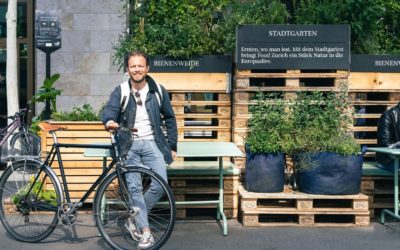
As member of the Innovation-Cooperative dieCuisine, Swiss Food Research supports the project “Vegane Markthalle” taking place from 10 – 31 December 2020.


In it’s unique location on the FOGO-Areal in Zürich-Altstetten, a mix of food-fair, store and bistro offers producers of vegan products an opportunity to display and sell products to consumers, to show-case possibilities of a plant-based nutrition and to network with a community of regional suppliers and gastronomy chefs.

dieCuisine is a living lab that promotes sustainable food and nutrition with social inclusion and education. “Vegane Markthalle” was born out of the Corona restrictions and offers a great opportunity to stand together and show great vegan offerings to a broad audience and increase consumption. We invite all producers of vegan food to participate and respond quickly to fill the stands.

For further inquiries please contact Marina Helm or consult the information below. (German only)

  • Vegane Markthalle 
  • Date: 11 – 31 December 2020
  • Time: 10:00h to 20:00h
  • Location: dieCuisine, Geerenweg 23a, 8048 Zürich

Latest News

Join the Swiss Food & Nutrition Valley ecosystem and be partof the journey!

EPFL Spin-off Plastogaz awarded CHF 85K to further its research in sustainable disposal of plastic waste

EPFL Spin-off Plastogaz awarded CHF 85K to further its research in sustainable disposal of plastic waste

Plastogaz, a spin-off of the Swiss Federal Institute of Technology Lausanne (EPFL), has developed a technology that uses powerful catalysts to selectively convert mixed plastics that cannot be recycled into methane.

Plastogaz is a technology company founded in 2020 that focuses on the development of new processes for the circular economy. Awarded CHF 85’000 by Tech4impact to further its research, the swiss startup is developing a technology that has the potential to considerably reduce the greenhouse gases resulting from the disposal of plastic waste (e.g. through incineration). 

Almost 100 project teams responded to the first call for proposals launched by Switzerland Innovation together with Tech4Impact and partners from the Swiss economy. Six projects were selected based on their degree of innovation, sustainability and technology. The topics addressed by the award-winning projects range from reducing water consumption to renewable heat generation and the improved usability of electronic waste. 

The Plastogaz™ process

The original Plastogaz technology transforms plastic waste into grid-compatible methane. The technology can be declined into other products for other markets. For instance, the startup claims is can also transform mixed plastics into naphtha, which is used in turn to produce new plastics. In the long term and thanks to it’s innovative process, the company aims at converting heterogeneous feedstocks into a single, ready-to-use molecule.

Tech4Impact: A Boost for Innovation Projects

The Switzerland Innovation Tech4Impact initiative aims to help pioneering innovation projects addressing one of six selected UN Sustainable Development Goals achieve a breakthrough. In order to qualify for a subsidy, the proposed project must be based on an advanced technology that will reach maturity and application within the next three years.

The award-winning project teams are to receive a CHF 85,000 grant. The funds are designed to give the innovation projects a considerable boost, make them ready for market launch or allow them to embark on further development. The subsidies are financed by the following innovation partners: ABB, Credit Suisse, Die Mobiliar, economiesuisse, Interpharma, Schindler, Swiss Re Foundation, Swisscom, UBS and Zurich Insurance.

More information is available at: www.sitech4impact.ch

Latest News

Join the Swiss Food & Nutrition Valley ecosystem and be partof the journey!

Nestlé to invest billions to reduce its carbon footprint

Nestlé to invest billions to reduce its carbon footprint

Focusing on regenerative agriculture and moving to renewable electricity, Nestlé redoubles efforts to combat climate change

Vevey, Switzerland


As a signatory of the UN ‘Business Ambition for 1.5°C’ pledge, Nestlé is one of the first companies to share its detailed, time-bound plan (pdf, 10Mb) and to do so ahead of schedule. The company is taking measures to halve its emissions by 2030 and achieve net zero by 2050 – even as the company grows.

Actions focus on supporting farmers and suppliers to advance regenerative agriculture, planting hundreds of millions of trees within the next 10 years and completing the company’s transition to 100 percent renewable electricity by 2025. Additionally, Nestlé is continuously increasing the number of ‘carbon neutral’ brands.

Nestlé Chairman Paul Bulcke said, “The Board recognizes the strategic importance of taking decisive measures to address climate change. It supports accelerating and scaling up our work to ensure the long-term success of the company and to contribute to a sustainable future for generations to come.”

This roadmap is the result of a complete review of Nestlé’s businesses and operations to understand the depth of the challenge and determine the actions needed to address it. The company emitted 92 million tonnes of greenhouse gas emissions in 2018, which will serve as the baseline for measuring progress. 

“Tackling climate change can’t wait and neither can we. It is imperative to the long-term success of our business,” said Mark Schneider, Nestlé CEO. “We have a unique opportunity to address climate change, as we operate in nearly every country in the world and have the size, scale and reach to make a difference. We will work together with farmers, industry partners, governments, non-governmental organizations and our consumers to reduce our environmental footprint.”

Nestlé’s work to get to net zero spans three main areas:

  • The company is already working with over 500 000 farmers and 150 000 suppliers to support them in implementing regenerative agriculture practices. Such practices improve soil health and maintain and restore diverse ecosystems. In return, Nestlé is offering to reward farmers by purchasing their goods at a premium, buying bigger quantities and co-investing in necessary capital expenditures. Nestlé expects to source over 14 million tons of its ingredients through regenerative agriculture by 2030, boosting demand for such goods.

    Nestlé is also scaling up its reforestation program to plant 20 million trees every year for the next 10 years in the areas where it sources ingredients. More trees mean more shade for crops, more carbon removed from the atmosphere, higher yields and improved biodiversity and soil health. The company’s primary supply chains of key commodities, like palm oil and soy, will be deforestation-free by 2022. Through efforts like these, Nestlé is building longer term partnerships and providing farming communities with greater certainty and higher incomes. 

  • In its operations, Nestlé expects to complete the transition of its 800 sites in the 187 countries where it operates to 100% renewable electricity within the next five years. The company is switching its global fleet of vehicles to lower emission options and will reduce and offset business travel by 2022. It is also implementing water protection and regeneration measures and tackling food waste in its operations.
  • Within its product portfolio, Nestlé is continuously expanding its offering of plant-based food and beverages and is reformulating products to make them more environmentally friendly. It is increasing the number of ‘carbon neutral’ brands it offers to give consumers the opportunity to contribute to the fight against climate change. Garden Gourmet plant-based food as well as Garden of Life supplements will achieve carbon neutrality by 2022; Sweet Earth plant-based food, among other brands, will do the same by 2025. These come on top of Nespresso, S.Pellegrino, Perrier and Acqua Panna‘s commitment to carbon neutrality by 2022, with the rest of the Nestlé Waters category achieving the same by 2025.

Magdi Batato, Executive Vice President and Head of Operations, said, “With nearly two-thirds of our emissions coming from agriculture, it is clear that regenerative agriculture and reforestation are the focal points of our path to net zero. These efforts will reduce emissions and improve biodiversity at scale. We will also continue to eliminate emissions from our operations and make improvements in our product portfolio. We have our work cut out for us and we are committed to delivering.”

The company expects to invest a total of CHF 3.2 billion over the next five years to accelerate our work, including CHF 1.2 billion to spark regenerative agriculture across the company’s supply chain. These investments will be financed primarily through operational and structural efficiencies to keep this initiative earnings neutral.

Nestlé has had its emissions reduction targets approved by the Science Based Targets initiative (SBTi), as consistent with levels required to meet the goals of the Paris Agreement. SBTi is a collaboration of non-profit organizations that is considered the international gold standard on assessing net zero commitments. Nestlé will provide annual updates to provide transparency on its progress.

Contacts:

Media:
Christoph Meier Tel.: +41 21 924 2200
mediarelations@nestle.com

Investors:
Luca Borlini Tel.: +41 21 924 3509
ir@nestle.com

Latest News

Join the Swiss Food & Nutrition Valley ecosystem and be partof the journey!

REM Analytics: Uncovering new applications in microbiome, certification and food safety

REM Analytics: Uncovering new applications in microbiome, certification and food safety

A science is only as good as its measurement tools. Based in Monthey (Canton of Valais), REM Analytics offers solutions for measuring genetic composition in mixed DNA samples. 

DNA analysis, particularly when applied in microbiome, has the potential to provide breakthrough solutions in countless industries. Swiss startup REM Analytics is looking at microorganisms through the lens of DNA to uncover new opportunities in personalised nutrition, precision medicine, food authenticity, agriculture and more.

We sat down with founder and CEO, Dr. Paulo Refinetti, to ask three questions about what they’re working on.

SFNV: What’s the founding story behind REM Analytics; and what made you pick this specific field of innovation?


Dr. Paulo Refinetti: REM Analytics started as a company at the end of my doctoral research project at EPFL with co- founders Prof. Stephan Morgenthaler, Dr. Anna Surowska and Dr. Per Ekstrom in 2017, but the underlying inspiration comes from the work done in the 1980’s by our friend and mentor Prof. William Thilly on Cycling Temperature Capillary Electrophoresis (CTCE).


I am a statistician, and during my PhD I was attempting to model cancer and tumour growth in humans. This was difficult, but the problem was not in the modelling or statistics the project involved; the challenge came from the lack of sufficiently accurate data. It was at this point that I realised that the measurement tools we use in life science do not provide us with the quality data we require, and this is the limiting factor on much of scientific progress. My PhD supervisor and co-founder, Prof. Morgenthaler, introduced me to the work of Prof. Thilly on CTCE, which is a method for detecting, characterizing and quantifying variations in genetic sequences using mutational spectroscopy. This realization that we can find genetic mutations struck me as something very powerful, and I was convinced that CTCE could become the measurement tool that was missing in biotech. At this point the idea and technology was raw, so I worked with Stephan and Per on enhancing CTCE with bioinformatics and robust mathematical models, and with Anna on putting all the pieces of the ‘business puzzle’ together to launch our technology as a company.

CTCE, following all our innovations and improvements, became what we like to call Advanced Testing for Genetic Composition (ATGC). ATGC is the DNA-analysis platform we’re based on, and it provides the most advanced method of genetic analysis available. The result is REM Analytics. 


Tell us more about the solution you’re developing: at what stage of product development are you?

P. R : DNA analysis, particularly when applied in microbiome, has the potential to provide breakthrough solutions in countless industries. If we start looking at organisms or microorganisms through the lens of DNA, there are opportunities to offer new solutions in personalised nutrition, precision medicine, skincare, food authenticity, bioprocess management or even agriculture. The exciting thing is that these fields of research are still largely unknown and undiscovered. This genetic information available to companies in pharmaceuticals, food, agriculture and cosmetics is a valuable strategic asset. By fully leveraging this information, leading companies can gain a competitive edge while maximising the success, efficiency and Net Present Value (NPV) of their R&D projects. REM Analytics’ provides an end-to-end research & development service to do just that. We translate raw biological samples into actionable data that is user-friendly for research teams.

Our research and development service is unique due to the capabilities of ATGC, our proprietary genetic measurement platform. ATGC does not use sequencing and thus can achieve a high-throughput, strain-level resolution and unrivalled quantitative accuracy. It is also highly versatile, allowing us to customize the analysis to your specific questions. Providing solutions always begins with us listening. We extensively discuss with our partners to understand their objectives and challenges and we tailor our analysis accordingly. Then we run the customized analysis from our fully operational labs in Monthey, Switzerland.  


What’s coming next for REM Analytics ? 

P.R : Our main focus over the coming months will be to successfully complete the series of projects we are currently running with various partners. These projects have been a great opportunity for us to really adapt our technology and experience to diverse fields of application, and fine-tune small features of our analytical platform, notably the IT back-end. We are also looking forward to meeting and discussing with leading, innovation-driven companies and institutions who are seeking to improve their R&D efficiency and integrate cutting-edge biotechnology to differentiate and prove the efficacy of their products.

Over the long-term, the vision is to scale our capabilities, by developing more core technologies that can be deployed to other domains of life sciences. These would be developed as our own solutions and would be spin-offs of our model and technology.


Find out more:

REM Analytics is located in the BioArk in the Swiss canton of Valais, a region with a long tradition in life sciences.


FOR TECHNOLOGY-RELATED INQUIRIES

contact Paulo Refinetti

FOR BUSINESS AND PARTNERSHIP INQUIRIES

contact Anna Surowska


Latest News

Join the Swiss Food & Nutrition Valley ecosystem and be partof the journey!