Nexenic raises 1.8 million for series production and market entry of portable mini-steamer Steasy®

Nexenic raises 1.8 million for series production and market entry of portable mini-steamer Steasy®

The Swiss company Nexenic has developed a portable mini-steamer the size of a standard lunch box, and they’ve called it Steasy®. The product is soon to start serial production and enter the market. With a successful funding round to the tune of 1.8 million Swiss francs, its founders are gearing up for their invention’s entrance onto a wider stage.

Meet Steasy®

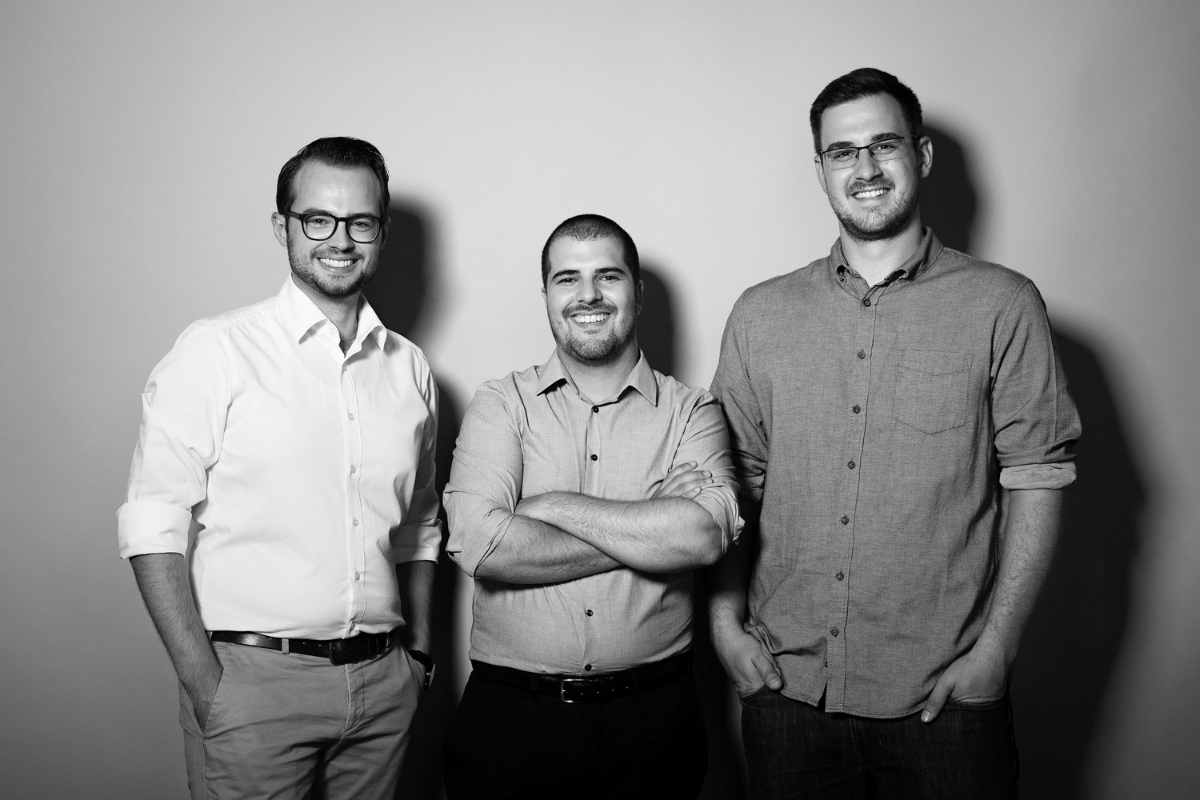
The company’s trio of founders and inventors met while studying at the Zurich University of Applied Sciences (ZHAW), and bonded in the queue to heat up their lunches in the microwave. But now, thanks to their easy yet revolutionary steaming device, those long waits may well be a thing of the past for future students. It turns out queueing has its benefits: the three – Claudio Ruiz, Reto Muhl and Johannes Hofer – used that time (and more) to dream up a solution to their predicament.

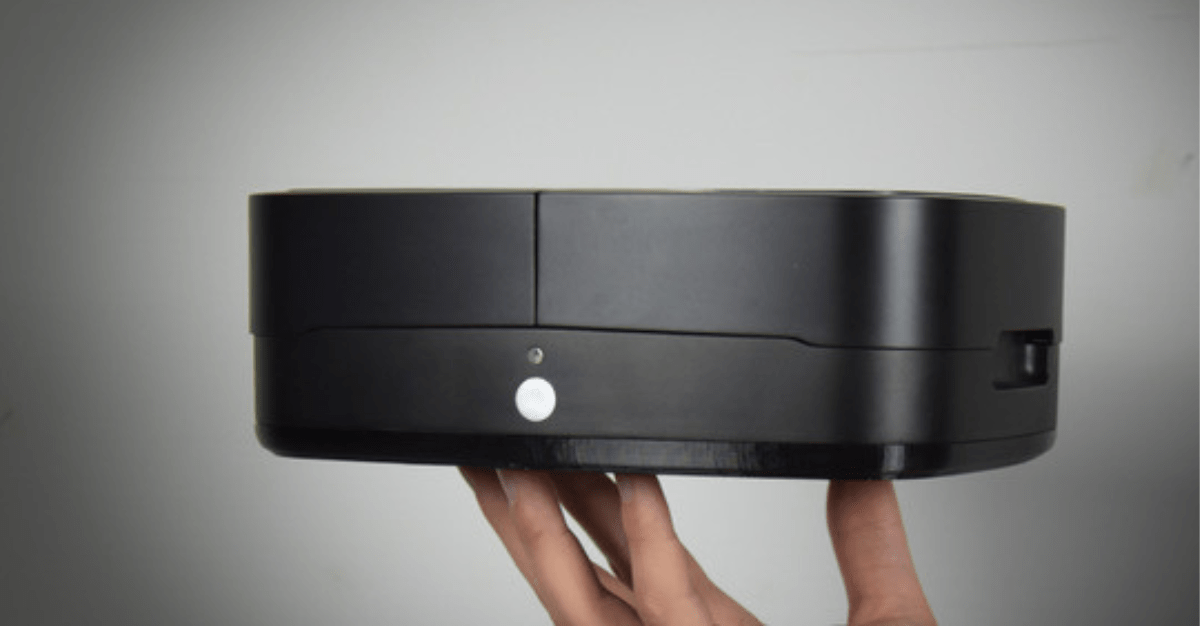
Enter Steasy®, their ingenious portable mini-steamer. No bigger than your average lunchbox, the device allows hungry users to heat up their meals gently and efficiently  – no microwave, oven or power socket needed. And now, thanks to a successful funding round, its inventors are one step closer to making their vision a reality.

A prototype of the Steasy® portable mini steamer.

Merging convenience, health and tech

To bring their innovation to the masses, the young entrepreneurs are making the final preparations for serial production and market entry – the portable mini-steamers are already being produced in Europe in partnership with a Swiss manufacturer. 

And the invention will do far more than just save its users the time and boredom of waiting in the microwave line. The steaming technology ensures vegetables retain their vitamins and nutrients, while meat stays moist and succulent. Not only that: the accompanying app means you can heat up your lunch from afar, and time it to coincide with the moment the clock hits noon. 

The founders see their creation adding particular value to students, who find themselves in the same predicament as they once did, as well as office workers – particularly those with health at the forefront of their minds – and those who work outdoors or on construction sites, away from any catering facilities. 

Milestone after milestone

The inventors have already celebrated several significant milestones, with the final prototype developed, tested and convincing enough to win over investors. “The functioning prototype and the successful customer testing phase were decisive in persuading investors to fund our next stage,” says Johannes Hofer, co-founder and CMO. “This meant we could sell not just a vision, but had a finished product including user data that proved the idea really worked.”

The founders closed the latest, oversubscribed funding round with an additional 1.8 million Swiss francs in the bank. With this new injection of cash, Steasy® will be able to enter serial production, paving the way to mass market entry. An initial launch is planned in Switzerland, with preorders for private individuals starting as soon as autumn this year.

A strategic partnership

The Swiss catering group, ZFV-Unternehmungen cooperative (ZFV), will not only invest financially but will also enter into a strategic partnership with the startup. This will include exploring how their solution could support ZFV in providing access to fresh, balanced food throughout the day. Dario Notaro, Chief Business Development Officer at ZFV sees clear synergies between their work: “At ZFV, we’re always eager to collaborate and work with creative partners to spot and develop innovative solutions.”

Find out more on the Steasy® website.

About Nexenic

Nexenic AG is a Swiss startup that aims to make everyday life easier. Nexenic AG works across various engineering fields to achieve this goal. Steasy®, the product developed by the startup, is a smart, lightweight and portable mini-steamer the size of a standard lunch box.

Never miss a Swiss food innovation morsel.

Latest News

Join the Swiss Food & Nutrition Valley ecosystem.

How FOOD2050 is enabling food service partners to reshape our food system, one meal at a time.

How FOOD2050 is enabling food service partners to reshape our food system, one meal at a time.

Back in 2019 Christian Kramer spotted an opportunity. Restaurants wanted to create more sustainable menus. Consumers wanted to make greener choices. And both were looking for support to help them in this process. This is exactly the gap that Christian’s new venture, FOOD2050, aims to close.

Hello. Tell us a bit about yourself.

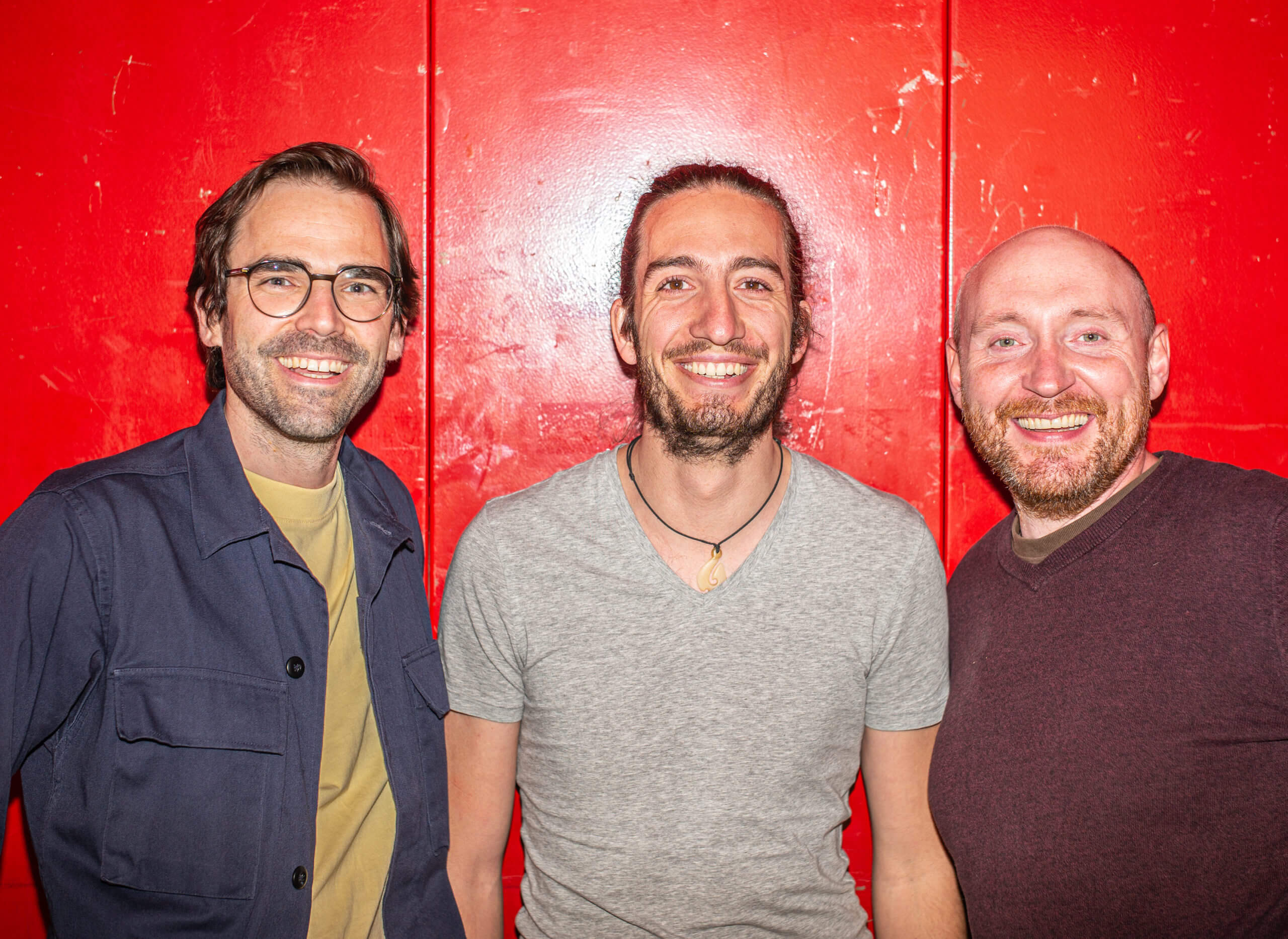
I’m Christian Kramer, CEO & Co-founder at FOOD2050. I’m a restaurant industry veteran who is passionate about global food system transformation.

Can you pitch FOOD2050 in a single sentence?

FOOD2050 promotes more sustainable food systems by rating and optimizing food service sector recipes, enabling better consumer choices and making it easy for businesses to achieve their sustainability goals.

How did you come up with the idea behind FOOD2050?

Back in 2019, I was involved in introducing the Beyond Burger in Europe. Throughout this process, it became really clear to me that consumers were ready for more sustainable solutions in the hospitality sector. 

I started talking to food service sector colleagues about what sustainability meant to them. Everyone recognised that there was a market need and that consumers wanted clear and robust information to help them make better choices. But no one had the time to figure out their own solutions.

So together with my business partners, Adrian Hagenbach and Leopold Weinberg, we came up with the idea of creating a platform that allowed restaurants and caterers to connect their sustainability goals with practical measures to achieve them – and help them monitor their progress. This seed then grew into FOOD2050.

What have you done so far?

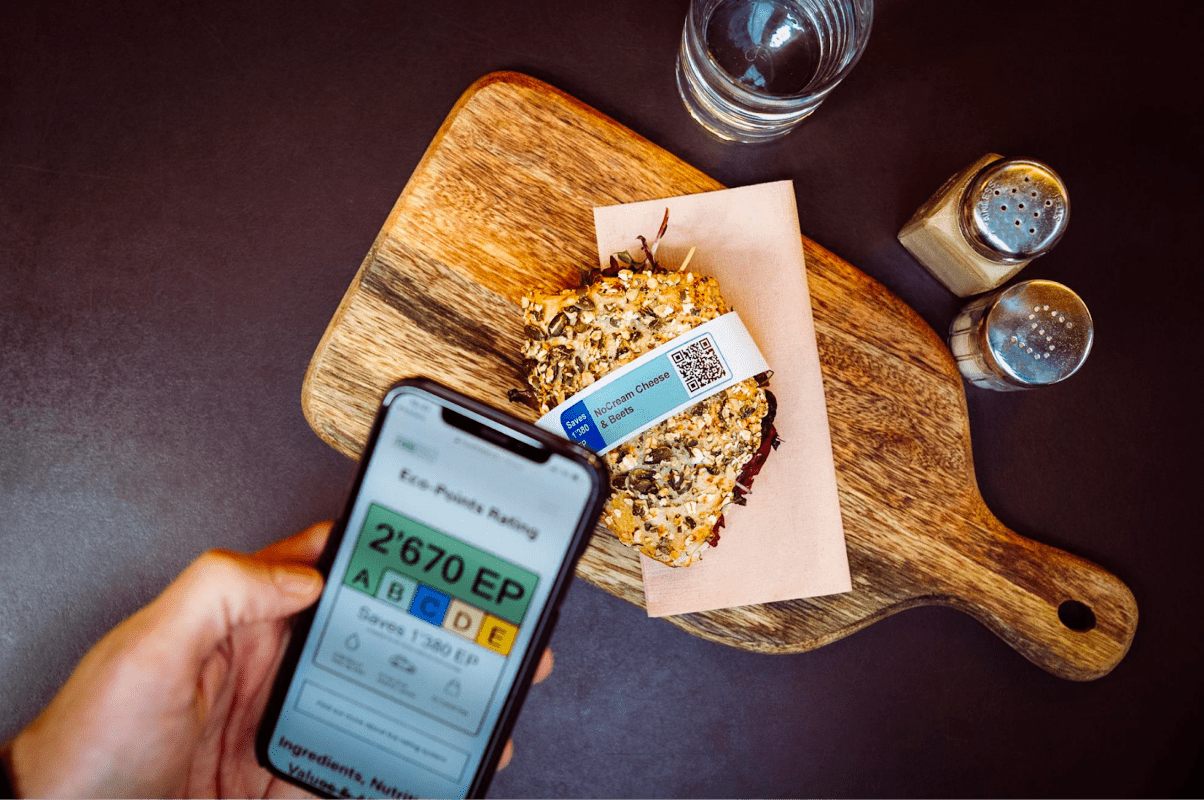
Using a scientific database, we’ve created a system that evaluates food products for their environmental impact in Eco-Points (EP). This allows our partners to quickly and easily develop delicious recipes that also respect planetary boundaries. They can either choose recipes from our existing database or can use the FOOD2050 system to rate and optimise their own recipes. 

In January we launched a pilot project with the University of Zurich and ZFV, one of Switzerland’s largest caterers. This allowed us to better understand the different ways to measure the impact of food we consume and explore how to make this information tangible and actionable for consumers. After testing out multiple options, we found that Co2 equivalent was the most common metric used in food service businesses and that consumers wanted to understand how that translates into environmental goals we are all trying to achieve. It feels more motivating: it links their choices to the goal of tackling climate change.

We also tested the best ways to share the information with consumers and tested which promotional channels were most likely to drive a change in behaviour.

What are you working on right now?

We’re looking to create software to help us scale our solution. This platform will make it easier for consumers to view and interact with product ratings, as well as providing content that promotes sustainable products and the producers behind them. Participating businesses will also have access to a monitoring dashboard that will track their climate impact over time. Commercial rollout is planned for 2023. We’d be really interested in connecting with other innovators developing software for the food service sector to learn from their experiences.  

Once we’ve created software that guides our recipe development we’ll focus on creating food innovation with our partner Blue Horizon, who has been very helpful in facilitating the access to innovative producers with real environmental impact. 

Also, as a member of the EHL Innovation Village, we’re looking to collaborate with other promising start-ups working on creating a sustainable food system to maximise our long term impact.

How do you see FOOD2050 developing in future?

Our solution is currently focussed on supporting caterers and manufacturers. But in the longer term, we’d like to be able to drive change across the whole food supply chain and share the data gathered with government colleagues to shape positive food and nutrition policies.

How can the SFNV community help you achieve your goals?

We’ve recently submitted a project proposal as part of SFNV’s Impact Platform on sustainable protein to team up with other SFNV members to boost the impact of sustainable proteins within food service operations. We’re eager to work alongside leading alternative protein brands, large scale food service operations, professional chefs and environmental specialists to develop a range of recipes that could be promoted in some of the largest food service operations in Switzerland.

These collaborations would then lay the foundations for an open-source recipe platform, where knowledge is freely shared between key stakeholders to drive innovation for environmental and human health.

Additionally, we want to apply the concept of the Planetary Health Diet from the EAT Lancet Commission in a national context and help to translate it from theory into practice. To make this a reality, we’ll be looking to connect with relevant partners along the entire supply chain. 

SFNV recently launched its third Impact Platform on Food Systems 4.0. How do you see digitalization reshaping the future of food?

We see huge potential in using digital tools to enable food system transformation. In the short term, we can facilitate access to relevant food information to guide consumption choices and raise awareness of how much our diets impact our planet. In the longer term, we believe that data can help us understand the complexity of global food systems and reduce greenwashing to really drive the food revolution that we desperately need.

Tell us something we didn’t know about your company.

Through our pilot operation with a fairly small food offer, we’ve enabled students at the University of Zurich to save a whopping 36 million litres of water since the start of this year. That’s the equivalent of the water used in 1 million showers or baths! This demonstrates very clearly how food choices have a huge impact on our planet and that every individual can have an impact through their actions, however small.

Connect with Christian on LinkedIn or visit the Food2050 website to find out more. 

Got an idea for a collaborative project in this space?

Latest News

Join the Swiss Food & Nutrition Valley ecosystem and be partof the journey!

Luya Foods launches its first products in over 130 Coop outlets

Luya Foods launches its first products in over 130 Coop outlets

Back in 2021, a foodie, a food scientist and a chef led a successful crowdfunding campaign – and Luya was born. The Swiss startup transforms Okara – or soy pulp – into juicy plant-based alternatives. As of May 30 their products are available in over 130 Coop outlets across Switzerland. 

Meeting growing demand

More than one million Swiss consumers already skip meat completely or partially, once or twice a week. They care about their health and the environment – but they’re not willing to compromise on taste. Luya’s products are designed with these consumers – alongside growing numbers of vegetarians and vegans – in mind.

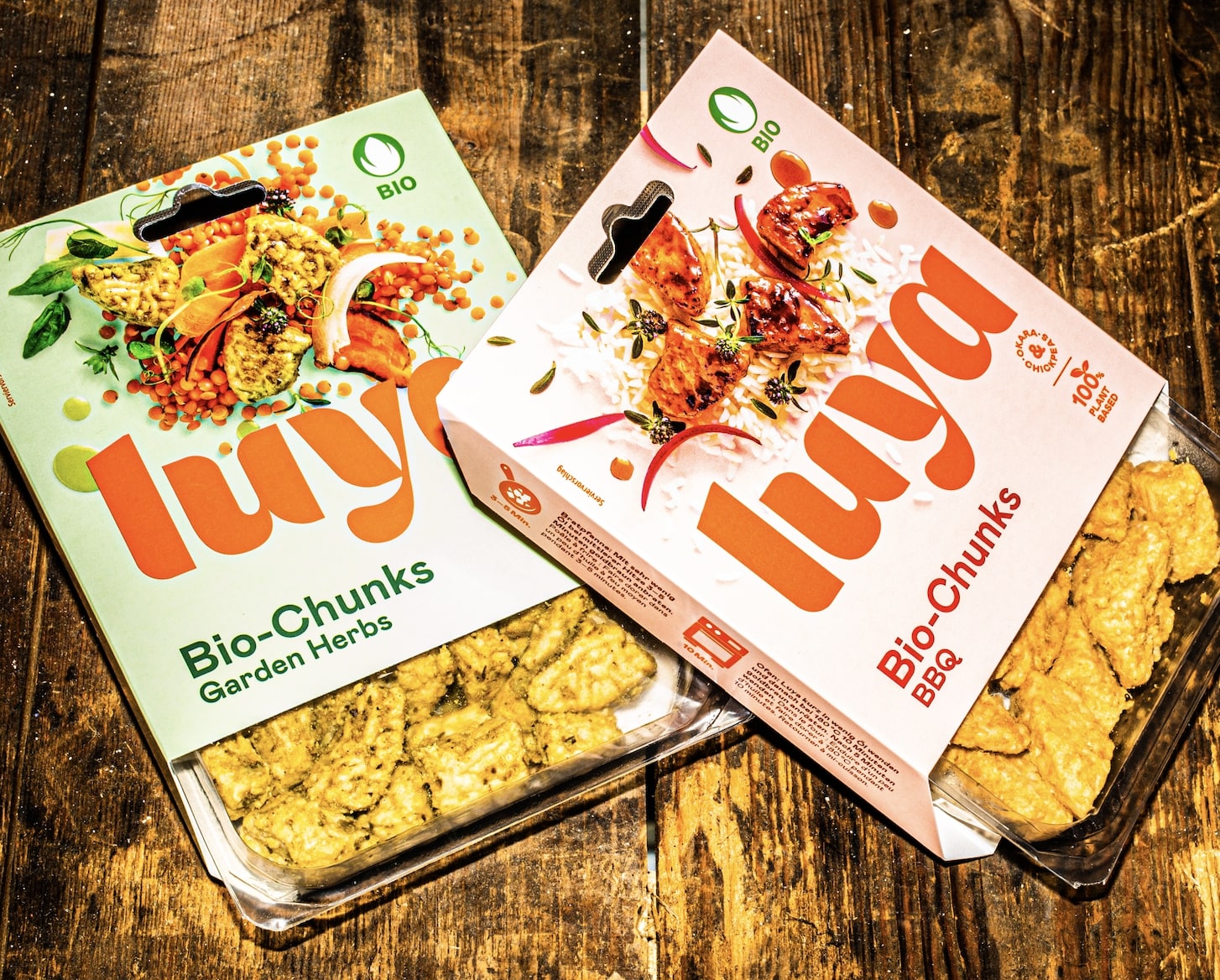
Made from chickpeas and okara, their organic chunks, nuggets and burger patties aim to offer a juicy alternative to meat and poultry. Two flavours of the chunks – Garden Herbs, and BBQ – are now available in over 130 Coop outlets and Coop’s online store. The two varieties and a Nature version will also soon be available in Luya’s own webshop.

Luya food team photo
The story so far

Back in 2021, Flavio Hagenbuch, Mike Whyte and Tobi Kistler launched a crowdfunding campaign. They’d successfully created a new generation of alternative protein using their proprietary mycelium fermentation platform at the Bern University of Applied Sciences and their early products were already being enjoyed in local restaurants.

After securing CHF 56,000 through crowdfunding to build a larger fermentation chamber and create their brand identity in July, the team went on to close a successful seed funding round led by Redalpine Venture Partners in November. In March this year, they won CHF 150,000 in Venture Kick funds to scale up production and further develop their solid-state fermentation technology.

Luya food packaging
Achieving impact through local and circular production

Luya’s key ingredient Okara is a by-product from tofu and soymilk production that is still not very well known outside Asia. Globally around 14 million tons of Okara end up in biogas production or as animal feed every year, despite its high nutritional value and fiber content. Luya rescues organic Okara produced by Swiss tofu producers from Swiss and Italian organic soy beans. Then Luya uses traditional fermentation process to transform it into their final product.

Their raw material sourcing strategy ensures short transport routes and reduces significantly less land. The team also takes reducing their Co2 footprint seriously and have recently received the maximum 3-star rating from Eaternity in all four sustainability categories (CO2 emissions, animal welfare, water consumption and rainforest protection).

Find out more on the Luya Foods website.

Never miss a Swiss food innovation morsel.

Latest News

Join the Swiss Food & Nutrition Valley ecosystem.

How iSense is mapping taste just like Google mapped the Earth

How iSense is mapping taste just like Google mapped the Earth

Up until now, flavors have been functional black boxes. But Mathieu Asté, Founder and CEO of iSense, is eager to disrupt this 120-year old, $14 billion industry. His solution standardizes flavor taste measurement to enable comparison and provides a software (SaaS) to accelerate flavor selection, matching, creation and sourcing.

Hello. Tell us a bit about yourself.

My entrepreneurial journey began at the age of 16, building windsurf boards. At age 22, I backpacked through West Africa looking for the ideal spot to start a fish farm, another passion of mine. Two years later I traveled to Colombia, near Cali, where I learned about cassava flour processing — a topic I dived into for my master thesis.

After graduating, I worked for two great US companies, first at Ingredion and then at IFF (International Flavors & Fragrances Inc.) where I discovered Sensory Sciences and Consumer Insights.

Creating a startup had always been in the back of my mind. But you need a strong idea — and they don’t come easy or often! While hanging out with friends one day, we were chatting about how flavors are like these functional black boxes. Then and there we realized that the world needed a better way to define flavors.

Can you pitch iSense in a single sentence?

iSense is the first flavor tech company that defines flavors in the same way that Pantone defined color, and provides software to make it easier to choose, match, create, and trade flavors.

What gets you out of bed in the morning?

The extraordinary people I meet along the way who share the vision of mapping taste to redefine the flavor industry.

This week I met the CEO of a French tech sensor company, and we explored how to translate chemical signatures into taste representations. The week before it was the chairman of a Swiss flavor house, talking about digital customer engagement. 

What does a typical day at work look like for you?

It typically starts with a few calls about key topics and continues with planned meetings to monitor the progress of our operational roadmap. Then it’s all about customers and investors. The best part is when we can meet as a team – employees, consultants, industrial partners and IT developers.

What were your key achievements in 2021?

We released the first open-source taste language to describe chicken flavors. Imagine a color palette with different shades of blue to help you select the right color. It’s exactly the same with flavor. The iSense Chicken Toolkit helps marketing and product developers to define and select the right chicken flavor.

We also developed a software to match any flavor in a matter of seconds. The first proof of concept with a large beverage manufacturer was successful, and we’re now developing the technology further to support flavor creation.

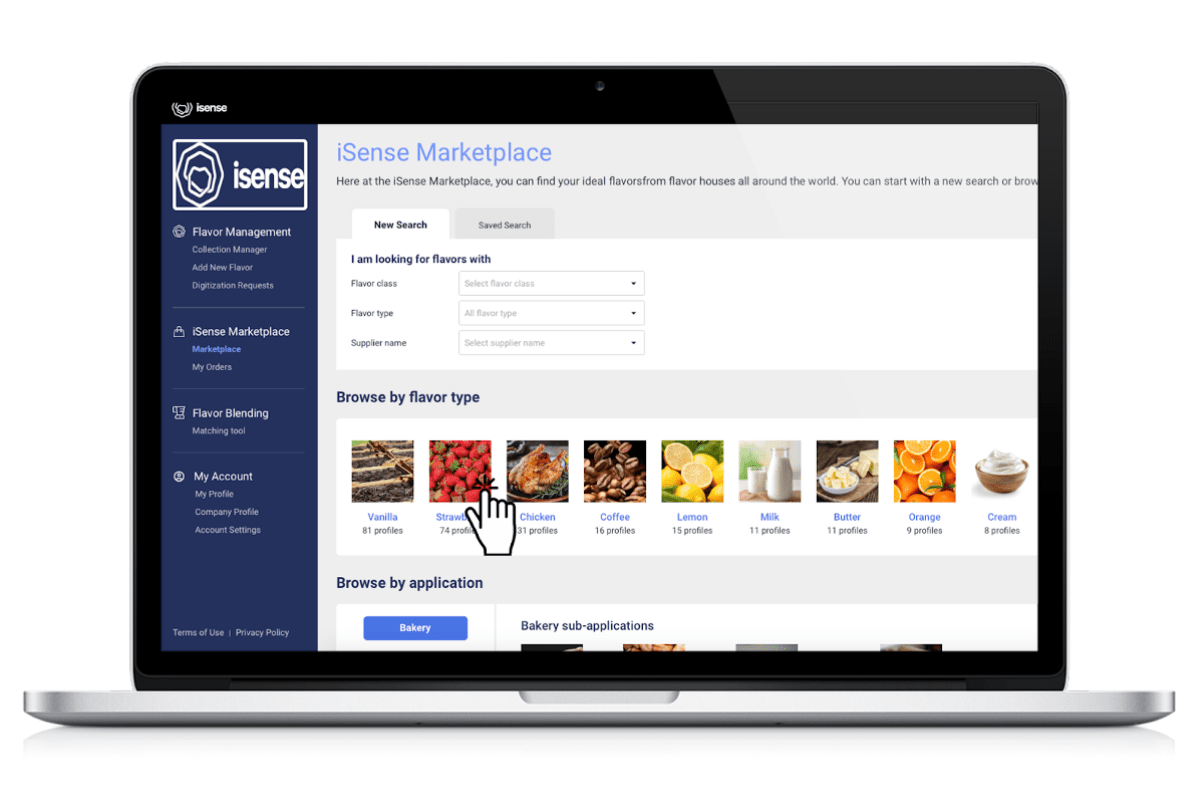
I genuinely believe that digital customer engagement will change the flavor industry. So we launched a distributor engagement portal for flavor houses. It works as a SaaS, so it’s accessible to every company with a license.

What projects are you and your team working on this year?

This year is all about commercializing our tools and services, and preparing to launch our tech-driven flavor marketplace next year. That includes building preference maps to guide flavor choice, and launching a flavor briefing and creation portal.

Tell us about how you work with others in the ecosystem to innovate.

As a small company, we collaborate with experts, service providers and involve customers early on in our taste language creation and portal development. It starts with sharing our vision: disrupting how we source flavors with tech. It’s about offering flavor selection, matching, and creation within minutes instead of weeks, and making flavor trade easy, quick, and affordable. From there, we co-create a strategic roadmap and set objectives for each phase.

How do you support the Swiss ecosystem beyond your core business offer?

We initially reached out to large flavor houses and F&B manufacturers in Switzerland, looking to collaborate and gain visibility. Then we created proof of concepts and built strong commercial relationships. Now we’re at a point of maturity where we can start to give back and help the ecosystem with taste mapping, flavor guidance and flavor sourcing.

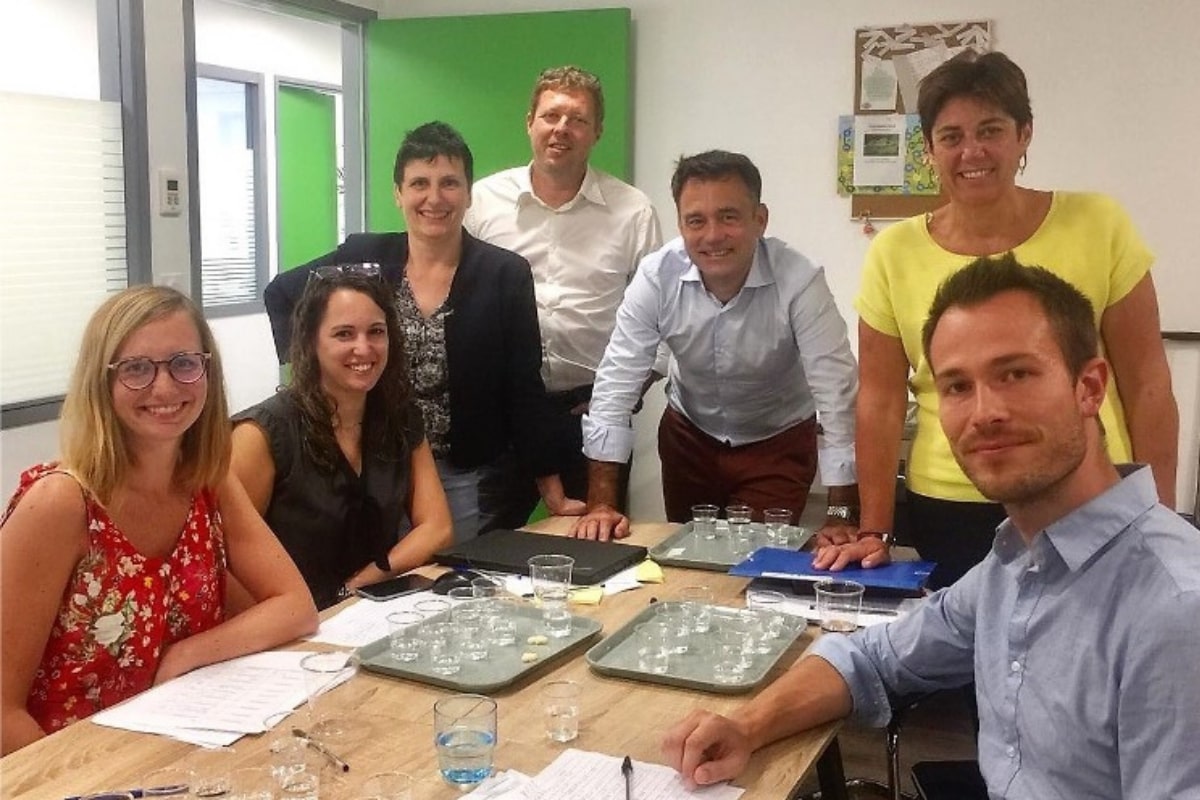
iSense team photo
How can the SFNV community help you achieve your goals?

SFNV represents iSense and the startup ecosystem at events when we don’t have the time or funds to attend ourselves.

The global startup and investment scene is also very focused on solutions that help save our planet, like plant-based alternatives, fermentation, and cultured meat. Being part of a well-known network and community that represents these different streams of innovation is important to us.

SFNV also allows us to meet with very busy people! They can bring Stephan Palzer, Fabio Campanile, Martin Vetterli and Calvin Grieder together in a single meeting. This happened at a meeting in Zurich recently, and we were thrilled to be there.

SFNV will soon be launching its third Impact Platform on Food Systems 4.0. What’s your perspective on the role of digitalization in shaping the future of food? 

Digitalization of flavor taste lies at the heart of iSense. Taste and flavors create emotions. But what if we could map taste like Google mapped the Earth?

With agility and affordability in mind, startups like AI Palette are already identifying food and beverage trends using IoT and AI. They accelerate the development of concepts and prototypes. 

While the nutritional and regulatory aspects of food and ingredients can be put into models, taste remains artistry 99% of the time. There is a big opportunity here to change how food products are built, and make the day-to-day lives of marketing and procurement professionals and food developers easier.

We’re looking forward to the launch event and connecting with other Valley members to discuss the innovations in this space.  

Tell us something we don’t know about your company.

The idea of iSense was born on the border of the Hudson River, Hoboken, in 2016, and we drafted our first business model in Shanghai.

Connect with Mathieu on LinkedIn or visit the iSense website to find out more. more.

Interested in food system digitalization?

Latest News

Join the Swiss Food & Nutrition Valley ecosystem and be partof the journey!

Firmenich and DSM join forces to accelerate taste and nutrition innovation

Firmenich and DSM join forces to accelerate taste and nutrition innovation

SFNV member Firmenich and DSM will merge, leveraging their respective world-class science and complementary capabilities in taste, texture and nutrition. The merger would allow the new company to anticipate evolving consumer needs and boost innovation in high-growth and resilient segments.

Accelerating innovation

SFNV member, Firmenich and DSM announced yesterday that they have entered into a business combination agreement. The merger brings together Firmenich’s leading Perfumery and Taste businesses, its world-class science platforms and associated co-creation capabilities with DSM’s renowned Health and Nutrition portfolio and scientific expertise. The new company, DSM-Firmenich, will have dual headquarters in Switzerland (Kaiseraugst) and the Netherlands (Maastricht). 

DSM-Firmenich anticipates that the merger would allow them to better address the needs of today’s conscious consumers, who prioritize sustainability, health and well-being, and generate new growth opportunities for customers.

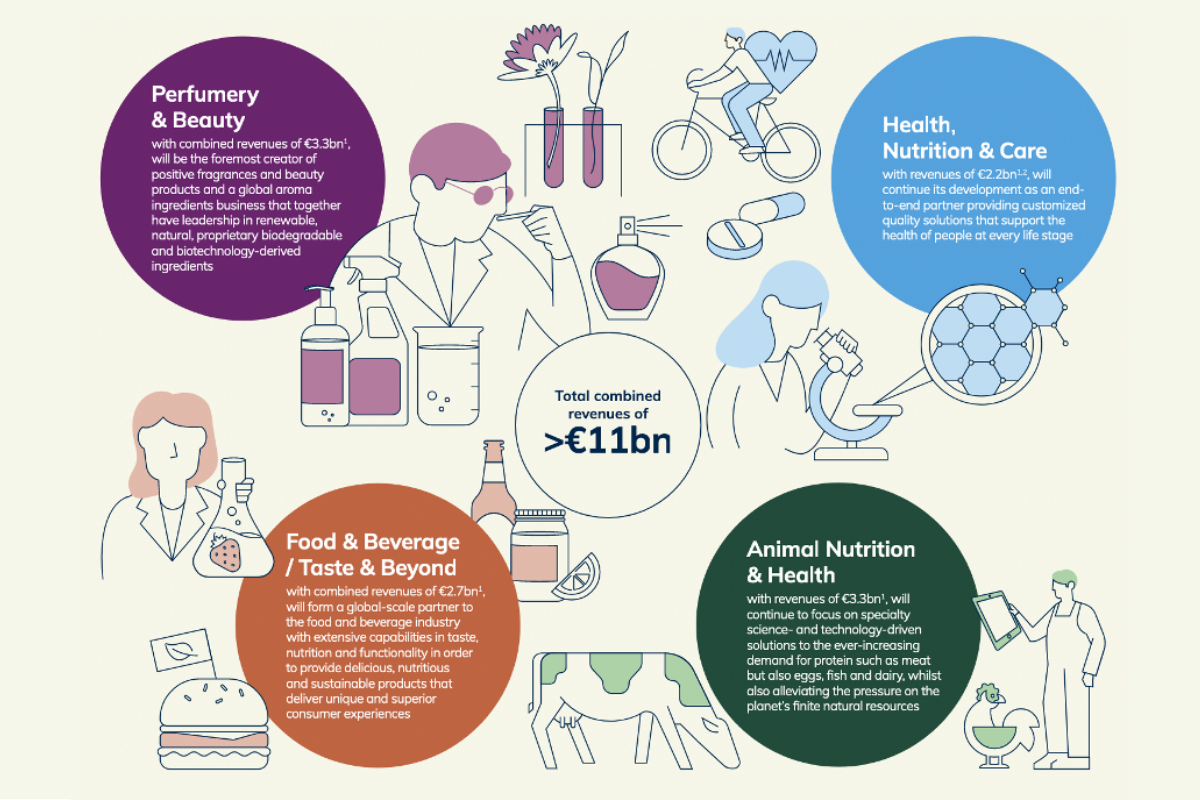
The new global-scale company would accelerate innovation in the food and beverage industry, by combining DSM’s Food & Beverage and Firmenich’s Taste & Beyond businesses. Firmenich’s world-leading global Perfumery and Ingredients business would expand further into Beauty through the addition of DSM’s Personal Care & Aroma business. These new combined businesses would be joined by DSM’s high-performing Health, Nutrition & Care and Animal Nutrition & Health businesses.

A global-scale partner

DSM’s Food & Beverage and Firmenich’s Taste & Beyond, with combined revenues of €2.7bn, would form a global-scale partner to the food and beverage industry with extensive capabilities in taste, nutrition and functionality. The new business would play a key role in diet transformation by creating healthier, great-tasting, accessible food and beverages with more natural and sustainable ingredients. This will include a focus on innovation in natural and clean label products, in plant-based foods, and in supporting an excellent taste experience whilst enhancing food’s nutritional profile, through vitamins, probiotics, and lipids and reduced sugar and salt. 

Animal Nutrition & Health, with revenues of €3.3bn, would continue to focus on specialty science- and technology-driven solutions to the ever-increasing demand for protein such as meat, eggs, fish and dairy, while also alleviating the pressure on the planet’s finite natural resources. 

The combined company’s global footprint would provide customers with access to an extensive network of R&D, creation and application capabilities, informed by local consumer preferences, across regional and local hubs around the world. Opportunities from new pioneering and complementary digitally-powered business models would also build upon the 125+ year heritages of each company in purpose-led scientific discovery and innovation.

Find out more about the merger here.

About Firmenich

Firmenich is the world’s largest privately-owned fragrance and taste company and has been family-owned for 127 years. The Swiss company specializes in perfumes, flavors, and ingredients and is renowned for its world-class research as well as leadership in sustainability.

About DSM

DSM has transformed during its 150+ year history into today’s health, nutrition & bioscience global leader. The Dutch-Swiss company specializes in nutritional ingredients for food and feed with proven world-leading bioscience capabilities and an international network of high-quality manufacturing sites that underpin a business model of global products, local solutions and personalization and precision.

Latest News

Join the Swiss Food & Nutrition Valley ecosystem and be partof the journey!

Bühler opens Insect Technology Center to support customers in the feed and food industries

Bühler opens Insect Technology Center to support customers in the feed and food industries

SFNV member, Bühler Group, has officially opened its world-class Insect Technology Center (ITC). The facility combines Bühler’s expertise with cutting-edge infrastructure to drive the development of the insect industry.

Accelerating insect plant projects

The Insect Technology Center (ITC) is designed to accelerate large-scale insect plant initiatives. The new test facility will allow Bühler’s customers to demonstrate technological feasibility before investing in their own pilot plants. The team believes that seeing industrial insect technology in action will make it more tangible to customers who are interested in becoming active in this space. 

At the heart of the Center there are two insect growth chambers that mimic industrial production conditions. These chambers have a sophisticated climate control system and are equipped with numerous sensors. The data collected is used to optimize growth conditions to maximize production efficiency. The infrastructure can also be sent to any location, making it accessible to customers worldwide.

The facilities are currently designed to help insect companies, startups and food and feed companies to evaluate the feasibility of producing black soldier flies and mealworms as a sustainable protein source. They can also be used to conduct larvae growth trials with various feedstock, develop product samples, evaluate breed solutions, and run training sessions.

The ITC was funded by Switzerland’s Federal Office for the Environment (FOEN), in recognition of its contribution to a more sustainable food system.

The opening of the Insect Technology Center is a major milestone in our journey. Over the last few years, we have gained expertise and maturity to serve different customers in the insect industry with the most suitable and reliable solutions. With our new facility, we extend our services and can even better support our customers in installing an industrial insect plant,” says Andreas Baumann, Head of Market Segment Insect Technology at Bühler. 

Contributing to a circular economy

The work of the Center will make a significant contribution to Bühler’s sustainability targets around mitigating climate change and the creation of more sustainable food systems. In addition to insects being a healthy and sustainable source of protein for food and feed, their frass can be used as a fertilizer, contributing to a circular economy model of production.

The insect feed protein market is expected to reach half a million metric tons in 2030, with the pet food sector and aquaculture sectors projected to make up 30% and 40% of the total insect protein volumes respectively.

We are devoted to supporting the industry in reaching its full potential. Over the last years we have gained maturity and built the skills for helping the industry to further develop. With proven technologies in our portfolio, we are ready to enable our customers in bringing insect-based products to the market,” explains Andreas Baumann. 

Visit the Insect Technology Center at part of Bühler Networking Days 2022. 

Latest News

Join the Swiss Food & Nutrition Valley ecosystem and be partof the journey!